Wearable Recommendation Coaching for Lifestyle Clients
I watched a client walk in already defeated by their watch. Their recovery score looked low. Their sleep score looked worse. Before I saw them move, they wanted to change the session. The device had already set the tone, and the coach had to bring the conversation back to the person in front of them.
That is where wearable recommendation coaching gets real. The device should inform the coaching conversation. It should not replace it. If you coach lifestyle clients, your job is not to pick the most advanced device. Your job is to decide whether the wearable makes the client more consistent, less reactive, and easier to coach.
The Right Question Isn’t “Which Wearable Is Best?”
WHOOP, Oura, Garmin, and Apple Watch all solve different problems. Nearly half of U.S. adults now own a fitness tracker or smartwatch, and ACSM ranked wearable technology as the No. 1 global fitness trend for 2026.
The question has changed. It is no longer whether clients will use wearables. They already do. The better question is which lifestyle client wearable helps this person make better choices.
Here is the clean coach frame:
- Oura works best for sleep-first clients.
- WHOOP works best for recovery nudges.
- Garmin works best for clients who actually train with structure.
- Apple Watch works best as the default for iPhone lifestyle clients.
No wearable works best for clients who already feel anxious about health data.
“A coach should match the device to the behavior problem, not the product’s marketing.”
— Coaching principle
The 5-Criteria Wearable Fit Test
Use five criteria before you recommend anything.
- First, sleep accuracy. Does the device help the client see sleep patterns without pretending to diagnose sleep problems?
- Second, training-load utility. Does it help the coach see workload, fatigue, and training response?
- Third, behavioral nudge quality. Does the device push the client toward better choices?
- Fourth, data portability. Can the client share or export useful data?
- Fifth, cost. Does the hardware, subscription, and friction fit the client’s life?
That coach wearable decision tool keeps the recommendation grounded. Do not recommend your favorite device. Recommend the device the client will wear, understand, and use without making coaching harder.
Keep the regulatory lane clear. A coach can use wearable data to guide training conversations, habit design, and referral decisions. A coach should not present a wearable as a diagnostic tool, medical device, or reimbursement shortcut.
WHOOP: Best for Recovery Nudges
WHOOP is for clients who overtrain, undersleep, ignore recovery, and respond well to daily prompts.
Its features revolve around Sleep, Strain, Recovery, personalized coaching, VO2 max, heart-rate zones, and a long battery life.
Price starts at $199 per year for WHOOP 5.0, with Sleep, Strain, and Recovery insights included. The device flags when strain is climbing, gives the client a reason to sleep more, and hands the coach a useful opening line: “What did you do yesterday that explains this?”
WHOOP runs on a membership model. Its support page lists WHOOP One at $149 for the first year, then $199 on renewal. The same daily prompts can also push anxious clients to obsess over readiness.
Oura: Best for Sleep-First Lifestyle Clients
Oura is clean, low-friction, and watch-free. It works well for clients who hate wearing a screen but still want sleep and readiness patterns.
A 2025 meta-analysis found the Oura Ring showed comparable accuracy to polysomnography and actigraphy for commonly measured sleep parameters, supporting its use as a self-monitoring tool.
That does not make Oura a sleep clinic. It means Oura gives coaches a better sleep-awareness tool than most clients can build from memory. Oura members can also download data as CSV and share sleep and movement summaries as reports.
The weakness is training load. Oura helps lifestyle clients see readiness and sleep. It does not replace a real training-load tool for clients running, riding, hiking, or training with a serious plan.
Garmin: Best for Clients Who Actually Train
Garmin works best for clients who run, hike, cycle, build endurance, or follow structured conditioning. Its Training Readiness feature gives a top-line readiness insight for training decisions. Garmin’s Training Status gives a longer view of training habits, HRV status, recovery demands, life stress, and environmental strain.
Garmin also has Body Battery, designed to monitor personal energy resources around the clock. That makes Garmin the strongest training-load pick.
The tradeoff is complexity. Garmin can overwhelm lifestyle clients who only need a simple sleep and movement cue. Model choice also matters. A casual Venu buyer and a Forerunner user will not get the same coaching value.
Apple Watch: Best Default for iPhone Lifestyle Clients
For iPhone users, the Apple Watch is the cleanest default. It fits daily life, workouts, notifications, safety features, health tracking, and general activity without a separate recovery subscription.
The Vitals app can show overnight health metrics like heart rate, respiratory rate, wrist temperature, blood oxygen, and sleep duration. Apple also documents training-load views across the last 7 days. Apple Health supports health data management and export, which matters for clients who want their data in one place.
Apple is less opinionated on coaching direction. It gives a lot of data, but less of a verdict than WHOOP or Oura. The coach has to filter the dashboard.
The No-Wearable Readiness Check
Some clients already feel anxious about health data. Some obsess over every score. Some want the device to replace coaching judgment. Others own wearables but ignore sleep, steps, protein, and schedule basics while chasing HRV changes.
No wearable is better than a device that makes the client less coachable.
Use this cue:
“Let’s build the habit first. Then we’ll decide if data helps.”
— Coaching cue
If the client has sleep, stress, heart, metabolic, or medical concerns, the coach should not use a wearable as the answer. Refer out when the question belongs to a clinician.
The Data-to-Decision Coaching Filter
Wearables can improve awareness, but they also create noise. A lifestyle client may overreact to one bad sleep score, one poor readiness score, or one HRV dip. The coach has to turn data into patterns, not panic.
Pick only a few metrics. For most lifestyle clients, that means sleep duration, resting heart rate, weekly activity, training load, and consistency. Ignore the rest until it changes the coaching decision.
Related: Wearable Data Coaching Workflow and Retention
FitHire: Browse Tech-Forward Coaching Roles
Coaches who can turn wearable data into better coaching decisions are becoming more valuable across tech-forward fitness settings. Browse tech-forward coaching roles if you want to work where client data, behavior change, and training judgment meet.
Recommend the Tool That Changes Behavior
Good wearable recommendation coaching does not start with brand loyalty. It starts with the client’s coaching problem. Use Oura for sleep, WHOOP for recovery nudges, Garmin for structured training, and Apple Watch for the iPhone lifestyle client. Choose no wearable when data makes the client worse.
Frequently Asked Questions
Which wearable should coaches recommend for sleep?
Oura is the cleanest sleep-first recommendation for most lifestyle clients. It is low-friction, ring-based, and built around sleep and readiness. Apple Watch can also work well for iPhone users who want one device.
Which wearable is best for training load?
Garmin is the strongest choice for training-load utility. It works best for clients who run, cycle, hike, or follow structured conditioning. Apple Watch is a good default for general lifestyle clients.
Is WHOOP worth recommending to lifestyle clients?
WHOOP is useful for clients who need recovery nudges, sleep accountability, and strain awareness. It is less useful for clients who dislike subscriptions, want a screen, or already obsess over recovery scores.
Should every lifestyle client use a wearable?
No. A wearable helps when it supports behavior change. It hurts when it creates anxiety, score-chasing, or dependence. Some clients need better habits before more data.
Robert is a contributor at Coach360News, writing on coaching technology, client systems, and behavior change.
About Robert James Rivera
Robert is a full-time freelance writer and editor specializing in the health niche and its ever-expanding sub-niches. As a food and nutrition scientist, he knows where to find the resources necessary to verify health claims.
Studio Class Scheduling Longevity: Restructuring Around Lifespan
I saw the schedule problem before the churn report showed it. The studio looked strong from the outside. HIIT stayed packed. Strength classes ran heavy. Coaches loved the energy, and the room felt alive at peak hours. Then the 40 to 65 lifestyle members started missing weeks.
Some mentioned sore knees. Some said they weren’t sleeping well. Others still liked the studio, but they couldn’t recover from the weekly layout. If you run a studio, this is where studio class scheduling longevity becomes an operator issue. The member may not be ready to quit. The schedule may have stopped fitting the way they train, recover, and repeat.
The Lifestyle Member Isn’t Asking for Easy
The 40 to 65 lifestyle member still wants effort. They want strength, cardio capacity, joint-friendly movement, less stiffness, better energy, stress control, confidence, and a weekly rhythm they can repeat. They’re avoiding programming that breaks their consistency.
The market keeps moving in their direction.
ACSM ranked fitness programs for older adults as the No. 2 global fitness trend for 2026. The ranking points to stronger demand for age-aware training, active aging, and programming built around long-term capacity.
ClassPass also reported low-impact training grew 112% year over year in its 2025 Look Back Report. Pilates stayed the most-booked workout globally for the third straight year, with yoga, strength training, and cycling still holding strong.
Zone-2 Retention Blocks
Zone-2 blocks give members low-to-moderate aerobic work built around steady output. They’re not leaderboard classes or secret HIIT classes with softer branding. They’re controlled conditioning blocks that help lifestyle members train more often with less recovery cost.
A strong format runs 40 to 60 minutes. Use bikes, treadmills, rowers, incline walking, or low-impact cardio stations. Coach with the talk test, keep the effort steady, and cut the max-output finisher.
The cue should sound simple on the floor:
“Stay at a pace where you can talk, but you would not want to sing.”
— Zone-2 floor cue
Use an early morning routine block for members who train before work. Try a midday 50+ block for members with flexible schedules. Program a weekend recovery slot after heavy strength days.
Zone-2 blocks give lifestyle members a way to build cardio capacity without making the rest of the week harder. The class adds training volume without adding the same recovery tax as another hard session.
Mobility/Strength Repeatability Classes
Mobility/strength hybrids keep strength serious while making the session easier to repeat. This class shouldn’t become slow stretching with a dumbbell nearby. It has to have structure. Use tempo strength, loaded carries, unilateral work, balance, trunk control, controlled ranges, and mobility between strength sets.
The member still lifts, trains positions that matter, and feels the work. The difference sits in the pacing, control, and recovery demand.
Good slots include late morning, early afternoon, and a post-work reset slot. Those windows catch members who want to move, build strength, and leave better, not crushed. This format serves members who care about hips, shoulders, posture, knees, and long-term confidence. It also helps coaches teach better movement standards without turning every class into a lecture.
Recovery-Anchor Revenue Slots
Recovery-anchor classes shouldn’t sit on the schedule like filler. They need a job. Use mobility, breath-led cool-downs, light cardio flushes, restorative strength, soft tissue education, and short recovery lessons. Keep the class coached and the structure clear.
The best slots include Sunday late morning, Monday evening, Wednesday midday, and Friday recovery blocks. Those points in the week give members a reason to stay connected without taking another hard class.
This creates real low intensity class revenue.
A member who feels beat up may skip the studio, but a recovery-anchor class gives them a lower-stress booking that keeps the habit alive. That class can protect attendance in weeks when the member would otherwise disappear.
Lower intensity doesn’t mean lower value. The class has a different business job: keep the members in the rhythm.
Amber Toole, founder of The Training Toole, sees the same scheduling issue in her own studio.
“Our clientele is mostly over 50 with a range of needs. Some are still in the workforce and need the early hours for working out, while others are retired and prefer to work out a little later in the morning or early afternoon. Many of our retirees also have past and current injuries that need to be considered when working out. We found that offering a low-impact, very small class was a much more effective and safer experience for them. They needed something more focused and personalized.”
— Amber Toole, founder, The Training Toole
The Weekly Schedule Mix Operators Should Test
A simple test week can include 2 high-intensity classes, 3 strength classes, 2 Zone-2 blocks, 2 mobility/strength hybrids, and 1 recovery-anchor class. Every studio doesn’t need this exact model. Operators need to stop stacking high-intensity options across every peak slot, then wondering why lifestyle members drift.
Place lower-intensity options where lifestyle members already book.
Sunday late morning works well for recovery and mobility. Monday evening can reset members who don’t want to start the week with a beatdown. Wednesday midday can support flexible workers or 50+ members. Friday recovery blocks can keep members moving before the weekend without draining them.
The schedule should create a training week members can repeat. It shouldn’t feel like a menu of disconnected hard sessions.
The Health & Fitness Association reported 6% year-over-year membership growth and 8% average revenue growth in its 2025 global industry report summary. Operators have a growth market, but growth still needs retention design.
The Tradeoff: The Schedule Will Feel Less Extreme
Some members want intensity every day. Some coaches prefer high-output classes because those rooms feel more exciting to lead. Some operators worry lower-intensity options will weaken the brand.
You have to explain the purpose and protect the standard.
- A Zone-2 block still needs coaching.
- A mobility/strength class still needs progression.
- A recovery-anchor class still needs structure.
“Don’t sell these classes as easier. Sell the job they do: helping members train more often, recover better, and stay inside the studio’s weekly rhythm.”
— On positioning the schedule
Related: The Dead-Time Design Problem: Amber Toole on Off-Peak Revenue
FitHire: Browse Class Programming & Studio Roles
Operators who can design schedules around lifespan, recovery, and member retention keep gaining value across clubs and studios. Browse class programming and studio roles if you want to work where programming strategy shapes the business.
Build the Schedule Members Can Keep
Studios don’t need to abandon intensity, but they do need to stop making intensity carry the whole schedule. The 40 to 65 lifestyle member wants to train long enough to feel better next year, not only crushed today. A schedule built around lifespan gives that member more reasons to stay.
Keep the hard classes, add the repeatable ones, then watch which members finally find a week they can keep.
Frequently Asked Questions
What does studio class scheduling longevity mean?
Studio class scheduling longevity means building a class calendar around long-term member capacity, not only intensity. It balances strength, cardio, mobility, recovery, and high-output work so members can train consistently for years.
Why should studios add lower-intensity classes?
Lower-intensity classes give lifestyle members a way to train more often without feeling beat up. They can support retention, fill off-peak slots, and create revenue from members who want consistency, not constant exhaustion.
What classes work best for lifestyle members?
Zone-2 blocks, mobility/strength hybrids, and recovery-anchor classes work well. They help members build aerobic capacity, strength, mobility, and recovery habits without forcing every class into a high-intensity format.
How should operators test a new class schedule?
Operators should test one to three new slots first, track bookings, repeat attendance, waitlists, cancellations, and member feedback, then adjust the mix before changing the full schedule.
About Robert James Rivera
Robert is a full-time freelance writer and editor specializing in the health niche and its ever-expanding sub-niches. As a food and nutrition scientist, he knows where to find the resources necessary to verify health claims.
Robert James Rivera writes on studio operations, class programming, and member retention for Coach360News.
Return-to-Training Protocol: A Coach’s Six-Stage Framework
I watched a client walk back into the gym with a clearance note and an old training plan in their head. No real return to training protocol between rehab and normal training. They finished rehab, missed several weeks, and felt ready because someone told them they could exercise again.
The old lifts, intervals, and class schedule still looked familiar. The body in front of me? It didn’t. If you coach long enough, this is where your return to training protocol has to protect the client from the calendar.
Clearance opens the gate, but it doesn’t mean prior training load is ready. Your job is to build the ramp between “allowed to train” and “ready to train normally.” This return to training protocol uses three coach-facing checkpoints: clearance-to-baseline, load-floor ramping, and intensity-last monitoring.
Clearance Opens the Gate. It Doesn’t Write the Program
A coach doesn’t diagnose, treat, prescribe rehab, or medically clear a client. The coach asks for clearance when injury, surgery, illness, concussion, cardiac symptoms, or provider-directed rehab is part of the return.
NSCA professional standards say participants returning from injury or illness should provide documentation of medical clearance before returning to strength and conditioning activity. The same guidance says staff should receive documentation about conditions that require special training considerations.
The Clearance-to-Baseline Check
Stage 1: Clearance and Intake Check
The first stage is a decision point.
- Ask what happened, who cleared the client, what restrictions remain, what symptoms still show up, and which movements are off-limits.
- Find out what would require referral back.
- Confirm what the client believes they’re ready for, because confidence often differs from current capacity.
Proceed only when clearance is documented, restrictions are clear, or the return is non-medical with no red flags.
Hold or refer if symptoms are active, worsening, unexplained, neurological, cardiac-related, or outside coaching scope. For concussion cases, athletes should return to sports practice only with healthcare provider approval and supervision, with each step typically taking at least 24 hours.
Stage 2: Baseline Reassessment
Assess the current client, not the old client.
Check the following:
- Pain-free range of motion
- Movement quality
- Breathing tolerance
- Resting fatigue
- Basic strength exposure
- Unilateral control
- Confidence under light load
- Recovery at 24 and 48 hours
Return readiness isn’t one moment, but a continuum across the healing process. It’s not a single point in time. That is the post-rehab fitness coaching problem. The client can be medically cleared, but you still need a training baseline.
Old PRs, mileage, conditioning, and class volume don’t set the starting line. What does set it is the reassessment.
Related: Clinical Data Fitness Coaching: Turning Reassessments Into Revenue
The 40–50% Load Floor and Volume Ramp
Stage 3: Set the Load Floor at 40 to 50%
Set the load floor at 40 to 50% of prior working load. Go lower if the absence was longer, the illness was systemic, the injury involved the trained pattern, or the client’s recovery signals look poor.
Use simple guardrails:
- 2 to 3 sessions per week
- 2 to 3 sets per pattern
- RPE 4 to 6
- 1 to 2 fewer exercises than normal
- No grinders or forced density
For example, a client returning to goblet squats might start with 2 sets of 8 at RPE 4 to 5, then hold that exposure until the next 24 to 48 hours are clean.
The CSCCa and NSCA safe return-to-training guidance recommends upper limits on volume, intensity, and work-to-rest ratio during transition periods when athletes are more vulnerable. It also frames the first 2 to 4 weeks after inactivity or return from major heat-related conditions as a period that needs controlled programming.
Use the same discipline here. Today’s milestone is clean exposure, not proof that the client is back. Advance only when the client has no symptom increase during training and no negative response 24 to 48 hours later.
Stage 4: Ramp Volume by 10 to 15% Per Week
Add work before intensity. Increase total exposure by 10 to 15% per week. Use sets, reps, distance, total weekly load, or total training time. Slow the ramp when the client has pain history, poor sleep, lingering fatigue, or inconsistent recovery.
The rule is simple: volume teaches tolerance, but intensity tests it later.
Advance when pain is absent or stable, movement quality holds, fatigue or inflammation is manageable, and the client recovers within 24 to 48 hours.
Hold when soreness lasts longer than expected, symptoms rise, technique changes, or the client starts protecting the area. A coaching post-injury return plan fails when the coach adds work while the client is already compensating.
| Signal | Coaching Action |
|---|---|
| No symptom increase during training and clean recovery within 24 to 48 hours | Advance total exposure by 10 to 15% |
| Pain is absent or stable, movement quality holds, and fatigue is manageable | Continue the ramp |
| Soreness lasts longer than expected | Hold load or volume |
| Symptoms rise during the ramp | Stop progression and refer if symptoms persist or fall outside scope |
| Technique changes or the client protects the area | Reduce load, complexity, or range |
| Dizziness, fainting, chest pain, neurological symptoms, fever return, or concussion symptoms | Refer back immediately |
The Intensity-Last Return
Stage 5: Reintroduce Intensity Last
Bring back one variable at a time: moderate-to-heavy loads, faster tempos, jumps, intervals, supersets, sport-specific stress, or higher RPE sets.
Don’t add load, density, speed, and novelty in the same week, because this is how many returns break down. The client feels good for one session, the coach stacks three stressors, and the next 48 hours become the real test.
For return to exercise after illness, the same logic applies. Safe return follows infection clearance, full recovery, and gradual progression of exercise volume.
The client needs to prove they absorb stress and recover cleanly, not that they’re tough.
Stage 6: Full Return With a Four-Week Monitoring Rule
A client returns to normal training when they handle prior movement patterns, expected weekly volume, and higher-intensity exposures without symptom flare, compensation, or recovery debt.
Keep one weekly check-in for four more weeks.
Ask about delayed pain, swelling, fatigue, confidence drops, symptom return, and movements the client is avoiding. Watch their behavior, not only their answers. A client who says they feel fine but keeps shifting away from one side is still giving you data.
Full return means the client has earned normal training with eyes still on the response.
Referral Triggers Coaches Should Not Ignore
Refer back to a physical therapist, primary care provider, sports medicine physician, or the relevant clinician when symptoms move outside training management.
Don’t coach through:
- Worsening pain
- Swelling
- New weakness
- Numbness
- Tingling
- Dizziness
- Fainting
- Chest pain
- Unusual shortness of breath
- Concussion symptoms
- Fever returning after illness
- Symptoms that worsen during the ramp
A referral-friendly coach doesn’t lose authority by referring out. They build trust. This trust-based approach is the kind of system allied health professionals want their clients returning to: clear boundaries, documented progressions, and no ego when symptoms say stop.
The Tradeoff: The Protocol Slows the Client Down First
This protocol frustrates a motivated client because they feel ready before their recovery pattern agrees. As coach, you need to hold the same load, reduce volume, remove intensity, or delay the return to their favorite class.
That feels conservative, and it’s also the point.
Short-term restraint protects the next 6 to 12 weeks of training. It keeps the client from mistaking a good day for full capacity. It also makes you easier to trust for PTs, physicians, and sports med providers who want clients returning to training without chaos.
FitHire — Find Performance & Rehab-Adjacent Coaching Roles
Coaches who bridge training, communication, and referral-friendly systems are valuable in performance and rehab-adjacent settings. Browse roles at www.fithirebycoach360.com if you want to work where smart return-to-training decisions carry real weight.
Build the Ramp Before You Rebuild the Program
A coach doesn’t need to make return-to-training complicated. The system is the work: clearance, reassessment, load floor, volume ramp, intensity reintroduction, and monitored return.
That protects the client, the coach, and the referral relationship. It also gives the client what they actually need after time away: not a punishment, not a test, but a clean path back.
Frequently Asked Questions
What is a return-to-training protocol?
A return-to-training protocol is a staged system for bringing a client back after injury, illness, post-rehab discharge, or extended absence. It controls clearance, reassessment, load, volume, intensity, and monitoring.
Can a fitness coach train a client after injury?
Yes, when the client is medically cleared and the coach stays within scope. The coach doesn’t diagnose or treat the injury. They rebuild training exposure within known restrictions and refer back when symptoms require it.
How should coaches handle return to exercise after illness?
Start only after the client has recovered enough for activity and no red flags are present. Begin with lower intensity, lower duration, and conservative volume. Hold or refer if symptoms return during training.
When should a coach refer a client back to a provider?
Refer back when pain worsens, symptoms return, swelling appears, neurological signs show up, breathing feels abnormal, or the client reports chest pain, dizziness, fainting, fever, or concussion symptoms.
About Robert James Rivera
Robert is a full-time freelance writer and editor specializing in the health niche and its ever-expanding sub-niches. As a food and nutrition scientist, he knows where to find the resources necessary to verify health claims.
Member Lifecycle Revenue in Fitness: 3 Moments Where Studios Leak Money
I saw the revenue leak before the cancellation report showed it. The studio looked healthy with steady new joins, busy classes, and decent revenue.
Then the owner pulled the member lifecycle revenue fitness data. They saw new members who never reached five visits, package clients with two sessions left and no renewal task, and unlimited members who kept booking less each week. The money was already there, but it leaked because no one tied member signals to staff action.
If you run a studio, this is where member lifecycle revenue fitness data stops being a report and becomes a revenue call list.
Lifecycle Moment 1: Flag First-30-Day Visit Drop-Off
A new join isn’t secure revenue yet, but it is revenue in progress. ABC Fitness names visits per member in the first 30 days as a key operator metric for 2026 because early activation shapes what happens next. The first 30 days is also a critical window, and the five-visit mark in month one is a major retention signal.
This is an operator’s first lifecycle moment. Track the first visit completed, five visits in the first 30 days, second booking made, seven-day attendance gaps, and no class booked after the first visit.
Look at the math.
- A studio charges $149 per month.
- 20 new members show weak first-month activity.
- The team saves five of them for three more months with a staff check-in, a class booking, and a simple goal review.
5 × $149 × 3 = $2,235 protected revenue.
Lifecycle Moment 2: Start the Package Renewal Before Roll-Off
Package clients can look active right up to the moment they disappear. They still have credits, still show up, and still like the coach. Then the last session arrives, no one has started the renewal conversation, and the client treats the package ending like a natural exit.
A session credits remaining report helps operators plan personal training renewals by showing how many sessions a client has left. It also helps trainers know when it’s time to discuss renewal and can flag inactive clients who need to use sessions before expiration.
This is the second lifecycle moment. Track 2-3 sessions remaining, last session booked, unused credits, expiration dates within 30 days, and revenue used versus revenue remaining.
The dollar gap adds up fast, so the renewal conversation should start before the last session feels like a goodbye.
- Eight clients are down to two sessions.
- The next package costs $600.
- The team converts four renewals.
4 × $600 = $2,400 recovered revenue.
Lifecycle Moment 3: Catch Underuse Before Downgrade
Underuse doesn’t always mean the member wants to leave, but it might mean the member has started doing the math.
They pay for unlimited but visit twice a month, stop booking their favorite class, cancel late. They also end up ignoring the app, so they miss a payment. The plan still exists, but the value story has already weakened.
Churn signals operators can watch include visit frequency, class booking behavior, app engagement, payment history, and membership tenure. Modern operator software stacks combine these signals into a risk score, but the underlying inputs are the same ones a manager can pull from a weekly report.
You don’t need perfect AI to start. Track visit frequency drops, stopped class bookings, canceled reservations, failed payments, no app engagement, plan mismatch, and members who average below plan value.
Here’s the found-revenue example.
- 10 unlimited members pay $159 per month.
- 4 show underuse and risk canceling.
- The team books plan-fit conversations, resets goals, and keeps those four active.
4 × $159 = $636 per month.
$636 × 12 = $7,632 per year.
Some members still downgrade and that’s normal. A clean downgrade beats a full cancellation when the member still wants the club in their life.
The point is simple: underuse is a value recalculation signal. Catch it before the member decides alone.
The Weekly Revenue Review Operators Should Run
This is gym retention revenue analysis at the operator level: visit cadence, package timing, underuse, payment risk, and follow-up outcomes.
Review the following:
- New joins under five visits
- Members with seven or more days since their last visit
- Package clients with two to three credits left
- Credits expiring within 30 days
- Failed payments, unlimited members below plan usage, downgrade requests, and manager follow-up outcomes
Then assign each signal.
- Who calls the new member with one visit?
- Who books the goal review?
- Who handles the renewal talk?
- Who recovers the failed payment?
- Who checks the member who canceled three bookings in a row?
Do not review lifecycle data as history. Review it as a call list.
That cue keeps the report alive. Studio member data revenue only matters when every signal has an owner, an action, and a deadline.
One page can work. The owner doesn’t need a complex dashboard for now. What they need is a weekly operating routine that turns member signals into staff behavior.
Related: How to Improve Client Retention in Fitness Coaching
The Tradeoff: Found Revenue Still Requires Staff Discipline
Staff still have to call, text, book the goal review, assign the renewal talk, recover the failed payment, and log the outcome. Some members will still downgrade and some will still leave.
The tradeoff is discipline. The owner has to review the same signals every week. Managers have to follow through. Coaches have to treat renewal timing, member underuse, and early visit cadence as part of the job. The operator finds success by turning reports into routines.
FitHire — Browse Revenue & Operations Roles
Operators who can turn member lifecycle data into revenue action are becoming more valuable across clubs and studios. Browse revenue and operations roles at fithirebycoach360.com if you want to work where retention, reporting, and follow-through carry real weight.
Turn the Report Into Revenue Action
Member lifecycle data only matters when it changes staff behavior. Review the signals weekly, assign each trigger, and then track the outcome. The quiet revenue lever already sits inside the system. The operator’s job is to act before the money leaks.
Frequently Asked Questions
What is member lifecycle revenue in fitness?
Member lifecycle revenue in fitness is the money tied to each stage of a member’s relationship with the club. It includes first visits, renewals, package roll-offs, downgrades, failed payments, and retention saves.
What data should studios review weekly?
Studios should review first-30-day visits, attendance gaps, package credits remaining, renewal windows, failed payments, plan usage, downgrade requests, and staff follow-up outcomes.
How does lifecycle data help protect revenue?
Lifecycle data shows where members drift before cancellation. That gives operators time to book a touchpoint, offer the right next step, recover a payment, or renew a package.
How soon should staff act on lifecycle signals?
Inside 24 to 72 hours of the signal showing up in the weekly review. The longer a flagged member sits in the report without action, the more the original signal cools. A new member who has not booked a second visit needs the call this week, not next month. A package client with two sessions left needs the renewal conversation before the last session, not after. Build the review cadence and the response cadence into the same operating routine so the signal and the action live in the same week.
About Robert James Rivera
Robert is a full-time freelance writer and editor specializing in the health niche and its ever-expanding sub-niches. As a food and nutrition scientist, he knows where to find the resources necessary to verify health claims.
Planet Fitness PT Program: How Ohana Builds a Coach Pipeline From the Floor Up
I watched a new trainer step onto the floor with a clipboard, a half-full class roster, and three members already waiting for answers.
One needed help with the machines. Another wanted a beginner workout. The third had a knee concern, which meant the trainer had to slow down, listen, and know what the next safe step should be.
That is where the Planet Fitness PT program becomes more than a floor assignment. If you run a club, you are asking one person to protect member confidence, keep the floor moving, and turn basic guidance into trust.
The role can look simple from the outside. A trainer on the floor. Members asking for help. Small group sessions, machine instruction, and basic workout guidance. Inside the club, it is a different thing. It is where a lot of the member experience gets decided.
Jeremy Smoot started as the only fitness trainer in his first Ohana Growth Partners club. Members came to him with different goals, fitness levels, and physical considerations. There was not always another trainer beside him to absorb the hard moments. Smoot had to learn fast, solve problems inside the structure, and build confidence by doing the job in front of members.
For owner-operators, the lesson is how to turn that role into a leadership pipeline.
The Real Problem Is a Flat Trainer Role
Many trainers leave because the role feels flat. Picture being the one trainer on one floor with unclear standards and limited feedback. Worse, no visible next step. The trainer may have the certification, energy, and intent, but after a year, the job can still feel like the same shift on repeat.
When trainers churn, the business loses member familiarity, onboarding consistency, class continuity, and future management talent. The next hire then starts from zero, and the same weak handoff repeats.
What Ohana’s Planet Fitness Model Changes
Ohana Growth Partners is a useful case study because its size makes the trainer path feel real, not theoretical.
The company says it owns and runs more than 90 Planet Fitness clubs across eight states and Washington, D.C., with over 600,000 members. Recent acquisition coverage puts it at 94 clubs after it added 10 locations in Michigan.
That kind of scale gives the company enough clubs, staff, and member volume to build a trainer pipeline that can actually work. A trainer pathway inside one club supports one employee. A trainer pathway across a large franchise group becomes an operating system.
Smoot’s path shows the pipeline in action. He started as a fitness trainer, moved into Manager of Fitness Training Support, then Senior Manager. Now he serves as National Fitness Training Director, overseeing fitness operations across more than 90 locations.
The trainer role is not treated as a dead-end floor job. It becomes an entry point into broader fitness operations, team leadership, and management.
The 30-60-90 Floor Confidence Pathway
Ohana says trainers go through a strategic onboarding process that lets them understand the company, meet the team, learn the role, and see what success looks like day to day. Trainers also work alongside other OGP trainers selected for different strengths and styles.
The first 90 days should answer practical questions:
- How should the trainer greet members?
- What does a good equipment orientation look like?
- What should they do when a member looks lost?
- How should they hand off a concern to management?
- How should they document a pattern they keep seeing on the floor?
The framing for the trainer in this window is simple: this week, learn the floor, learn the members, and learn what a good handoff looks like.
The Solo-Trainer Support Loop
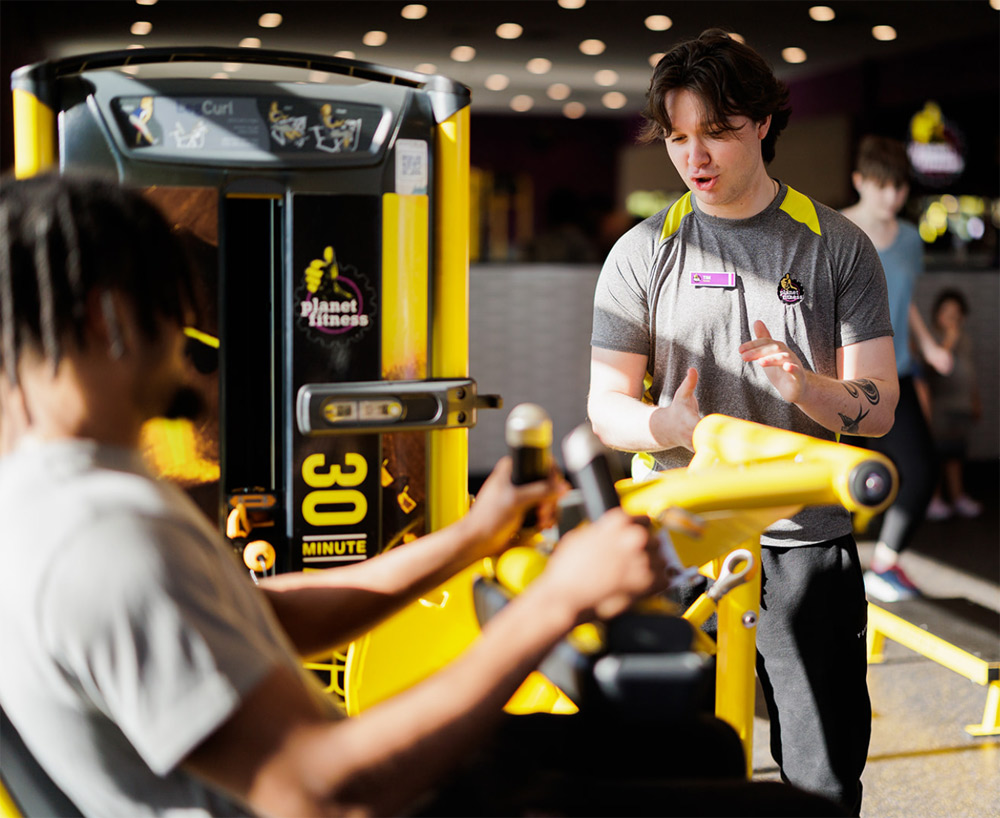
Ohana’s model recognizes that trainers are often the only trainer in their club. It gives them responsibility, but it also creates isolation. To close that gap, OGP trainers stay connected through monthly virtual meetings within their state or territory.
Those meetings give trainers a place to share best practices, discuss challenges, and stay current on fitness trends.
A solo trainer still needs a coaching team. Smaller operators should copy the logic without copying the exact scale. Run one monthly trainer call, one shared programming review, one short coaching audit, and one example from a stronger coach.
The point is to stop the trainer from solving every floor problem alone.
Planet Fitness positions PE@PF as free fitness training where certified trainers show members around the gym, teach cardio and strength machines, lead small group training, and help design exercise programs. That role touches new-member confidence every day.
The Promotion Map Technique
Smoot’s view of growth is direct. He wants trainers to become well-rounded professionals who understand leadership, communication, operations, and accountability.
“If you’re at OGP and you’re still in the same role five years later, it’s usually because you made that choice. The opportunities to grow are there, but you have to lean into them. Growth is something we genuinely care about here. It’s part of who we are, and honestly, it’s right there in our name.”
— Jeremy Smoot, Director of Fitness Training, Ohana Growth Partners
A trainer’s next step may be assistant manager, general manager, fitness support lead, regional fitness support, training director, or another operations role.
That growth path demands more than exercise knowledge. It requires schedule discipline, member communication, accountability, team judgment, and the ability to solve problems.
The trainer who coaches members and understands the business becomes more valuable than a trainer who only delivers sessions.
Related: Fit Pro Programming: Building Instructor-Focused Education with Multi-Modal Certifications
The Tradeoff: A Trainer Pipeline Needs Management Time
A trainer pipeline takes management time. Operators have to invest in onboarding, meetings, feedback, continuing education, and real trainer development. It is easier to hire a trainer, hand them the schedule, and hope they figure it out.
That ease is where the problems start. Ohana keeps growth moving through discounted continuing education and reimbursement options. Trainers get a way to build skill early, before bad habits settle in.
Development is part of the job. It is not something a trainer should chase alone after hours, with no clear signal from the company.
The payoff is a stronger bench, but consistency has to hold. Someone has to own the pathway. They have to check progress, set the meeting rhythm, protect the standard, and show the next step before that trainer starts looking somewhere else.
What Smaller Operators Can Steal From This
Start with a simple 30-60-90 day trainer pathway:
- First 30 days: focus on floor standards, member greeting, equipment orientation, class observation, and basic handoffs.
- Days 31 to 60: let the trainer lead small group sessions, review member feedback, and shadow senior staff.
- Days 61 to 90: give the trainer ownership of a recurring program block, one development meeting, and a promotion-readiness review.
The operating principle is straightforward: do not wait until a trainer asks about growth. Show them the map before they start looking elsewhere.
FITHIRE — BROWSE FITNESS LEADERSHIP ROLES
Coaches who can lead members, support systems, and grow into management roles are valuable in fitness operations. Browse roles if you want to work where coaching skill and leadership potential carry real weight.
Build the Trainer Role So It Leads Somewhere
A trainer role with no path can turn into a churn risk fast. Give that same role structure, coaching support, and room to move, and it becomes a staffing advantage.
From Ohana’s model, the best trainer pipeline does not start at the promotion. It starts when the first floor shift is treated like the first step in a real career. The trainer knows what good work looks like, who they can learn from, and which skills will move them forward.
Build the path early. Make the floor role worth staying for.
Frequently Asked Questions
What is the Planet Fitness PT program?
Planet Fitness PE@PF is free fitness training for members. Certified trainers show people how to use cardio and strength machines, run small group sessions, and help build basic exercise plans. For trainers, it creates a floor-based role tied directly to member confidence.
Why does Ohana’s trainer pathway matter for operators?
It shows how the trainer role can become a leadership pipeline. The role starts on the floor, but it does not have to stay there. With the right development, those same skills move into management, operations, and regional support.
How can smaller clubs copy this model?
Start small. A 90-day trainer pathway, monthly development check-ins, and a clear promotion map does a lot. The system does not need to be complex. It just needs to show trainers what good work looks like, how they are progressing, and where that work leads.
What skills help a trainer move beyond the floor?
Trainers tend to move faster when they build communication, accountability, member support, and operational judgment. Exercise knowledge still matters, but leadership roles usually ask for more. Trainers have to solve problems, support the team, and understand how the member experience affects club performance.
Robert James Rivera is a Coach360 contributing editor covering the business of coaching, trainer development, and the operational systems behind high-retention fitness businesses.
About Robert James Rivera
Robert is a full-time freelance writer and editor specializing in the health niche and its ever-expanding sub-niches. As a food and nutrition scientist, he knows where to find the resources necessary to verify health claims.
Functional Fitness Coaching Career Path: What Fitstop Texas Hiring Shows New Coaches
I knew within the first warmup whether the room trusted the coach. Thirty-plus people were moving at once. Nobody was waiting for a private training plan. They were waiting for direction, timing, regressions, and energy. That is the real test inside a functional fitness coaching career. The coach has to hold the room before the workout earns its result.
Fitstop Memorial in Houston sits right inside that test. It is a growing studio in a growing market, backed by a brand that describes its model as functional, community-driven team training across more than 150 locations in Australia, New Zealand, Singapore, and the United States.
If you want a functional fitness coaching career, this job lets you manage pace, attention, safety, and trust in real time.
Why Fitstop Texas Hiring Creates an Early Career Window
The opportunity is tied to timing. Victor Guo, owner of Fitstop Houston Memorial, described a clear path for coaches who join now and prove they perform. The progression starts at Lead Trainer, moves to Studio GM as a second location opens, then Area Manager as the group scales to 5 to 7 locations across Houston. For the right person, franchise ownership enters the conversation later.
Fitstop Memorial is hiring before the Houston market is fully built out. Early coaches step in before every leadership layer already has a name on the door.
What Fitstop Screens For Before Skill
Victor screens coaches for three things: coaching energy, coachability, and community instincts.
That should get every new coach’s attention. A certification proves baseline knowledge. It does not prove you can hold a room, keep 35 people moving, adjust tone, cue safely, and make quiet members feel noticed.
Victor’s sharpest hiring point is that skill is not the 90-day problem. Culture fit is. Some coaches are strong in a one-on-one setting, but they cannot command a full room and make every member feel seen at the same time.
“They’re great in a one on one setting but they can’t command a room of 35 people and make every single person feel seen at the same time. That’s a rare skill and it’s the one I screen hardest for.”
— Victor Guo, Owner, Fitstop Houston Memorial
The first career lesson is simple. Do not sell yourself as a workout coach. Show that you can lead a room.
Method 1: Coach the System Before You Add Personality
Fitstop’s session structure includes Lift, Perform, Condition, and Sweat.
- Lift focuses on strength and progressive overload.
- Perform blends lifting with higher-intensity work.
- Condition leans into cardio and full-body endurance.
- Sweat is the higher-energy community session, held on Saturdays, with elements from the other formats.
Victor said Fitstop’s programming is pre-written by the corporate team. Development is focused on floor presence, cueing, energy management, and member connection, not exercise science theory.
Fitstop also uses reps in reserve to help guide lifting intensity. That gives coaches a way to talk about effort without vague hype. Reps in reserve means how many good reps a member could still perform before failure.
“Coach the system first. Add your personality after the room trusts you.”
— Coaching cue, Method 1
Method 2: Build Room Control in Four Weeks
Victor said Fitstop Memorial works with HQ in Santa Monica on structured onboarding. In his experience, a coach with the right energy and attitude leads independently within 3 to 4 weeks.
That first month should feel deliberate.
- Week 1 is for session flow, movement standards, equipment setup, and member names.
- Week 2 is for shadowing, helping, cueing warmups, and learning timing.
- Week 3 is for leading blocks, managing transitions, and receiving direct feedback.
- Week 4 is for leading independently with review.
That ramp works because the workout is already built. The coach’s job is to make the plan work in the room.
A useful cue sounds like this:
“Stay with this pace. Clean reps first, speed second.”
— Coaching cue, Method 2
That sentence protects the member, the session, and the coach.
Method 3: Treat Retention Like a Coaching Skill
Victor said coaches are not only hourly employees. They also have performance bonuses tied to class attendance and member retention. PT trainers run their own personal training business from the studio from 1 to 4 p.m. daily. They pay a facility fee and keep everything else.
That changes the career math for a new coach.
A member who returns, brings a friend, books PT, or stays consistent becomes proof that the coach creates value beyond the workout. The proof shows the owner that the coach builds trust, supports revenue, and helps the studio grow.
For a new coach, retention is a key career skill. A coach who keeps members engaged gives an owner a clearer promotion case.
The Tradeoff: Group Coaching Exposes Weak Habits Fast
Group coaching puts weak habits on display fast. A coach cannot hide behind long explanations, random hype, or the strongest members in the room. They have to cue clearly, control pacing, protect beginners, and keep the session on time.
Miss names and timing, ignore beginners, or overcoach every station, and members feel it quickly.
“If you want the career path, you have to earn trust in public.”
— Career cue, Functional Fitness Coaching
Why the Head Coach Role Blends Coaching and Business
Take the role of Head Fitness Coach and Community Manager in Houston as an example. It describes a full-time, on-site role tied to daily operations, memberships, sales support, instructor coordination, local community growth, and member connection.
For new coaches, the next step up is learning how a studio runs.
The operator skills are practical: membership support, retention, sales support, staffing, local events, and community growth. A coach who leads a room and understands those levers looks less like a class instructor and more like a future studio leader.
The functional fitness coaching career becomes a business path.
What New Coaches Should Prove Before Applying
Before applying for a role like this, show that you are capable of coaching a group.
- Record yourself cueing one movement in under 15 seconds.
- Learn basic strength and conditioning terms.
- Prepare examples of how you helped a member feel connected, not only how you corrected a squat.
Give a sense of coachability in the interview. Ask about the 30-day onboarding path, how performance bonuses work, and what a Lead Trainer has to prove before moving up.
Related: Fitness Talent Retention: What Crunch, MADabolic, and Life Time Do Differently
FITHIRE — BROWSE FITNESS LEADERSHIP ROLES
Coaches who lead a room, retain members, and grow into studio operations are becoming more valuable in functional fitness. Browse leadership and coaching roles if you want a coaching job with a real path beyond the weekly class schedule.
Build the Career Before the Title Arrives
Fitstop Memorial’s hiring story shows the real trade. A new coach gets a system, a room, a growth market, and a leadership path. In return, they have to prove they can lead people, retain members, and help the studio grow.
The title comes later. The proof starts on the floor.
Frequently Asked Questions
What career path can a Fitstop coach have in Houston?
Victor Guo describes the path as Lead Trainer, Studio GM, then Area Manager as the group opens more Houston locations. For the right person, franchise ownership becomes part of the conversation later. Coaches who join early get the leadership window before every layer is filled.
What does Fitstop Memorial look for in new coaches?
Fitstop Memorial screens for coaching energy, coachability, and community instincts. Certification matters, but Victor said the harder skill is leading a room of 35 people while making each member feel seen. That is the rare skill he screens hardest for.
Is Fitstop programming written by the coach?
Victor says Fitstop programming is pre-written by the corporate team. That means the coach’s main development focus is floor presence, cueing, energy management, and member connection, not exercise science theory. Coaches who want to write their own programs may find this constraint frustrating. Coaches who want to develop room control quickly will find it accelerating.
How long does it take to lead a Fitstop class independently?
Victor said a coach with the right energy and attitude typically leads independently within 3 to 4 weeks of joining. Week 1 covers session flow and member names, week 2 is shadowing and cueing warmups, week 3 is leading blocks under feedback, and week 4 is leading independently with review. The structured onboarding works because the workout is already built. The coach’s job is to make the plan work in the room.
About Robert James Rivera
Robert is a full-time freelance writer and editor specializing in the health niche and its ever-expanding sub-niches. As a food and nutrition scientist, he knows where to find the resources necessary to verify health claims.
Strong Start Powered by Opus: The Gym Onboarding System That Stops First-30-Day Drop-Off
I watched a new member sign up, take the tour, come in once, miss the next planned visit, then slip out of sight. No one followed up because she was ‘still new.’ The cancellation risk had not reached the report, and the team assumed she would come back when she was ready.
That is exactly where a gym onboarding system earns its keep.
If you run a club or studio, the first warning sign is not the cancellation form. It is the second missed touchpoint. The member has not quit yet, but the habit has not formed. If your team waits until cancellation, the recovery window is already smaller.
Why the First 30 Days Decide the Habit
New members are still deciding if the club fits their life. They are testing the commute, the class schedule, the staff, the equipment, the atmosphere, and their own confidence. Early onboarding has to reduce friction, build comfort, and create a simple rhythm before motivation fades.
ABC Fitness says ‘visits per member’ in the first 30 days is the single metric operators should watch most closely because early activation shapes what happens downstream. Structured onboarding, app engagement, and staff interaction protocols also belong in the retention strategy.
ABC Fitness also cites a benchmark that members who reach five visits in the first month have a 90%+ retention rate. Treat that as a useful operator marker, not a universal law.
The 30-Day Journey Map
A new member should never reach day 30 as a stranger.
The map stays simple:
- Day 0: welcome, goal note, first visit plan.
- Days 1 to 3: first visit confirmation.
- Day 7: staff check-in.
- Day 14: visit-frequency review.
- Day 21: confidence or friction check.
- Day 30: milestone review and next-month plan.
This gives the owner a way to see which members are moving through the first month and which ones are starting to drift. Glofox’s first-30-days onboarding guide frames this window around confidence, friction reduction, and habit formation. The first month is meant to help the member feel capable enough to return.
The Role-Based Touchpoint Standard
The front desk greets the new member by name, confirms the first visit, and explains the next step. The coach gives one correction, one win, and one next-session cue. The manager reviews the new-member risk list each week.
“Early churn usually gets blamed on member motivation, but motivation is rarely the cause. What’s actually happening is that no one on staff owns the full first 30 days. Your coaches know their part, your front desk knows theirs, but the handoffs between them are invisible, and new members feel it.”
— Maddie Nehlen, Sr. Content Marketing Manager, Opus
“Don’t wait for the member to ask for help. Give them the next step before they feel lost.”
That cue works because new members do not know what to ask. They feel embarrassed, unsure, or out of place. Staff behavior has to close that gap before silence turns into absence.
A coach once asked me what standard first-timer onboarding should look like. She asked after noticing some new members were not getting enough attention from coaches. New members notice inconsistency during the first experience fast.
The Engagement Signal Review
Attendance tells you who walked in. Engagement tells you who is starting to connect.
Track the:
- First visit booked
- First visit completed
- Second visit booked
- Coach interaction
- App login
- Class booking
- Missed session
- Reply to check-in
- Goal note completed
A member shows up, avoids staff, skips the next booking, ignores the app, and never responds to a check-in. Attendance alone will not show the full risk.
First-30-day onboarding cadences guide members through app setup, class booking, and related connection points. Operators should also track visit frequency in the first 90 days because it supports habit formation and gives operators the information they need to tailor communication.
How Opus Turns the Plan Into Staff Execution
A gym onboarding system only works if staff execute it every day. Opus turns the first-30-day plan into a sequence every role can see and act on.
Coaches know which members are due for a check-in and what the front desk has already covered. Front desk staff can see who attended a class and who has gone quiet. Managers see the full arc, so they can spot drop-off before it reaches the cancellation report.
“Opus is the training operations platform built for your frontline. Everything your teams need (training, tasks, answers, and communication) in one mobile platform they’ll actually use. It’s built to help you scale without sacrificing consistency.”
— Maddie Nehlen, Sr. Content Marketing Manager, Opus
That matters in clubs, where staff do not sit at desks all day.
The Tradeoff: Consistency Can Feel Rigid at First
A standardized first-30-day journey feels scripted if staff do not understand the purpose. The fix is not to remove structure. The fix is to train the reason behind the behavior.
Every new member should receive the same level of care. Staff still deliver it in their own voice. A front desk lead, coach, and manager need the same standard for what happens when a new member joins, misses a visit, or looks unsure.
It takes time to train and review. It also asks managers to coach staff behavior before the member experience breaks.
What Owners Should Review Every Monday
Owners should review new joins from last week, first visits completed, members with zero visits after sign-up, members with one visit and no second booking, members under five visits by day 21, staff touchpoints completed, and members needing manager follow-up.
You are not asking, ‘Who canceled?’
The better question is, ‘Who is losing the habit before they build it?’
Onboarding spans the first 30 days. Smaller touchpoints beyond that window keep support going. That gives operators the right balance: focus hard on the first month, then maintain lighter signals after the habit starts to form.
Related: Empowering Coaches: How to Expand the In-Club Experience
FITHIRE — BROWSE REVENUE & OPERATIONS ROLES
Operators who turn retention data into daily staff execution are becoming more valuable across fitness brands. Browse revenue and operations roles if you want to work where member onboarding, retention, and team systems carry real weight.
Stop Early Drop-Off Before It Looks Like Churn
A gym onboarding system makes the first 30 days visible. Map the journey. Train each role. Track engagement and review risk signals every week. Most early drop-off does not start with a cancellation request. It starts when the member misses a touchpoint, loses confidence, and no one notices fast enough.
Frequently Asked Questions
What is a gym onboarding system?
A gym onboarding system is the planned first-month experience for a new member. It includes welcome steps, first visits, staff touchpoints, goal notes, engagement tracking, and follow-up tasks. The strongest systems treat the first 30 days as a coaching window, not an administrative one.
Why do the first 30 days matter for fitness member retention?
The first 30 days are when a member decides if the club fits their life. Strong onboarding helps build confidence, reduce friction, and turn early visits into a repeat habit. Members who reach five visits in the first month have a 90%+ retention rate per ABC Fitness benchmarks. Members who do not reach that threshold are the ones operators lose first.
How can clubs track engagement beyond attendance?
Track first visit completion, second visit booking, coach interactions, class bookings, missed sessions, app logins, check-in replies, and goal notes. These signals show if a new member is starting to connect with the club. Attendance alone misses the member who walks in, avoids staff, skips the next booking, and ignores every check-in.
How can Opus support first-30-day member onboarding?
Opus helps clubs train each role on the same onboarding behaviors, assign daily new-member tasks, and give managers visibility into whether those touchpoints are happening across the team. The platform is built for frontline staff who do not sit at desks all day, which is the operational reality in most clubs and studios.
About Robert James Rivera
Robert is a full-time freelance writer and editor specializing in the health niche and its ever-expanding sub-niches. As a food and nutrition scientist, he knows where to find the resources necessary to verify health claims.
The $200K Ceiling: Why Coaching Businesses Stall at the Same Number — and the Operational Shift That Breaks Through It
I saw the ceiling before the revenue report did. The coach had 30-plus clients, a packed calendar, decent revenue, and no slack. Payments came through different channels. Follow-ups lived in text threads. New client onboarding changed depending on how tired the owner was that week. The business looked healthy from the outside, but the coaching business infrastructure was still sitting inside one person’s head.
If you own a coaching business, this is the part that gets uncomfortable. You can be busy and close to $200,000 in annual revenue. At the same time, you can be running a business that depends too much on you.
The business is not broken. The next stage just needs systems, not more hours.
The $200K Problem Is Infrastructure
The $150,000 to $200,000 range exposes weak systems because founder effort stops covering every gap. The owner still sells, coaches, follows up, fixes billing issues, answers DMs, adjusts programs, and keeps clients happy. They just cannot do all of it with the same consistency once volume rises.
Six-figure coach systems matter at this stage. A personal trainer reported $191,000 in annual revenue. They also said they trained clients for about 55 to 60 hours per week. Strong revenue, but it shows the risk: the business can earn well while still being tied tightly to the owner’s working hours.
It is not always a marketing ceiling, either. Leads exist. Clients like the coach. The offer works. The leak is operational, and the business has no second layer.
Method 1: Lead Intake Leak Audit
Start with the front door.
- Where do leads come from?
- Who responds first?
- How fast is the first reply?
- What qualifies a good-fit client?
- Where is the lead recorded?
- What happens after a lead ghosts?
- What follow-up runs without the owner?
These questions get missed all the time.
A business cannot scale if every lead depends on founder memory. My PT Hub’s 2026 guide to business systems for personal trainers names lead capture forms, automated response sequences, consultation scheduling workflows, and lead nurturing as core parts of lead management. Inquiries get lost when the system lives in scattered messages.
The operator cue is this:
“Log it before you solve it.”
— Operator Cue: Lead Intake
Do not fix every lead manually and then forget what happened. Record the source, status, next step, and outcome. After 30 days, the pattern will show you where demand leaks.
Method 2: Sales Conversion Dependency Check
The second audit looks at sales.
- Is the offer clear?
- Is pricing documented?
- Is the sales call structured?
- Are objections tracked?
- Are failed closes reviewed?
- Are payment links sent immediately?
- Is recurring billing automatic?
A coaching business stalls because sales depends too much on founder personality. The owner knows how to explain the offer, calm doubts, and close the right client. Nobody else can repeat it because the process was never written down.
Manual payment habits make the leak worse. Venmo, Zelle, and similar workflows work early, but they are weak for recurring billing, invoice history, failed payment tracking, and renewals. Scattered coaching tech creates missed revenue, including forgotten renewals and failed payments that slip through the cracks.
The end goal is a repeatable path from offer to payment to onboarding. A client should not wait for the owner to remember the invoice, rewrite the payment message, or chase the same card issue three times.
Method 3: First-30-Day Delivery and Retention Standard
The third audit looks at the first 30 days and what happens after the first month.
- What happens on day one or after week one?
- How are goals recorded?
- How are adherence issues flagged?
- What does the coach review before renewal?
- Which clients are at risk?
- Who owns follow-up?
- Which failed payments need action?
- What report gets reviewed weekly?
ACE’s trainer guidance says the initial sessions with a new client set up long-term success in the client-trainer relationship. Onboarding has to go deeper than a standard fitness assessment. The coach has to understand the client as a person, not only as a set of numbers.
When it comes to retention, clients can follow different programs, but they need the same level of clarity. They should know what they are doing, why it matters, what progress looks like, and what happens next.
Use this cue with your staff:
“Do not sell the next block until the first 30 days prove the system works.”
— Operator Cue: Retention
What to Watch Out For
Early warning signs include drops in weekly attendance, longer gaps between bookings, missed renewals or failed payments, and reduced engagement with emails or app notifications. Those signs look small alone. Together, they show a client starting to drift.
Automation catches what memory misses. Renewal prompts should not depend on the owner checking three apps at 10 p.m. Failed payment alerts, missed-session flags, basic reports, and follow-up reminders need a cleaner system.
Keep the coaching conversation human. Automate the reminder, the flag, and the report.
The Cost of Becoming System-Led
Here is a tradeoff worth naming. Systems reduce freedom before they create it. Documentation feels slower because staff need training. The founder also has to stop solving every problem personally. The first version will be imperfect, and the business will feel more rigid for a few weeks.
If every client gets a different onboarding flow, billing path, check-in cadence, and renewal conversation, the business cannot tell which part works. Every new client should add margin, not just load. This happens when the operator turns repeated tasks into standards, then reviews those standards on schedule.
What the Breakthrough Looks Like
The breakthrough is when the club moves from founder-led to system-led.
- Leads are tracked.
- Payments are automated.
- The first 30 days are standardized.
- Retention risks are flagged.
- Delivery gets reviewed.
- Staff roles are clear.
A weekly operator scorecard shows what happened before the owner has to guess.
Business systems build a more sustainable coaching practice through better admin, client progress tracking, and growth workflows. The same systems support retention, cash flow, and more consistent operations on the studio side.
None of this guarantees a revenue jump. What it does is improve consistency, protect margin, and make growth less dependent on the founder’s calendar.
Related: How to Retain Fitness Clients: Proven Strategies from ACE Pros
FITHIRE — EXPLORE MULTI-SITE & REGIONAL COACHING ROLES
Coaches and operators who can build systems, lead teams, and spot revenue leaks are becoming more valuable as fitness brands scale. Explore multi-site and regional coaching roles if you want a role where operations skill carries real weight.
Run the Business Outside Your Head
A coaching business near $200,000 needs a cleaner operating layer, not another motivational plan. Audit the leads. Tighten sales. Standardize the first 30 days. Automate the reminders and reports so they no longer depend on memory. This is how a coaching business stops asking the founder to hold every detail at once. The calendar can stay full. The company carries more of the weight.
Frequently Asked Questions
What is coaching business infrastructure?
Coaching business infrastructure is the operating layer behind the coaching. It includes lead intake, sales, onboarding, billing, delivery, retention, staff roles, automation, and reporting. When the layer is strong, the business can grow without the owner working more hours.
Why do coaching businesses stall around six figures?
They stall when founder capacity becomes the bottleneck. The owner can sell, coach, and retain clients, but cannot do all three consistently without stronger systems. Revenue plateaus around $150,000 to $200,000 because every new client adds load to the owner instead of margin to the business.
What should be included in a fitness business operations audit?
A fitness business operations audit should review lead intake, sales conversion, client onboarding, delivery standards, retention, billing, automation, staff handoffs, and weekly reporting. The goal is to find revenue leaks before they become normal. Each section should have a named owner, a documented process, and a metric the operator reviews on schedule.
What is the first system a coaching business should build?
Lead intake. It is the cheapest leak to find and the easiest one to fix. Most coaching businesses lose 20 to 40 percent of inbound interest because no one tracks where leads come from, who responded first, and what happened next. Build a single intake log before automating anything else. The 30 days of data it produces will tell you which other system to fix next.
About Robert James Rivera
Robert is a full-time freelance writer and editor specializing in the health niche and its ever-expanding sub-niches. As a food and nutrition scientist, he knows where to find the resources necessary to verify health claims.
Clinical Data Fitness Coaching: Turning Reassessments Into Revenue
Clinical data fitness coaching clicked for me when I watched a client stop arguing with the plan the moment the data made the problem visible. For weeks, she thought the issue was effort. Her scan showed lean mass had dropped. Her waist had barely moved, and her strength numbers had stalled.
The numbers worked because they told us what to change next, not because they sat in a report nobody used.
If you coach real clients, you already know the obvious version. Intake form, body comp scan, progress photos. Maybe a wearable dashboard. The gap is what happens after that first readout. Data only becomes revenue when it changes the next block, triggers a scheduled reassessment, and gives the client a clear reason to keep going.
Data Isn’t the Product
A body composition scan, movement screen, wearable trend, blood pressure reading, or recovery score has value only when it changes the plan. This is where clinical data fitness coaching becomes useful: the coach turns the number into the next programming decision.
Research on personal health data in coaching points in the same direction. Personal health data gives coaches more objective insight into client behavior, but its value depends on how well it shapes the next coaching decision.
The client trusts you to show what the report means, what has to change, and when you’ll check it again. Use this coaching cue in the review to move the client from vague hope to a clear next step:
“We’re not guessing for six more weeks. This number tells us what the next block has to solve.”
The 6-Week Data-to-Revenue Loop
Use a simple framework. Call it the 6-week reassessment cycle. A useful reassessment framework for fitness coaches connects every metric to a decision, not a dashboard.
The loop has five parts:
- Baseline the metric.
- Name the trigger.
- Change the training block.
- Reassess in 6 weeks.
- Sell the next service layer from the result.
That gives you a clean 6-week reassessment cycle without adding busywork. Six weeks gives the training block enough time to show movement in strength, body composition, nutrition follow-through, or recovery trends. It also keeps the client close to the next decision instead of drifting through another vague month of workouts.
Example:
A client starts with baseline data:
- Body composition
- Waist
- Strength markers
- Resting heart rate
- Blood pressure screen
- A short recovery log
You build the next 6 weeks around the metric that matters most. Then you reassess and show the client what changed.
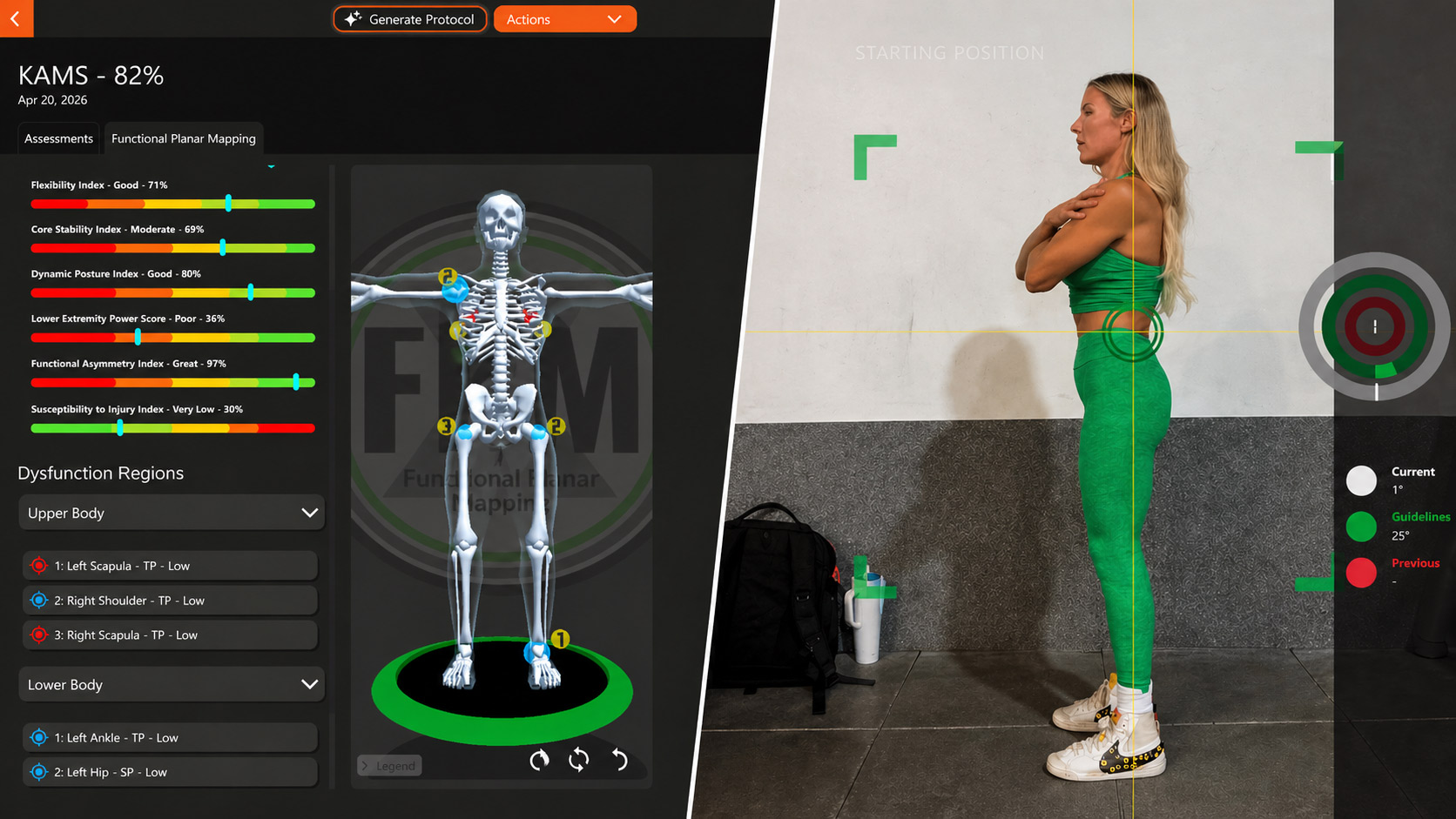
ACSM’s fitness assessment manual organizes testing across body composition, cardiorespiratory fitness, muscular fitness, and flexibility. That gives coaches a clear assessment lane, as long as the data gets tied to training decisions and referral boundaries.
Pick Three Metrics That Actually Change Programming
Don’t track everything. Track the metrics that change what you prescribe.
A strong starting set for coach-driven health data is:
- Body composition
- Strength performance
- Resting heart rate or recovery trend
Body composition tells you whether weight change is moving in the right direction. InBody’s educational material frames body composition as more specific than scale weight. It breaks weight into components like fat mass, lean mass, water, protein, and minerals. It can also show change over time in fat mass, lean muscle mass, and body fat percentage.
Strength performance tells you whether the training signal is holding. If scale weight drops and load drops every week too, you have a problem. If fat mass drops while strength stays steady, the plan has more room.
Resting heart rate or recovery trend gives you a simple fatigue flag. It isn’t a diagnosis. It is a programming signal.
Turn Triggers Into Coaching Decisions
This is where premium coaching services become easier to sell. The client sees the rule before the result.
Use hard triggers. The coach who can say, “This is the trigger, this is the adjustment, and this is when we retest,” has a stronger offer than the coach selling another month of workouts.
| Trigger | Coaching Decision |
|---|---|
| Body fat does not move after 6 weeks and adherence is above 80% | Change the nutrition process or raise activity targets |
| Lean mass drops more than 1% across the reassessment window | Reduce conditioning volume and increase protein priority |
| Resting heart rate is up for 7 days and session quality is down | Pull back intensity for 3 to 5 days and check sleep, stress, and intake |
| Grip strength drops across 2 straight checks | Reduce fatigue load before adding more work |
| Waist measurement is unchanged after 6 weeks while weight drops | Inspect hydration, food quality, and muscle loss risk before celebrating the scale |
| Strength on key lifts drops for 2 straight sessions | Hold load and reduce accessory volume |
| Blood pressure reads outside a safe exercise range | Stop intensity progression and refer the client to a licensed medical provider |
A Simple 6-Week Strength Marker Protocol
Use one repeatable lift as the performance marker. For example, track a trap-bar deadlift, goblet squat, or bench press for 3 working sets of 5 to 8 reps once per week.
Keep the test conditions consistent: same exercise, rep range, rest window, and point in the training week. Give the client 48 to 72 hours before repeating the pattern hard again, then progress load only when reps, form, and session quality hold.
At week 6, compare the lift, body composition, waist measurement, and recovery notes. If strength drops for 2 straight sessions, hold load and reduce accessory volume before adding more work.
Price the Reassessment, Not the Report
The report is a moment. The reassessment cycle is the service.
A clean 6-week offer can include:
- Initial assessment
- Training block
- Weekly check-in
- Mid-block adjustment
- 6-week reassessment
- Plan review
- Next-block recommendation
You’re not charging for a machine reading, but for interpretation inside your scope, programming changes, follow-up, and review. The data review belongs inside the paid cycle. It’s not meant to serve as a free explanation before the client decides whether to continue.
MedVanta fits this model because it connects clinical insight with the coaching decision that follows. For operators, that turns assessment data into a clearer service path, not a one-off report.
“Rather than completing generic assessments, that turn out variable and subjective results, Pronesis delivers clear and objective data showing the client’s dysfunction in their movement patterns, which can lead to decreased performance and possible musculoskeletal injury. This data shifts the conversation from ‘Do I need this?’ to ‘How do we fix this?'”
— Chuck Bollacker, MHA, PTA, Director of Business Development and Implementation, Pronesis, a MedVanta Company
Referral Line: Use Data, Don’t Diagnose
Coaches don’t diagnose, prescribe medical treatment, interpret disease markers as medical findings, or tell clients to ignore clinician advice. Use clinical data to guide coaching decisions and refer when the data points outside training scope. This protects the client and the coach.
A high blood pressure screen belongs to a licensed medical provider. So do chest pain, unusual shortness of breath, fainting, unexplained symptoms, or lab results that look abnormal. You can adjust training around the information you are qualified to use, but medical interpretation stays with the ordering clinician.
Tradeoff: Better Data Requires Better Follow-Through
You have to document better, run reviews on schedule, and explain data in plain language without drifting outside scope. You also have to train clients to care about more than the scale.
A 6-week reassessment cycle forces cleaner work. If the client knows you will retest in 6 weeks, the plan cannot stay vague. The training block needs a target, check-ins need a purpose, and the review needs a decision.
Run the Review So the Client Buys the Next Block
The review has one job: show the client what changed and what happens next.
Use this format. Here is what…
- …we measured
- …changed
- …didn’t move
- …we change next
- …why the next 6 weeks are critical
A client who sees progress has a reason to continue. Likewise, a client who sees the wrong metric move also has a reason to continue, if you can explain the correction. The data doesn’t close the sale by itself; the review does.
Body composition tools already show how training, nutrition, and lifestyle changes can become visible over time. InBody’s body composition analysis material describes tracking response to nutrition, physical activity, and lifestyle interventions as a way to turn data into actionable insight.
FitHire — Find Performance & Strength Coach Roles
Coaches who can turn assessment data into clear training decisions are becoming more valuable in performance-driven settings. Browse roles at FitHire by Coach360 if you want to work where reassessment, strength planning, and coach-led systems carry real weight. www.fithirebycoach360.com.
Frequently Asked Questions
What is clinical data fitness coaching?
Clinical data fitness coaching uses assessment data, such as body composition, performance markers, recovery trends, and referral-aware health screens, to guide training decisions. The coach uses the data to adjust programming and refer out when the issue sits outside training scope.
How often should a coach reassess clients?
Use a 6-week reassessment cycle for most coaching blocks. Six weeks gives enough time for a training change to show up, while keeping the client close to the next decision.
What data should a personal trainer track first?
Start with body composition, strength performance, and a simple recovery marker such as resting heart rate or session-quality trend. Add more data only when it changes a coaching decision.
About Robert James Rivera
Robert is a full-time freelance writer and editor specializing in the health niche and its ever-expanding sub-niches. As a food and nutrition scientist, he knows where to find the resources necessary to verify health claims.
Fitness Studio Member Communication System: Fixing Front Desk Bottlenecks and Client Experience
I stood at a front desk and watched the same minute break three ways inside a fitness studio member communication system that could not keep up. A billing call rang. A walk-in needed help. A member waved from the check-in line because her waiver hadn’t cleared.
That’s what a broken system looks like in real operations. Not lazy staff. Misplaced work. By the third interruption, you could see the real issue: too much repeat work sitting on top of the desk. If you run a studio, this is your bottleneck.
By midweek, the pattern was obvious to you. The issue wasn’t staffing or effort. The front desk had become the default home for every repeat task. The breaking point came when the line stalled again and both staff were tied up on billing calls.
That’s when the decision changed: communication had to move off the desk and into systems built to handle it.
Technique 1: Remove Repeat Communication from the Front Desk
By the second call, the person at the desk had already lost the member in front of them. She picked up, answered a billing question she’d answered ten times that morning, then turned back to the check-in screen. The line hadn’t moved.
Repetition is where most studios leak time, not in the major decisions. Replify‘s core move is simple: repeat communication gets pulled off the desk.
“After secret shopping 100+ gyms last year, 67% failed to capture our contact info when we called and only 12% followed up. At a minimum, operators need better training on telephone inquiries, or they can shortcut it and automate phone lead capture and follow-up with AI software.
When Gold’s Gym DC Metro went that route their sales cycle dropped from 30 days to 3 to 5 days, and phone leads went from a couple hundred a month to over a thousand. It’s a real need in the industry and it’s why we’re here.”
— Tony Small, Founder and CEO, Replify
You don’t need a full audit to start. Just watch one hour of your front desk and write down what repeats.
Then apply this sequence:
- Identify the top three repeat tasks
- Failed payment follow-up
- Missed call response
- Basic member questions
- Move the lowest-judgment task first
- SMS billing reminders
- Missed-call auto replies
- FAQ automation
- Centralize responses across locations
In one case, 3,010 billing follow-ups were automated, saving 65.16 staff hours per month. This shows up immediately on the floor. This leads to fewer interruptions, shorter lines, more eye contact.
Use this with your team:
“Stay with the member in front of you. Let the system handle the repeat work.”
Technique 2: Separate Communication from Check-In Flow
The stall happens at the same moment. A member reaches the front. Something is missing — a waiver, a booking, a payment. The staff member stops the line to fix it. Now three people are waiting.
Communication and check-in are anything but just one system. The first one happens before arrival, and the latter is where pressure shows up.
Walla is built for that pressure point:
- Self check-in (QR or tablet)
- Digital waiver capture
- Class roster visibility
- Direct messaging from the roster
You can see the difference in one interaction.
Before
- Staff stops the line
- Searches for waiver
- Switches systems
- Contacts the member
After
- Member checks in
- Waiver clears automatically
- Roster updates in real time
- Staff keeps the line moving
“At Walla, we use AI to help our clients become more human. An automated anniversary message, for example, is likely not to matter. It will be deleted immediately. But a phone call? That’s going to make a lasting impression.
Automations, if done well and highly personalized to the client actions or lack of action, are very helpful but can’t be the only way you stay in touch to build a retention oriented business.”
— Laura Munkholm, President and Co-Founder, Walla
Walla’s pricing ($220–$599/month) is easy to compare. One operator reported 15 hours per week spent on customer service before switching.
Technique 3: Assign Systems by Job, Not Platform
Most operators inherit this split. One system handles messaging. Another handles booking. A third handles check-in. Staff fill the gaps manually, and this is the part where things break.
The cleaner model is assignment by job:
- Replify → communication layer
- Walla → check-in and class-entry layer
That creates a full gym automation member experience across the visit:
- Before arrival → automated communication
- At the door → frictionless check-in
- During class → clear roster and visibility
This is where boutique fitness studio management becomes easier to control. There is a cost to doing it this way. You have to define roles more tightly, train staff on what stays human and what moves to the system. You also give up the idea that one platform will solve everything.
What will get you back to business? A cleaner flow:
- Fewer handoffs
- Fewer interruptions
- More consistent member experience
Where Each System Pulls Its Weight
The easiest way to understand the split is to map each system to the job it removes from the front desk.
| Operational Job | System Role | What the Staff Gets Back |
|---|---|---|
| Billing follow-up | Automates repeat outreach, payment reminders, and follow-up steps before they become live calls | Fewer interruption-heavy calls |
| Missed call recovery | Captures missed inquiries and starts a response flow without forcing the front desk to catch every call manually | Faster callback coverage without desk overload |
| Basic member questions | Handles repeat questions through a standard response flow | Less time spent answering the same question all day |
| Check-in flow | Gives members a cleaner arrival path through QR, tablet, or other self check-in options | Shorter lines at the desk |
| Waiver capture | Moves waiver completion into the check-in process before it stalls arrival | Less stop-start admin during peak check-in windows |
| Class roster visibility | Keeps attendance, class status, and member visibility easier to track in real time | Cleaner handoff into class |
| Member messaging at arrival | Lets staff send timely updates tied to class status, late arrivals, or missing members | Faster response when a member is late or missing |
| Front-desk pressure relief | Reduces repeat calls, follow-ups, check-in friction, and arrival-day admin | More eye contact, better pace, less scrambling |
What to Implement First
Use this as a simple rollout sequence. Start with the highest-frequency, lowest-judgment work.
In most studios:
- Billing follow-ups
- Missed call recovery
- Check-in + waivers
Then layer systems around that.
What Smaller Operators Can Steal From This
You don’t need seven locations or enterprise-level call volume to use the same logic.
Start by counting the repetitive jobs that eat the most time in a normal week. Look for communication tasks that repeat with almost no judgment required. Watch front-desk moments that stall member flow. Find issues that should have been solved before staff picked up the phone.
Then automate the high-frequency, low-judgment work first.
For many studios, that means billing reminders before anything else. For others, it means self check-in and waiver capture before a larger communication build-out.
Both Replify and Walla make that analysis easier. Their public material is tied to actual workflow jobs, not vague lifestyle language. Replify talks in calls handled, billing follow-ups, and hours saved. Walla talks in self check-in, waiver flow, and roster management.
Use this rule:
Automate the work that repeats. Keep the work that reassures.
FitHire — Browse Club & Studio Operations Roles
Strong studios don’t scale on effort alone. They scale on systems and the people who know how to run them. Browse studio and club operations roles at FitHire by Coach360 to see how operators are hiring for communication systems, automation, and front-desk performance. www.fithirebycoach360.com.
Frequently Asked Questions
How much time can a fitness studio member communication system save?
In one Replify case, automating 3,010 billing calls saved 65.16 staff hours monthly. Coaches feel this as fewer interruptions during peak hours. That time shifts back to tours, retention conversations, and member support.
What does gym automation member experience actually improve?
It reduces missed calls, speeds up check-in, and keeps staff focused on in-person service instead of admin tasks. The member feels the difference as fewer delays and cleaner communication.
What should boutique fitness studio management automate first?
Start with repeat communication and front-desk bottlenecks. These create the fastest operational drag. Billing follow-ups, missed calls, waivers, and check-in flow are the first places to look.
About Robert James Rivera
Robert is a full-time freelance writer and editor specializing in the health niche and its ever-expanding sub-niches. As a food and nutrition scientist, he knows where to find the resources necessary to verify health claims.


Subscribe to our Newsletter
Powering the Business of Health, Fitness, and Wellness Coaching