


I have walked into fitness facilities where the onboarding binder was three years out of date and the manager who built it had left six months ago. The new hire was told to shadow whoever was free that week. Two people hired into the same role in the same month left that first week with completely different pictures of what the job was. The service gap that showed up six weeks later was built on day one. Opus Training is built for operators who recognize that picture and are done accepting it.
The platform landed on Fast Company’s Most Innovative Companies 2026 list. It brings a hospitality- and restaurant-tested onboarding model into fitness — targeting the specific gap between hiring a coach and getting that coach to perform at brand standard, consistently, across every location.
“Training needs to be continuous and embedded in the flow of work, not something you complete once and move on from.”
Why Operator Onboarding Breaks Down
Fitness operators often frame retention as a culture problem or a pay problem. Both matter. The damage starts earlier — in the first days on the floor.
A new trainer joins the team. They wait on login access. They hunt down materials. They shadow whoever happens to be free. What they get on day one depends almost entirely on which manager is around. Two people hired into the same role get two different starts. Operators are then confused when service quality drops or early turnover stays high. The connection rarely gets made. The onboarding happened in week one. The turnover shows up in month six.
Restaurants solved this problem years ago. Shift-based work. Stretched managers. Frontline teams with high turnover. Standards that break when training gets inconsistent. That is the same picture most fitness brands still work around today. People who figure out onboarding on their own figure it out differently. They bring different habits, different language, different standards to every client interaction. The service gap across locations was built in week one.
What Mobile-First Training Changes on Day One
Before Opus, day one is fragmented. A new hire waits on access. They bounce between systems. Training content sits outside the actual flow of the shift. The quality of the start varies by location and the speed to full readiness varies with it.
After Opus, training starts on the phone. Without email setup delays, new hires begin immediately. Lessons are short, role-specific, and tied to real tasks they will perform on the floor. When standards change, updates go live across all locations at once. The brand no longer depends on every manager reteaching the same point in the same way.
At VASA Fitness — more than 70 locations across eight states — that approach drove 93 percent adoption. More than 3,700 employees completed training in the first 90 days. Early results showed more consistent language and behavior on the floor.
Finishing Training vs. Being Floor-Ready
Fitness has had a blind spot for years: the gap between finishing a module and being ready for the floor. A trainer can complete every onboarding lesson and sign the checklist, and still be unready for a client pitch, a sales objection, or a safety issue. Most operators know this gap exists. Few built a system around closing it.
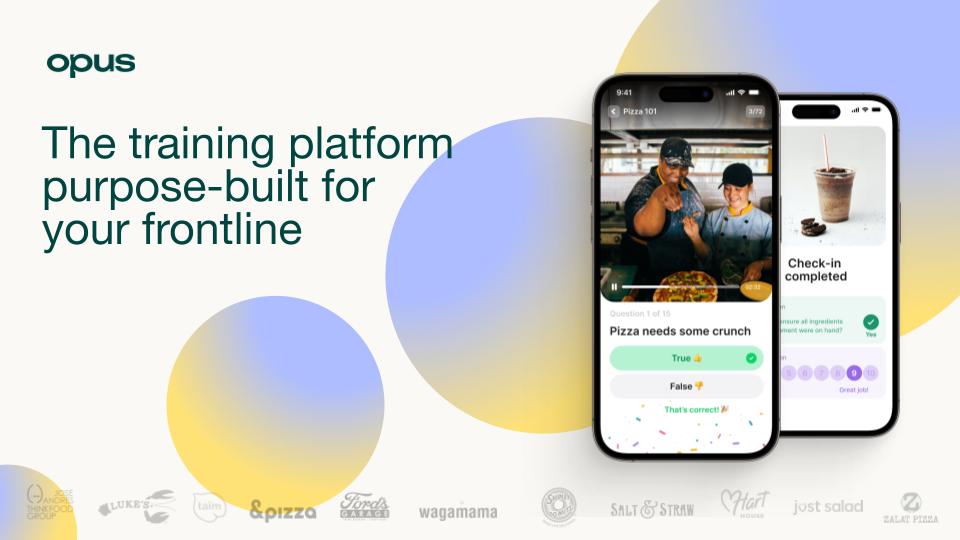
Opus addresses this through Check-ins. Managers assign live tasks, then record whether the employee passed or needs more work. In a fitness setting, that means watching a trainer run a sales pitch, handle a member exit call, or manage a safety issue. Operators can separate completed coursework from demonstrated skill.
Head office no longer guesses who is ready based on module completion alone. Managers can see who has finished the coursework and who has shown they can perform the work at brand standard.
What Fitness Operators Get From Opus Training
For operators, three things matter: how quickly a new coach becomes productive, how much manager time goes into onboarding, and whether the member experience stays consistent across locations. Structured training addresses all three.
VASA’s data suggests training became part of the day-to-day workflow. The clearest cases come from adjacent industries. At Bricktown Brewery, Opus reduced turnover across 20 locations with roughly $42,000 in annual training and staffing savings. Just Salad cut food waste by 10 percent through a 13-minute mobile training on portioning and prep. These are not fitness examples — they show what happens when training becomes a regular part of work rather than a one-time event. For fitness operators running 10 to 50 locations, the case is direct: faster ramp-up, less manager time chasing setup, fewer gaps between what happens at location A and location B.
What Opus Handles vs. When Managers Step In
Ask Opus answers questions using the brand’s own training materials, SOPs, and brand standards — not the open internet. A new trainer can ask how to handle a member exit call, a floor incident, or a sales pitch. The answer comes from the brand’s approved content.
When the material does not cover the situation, or when judgment is required, managers stay in the loop. Opus is direct about this: Ask Opus does not replace human judgment. A tool that knows its limits is more useful than one that pretends certainty. That boundary is the right one for fitness operators who want AI support without AI liability.
How Training Creates Clearer Career Paths
Opus supports role-based learning paths, set sequencing, and manager-verified Check-ins. It does not create promotions. It gives managers a clearer view of who is ready for more — what someone has completed and what they have demonstrated live.
For coaches who describe their first year as a blur, that structure changes something real. When people know what to expect and can find answers fast, they stay longer. Without that clarity, strong coaches start looking at what is offered elsewhere. The retention problem and the onboarding problem have the same source.
FOR OPERATORS BUILDING A TRAINING INFRASTRUCTURE
Operators who build structured onboarding and career development systems hire differently — and retain longer. FitHire by Coach360 connects operators with coaches who are ready to perform at brand standard from day one.
Post your next coaching role at fithirebycoach360.com
Frequently Asked Questions
What is Opus Training and how does it work for fitness operators?
Opus Training is a mobile-first platform that delivers role-specific lessons through short modules during the workday. For fitness operators, it replaces manager-dependent onboarding with a centrally managed system. It tracks both lesson completion and live skill checks through manager-assigned tasks tied to actual floor work.
How does Opus Training differ from standard onboarding platforms?
Most onboarding platforms track whether someone finished a module. Opus Training separates that from whether someone can perform the skill in practice. The Check-in feature lets managers record live assessments against real tasks, giving operators a readiness view that completion data alone cannot provide.
What results have fitness operators seen with Opus Training?
VASA Fitness reported 93 percent adoption across more than 3,700 employees in the first 90 days at over 70 locations. In adjacent industries, Bricktown Brewery reduced turnover across 20 locations with roughly $42,000 in annual savings. Just Salad cut food waste by 10 percent through a single 13-minute mobile training on portioning and prep.
When does Ask Opus answer questions and when do managers step in?
Ask Opus answers questions using the brand’s own training materials, SOPs, and standards rather than generic AI responses. When the material does not cover the issue, or when judgment is required, managers stay in the loop. It reduces routine question volume without removing human oversight from decisions that require it.
About Robert James Rivera
Robert is a full-time freelance writer and editor specializing in the health niche and its ever-expanding sub-niches. As a food and nutrition scientist, he knows where to find the resources necessary to verify health claims.