Fitness Industry Intelligence The Career Network for Health, Fitness & Performance

Online Coaching Business: Brittni Shae’s 750-Client Model

The emails came in on lunch breaks.

Brittni Shae was the primary occupational therapist on an orthopedic unit in Bradenton, Florida. Fresh hips, fused backs, total shoulders. Somewhere between morning rounds and afternoon charting, her phone filled with questions from women who had been following her fitness posts since 2010. Not clinical questions. Training questions. Nutrition questions. Questions about how to eat when you work a twelve-hour shift and get home exhausted.

She wrote a few one-off programs. Then PDF booklets. Then something that looked, by 2014, like an actual business.

“I realized my OT background was an advantage. I was a clinician who understood anatomy, movement, and how the body actually heals. I knew if I could just stay disciplined, the business would eventually catch up to the vision.”

Tax season confirmed what she already suspected. By 2015, the online work had grown large enough to generate a significant tax bill. Her best year in business to that point. She kept both careers. Ten years later, Team BShaeFit has served more than 750 clients, runs entirely online, and sits beside an ergonomics consultancy and an active IFBB Pro Fit Model career.

📎 How to Build an Online Fitness Coaching Business That Retains Clients Long-Term

Brittni Shae competing at NPC Universe in blue competition bikini

Brittni Shae competing at NPC Universe

What OT Training Actually Adds to a Coaching Practice

Most personal training certifications teach exercise prescription. Occupational therapy teaches you to evaluate a whole person.

“There are so many factors as an OT that I see beyond just exercise. The environment, mindset, social habits, and physical limitations also play a role in the outcomes for a good exercise program.”

That changes the intake form. New Team BShaeFit clients share not just bodyweight and goals, but surgical history, chronic diagnoses, work hours, commute time, and family responsibilities. Two clients can run the same program on paper and adapt completely differently.

Her credential stack reflects that approach: ACE Certified Personal Trainer and Fitness Nutrition Specialist, Precision Nutrition Sleep, Stress, and Recovery Level 1, Certified Health Coach, and specialty certifications in foam rolling, rehab-oriented fitness, pre and postnatal training, and plyometrics. She holds a COEE credential for ergonomics work with employers.

“My passion is mostly with women’s health, postpartum needs, exercise science, and nutrition for wellness. I tend to select continuing education that is more related to my actual business.”

Not every certification changes how you coach. The ones Brittni carries do.

Her clinical background also means she catches what a standard intake misses: a pain description that sounds more like nerve irritation than soreness, swelling in the wrong pattern, or shortness of breath that warrants a physician conversation before training moves forward. Five years in sub-acute rehab and seven years on an orthopedic unit gave her a pattern library that a weekend certification cannot replicate.

During those hospital years she also helped implement the Marshall Steele Program alongside surgeons and Stryker consultants: early mobility protocols, structured home exercise plans, clear recovery expectations. She watched how healing timelines actually behave in real bodies. That knowledge now lives inside every program she writes for a client coming back from a procedure or managing a chronic condition.

Brittni Shae in gym with IFBB Pro Fit Model backpack

IFBB Pro, coach, OT – Brittni holds it all simultaneously

The Business Model That Made Scale Possible

Here is the part most coaches skip over when they admire Brittni’s client numbers: the structural decision that made 750 clients achievable without a facility, without staff, and without in-person sessions.

Email check-ins. Not calls.

“By offering options that provide weekly accountability via email, not calls, this allows me to charge less and have more clients and have them continue long term. Personal training with one-on-one sessions comes at a significantly higher price point, so long term is less common. I can charge someone with just monthly workouts for $75 versus a one-on-one session.”

“By offering options that provide weekly accountability via email, not calls, this allows me to charge less and have more clients and have them continue long term.”

That single structural decision unlocks three things simultaneously: a price point more clients can sustain, higher volume without proportional time cost, and better retention than session-based models produce. A client paying $75 per month for a customized program and weekly email accountability shows up differently than someone paying per session.

Brittni’s full offer ladder runs from that workout-only entry point through full one-on-one support with weekly feedback and program updates. Seasonal challenges, photoshoot transformations and Fit4TheHolidays, create group momentum and function as retention tools.

“The challenges are a great add-on for my current one-on-one clients too, which I charge a low one-time fee if they are a current client.”

The third round of her twelve-week photoshoot challenge ran January through March 2026. A partnership with Marek Health adds lab-driven context most online coaches cannot offer: blood work, hormones, lipids. It changes what personalized programming actually means.

📎 How to Price Online Coaching Programs for Long-Term Client Retention

When the Workload Became Unsustainable

At some point, five clinical days per week, emotionally heavy caseloads, a growing online roster, sponsorship obligations, and her own competition training all competed for the same hours. Motherhood arrived in the middle of that.

“I learned to set up boundaries and work times for client programming and check-ins, as well as a weekend schedule that is mostly off from client work. I have set programming days and check-in days. I also have a roster that I keep an eye on in regards to the amount of work I can handle.”

Her OT training gave her a framework for diagnosing the problem. In that discipline, you evaluate a person’s function in context: demands, environment, and cognitive load alongside physical capacity. She turned that lens on herself. The mismatch was obvious.

Roster caps are not a failure of ambition. They are a structural decision that protects the quality of feedback every client receives. Brittni built Alter Ergo, an ergonomics consultancy, into a separate lane of the week with defined start and end points rather than whenever you can fit this in. The system functions because the system has limits.

Brittni Shae on stage at IFBB competition number 81

Brittni Shae on the IFBB Pro stage

Competing vs. Coaching: How She Holds Both Honestly

Competing is extreme. Brittni knows it.

She moved from WBFF Pro Bikini to IFBB Pro Fit Model and competes with long off-seasons, sometimes three to seven years between prep cycles. That gap is intentional. It is how she holds the athlete identity and the lifestyle coaching identity without letting them contradict each other publicly.

“My expectations of consistency to get great results for a lifestyle client is 85 to 90 percent per week, six out of seven days. A competition prep client I expect 95 to 100 percent. I do set these expectations up front.”

She tracks macros rather than following a rigid meal plan during her own prep. She tells clients directly: her goals and their goals are different. That honesty is not a disclaimer. It is the thing that makes long-term client relationships possible.

Becoming a mother deepened her clinical eye.

“Going through my own fitness journey while pregnant and postpartum, I understand the pelvic floor function better and the needs we have for better core control.”

That is not a credential line on a bio. That is earned clinical knowledge that shows up in every postnatal program she writes.

What Your Practice Can Take From Her Model

Brittni’s business does not run on volume alone. It runs on discipline applied consistently across a long timeline.

The email check-in model requires you to actually respond to emails on schedule, not reactively. The roster cap means saying no to clients when you are at capacity, even when the revenue is appealing. The credential stack means investing in education that changes how you think, not just what you can list.

If you are building toward an online coaching business with real retention and recurring revenue, structure matters as much as marketing. You need a pricing model clients can sustain, a check-in cadence that fits your actual bandwidth, and an intake process that captures the full picture of who you are working with.

The work of evolving your coaching practice is rarely about adding more. One honest look at your check-in load, your roster size, and your pricing tells you whether you have built a business or an obligation. Usually the answer requires subtraction, not addition.

When you are ready to connect with studio and gym environments that match your background and approach, FitHire by Coach360 matches qualified coaches with operators actively hiring, built for coaches who have done the work of building their practice with intention.

Frequently Asked Questions

Can I build an online coaching business without leaving my current job?

Yes. Brittni Shae built Team BShaeFit entirely in the margins of a full hospital career: lunch breaks, evenings, weekends. The business grew alongside her OT caseload until the 2015 tax bill confirmed it was real. Start with what your schedule actually allows, not the schedule you wish you had.

What is the real difference between email check-ins and video calls for online coaching?

Scale. Calls require a calendar slot and real-time presence from both parties. Email check-ins let you respond during a dedicated block, keep a written record of every client’s progress, and support more clients at the same quality level. Brittni charges $75 per month for workout-only clients and structures full one-on-one support around email, not calls.

How do you set consistency expectations with coaching clients?

Use specific numbers set at intake. Brittni uses 85 to 90 percent per week, six of seven days, for lifestyle clients and 95 to 100 percent for competition prep. Those numbers are established in week one, not mid-cycle when a client is already struggling.

How do you decide which certifications are worth the investment?

Evaluate whether a credential changes how you think about clients, not just what you can list on a bio. Brittni selects continuing education that aligns directly with her actual client base: women’s health, postpartum needs, nutrition for wellness. If a certification does not show up in how you program, it is probably not worth the renewal cost.

About Robert James Rivera
Robert is a full-time freelance writer and editor specializing in the health niche and its ever-expanding sub-niches. As a food and nutrition scientist, he knows where to find the resources necessary to verify health claims.

Pilates Teacher Training: Alycea Ungaro’s 600-Hour Studio Model

The day after Alycea Ungaro enrolled in training under Romana Kryzanowska, she was put on the studio floor.

Not to observe. To teach.

Kryzanowska was one of Joseph Pilates’ closest protégés, and her training studio had a reputation that modern certification programs would find uncomfortable. You learned by doing. You made mistakes in front of clients. You corrected those mistakes the next day.

“Training to teach is the same as training muscles. It’s time under tension.”

Ungaro carried that principle into Real Pilates when she opened the NYC studio in 1996. It now sits at the center of the Real Pilates Teacher Training program, known as RPTT: 600 hours across 30 weeks, 18 to 22 hours per week, and from the first day of training, trainees teach real clients.

Alycea Ungaro teaching Rolling Like a Ball on the Cadillac at Real Pilates

RPTT trainees on the Tower wall at Real Pilates NYC – teaching real clients from day one


The day after Alycea Ungaro enrolled in training under Romana Kryzanowska, she was put on the studio floor.

Not to observe. To teach.

Kryzanowska was one of Joseph Pilates’ closest protégés, and her training studio had a reputation that modern certification programs would find uncomfortable. You learned by doing. You made mistakes in front of clients. You corrected those mistakes the next day.

“Training to teach is the same as training muscles. It’s time under tension.”

Ungaro carried that principle into Real Pilates when she opened the NYC studio in 1996. It now sits at the center of the Real Pilates Teacher Training program, known as RPTT: 600 hours across 30 weeks, 18 to 22 hours per week, and from the first day of training, trainees teach real clients.

📎 How to Build a Pilates Teacher Training Program Inside a Working Studio

Alycea Ungaro teaching Rolling Like a Ball on the Cadillac at Real Pilates

Alycea Ungaro at the Cadillac – the hands-on correction that observation alone cannot replicate

What Passive Observation Actually Costs a Trainee

The Pilates market is a different place than it was in 1996. The global studio market is valued at over $180 billion and growing. Training programs are everywhere.

“The good news for future instructors is that you can find training everywhere nowadays. The bad news is that excellent training is becoming harder to find.”

Ungaro’s concern is structural. Programs built around extended observation blocks look like training on paper, but they move the accountability burden off the program and onto the trainee.

“I’m concerned that teacher training programs that require large blocks of unsupervised or unstructured observation are simply outsourcing hours in order to reduce the program work load and accountability of investing in their trainees.”

That is a pointed critique of how most certification programs are built. Ungaro is not softening it.

What a trainee learns in their first week of live teaching cannot be replicated from the sideline: how to read a body moving in real time, how to deliver a cue and watch whether it lands, how to adjust when it doesn’t. Those skills require a student standing in front of you.

The Hand-Off Moment

Ungaro describes what she calls the hand-off moment: the point where a cue stops being what the instructor says and becomes the client’s internal awareness.

“Our role as instructors is alignment, progression, and meeting stated goals. In order to achieve that, our first task is to inspire our students to mastery. We build routine and chart the journey, but coaches can only do so much. Empowering your clients to own their own wellness is the most impactful thing you can do.”

Most coaching frameworks push in the opposite direction. Dependent clients rebook. Ungaro’s model is built on a different argument: clients who develop real ownership stay longer and refer more often than clients who stay because they don’t know what to do without you.

“A great coach will keep a client connected in myriad ways, but not dependent. Your clients should want to please you, but self improvement and self-actualization can only come from within.”

“Empowering your clients to own their own wellness is the most impactful thing you can do.”
Alycea Ungaro, Real Pilates

The hand-off moment is when a teacher knows their client has actually learned something. It is also when the coaching relationship becomes sustainable rather than transactional.

What Teacher Training Does to a Studio’s Culture

This is where most operators underestimate what they are taking on.

Real Pilates did not plan to become a teacher training network. Demand built it. As RPTT graduates moved through the industry, other studios began asking to host the program. The model now runs across multiple states and internationally. Each host studio operates under the Real Pilates educational structure while maintaining its own identity.

Ungaro is direct about what this transition does to a working studio.

“Teacher training is an identity. If your studio is considering growing into teacher training, there is a very real impact to clients and to your team.”

The infrastructure requirements arrive before the first enrollment. Curriculum, contracts, policies, and evaluation systems all need to exist before trainees walk in. That is not the interesting part of launching a training program, which is exactly why most studios skip it.

“You want to have your structure in place before you get rolling and not get stopped up with troubleshooting when you really just want to be educating.”

Enrollment sourcing matters as much as curriculum. Converting existing clients into trainees creates a different set of problems than it solves.

“Building a teacher training program that relies exclusively on converting your clients is a trap that can easily backfire. Source your applicants broadly and vet your enrollments carefully.”

And for operators who find the operational lift too large to justify building from scratch, Ungaro offers a question worth sitting with before committing to development costs.

“Do you really need to reinvent the wheel? There are great programs to partner with and it may make sense to build your brand alongside others.”

📎 How to Evaluate Whether Your Studio Should Host a Teacher Training Program or Partner With an Existing One

The Credential That Sets a Floor

Pilates has no universal licensing requirement. Physical therapy does. Ungaro holds credentials in both fields. In 2024 she was elected to the Board of Directors for the National Pilates Certification Program, which created the NCPT credential: a neutral third-party certification any instructor can pursue regardless of which training program they completed.

“Pilates has been the wild west in terms of standards. This exam was created by Pilates teachers for Pilates teachers.”

The framing Ungaro uses matters for operators evaluating candidates. The NCPT is a floor, not a ceiling.

“It’s the least you can do to establish yourself as a professional. It was created as a safety standard for the public, not as a hierarchy for teachers.”

For a studio hiring today, that distinction changes how you evaluate a candidate’s credentials. The NCPT tells you a teacher has met a minimum safety standard. Everything above that is where the real evaluation begins.

Real Pilates studio sign on Upper East Side New York City storefront

Real Pilates, Upper East Side

Depth Over Breadth as a Studio Operating Principle

Every season brings new formats, new technology layers, new hybrid concepts promising differentiation through complexity. Ungaro’s position on this has not moved since 1996.

“Depth over breadth is foundational for us. We train our trainers to go deeper not wider. Cueing for mastery and form will win over variety every time.”

That is not a Pilates-specific observation. It is a studio operating principle applicable to any format: the coaches who produce results are rarely the coaches who have the most certifications. They are the coaches who have spent real time developing precision in fewer things.

“You need not do more to get better. You need to do better to get more.”

Evolving your coaching practice does not always mean adding something. Sometimes it means returning to what you already know and coaching it with more precision than you did last year. Real Pilates has operated on that premise for thirty years. The studios hosting RPTT programs across multiple countries are operating on it now.

For studio operators building or expanding their teaching teams, FitHire by Coach360 connects qualified Pilates and fitness instructors with studios actively hiring, including operators who want candidates with specific educational backgrounds and credential standards.

Frequently Asked Questions

What is the NCPT credential and do Pilates instructors need it?

The NCPT is a neutral third-party certification exam created by the National Pilates Certification Program. Alycea Ungaro, an NPCP board member, describes it as the minimum standard: a safety baseline for clients, not a ranking of teachers. Instructors can complete any training program and still sit for the NCPT. Studios using it as a hiring filter should treat it as a floor and evaluate everything above it separately.

How does the RPTT program structure 600 hours of teacher training?

The Real Pilates Teacher Training program runs 600 hours across 30 weeks at roughly 18 to 22 hours per week. The defining structure is that trainees teach real clients from week one. Coursework, supervised sessions, and live teaching hours are integrated from the start rather than sequenced from observation to practice.

Should a studio owner build a teacher training program or partner with an existing one?

Ungaro asks operators to answer one question before committing: do you need to reinvent the wheel? Building requires infrastructure, contracts, enrollment sourcing, and an identity shift that affects your entire client culture. Partnering with an established program can build your brand and expand your reputation without the full operational cost. Both paths require the same foundational infrastructure in place before enrollment begins.

What is the single biggest business literacy gap for new Pilates instructors?

According to Ungaro, personnel management. New instructors often graduate knowing how to deliver sessions but unprepared to hire, manage a team, or build a schedule. Her advice: get a mentor early, find someone with the skills you don’t have, and treat business education with the same urgency as technical training. Winging it won’t cut it in the current market.

About Robert James Rivera
Robert is a full-time freelance writer and editor specializing in the health niche and its ever-expanding sub-niches. As a food and nutrition scientist, he knows where to find the resources necessary to verify health claims.

Business for Unicorns: How Mark Fisher Built a Gym for Gyms

Before Business for Unicorns was a thing, Mark Fisher was the kid in gym class who could not sweat right. He would go bright red, get a headache, and end up lying down next to his mom while everyone else finished dodgeball. He wore two XL shirts because he felt painfully skinny.

Then one day, he found lifting. The weight room turned into a little sanctuary, the first place that felt safer than any locker room ever did.

Not only did that awkward kid from the South Jersey shore grow out of it, he also built something out of that experience. He became the co-founder of one of the strangest, most successful studios in the industry.

And then he did the thing most owners cannot even picture: he sold the gym that carried his name, stepped away from a multi-million-dollar machine, and went all in on helping other owners through Business for Unicorns.

From Theater Kid to Trainer With an Actor’s Survival Job

Mark did not come up as “the business guy.” He moved to New York with a BFA in musical theatre, no family money behind him, and personal training as the survival job between auditions. For a long time he lived in both worlds. Auditions, callbacks, side gigs on one side. Early sessions and late-night programming on the other.

And it did not flip because of one big, cinematic moment. It was more like his attention just kept sliding in one direction.

He started getting irritated when auditions landed on the calendar, because he would rather be watching training DVDs than rehearsing sides. Then he booked a national commercial and got that rare little cash bump. Instead of using it as fuel to chase more out-of-town acting work, he stayed in the city, leaned into TV and commercial gigs, and used the breathing room for something else.

He started to read business books: Good to Great. Delivering Happiness. Crush It.

Once that door opened, the acting and fitness balance could not hold. Fitness had already become the obsession. Entrepreneurship arrived as the missing piece. That mix, training plus business curiosity, pulled him toward ownership.

The Enchanted Ninja Clubhouse That Refused to Blend In

Mark met his future business partner, Michael Keeler, years earlier doing community theatre down the shore. Michael choreographed Godspell and Mark played Jesus.

Fast forward a bit and their paths looked nothing alike. Michael went into hospitality at the Four Seasons, then shifted into non-profit work and organizational psychology. Mark turned into the Broadway-adjacent trainer running a six-week body recomposition program for performers, taught in a rented rehearsal room at Roy Arias Studios.

Michael started hearing about it through the grapevine. He saw the emails. Friends did Snatched in Six Weeks and kept talking about it. Eventually he came up to New York to see it for himself.

And what he saw was a repeatable offer, a clear market, and a coach with an unusual amount of discipline. Meanwhile, Michael was starting to feel that familiar itch in corporate roles that did not fit anymore.

So they talked.

A lot.

Over a string of conversations, they pieced together what became Mark Fisher Fitness.

They opened the “Enchanted Ninja Clubhouse of Glory and Dreams” in Hell’s Kitchen with two full-time staff.

And the glitter, costumes, profanity, and radical inclusion were not window dressing. That was the whole deal.

Clients were Ninjas and Trainers were Unicorns.

Some people walked in, rolled their eyes, and walked right back out. Others walked in and felt, maybe for the first time, like a gym had actually been built for them.

Under all the absurdity were two real anchors: “Ridiculous Humans, Serious Fitness,” and the quieter value, “Infinite Heart.”

That is what shaped how they treated Ninjas and staff, and it is what set the tone for everything that came after.

Letting Go of the Gym With His Name on the Door

Success showed up, and it brought weight with it. The systems got more complicated. The service lines kept multiplying. Then the pandemic hit, in-person shut down for a long stretch, and they had to pivot hard into virtual classes and online content.

MFF made it through and, in a lot of ways, did more than just survive. The bill just came due later.

By 2024, Mark was living inside three businesses, managing too many clients, stretched across too many team members who needed time he did not have, and watching his parents’ health take a serious turn. Grief, responsibility, and day-to-day operational stress all hit at once. He had built the city he wanted to live in, but somehow there was not room left to actually live inside it.

He had already been stepping out of the daily owner operations for years. That slow fade made the sale less dramatic and more strange. There was not one big “last class” moment, no clean ceremonial goodbye. Instead, it was dozens of last times that did not feel like last times.

He sold Mark Fisher Fitness to Steve “Coach Fury” Holiner in that same year, a former MFF trainer and longtime Business for Unicorns client. Steve rebranded it as Speakeasy of Strength. Mark felt ready. The hardest part was the eerie absence of a single, clear ending.

What was left was gratitude, and the awareness that MFF gave him his entire professional life: the experience, the proof, and the relationships. And that foundation is what made the next move possible.

Business for Unicorns: Coaching the Owners, Not Just the Members

Business for Unicorns began alongside MFF in 2016. The idea was simple: most gym owners had nowhere to go for real mentorship that combined culture, operations, finance, and leadership in one place. Industry advice often felt vague or disconnected from the reality of running a studio.

Mark and Michael built Business for Unicorns using lessons from MFF, Michael’s background in hospitality and organizational psychology, and systems drawn from other high-performing facilities. The result was an owner-focused coaching company designed for people actually running gyms.

Today, BFU runs the Unicorn Society, where owners receive monthly one-to-one coaching, access to multiple live office-hour calls each week, and a growing library of playbooks and SOPs.

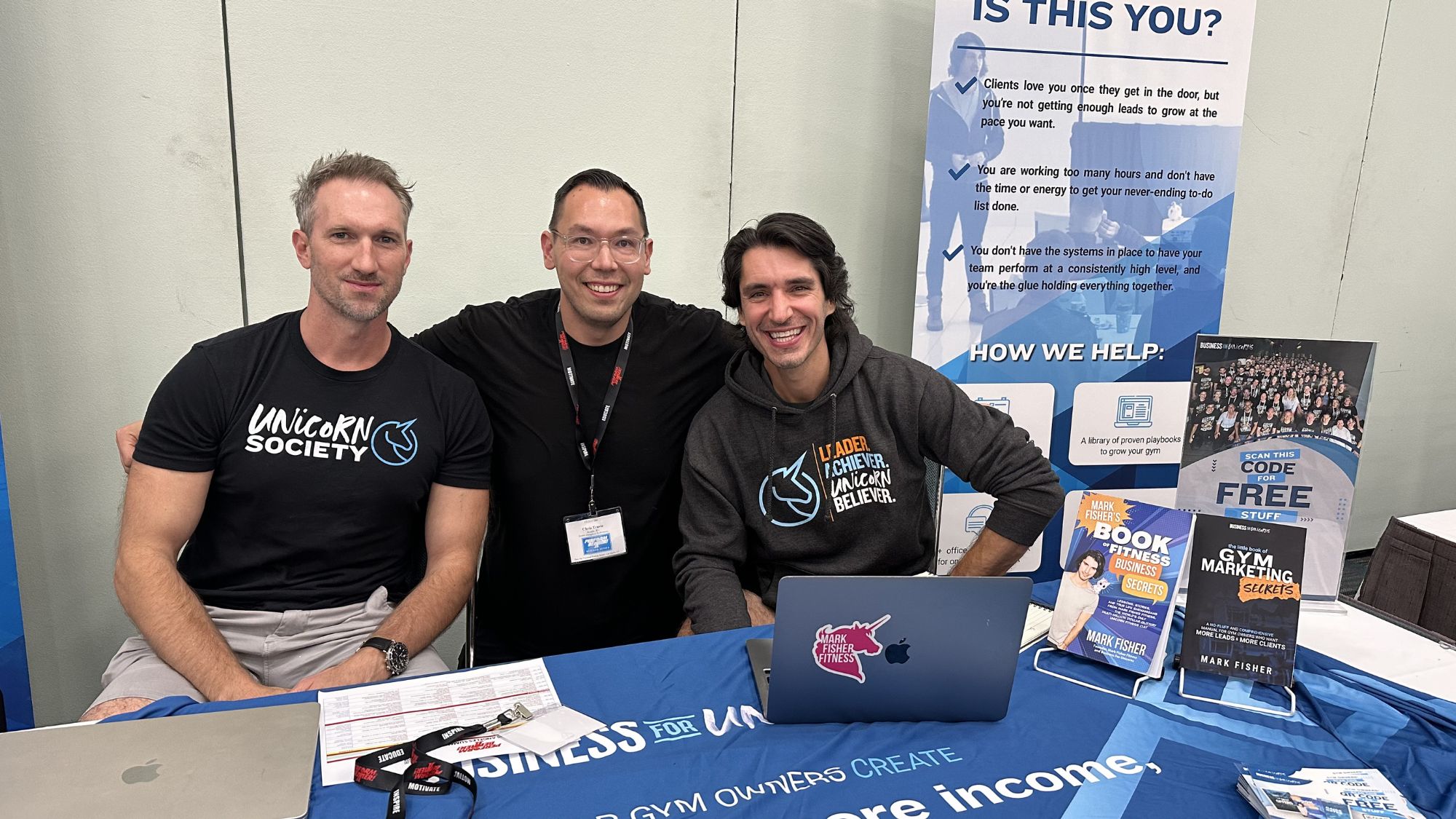
The Business for Unicorns team at an industry event with Unicorn Society branding
The Business for Unicorns team. Photo courtesy of Business for Unicorns.

The coaching team extends beyond Mark and Michael. Operators like Pete Dupuis, co-founder of Cressey Sports Performance, and Ben Pickard, who ran Lean Strong Fitness profitably for a decade before becoming BFU’s COO, bring firsthand experience.

The outcomes BFU clients report are the kind many burned-out owners barely let themselves imagine. Revenue jumps that change the viability of a studio. Facilities doubling in size while profit grows instead of disappearing. Monthly revenue climbing from five figures into the tens of thousands. Owners taking multi-month parental leave without the business collapsing.

Mark’s message to the owner still coaching 30 hours a week is simple: identity has to shift. You cannot stay “the trainer who owns the LLC.” At some point you become the business owner and invest in skills beyond coaching: marketing, sales, leadership, finance, and systems.

That is where the work actually starts.

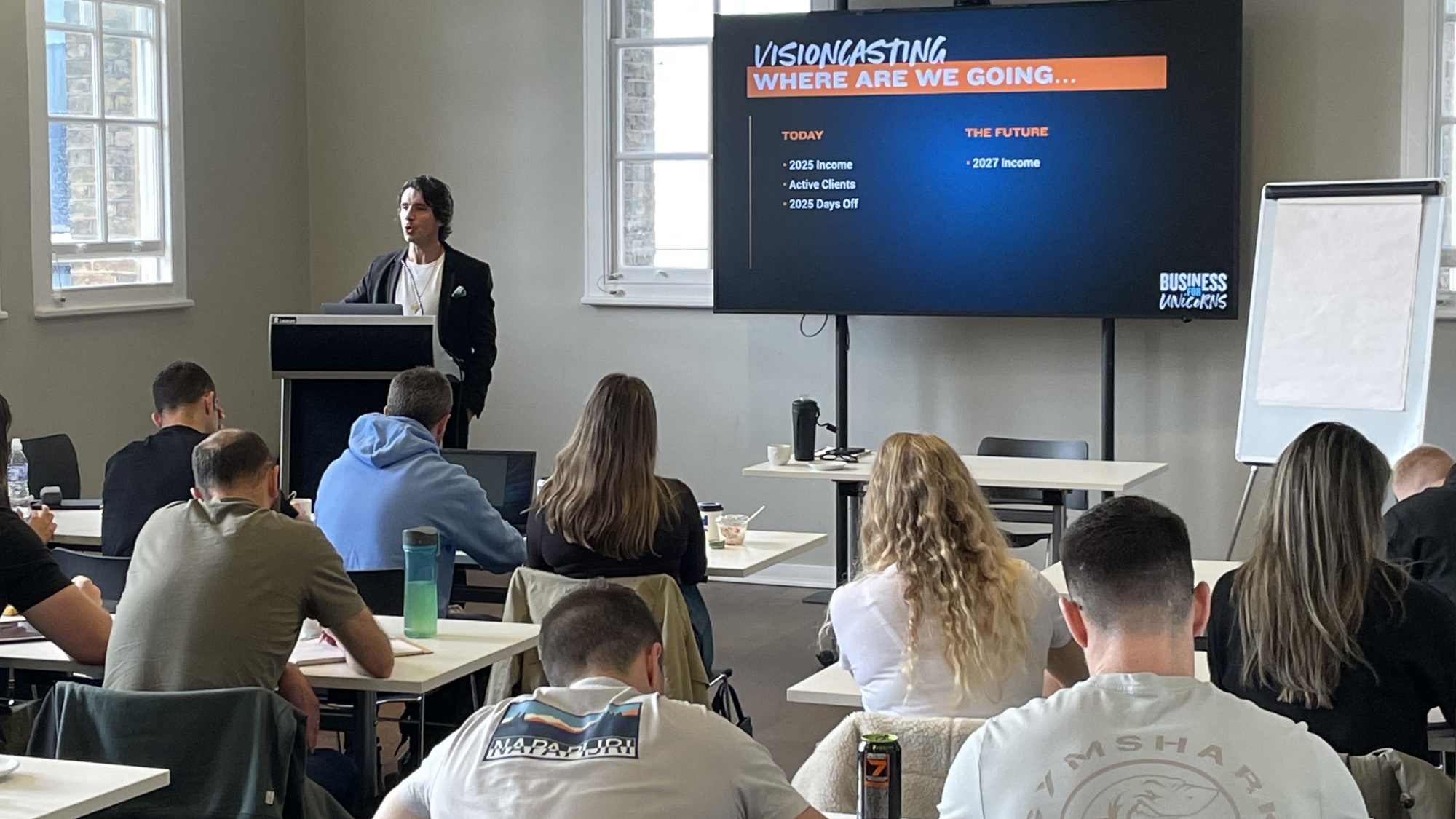
Mark Fisher leading a Visioncasting session with gym owners at a Business for Unicorns event
Mark Fisher leading a Visioncasting session with gym owners. Photo courtesy of Business for Unicorns.

Culture for Misfits, Systems for Owners

MFF worked because it was a gym for people who never felt safe in gyms. Mark talks about the kid who eats lunch alone in a bathroom stall. The Ninja community was an answer to that: a home for misfits, performers, and outsiders who had spent years hovering at the edge of every “cool table.”

A lot of members worked in entertainment. They needed bodies that could handle eight shows a week, and a space that could handle the emotional whiplash that comes with that life.

For owners, the lesson is to get clear. You do not need a dragon loincloth photo shoot. What you do need to know is who you serve and what values you will actually hire and fire for. Culture comes from repeated behavior and real enforcement, not slogans.

Practically, values have to show up in staff meetings, performance reviews, and daily decisions. One simple move Mark uses is opening team meetings with a value and asking for real examples from the week. Over time, those stories define what “normal” is inside your four walls.

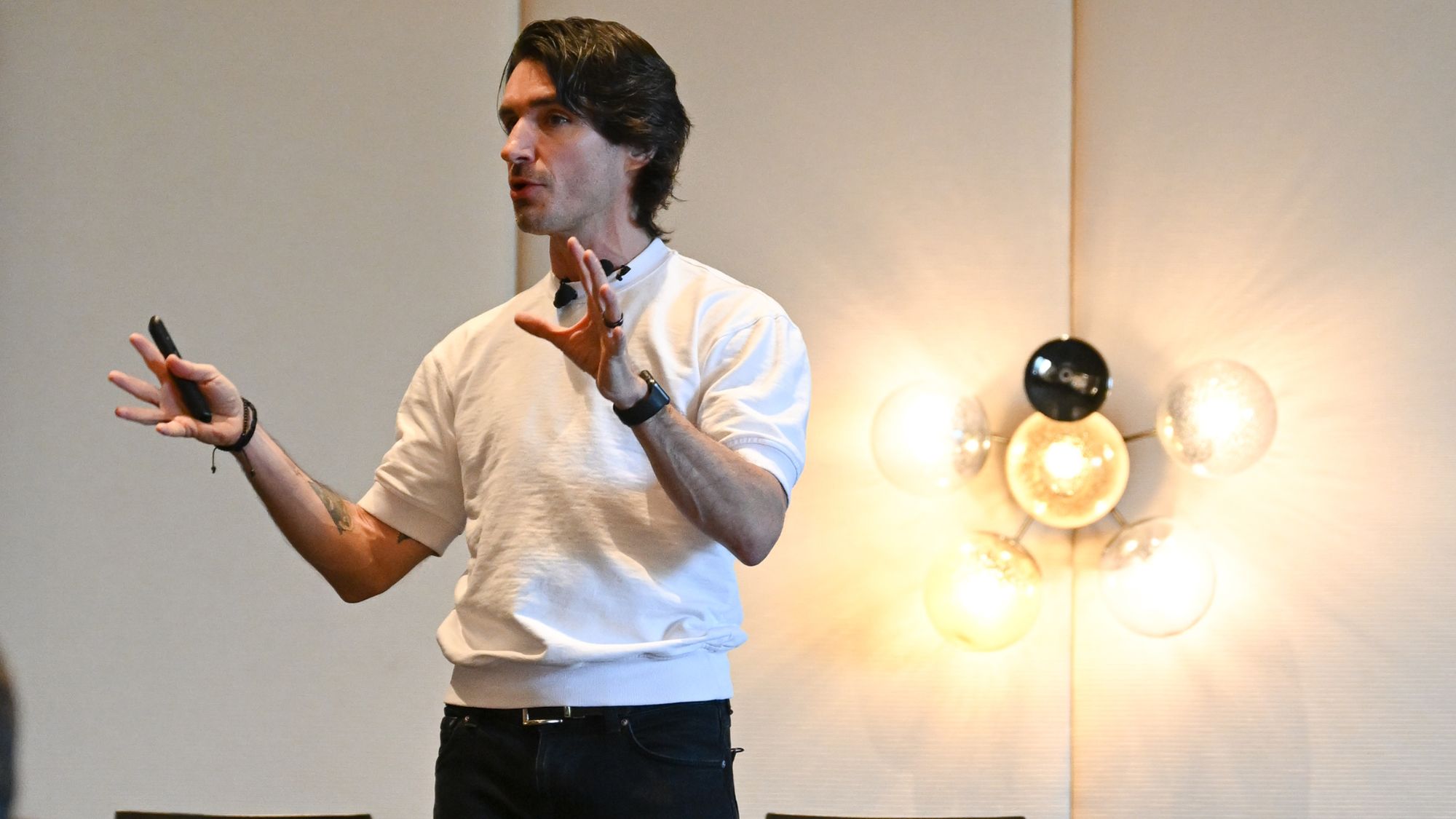
Mark Fisher speaking at a Business for Unicorns coaching event
Mark Fisher speaking at a Business for Unicorns event. Photo courtesy of Business for Unicorns.

That is why BFU exists: for owners who want that kind of clarity but feel trapped in their schedule. Mark has lived the whole arc, and now helps other owners build the place they wish they had found.

Operators building teams around clear culture and coaching standards can explore hiring through FitHire by Coach360, where studios find coaches who align with the values that define how your gym actually runs.

Frequently Asked Questions

How did Business for Unicorns start?

Mark Fisher and Michael Keeler launched BFU in 2016 alongside Mark Fisher Fitness. They saw that most gym owners had no structured mentorship combining culture, operations, finance, and leadership. BFU was built from lessons learned running MFF, Michael’s hospitality and organizational psychology background, and systems from high-performing facilities across the industry.

What is the Unicorn Society?

The Unicorn Society is BFU’s flagship coaching program for gym owners. Members receive monthly one-to-one coaching, access to multiple live office-hour calls each week, and a library of playbooks and standard operating procedures. The coaching team includes operators with firsthand experience running profitable facilities, including Pete Dupuis (Cressey Sports Performance) and Ben Pickard (Lean Strong Fitness).

How do I know if I need a gym business coach?

If you are still coaching 30 or more hours a week and also running the business, your identity has not shifted yet. When operational decisions, hiring, marketing, and financial planning consistently take a back seat to sessions on the floor, that is the signal. A business coach helps you build systems so the gym runs without requiring you to be in every session and every decision.

About Robert James Rivera
Robert is a full-time freelance writer and editor specializing in the health niche and its ever-expanding sub-niches. As a food and nutrition scientist, he knows where to find the resources necessary to verify health claims.

How Joseph Dickson Built a Coaching Business on Maui After the NFL

Joseph Dickson spent four years cycling through five NFL franchises. Every week was an audition. Every practice was a test. That survival education shaped how he built his coaching business at Dickson Performance on Maui, where tiered athlete development, community investment, and clear systems replaced the chaos of professional football with something durable.

His story is not about a former pro who coasted on name recognition. It is about a coach who evolved through setbacks, studied systems at the highest level, and then rebuilt those ideas inside the real constraints of a small island market.

What NFL Survival Teaches About Evolving as a Coach

In his senior year at Idaho, Joseph shattered his ankle in the fourth game. That injury landed right before the draft and, in his assessment, cost him a legitimate shot at being selected. He still earned a roster spot with Jacksonville in 2011, but that year brought its own obstacle: the lockout season.

He trained alone, away from veterans and coaching staff, without any of the normal rhythms of meetings or installs. When the lockout ended and the veterans returned, Jacksonville released him almost immediately. He went home to Maui and carried that weight hard.

“I spent two weeks at home feeling ashamed and defeated. Then I realized something important. I had just accomplished something most people never even come close to. I had nothing to be ashamed of, but I did have work to do.”

That shift still defines how he coaches. Moving through five franchises in four years taught him that talent alone does not protect anyone. Each team had its own playbook, culture, staff, and expectations. He had to read new environments fast, earn trust on contact, and contribute immediately.

“You have to learn how to read a room, earn trust fast, and contribute immediately,” Joseph said. “That survival education directly shapes how I build programs at Dickson Performance today. No two athletes respond the same. No two environments are identical.”

The constant evaluation carved one belief into everything he does: preparation is protection. As a player, that meant film study and playbook work. As a coach, it means clear progressions, standards that hold under pressure, and systems that don’t fall apart when life gets difficult.

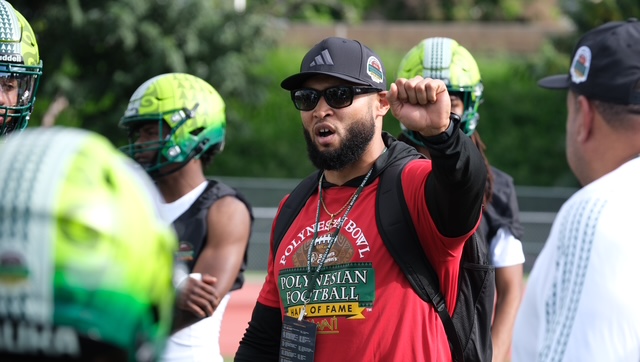
Joseph Dickson coaching athletes at the Polynesian Bowl
Joseph Dickson coaching at the Polynesian Bowl. Photo courtesy of Dickson Performance.

Systems Thinking: From EXOS Influence to an Original Framework

During his playing career, Joseph trained at Athlete’s Performance, now EXOS. For the first time, he saw an integrated performance setting from the inside. Movement quality, speed work, strength, recovery, and energy systems all fed the same progression instead of sitting in separate corners.

That experience did not turn him into a brand loyalist. It turned him into a systems thinker.

“What impacted me most was how training was integrated,” he said. “It wasn’t random intensity. It was calculated development. But what I also learned over time is that systems evolve. Even what I experienced there is not what they’re doing now. That taught me something critical: never freeze your framework.”

When he returned to Maui, he did not paste a mainland performance model onto local athletes. He borrowed principles: clear movement standards, progressive loading, thoughtful warm-ups, and respect for the nervous system. Then he tested those ideas with his own athletes. Some pieces translated. Others did not fit the island’s realities, from field access to schedules to athletes with limited training history.

He kept what held up, dropped what didn’t, and built a Dickson Performance framework with its own identity. That willingness to evolve a coaching approach rather than copy one is the difference between borrowing ideas and building a business.

Building the Business Inside Real Constraints

Dickson Performance did not start as a standalone facility. It started inside The Club Maui, a commercial fitness center where performance memberships included full club access. That gave him a real facility, established foot traffic, and a chance to refine his model under a real roof instead of a fantasy version on paper.

The arrangement came with responsibility. He had to prove that his performance group would raise the standard on the floor, not disrupt it. No chaos, no reckless lifting, no culture clash with the host brand. He kept coaching presence visible and professional, set expectations for his athletes, and respected shared space.

“For coaches considering launching inside an existing gym, you must bring value, not friction,” Joseph said. “You must clearly define your lane. And you must protect your brand standards without alienating the host environment.”

Towards the end of 2024, The Underdog Foundation, his nonprofit, acquired the lease to a 12,000 square foot facility in central Kahului. Dickson Performance now leases space within that building and operates independently. The nonprofit builds community infrastructure. The training business delivers elite development inside the same walls. Youth athletes on scholarship train alongside competitive athletes who pay full price.

Tiered Development: Placing Athletes Where They Can Succeed

Many athletes arriving on Maui were undertrained. Not because they lacked talent, but because they lacked exposure to structured development. Most showed up with a weak strength base, limited movement quality, and no consistent training history. A few random hard sessions would not fix that.

Joseph built a tiered system. At the base sits a foundational track, typically two sessions per week, built for adults and youth who need habits, strength basics, and competency in core movement patterns. Above that sits a youth development track with doses that match growth stages and maturation instead of parent ambition. At the top sits an elite performance tier, three focused sessions per week for competitive athletes with the capacity for higher training stress.

“The tiers aren’t about exclusivity. They’re about appropriate dosage. Place athletes where they can succeed, not where their ego or their parents want them. Structure protects development.”

Placement is a coaching decision, not a marketing one. He uses movement screens, strength levels, training maturity, and lifestyle to decide where each athlete belongs. If someone pushes for the elite tier before their body is ready, he holds the line. That discipline is what separates a coaching business built on outcomes from one built on selling access.

When Coaching Extends Beyond the Weight Room

Joseph had already seen how training can anchor people during hard seasons. During COVID, before Dickson Performance formally existed, he trained athletes in his garage because they needed structure and connection. When the Maui wildfires hit, that instinct resurfaced with new urgency.

Families lost homes. Kids lost fields, routines, and any sense of normal. Training became part of restoring something predictable. A space with a schedule and expectations, even when everything outside felt unstable.

Through The Underdog Foundation, he launched the Gorilla Athletic Scholarship Fund. Youth athletes affected by the fires could train at Dickson Performance without cost barriers. The Foundation also helped drive the Maui TUF Initiative, building tiny homes for displaced families. Community-driven coaching sits at the center of how he defines his role.

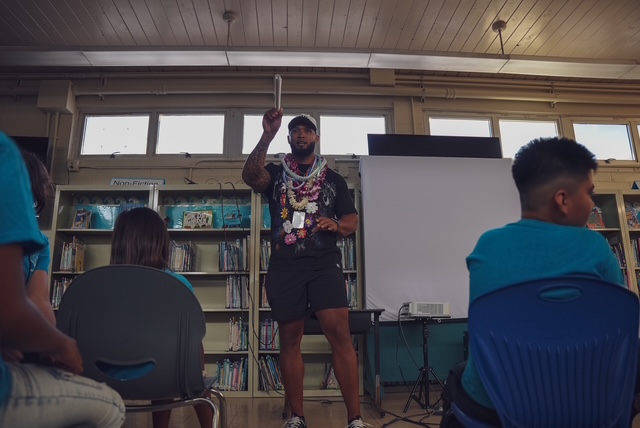
Joseph Dickson speaking to youth at a community event on Maui
Joseph Dickson speaking to youth at a community event on Maui. Photo courtesy of Dickson Performance.

“Coaching responsibility doesn’t end at performance metrics,” Joseph said. “When athletes walk through our doors, I’m not just thinking about speed and strength. I’m thinking about who they’re becoming, how they respond to adversity, and how they will serve others one day.”

Pricing a Coaching Business in a High-Cost, Small Market

Operating in Maui means high living costs and tight family budgets, especially after the fires. At the same time, a coaching business cannot survive as a charity. If the operation fails, the service disappears.

Joseph built his pricing around three ideas: understand the real financial pressure your community faces, deliver value that justifies what you charge, and treat relationships as long-term rather than transactional. He uses a personal test. Would he pay this amount for this service if he stood on the other side of the counter? If the answer is no, he adjusts. But he refuses to discount his rates so low that he burns out and loses the ability to lead. Access is handled through scholarships, not discounted pricing.

“The one thing I wish I had understood earlier is that coaching skill and business skill are different disciplines,” he said. “I wish I had studied business more intentionally. But adversity became my education. And in many ways, learning it through experience made it stick.”

That admission is worth sitting with. Many coaches assume sharp training skills will automatically lead to business stability. Joseph learned they don’t. Leases, partnerships, budgets, payroll, and risk all needed their own education curve. He took his lumps, then turned hard-won knowledge into slower, more deliberate decisions.

Frequently Asked Questions

How do you start a coaching business inside an existing gym?

Joseph started Dickson Performance inside The Club Maui before moving to an independent facility. His advice: bring value to the host environment rather than friction. Define your lane clearly, protect your brand standards, and prove that your athletes elevate the culture on the floor. A shared space gives you real infrastructure and foot traffic while you refine your model.

How should coaches structure tiered programming for mixed-level athletes?

Assessment drives placement, not marketing. Use movement screens, strength baselines, training maturity, and lifestyle factors to place athletes in the right tier. Joseph runs a foundational track (two sessions per week for habit-building), a youth development track (matched to growth stages), and an elite tier (three sessions per week for athletes ready for higher intensity). Placement is a coaching decision.

Can you build a sustainable coaching business in a small market?

Joseph argues the advantage of a small market is that consistency and authenticity get rewarded. There is less competition, more opportunity to become the local standard, and deeper community relationships. The trade-off is tighter margins and the need to price with discipline: high enough to sustain the business, accessible through scholarships rather than discounts.

Dickson Performance on Maui is a case study in evolving a coaching business inside real geographic and economic constraints. Joseph built it through NFL survival instincts, systems thinking borrowed from the highest levels of performance training, and a refusal to freeze his framework. For coaches still early in building their own model, his path is a reminder: preparation is protection, systems must evolve, and the gap between coaching skill and business skill is one worth closing deliberately.

Coaches looking for performance training roles or operators hiring for facilities like Dickson Performance can explore active listings on FitHire by Coach360.

About Robert James Rivera
Robert is a full-time freelance writer and editor specializing in the health niche and its ever-expanding sub-niches. As a food and nutrition scientist, he knows where to find the resources necessary to verify health claims.

Progressive Overload Coaching: 6 Methods to Build Strength That Sticks

Monday morning, 6 AM slot. Your client walks in looking like she slept four hours because she did. She is a nurse who pulled a double, ate vending machine food at 2 AM, and still showed up. The progressive overload coaching plan says add five pounds to her squat today. You do that, she grinds out ugly reps with a sore lower back, and the session ends worse than it started. Or you read the room and make a different call. Most coaches who keep clients past three months have figured out when to make the different call.

Progressive overload still means stress has to rise over time so the body adapts. Nobody is arguing that. But the way coaches time those increases has changed fast. Many Gen Z coaches now work with clients tracking sleep and stress through wearables alongside training load. Work schedules shift, travel happens, sleep dips. The old add-five-pounds-every-session model assumed a client whose life held still between workouts. When did that last describe anyone on your roster?

What Progressive Overload Looks Like on the Floor

Progress shows up when a workload that used to be hard starts feeling routine. When a client finishes her fourth set of goblet squats at 40 pounds and says “that felt easy,” you have a decision. More weight, an extra rep, another set, shorter rest, deeper range, tighter tempo, a harder variation. Each one counts as overload. Each one drives adaptation. The mistake is reaching for load every time and ignoring the five other options.

Pick the variable, track it, and look at what happened next session. If you are not measuring, you are guessing. Guessing works until it does not, and it usually stops working around week six. Strength does not come from stress alone. It comes from the recovery between exposures: the sleep, the food, the spacing of hard sessions. Coaches who build recovery into the overload plan keep clients longer because those clients actually feel better, not just stronger.

6 Overload Levers and When Each One Earns Its Spot

Here is where most programming gets lazy. One lever, load, gets all the attention. Weight creeps up week after week until the client’s knees start talking. Confidence drops. Sessions get dreaded instead of anticipated. Then you lose the client. Not because overload failed, but because the approach was one-dimensional.

Better approach: rotate levers based on how the client’s week actually went.

Lever Simple Progress Rule Best Use Case
Load Add 2.5 to 5% on main lifts once reps and form stay clean Strength blocks, stable technique
Reps Add 1 rep per set inside a rep range, add load once top of range holds Early progression, skill grooving
Sets Add 1 set after performance holds steady for 2 to 3 exposures Hypertrophy focus, work capacity build
Rest Cut rest only when goal supports it, avoid short rest on heavy triples Conditioning density, time-efficiency phases
Range Add range with control: deficit work, longer bottom position, full depth Mobility-limited clients, joint-tolerance build
Tempo Slow eccentrics or brief pauses, return to normal tempo once control improves Technique cleanup, low joint-cost overload

A harder variation often beats a heavier bar on a rough week. Take the split squat to rear-foot elevated split squat, then to a deficit version. Range rises, stability demand rises, and load stays moderate. Clients get a clear level-up without adding plates. Joints stay quiet. There is nothing consolation-prize about it. Some of the fastest technique improvements happen when load pressure comes off and movement quality goes up.

Autoregulation: Reading the Room Before Writing the Program

The startup founder who sleeps great Sunday through Wednesday and then travels Thursday through Saturday. The single parent who trains at 5 AM because it is the only window before the day takes over. The Gen Z client tracking sleep, HRV, and stress on a smartwatch and expecting you to actually use that data. These are not edge cases. They are your Tuesday morning.

Autoregulation turns daily readiness into a decision you can explain, not a vague “listen to your body” handwave. Concrete rule: work sets at RPE 7 to 8 most weeks, short peaks at RPE 8 to 9 for advanced clients, a couple reps in reserve on most sets, and true failure work reserved for planned blocks only. For beginners, good form is the gate. Load increases only when form stays stable across every rep. Simple, but that simplicity is exactly what makes it repeatable across 20 or 30 clients a week.

Biofeedback That Clients Will Actually Report

Sleep hours and quality. Stress score, 1 to 10. Joint status, 1 to 10. Mood. Appetite. Five lines. If you build a 15-item intake form, clients fill it out twice and ghost it. Keep it to five signals they can answer while walking from the car to the gym, and you get data every session. Data every session is what separates the adjustment call from the guessing call.

Adjusting a Session Without Losing the Week

A bad readiness day does not mean canceling. It means picking a different lever. Drop load, keep reps, use tempo, keep the movement pattern. Swap barbell for dumbbell, keep intent. Cut sets, keep quality. The client still trains, the habit stays intact, and the body gets stimulus it can actually recover from. Consistency beats intensity almost every week of the year. [See also: mobility and flexibility for performance]

“I stopped chasing PRs every week and started chasing consistency. My clients stay longer, get hurt less, and still hit numbers they are proud of. The real change was learning to pull back on the right days instead of pushing harder on all of them.”

— Marcus Hale, strength coach, 8 years, 40+ active clients

Periodization Without the Textbook Overhead

Periodization still works. It just needs to fit the life your client is actually living, not the one a grad school syllabus assumed. Most clients need a clear block, a clear goal, and planned changes that bend around work schedules and family load.

Linear periodization trends reps down and load up across 8 to 12 weeks. Undulating periodization alternates heavy, moderate, and lighter days through the week. Block periodization moves through hypertrophy, strength, then power with clear transitions. Pick one, commit to it, and run it long enough to see signal. Switching every three weeks because something new looked interesting on Instagram is not periodization. It is noise.

A clean 8 to 12 week block: weeks 1 through 3 build, week 4 deload, weeks 5 through 7 build, week 8 check performance. For advanced clients, a 6-week block with a 4 to 5% load bump when you repeat the cycle can run for months.

And deloads are not lazy weeks. Lower load, crisp reps, clean range, leave with energy. Clients almost always come out of a deload ready to attack the next block. If they do not, something else is wrong, and the deload just told you about it.

When Progress Stalls, Check These Three Things First

Most advice about plateaus is useless because it jumps straight to “change the exercise” or “try harder.” A plateau usually means something quieter went wrong. Before you overhaul the program, run three checks in order.

First, execution. Range of motion, tempo, bar path, setup, rest times. Plenty of stalls disappear when the client starts actually hitting depth again or stops cutting rest periods short because they are watching the clock. If the rep does not match the standard, it does not count as progress. Full stop.

Second, recovery inputs. Sleep, protein, total calories, hydration, stress. A client running a sleep deficit and skipping lunch will stall regardless of how sharp the program is. Put expectations into an experiment frame. Run the block for eight weeks, track everything, then make a call based on data instead of frustration.

Third, exercise selection. Keep the movement pattern, change the tool. Swap barbell bench for dumbbell press, back squat for front squat, bilateral hinge for a kickstand variation. Come back to the original lift later and see what shifted. This gives the joints and the nervous system a different stimulus without abandoning the pattern you have been building.

Delivering Strength Programs in 2026

Strength programming now lives inside systems, and the system has to be legible. Clients do not want to decode a spreadsheet. Progress metrics that work for most: top set load and reps, total reps at a given load, estimated 1RM, and a simple readiness score. Add a body composition metric only if it directly serves the goal.

For weekly reviews, ask three things: one win, one friction point, one change for next week. Keep it short. The moment you build a review that takes ten minutes, response rates collapse, and the program starts drifting without the signal you need.

Set guardrails early. A max hard set count per lift. A weekly cap on true grinders. Hard conditioning kept away from heavy lower-body days for most people. These boundaries make the week repeatable, and repeatable weeks compound.

Progressive Overload as a Feedback Loop

The coaches who retain clients for a year or longer are the ones who got comfortable making changes mid-block rather than defending the original plan. Write the program. Watch the person. Adjust. The strength takes care of itself.

FAQ

What is the 70/30 rule in strength training and progressive overload?

In strength programming, 70/30 usually means most of your work stays moderate, clean, and repeatable, while a smaller portion pushes the needle. Think of 70% as crisp volume and practice reps, and 30% as heavier top sets, harder weeks, or higher-intent sets that actually drive overload.

What is the 3 3 3 rule in strength training?

In many strength circles, 3 3 3 is a simple template: 3 training days per week, 3 exercises per session, 3 sets per exercise. Another version splits the week into 3 strength days, 3 cardio days, and 3 rest or active recovery days. The 3/3/3 setup tends to pair well with progressive overload coaching because it provides enough training exposure to add reps or load over time without burying recovery capacity.

Is progressive overload good for strength training?

Yes. Progressive overload coaching is the engine behind getting stronger. Strength improves when training demand rises over time in a controlled way, whether through load, reps, sets, rest, range of motion, tempo, or exercise variation. The part most people miss is control: you match the overload lever to how the client is actually recovering, so progress stays steady instead of stalling out every six weeks.

What is the 5/3/1 rule?

5/3/1 is Jim Wendler’s strength program built around 4-week cycles using a training max, not a true max. The main lift rotates through a 5s week, a 3s week, a 5/3/1 week, and then a deload. Each training day focuses on one main lift (squat, bench, deadlift, or press), followed by assistance work. It is one of the clearest examples of progressive overload built into a long-term system.

About Robert James Rivera
Robert is a full-time freelance writer and editor specializing in the health niche and its ever-expanding sub-niches. As a food and nutrition scientist, he knows where to find the resources necessary to verify health claims.

Longevity Fitness Coaching: How to Shift Clients From Short Cuts to Long Games

Longevity fitness coaching starts making sense the moment a client says something you did not expect. A 52-year-old accountant sits down for her first session. She says she wants to lose 15 pounds. Standard request. Then she pauses and says her mother moved into assisted living last year, could not carry her own groceries, and fell twice in the kitchen. She does not want that to be her story. The 15 pounds still matter to her, but they are not the real reason she is sitting in your gym.

If you are coaching 15 to 50 clients a week, you have heard some version of this conversation. Clients still care about how they look. But the questions underneath have shifted. Energy at 3pm. Joint confidence on stairs. Sleep quality after a hard week. Whether the body holds up through work stress, travel, and imperfect seasons. They want results that do not collapse the moment life gets tight. [See also: incorporating longevity into the fitness equation]

Lifespan vs. Healthspan: Why It Changes What You Say to Clients

Lifespan is how long someone lives. Healthspan is how long they live with good function, low disease burden, and real independence. On paper it sounds like a vocabulary lesson. On the gym floor it reshapes the intake conversation.

A coach who understands lifespan vs. healthspan does not pitch training as punishment for food or as a sprint to a physique. Instead, they frame it as a capacity plan. You are building the body you need at 65, and the work starts now. Aesthetics can stay on the table, but they sit inside a broader priority list: strength, mobility, aerobic base, recovery, and habits the client can actually repeat when their week gets ugly.

This changes goal setting in a practical way. Instead of “lose 10 pounds by June,” the conversation becomes “build enough lower body strength that the hiking trip in September feels easy, and improve your sleep consistency so you stop crashing at 2pm.” The 10 pounds often happen anyway. But the framing keeps the client enrolled past the deadline.

Who Is Actually Asking for This

Gen X and older millennials now make up a large segment of paying clients, and their motivation is personal. They watched parents lose independence faster than expected. A father who stopped driving. A mother who needed help on stairs. They do not want to repeat that arc, and they are willing to pay for a plan that addresses it directly.

Younger millennials are showing up early too. They lived through extreme dieting culture and social media transformation pressure, and many are done with it. They want to build capacity now, while they still feel good, rather than waiting for a health scare. A client might still want body recomposition, but she also wants to hike without knee fear, sleep without pain, and stay sharp at work. Longevity fitness coaching meets all of those requests under one program.

What Longevity Coaching Prioritizes in Programming

Strength Training for Long-Term Durability

Strength sits near the center of longevity programming, and it is the easiest conversation to have with a skeptical client. Protecting joints, connective tissue, and bone density. Improving glucose control. Building confidence in daily tasks. Tell your 52-year-old accountant that the single-leg work is protecting her knees for the ski trip she mentioned, and watch compliance change. Coverage matters: bilateral and unilateral patterns (squats, hinges, pushes, pulls) build the holding power clients feel on stairs, carrying groceries, and handling awkward loads. [See also: from lifespan to strengthspan]

Mobility and Balance Training for Healthspan

Falls and missteps often start with weak hips, poor ankle function, limited side-to-side control, or a trunk that cannot resist twist under load. Most aesthetics-first programs ignore all four. Program multi-plane work on purpose: lateral lunges, step-overs, controlled direction changes, and anti-rotation drills. Clients need control beyond forward-only movement, and the ones over 45 need it more than they need another set of bicep curls.

Aerobic Base and Habit-Based Programming

Aerobic work supports recovery, energy, and capacity. A mix of conversational-pace sessions with occasional higher effort, plus daily walking and Zone 2 work for most clients. Keep progression slow and honest. Repeatability first, then load tolerance, then confidence. Longevity coaching does not rely on constant intensity, and clients who have been burned by high-intensity-every-day programs will tell you they appreciate the difference. Sleep, nutrition basics, and stress management act like training inputs. The plan only works when the client can repeat it.

“I used to sell 12-week transformations. Now my average client tenure is 14 months. The real change was simple: I stopped programming for a deadline and started programming for their actual life. They keep showing up because the work makes sense on Tuesday, not just on Instagram.”

— Jenna Morales, personal trainer, 6 years, 35+ active clients

How This Changes Your Positioning

Instead of “summer body” language, longevity coaches talk about durability, capacity, and doing more life without payback. Clients who have spent years cycling through 8-week programs respond to that message because they have already experienced the alternative. They know the weight comes back. They know the motivation fades. When you offer something that connects to a longer timeline, you stop competing with every other coach selling a countdown.

Offer design shifts as well. Longevity coaching fits longer packages with periodic reassessments. Progress reports that show trends across months, not vanity metrics. Clients stay because the work keeps connecting to something they care about beyond a before-and-after photo.

Client Conversations That Drive Retention

Longevity coaching starts at intake. Strong intakes pull real motivation. Ask about stairs, travel goals, playing with kids, pain patterns, work stamina, and confidence in basic movement. Then connect the long-term goal to the next 12 weeks. The language stays simple: train now for what you want in ten years, then reverse engineer the next quarter. [See also: understanding client motivations for long-term success]

This approach does not remove aesthetics. It puts them in a healthier position. A client can still look better, and usually does, because the work now supports a body that performs and holds up. When they see strength trend lines going up and their sleep improving alongside the physical changes, they stop needing the deadline to stay motivated.

Common Objections and How to Handle Them

Some clients still lead with appearance, and you do not shut that down. You put it in the right frame. Yes, you can change how they look, and you will build it on habits that keep them healthy, capable, and consistent. Most coaches lose the aesthetics-first client not by refusing the goal but by failing to connect it to something that lasts beyond the initial burst of motivation.

Time is the next barrier. Two or three short strength sessions each week, plus daily movement, can shift the markers without turning the plan into a second job. Old injuries and the “I’m beat up” history will show up too. Adjust intensity, respect joints, build tolerance in phases. Keep the client moving, then add load when their capacity is actually there.

Longevity Fitness Coaching in a Crowded Market

Coaches who shift their programming and their conversations toward longevity will stand out, and more importantly, they will keep clients. Aesthetics still improve. The method is different: strength, movement quality, aerobic base, recovery, and habits that repeat build a body that looks better as a byproduct.

If you are still selling 8-week sprints, you are competing against every other coach running the same model. The 52-year-old accountant is not looking for a countdown. She is looking for a plan she trusts, from a coach who understands what she is actually afraid of. Longevity fitness coaching gives you the framework to be that coach.

FAQ

How does physical fitness increase longevity?

Longevity fitness coaching uses structured strength and aerobic training to lower disease risk and protect function. Aerobic work improves cardiorespiratory capacity and supports healthier blood pressure and blood sugar. Strength training builds muscle and bone, keeping clients independent longer. Both together create the foundation of health-focused personal training.

What are healthy habits for longevity that coaches should program?

Build a weekly baseline: aerobic work, strength training at least twice per week, and daily walking. Longevity fitness coaching also relies on steady sleep timing, regular protein and fiber intake, low alcohol, and basic mobility or balance work. The goal is a plan the client can repeat without burning out, week after week, for years.

What shortens life expectancy the most?

The biggest drivers are smoking, chronic inactivity, prolonged sitting, and unmanaged cardiometabolic risks like high blood pressure and high blood sugar. These compound over years, then show up as early disease and reduced function. Longevity fitness coaching counters this through daily movement, aerobic base, strength, sleep, and basic nutrition habits.

About Robert James Rivera
Robert is a full-time freelance writer and editor specializing in the health niche and its ever-expanding sub-niches. As a food and nutrition scientist, he knows where to find the resources necessary to verify health claims.

AI-Powered Programming: How Fitness Coaches Are Using Artificial Intelligence to Train Smarter

AI fitness coaching tools landed in most coaches’ workflows the same way spreadsheets did a decade ago. First it felt optional. Then it became obvious that the coaches using them were finishing admin in half the time. By January 2026, the shift was no longer theoretical. Coaches running 30 to 50 clients were using ChatGPT, Claude, and platform-native AI inside Trainerize and TrueCoach to draft check-ins, summarize wearable trends, and build program variations they used to spend Sunday nights writing by hand.

The tool is not the story. What changed is how fast a coach can move from client data to a usable programming decision without losing the judgment that keeps clients safe and consistent.

Where AI Actually Saves Coaches Time (and Where It Wastes It)

Most coaches lose six to eight hours a week on tasks that follow a pattern: weekly check-in replies, program modifications after a missed session, sleep and recovery summaries, habit reminders that repeat across a dozen clients. These are high-volume, low-creativity tasks. They follow templates the coach already carries in their head.

That is where AI earns the investment. Feed a client’s weekly data into a prompt, ask for a summary with two action items, then edit the output in 90 seconds instead of writing it from scratch in eight minutes. Multiply that across 40 clients and the math is obvious.

“I was spending my entire Sunday doing check-in replies. Now I batch them in 90 minutes on Friday afternoon. The clients get better responses because I’m not burned out when I write them.”
— Working coach, 47 active clients, hybrid model

Where it wastes time: coaches who use AI to generate full programs without constraints. A prompt like “write a hypertrophy program for a 35-year-old male” produces something that looks plausible and is clinically useless. No training age context, no injury flags, no equipment reality, no progression logic tied to the client’s actual numbers. Coaches who skip the constraint step end up spending more time fixing the output than they saved generating it.

The Prompt Problem Most Coaches Have Not Solved

The difference between a usable AI draft and a generic one is almost always the prompt. Coaches who get poor output are usually giving poor input. Vague prompts produce vague plans. Tight prompts with real constraints produce drafts a coach can edit in one pass.

A prompt that works for programming follows three layers.

Layer What to Include
Context Age, training age, goal, schedule, current working loads, injury history, available equipment. The more specific, the less editing after.
Constraints Session length cap. Movements to avoid. Required rest days. Step targets. Frequency ceiling. The things that narrow options.
Markers One strength marker (e.g. trap bar deadlift 1RM). One adherence marker (sessions completed per week). One recovery marker (average sleep or HRV trend). These anchor the AI to measurable progress.

After the first draft, run a compression loop. Ask for a version with fewer exercises. Ask for a version that keeps movement patterns but reduces total stress. Ask for a travel-week variant with bodyweight only. This draft-then-compress method mirrors how experienced coaches think: start with structure, then strip to essentials.

One more instruction that changes output quality dramatically: tell the AI to keep it simple enough that the client can follow it without the coach explaining every line. That single constraint eliminates most of the overcomplicated programming AI defaults to.

Camera-Based Feedback and Wearable Signals: Useful, Not Trustworthy

Video analysis tools that flag form issues (depth, knee tracking, bar path, trunk lean, rep speed) sound like the future of remote coaching. Some platforms do this well enough to catch repeat patterns. Most oversell what the camera actually sees.

Angle, lighting, and camera placement distort readings. A squat filmed from a low front angle looks different to the algorithm than the same squat filmed from hip height at 45 degrees. Coaches who rely on camera-based feedback without understanding its blind spots build programming decisions on unreliable data. Use these tools to spot recurring issues across multiple sessions, not to make load decisions from a single video.

Wearable data is more reliable as a trend indicator than a daily input. A client whose sleep drops for five consecutive nights will almost always show lower output, shorter patience, and less tolerance for volume. AI can surface that pattern from wearable exports faster than a coach scanning a spreadsheet. The useful response is usually modest: hold the load, cut one set, keep the session structure intact. The coach decides the edit. The AI identified the signal.

Where AI Gets Coaches Into Trouble

Four years after ChatGPT became mainstream, the failure modes are well documented. AI produces confident output even when the premise is wrong. It cannot hold the context a coach carries about a client’s real week, their emotional state after a bad month, or the subtle form breakdown that shows up at rep seven but not rep three.

Three risk areas coaches need to manage:

Privacy. Health data, injury notes, client messages, and session videos are sensitive. Coaches pasting client information into ChatGPT are sending that data to a third-party server. Clear consent, clear storage rules, and a policy clients can actually read are non-negotiable. Use the minimum data needed for the task.

Scope creep. AI can suggest load changes that look logical on screen but ignore accumulated fatigue, compensatory movement patterns, or stress the client never mentioned. Keep human review on anything that changes intensity, volume, or touches pain. No exceptions.

The empathy gap. AI can draft a follow-up message. It cannot read that a client needs less pressure this week, not more accountability. The coach who sends an AI-drafted “great job, here’s your next challenge” message to a client who just went through a divorce is the coach who loses that client. Tone, timing, and emotional context remain human work.

A Monday-Morning AI Workflow That Holds Up

Start with one workflow. Not five. Not a full AI-powered coaching stack. One repeatable process that saves time without creating new problems.

For most coaches, weekly check-in drafting is the highest-return starting point. Feed the client’s weekly summary (sleep, soreness, adherence, session results) into a prompt with their current program context. Ask for a 150-word recap plus two priority actions for next week. Edit in one pass. Send. Track two metrics for 30 days: hours saved per week and client response rate.

If both metrics improve, add a second workflow (travel-week programming alternatives). If hours saved goes up but client engagement drops, the AI output needs tighter constraints or the coach is editing too lightly.

Build a prompt library over time. Save the prompts that produce drafts you barely need to edit. Delete the ones that create more work. After 60 days, most coaches have four to six saved prompts that handle 80 percent of their repetitive programming and communication tasks.

The coaches who stall are the ones who try to automate judgment. The ones who move faster are the ones who automate the parts that never required judgment in the first place.

FAQs

Which AI Fitness Coaching Tools Are Coaches Actually Using in 2026?

The most common setup is a general-purpose LLM (ChatGPT or Claude) for check-in drafting and program templating, plus platform-native AI features inside coaching software like TrainHeroic, TrueCoach, or ABC Trainerize for client-facing delivery. Coaches who build a small prompt library with real constraints (training age, injury flags, equipment, session caps) get significantly better output than coaches who use default prompts.

Can AI Replace a Personal Trainer?

AI can draft plans and surface data patterns faster than a coach working manually. It cannot hold the kind of context that keeps a client consistent during a hard month: relationship timing, emotional reads, the ability to back off volume before a client asks. Coaches who use AI for admin and data sorting while keeping judgment, behavior work, and relationship management in their own hands are the ones getting the best outcomes.

What Are the Biggest Safety Risks When Coaches Use AI?

Privacy tops the list. Coaches pasting client health data into public AI tools are sending sensitive information to third-party servers without most clients’ knowledge. Beyond privacy, the biggest operational risk is scope creep: AI suggesting load or intensity changes that look reasonable on paper but ignore accumulated fatigue, pain history, or emotional context the coach knows but never entered into the prompt. Keep human review on every recommendation that touches intensity, volume, pain, or recovery.

About Robert James Rivera
Robert is a full-time freelance writer and editor specializing in the health niche and its ever-expanding sub-niches. As a food and nutrition scientist, he knows where to find the resources necessary to verify health claims.

How Much Exercise Do You Actually Need? The Minimum Effective Dose Explained for Coaches

A professional framework for finding the smallest plan that still moves the marker

Clients ask this when they come back from vacation, when a work project takes over, or when a new baby resets every schedule they had. The question isn’t “how do I get out of training.” It’s “what’s the smallest plan that still works?” That’s a coaching question worth taking seriously.

Minimum effective dose (MED) training is the smallest amount of exercise that still produces measurable progress. Not the ideal amount. Not the optimal amount. The floor, the minimum input that keeps the needle moving when life compresses the available time.

Most clients aren’t avoiding effort. They’re trying to protect the habit they have left.

What Minimum Effective Dose Actually Means for Coaches

MED isn’t a shortcut framework. It’s a professional tool for a specific situation: a client whose life has genuinely changed, at least temporarily, and who needs a plan that survives contact with reality. The mistake most coaches make is defaulting to a scaled-down version of an existing program, cutting volume but keeping the same structure. That usually leaves the client with something that still feels like too much on a hard week.

The MED approach starts differently. It asks: what is the smallest stimulus that still moves the marker we care about? Then it builds a weekly plan around that stimulus, one that still works when sleep is short and meetings run late. Run that plan for 8 to 12 weeks and track one or two clear markers so you can see whether it’s actually working.

Knowing how to prescribe a minimum effective dose is also a retention tool. A client who has a plan that fits their current life is more likely to keep training than one who falls off a program that stopped fitting two months ago.

Progress Markers to Define Before You Start

Before assigning any MED plan, define what progress means for that specific client. Vague markers lead to vague assessments, and clients who can’t tell whether the plan is working tend to abandon it.

Goal Progress Markers to Track
Strength Load progression, reps completed at a given weight, or estimated one-rep max (1RM)
Hypertrophy Circumference measurements, bodyweight trends, or rep performance at fixed loads
Conditioning Pace at a set heart rate, resting heart rate trends, or repeatability of interval work
Recovery Heart rate variability (HRV) trends, session rate of perceived exertion (RPE) patterns, or persistent soreness

Define the marker before the plan starts. Two clients with identical MED programs can have completely different results depending on what they’re tracking and whether the intensity was honest.

“The plan is working if the marker is moving. The plan needs adjustment if the marker has stalled for two consecutive weeks. Those are the only two states that matter.”

Common Minimum Dose Questions Coaches Hear

Clients arrive with numbers from their wearable, a podcast, or a coworker. Some hold up under scrutiny. Others need a professional adjustment.

The Movement Minimum That Actually Works

Treat steps as the base, then layer in two short effort blocks per week. Keep it boring, repeatable, and low friction.

Step Base as the Daily Anchor

Anchor to a weekly step range rather than a daily target. Clients miss days, that’s normal. A weekly total smooths out the noise and prevents the “I blew it” spiral that leads to overcompensation the next day. It keeps behavior stable and protects recovery.

Two Effort Blocks Per Week

Add two short brisk blocks each week, or two incline walk blocks. Keep them short, clear, and repeatable. The goal is a real stimulus: some breath and some leg demand, not a casual stroll.

One Longer Easy Session When Time Exists

If there’s room in the week, add one longer easy session to support aerobic base. Keep it recovery-friendly, not a grind.

The Strength Minimum Dose for Time-Strapped Clients

Component What it means Default minimum When to change it
Weekly frequency How often they lift 1 to 3 sessions/week Add a day only if it’s repeatable
Baseline dose Starting point per pattern 1 hard set per main pattern Add a 2nd set after 2 stalled weeks or for extra technique reps
Effort standard What counts as work Close to technical limit, clean reps Back off if form breaks or recovery dips
Tracking How progress stays real Log load and reps If it’s not written down, it usually doesn’t progress
Goal What this setup can do Move strength markers with low time cost Volume comes later, only if needed

The Muscle Dose and a Simple Set Ladder

If the goal is visible muscle change without adding hours to the week, volume needs to stay low but intentional.

Start with 1 to 2 hard sets per muscle group per session. Stay here until consistency is stable and recovery feels predictable. When performance stalls for two consecutive weeks, add one set to the muscle group that needs it most. Then wait two weeks before adding again.

More sets help, but only up to a point. After that, recovery cost rises faster than adaptation. Add one set at a time and don’t add again for at least two weeks.

A “Best Return per Minute” Week: Three Templates

Use one of these as the default, then adjust based on what the client can actually repeat.

Option A: Two-Day Strength Base Plus Daily Steps

20 to 35 min x 2 sessions

Two strength sessions per week. Daily step base. Two brisk blocks each week. Works well for the working parent or executive who can reliably train twice per week but doesn’t have margin for four sessions. Preserves strength markers while keeping recovery manageable.

8-week outcome: Load progression on main lifts, step habit intact, client hasn’t missed more than two sessions in the block.

Option B: Three Micro Sessions for Chaotic Weeks

15 to 25 min x 3 sessions

Three sessions per week. One main pattern per day, one accessory slot, one carry or trunk brace slot. Cuts decision load and keeps the plan easy to repeat. Fits clients with unpredictable schedules: healthcare workers, founders, shift-based roles.

8-week outcome: Client completed all three sessions at least 80 percent of weeks, effort stayed honest, perceived exertion trending down at the same loads.

Option C: Low-Dose Maintenance for Trained Clients

1 to 2 sessions/week

One to two sessions per week. One top set per main lift, plus one back-off set if time exists. Keep load honest, track reps, respect recovery. Ideal for experienced lifters in busy seasons: travel blocks, product launches, or in-season athletes.

8-week outcome: Strength markers held within 5 percent of pre-block performance, no accumulated fatigue issues, client ready to increase volume when the season ends.

How to Present Minimum Effective Dose to a Client

Clients often expect to be told to do more. When you prescribe less, frame it correctly. Lead with the logic before the prescription.

Explain that minimum effective dose is a starting point, not a ceiling. The goal is to find the smallest plan that still moves the marker, then earn the right to add volume later.

SCRIPT: SETTING EXPECTATIONS

“We’re going to find the smallest plan that still moves the number we care about.”
“If we see load increase over eight weeks, we stay here.”
“If progress stalls, we add one set, not three.”
“We’re building something repeatable, not heroic.”
“I know you want to do more. You’ll get the chance. Right now, let’s make sure you can do this every single week first.”

How to Run a Minimum Dose Plan Without Stalling

Minimal plans usually fail for three reasons: loads stay too light, expectations stay too high, and nothing gets tracked so progression never actually happens.

Set a clear effort target for each set. Use RPE or reps in reserve so the work stays honest. Run it for 8 to 12 weeks, then reassess using real markers. Keep the plan short, directional, and progressive.

The plan is working if the marker is moving. The plan needs adjustment if the marker has stalled for two consecutive weeks. These are the only two states that matter.

When to Refer Out

Coaches can help by protecting the habit structure, adjusting sessions when needed, and building plans that survive a difficult week. Some signals belong with a clinician, not a coach.

Chest pain tied to exertion, fainting, severe sleep disruption across multiple nights, or a mood decline that keeps deepening over weeks warrant medical support. Knowing when to refer out is part of good coaching, and it builds trust rather than eroding it.

ONE ACTION TO TAKE THIS WEEK

Identify one current client whose program isn’t surviving contact with their actual schedule. Apply Option A, B, or C above. Define one marker. Run it for four weeks before evaluating.

FAQ  ·  MINIMUM EFFECTIVE DOSE TRAINING

What Is the Minimum Effective Dose for Strength Training?

The minimum effective dose for strength training is typically 1 to 3 sessions per week with at least one hard set per major movement pattern performed near technical failure. Progress should be tracked using load and rep progression over 8 to 12 weeks.

How Many Days a Week Do You Need to Lift to See Results?

Most clients see measurable strength improvements lifting two days per week, provided intensity is high enough and progression is tracked. Frequency matters less than effort and consistency.

Can You Build Muscle With One Set per Exercise?

Yes. Beginners and time-constrained clients can build muscle with one hard set per exercise, especially in the short term. Hypertrophy gains typically improve as weekly set volume increases gradually and recovery remains stable. One honest set beats three half-effort sets every time.

How Do You Program Training for Busy Clients?

Programming for busy clients starts by defining the minimum stimulus that still moves the target marker. Choose a weekly template based on what the client can actually repeat, not what’s ideal. Set an effort standard, track load and reps, and run the plan for 8 to 12 weeks before making changes. Add volume only after consistency is established.

Coaches looking to expand professional opportunities can explore roles and operator connections through the FitHire by Coach360.

For ongoing professional development and industry events, explore the Career Lab by Coach360.

About Robert James Rivera
Robert is a full-time freelance writer and editor specializing in the health niche and its ever-expanding sub-niches. As a food and nutrition scientist, he knows where to find the resources necessary to verify health claims.

How FRC-Certified Mobility Coach Rebekka Tucker Built BEKKSFIT Around Corrective Exercise

One client session. A hard niche decision. The coaching framework that followed.

Rebekka Tucker

FRC-Certified Mobility Coach  ·  Corrective Exercise Specialist  ·  Founder, BEKKSFIT

Instagram: @bekksfit

On April 1st, Rebekka Tucker sat in her car before a client session and cried. Not from burnout, not from doubt, but from the weight of what that date meant.

Her first year in business had lined up exactly with her first BEKKSFIT client’s first year in remission from cancer. April 1st marked a milestone they had both been working toward, one through chemotherapy and recovery, the other through the uncertainty of building a coaching brand with her own name on it.

That client, Isaiah, had been present for every session through treatment. Even on his hardest days, he showed up and kept moving. Watching that steadiness didn’t just reframe her doubts about business or growth. It clarified what kind of coach she wanted to be.

“He showed me that consistency through discomfort compounds. That became the foundation of everything I build with clients.”

What an FRC-Certified Mobility Coach Actually Does

Rebekka Tucker is an FRC-certified mobility coach and corrective exercise specialist operating through BEKKSFIT. FRC stands for Functional Range Conditioning, a mobility training system developed by Dr. Andreo Spina built around improving joint capacity, strength at end ranges, and long-term tissue resilience through controlled, progressive loading.

In practice, her sessions don’t look like traditional personal training. She assesses joint function before prescribing anything. She looks for active range limitations, the places where a client can move but has no strength or control. She identifies where usable strength breaks down under real load. From that assessment, she builds corrective protocols that increase mobility actively, meaning strength within the ranges people actually need for their life and sport.

Her coaching philosophy is rooted in bio-individuality. A desk-bound professional with chronic hip tightness gets a completely different entry point than an athlete returning from a hamstring tear. The exercises, tempo, load, and expectations are built for that person’s history and not for a category they might fit.

The goal she comes back to repeatedly is literacy over dependency. Her clients learn what is happening in their own joints and tissues so they can make informed decisions long after a session ends. She wants them to feel seen, heard, educated, and capable of advocating for themselves, not just capable of following a program.

THE FRC FRAMEWORK IN PRACTICE

How BEKKSFIT Started and Why the Niche Changed

BEKKSFIT did not begin as a mobility-focused brand. Early on, Rebekka offered health coaching, hormone health support, nutrition coaching, mentorship, personal training, and corrective exercise, both in person and remotely. She was building with the education she had at the time and saying yes to every opportunity to gain experience.

She describes her relationship to failure clearly: it’s feedback and data collection, not an endpoint. What actually made her anxious wasn’t the possibility of failing. It was a success. The pressure of “What if this works?” The weight of “Can I maintain this?” As business picked up, her confidence wavered more than it had when she was unknown. Building something with your name attached carries different stakes than building without one.

The niche pivot didn’t come from a business strategy session or a brand audit. It came from a single client and a single session inside a gym.

The Client Session That Changed the Direction of BEKKSFIT

A client came in with persistent discomfort related to childhood scoliosis. Traditional programming had not addressed it. Rebekka ran targeted mobility protocols focused on improving active spinal control and hip joint strength.

Within weeks, the client began reporting reduced pain in daily activities, not just during training. That result alone would have been meaningful. But what stayed with Rebekka was something the client said at the end: no one had ever explained their body to them that way before.

That sentence landed differently than a progress update. It pointed at a gap that existed not just in that gym, but across the industry. The mobility work she treated as foundational wasn’t standard. Most coaches worked around pain or referred it out. She was going into it, explaining it, and building programming that addressed it directly.

She didn’t decide to narrow her niche because it was the strategic move. She narrowed it because that session made clear that the work she cared most about was already the thing clients couldn’t find anywhere else.

That clarity came with a cost. Some clients didn’t follow when the brand repositioned. The ones who did were aligned with the deeper work: reducing pain, increasing control, building joint resilience over time. The audience got smaller. The positioning got sharper. What she gained was a practice built around the work she actually wanted to do.

“Narrowing a niche may shrink your audience. But it strengthens your positioning, and the clients who find you afterward are the ones who actually need what you do.”

What Other Coaches Can Take From This

Rebekka’s path from broad service offering to focused corrective exercise practice follows a pattern that shows up repeatedly in the careers of coaches who build stable, referral-driven businesses. The specifics are hers, but the structure applies across specializations.

Specialization sharpens messaging in ways that generalism cannot. Once mobility became the focus, her referrals became more aligned and her discovery conversations became shorter. The people who reached out already understood what she did and had already decided they needed it.

Certifications do more when they reinforce an existing direction. FRC wasn’t just a credential added to a list. It deepened the corrective exercise foundation she was already building toward and gave the methodology a name that clients and referral partners could research independently.

Teaching clients about their own bodies changes the nature of the coaching relationship. When a client understands why a joint lacks end-range strength, they don’t just follow the protocol, they invest in it. That investment shows up in retention, in referrals, and in the quality of the sessions themselves.

The Milestone That Grounded the Work

Isaiah’s journey continues to shape how Rebekka approaches coaching. April 1st marked one year in remission and one year in business. Two parallel timelines. She remembers pulling up to his house that day and feeling the weight of it all, the celebration, the relief, and the confirmation that the work mattered beyond sets and reps.

The phrase they returned to during that season has stayed with her: we do hard things. She uses it as a working principle, a reminder that meaningful change in mobility, in recovery, in business, requires sustained effort without a guaranteed outcome. Isaiah demonstrated that. She built her coaching practice around it.

COACHING PRINCIPLE FROM BEKKSFIT

Consistency through discomfort is the mechanism. Not motivation, not momentum. Show up for the session you don’t want. That’s where the adaptation happens.

FAQ  ·  FRC CERTIFICATION AND BEKKSFIT COACHING

What Is FRC Mobility Training?

Functional Range Conditioning (FRC) is a mobility training system developed by Dr. Andreo Spina. It focuses on improving joint strength, increasing usable range of motion, and building tissue resilience through controlled, progressive end-range training. Unlike passive stretching, FRC develops active control throughout the full range of a joint’s capacity.

How Does Corrective Exercise Help With Pain?

Corrective exercise addresses strength imbalances and mobility limitations that contribute to chronic pain. By improving joint control and restoring balanced movement patterns, it reduces stress on tissues and supports long-term function. The approach works by identifying where strength or range of motion breaks down, then progressively loading those specific ranges until the body can manage them without compensation.

What Is Bio-Individuality in Fitness Coaching?

Bio-individuality recognizes that every client’s injury history, lifestyle demands, and movement capacity are unique. Effective coaching adjusts programming based on the individual rather than applying standardized templates. In practice, this means a desk worker with chronic hip tightness and a post-surgery athlete may require completely different entry points, even if their stated goals are similar.

How Do You Narrow Your Coaching Niche Without Losing Clients?

Narrowing a coaching niche typically involves a temporary reduction in audience size and a long-term improvement in referral quality and client alignment. The process works best when the niche emerges from work you already do well, not from a market gap identified externally. Clients who leave a repositioned brand are often replaced by clients who specifically sought out the new focus, resulting in higher retention and fewer discovery conversations that go nowhere.

About Robert James Rivera
Robert is a full-time freelance writer and editor specializing in the health niche and its ever-expanding sub-niches. As a food and nutrition scientist, he knows where to find the resources necessary to verify health claims.

Cortisol Hangover: What Coaches Need to Know About Post-Stress Recovery in Clients

Why stress hits harder 24 to 48 hours later, and what to do about it in training

Ever have a client say “I’m fine,” then unravel the next day? In the moment they believe it, but the hit lands later. That delayed crash is often what coaches describe as a cortisol hangover, a lagging stress response that shows up 24 to 48 hours after the original event.

It can look like anxious energy, brain fog, achy joints, low patience, sleep trouble, or appetite swings. Most people expect a same-day spike and a clean reset, so when the symptoms arrive a day later, they don’t connect them to what happened the morning before.

Understanding this cycle doesn’t require a physiology degree. It requires pattern recognition, and coaches are already in the room when the pattern shows up.

“The event may be over, but the physiology is still running.”

Why Stress Feels Worse the Next Day

Cortisol levels may normalize within hours, yet the downstream effects can linger for a day or two. Three overlapping biological clocks explain why, and each one has a direct implication for how coaches read a session.

Clock 1: The Fast Nervous System Response

Acute stress can drive heart rate up, heart rate variability (HRV) down, and keep the system on edge well after the moment is over. In lab work, salivary alpha amylase often tracks that quick sympathetic surge.

Clients might feel wired later in the day, then hit bedtime and find they cannot downshift even if the stressor was over by noon. This matters for training timing. A hard session late in the day can pile onto that already-alert state and deepen the cortisol hangover effect, producing higher perceived exertion, slower recovery between sets, and a client who feels fried from a session that would normally feel manageable.

Clock 2: The Cortisol Peak and Brain Lag

The HPA axis runs on its own schedule. ACTH rises first, cortisol peaks after. In common lab stress tasks, salivary cortisol often tops out around 15 to 20 minutes after the stressor starts, then eases off. That comedown can feel like a crash, especially if the client is leaning on caffeine, skipping meals, or pushing intensity late in the day.

Cortisol works through glucocorticoid and mineralocorticoid receptors, and those effects don’t all run on one timeline. Some cognitive drag can hang around after hormone levels settle. A client can feel okay in the moment, then the next day they’re snapping at staff, forgetting sets, or losing patience halfway through class. That’s not attitude. That’s a lagged neurological effect coaches need to recognize.

Clock 3: Inflammation and the Sleep Multiplier

Acute stress can push inflammatory signals up. IL-6 can rise within one to two hours after a stressor. CRP tends to move slower, and a next-day bump can show up, mostly when stress pairs with short sleep. That lines up with the “I’m coming down with something” feeling: heavy limbs, extra soreness, and that feeling clients describe as “I don’t know, I just feel off.”

Short sleep amplifies this loop. Even one restricted night can increase inflammatory signaling the next day, which raises soreness perception and fatigue. Coaches often interpret that as poor recovery or lack of effort, when it’s the stress-sleep-inflammation cycle still playing out.

Sleep is usually the multiplier. One rough night can turn one rough hour into a two-day performance problem. When a client’s numbers are off and nothing in their training changed, ask about the 48 hours before, not just the 24.

What the Cortisol Hangover Looks Like Across 0 to 48 Hours

Use this timeline as a session planning tool and client check-in reference, not just a diagnostic map. Knowing which window a client is in changes what the right coaching response is.

Window What the Client Shows Coaching Read
0 to 6 hrs Tension, tight breath, narrowed attention, irritability, gut unease, appetite shifts. Some clients appear calm but are physiologically still activated. This is the opening stage. High-intensity training here compounds the load. Easy movement or rest is often the better call.
6 to 24 hrs Light sleep, early waking, reduced patience, lower cognitive flexibility. Many clients call this “brain fog” or “I feel off.” Coaches often misread this as poor discipline. It is delayed stress physiology. Check the 24 hours prior before adjusting the program.
24 to 48 hrs Slower processing, reduced drive, soreness out of proportion to training dose, stronger cravings or low appetite. This is often when the cortisol hangover peaks. Complaint rates in gyms are highest here, even though the stressor happened two days ago.


Coaching signal: If a client’s RPE is high, motivation is low, and nothing changed in their program, the 48-hour window is the first place to look.

What Speeds Recovery in the Next 24 to 48 Hours

If a client mentions a hard day, a bad week at work, or shows up flat two days in a row, this sequence is worth suggesting before adjusting the program. Keep it boring, repeatable, and low friction.

1

Sleep Reset Night

Set a hard cutoff for work messages. Drop late caffeine. Skip alcohol. Cut late scrolling. Keep a 30-minute low-light wind-down before bed. Sleep is the highest-leverage input in this entire sequence.

2

Nervous System Downshift

Paced breathing for 5 to 10 minutes near six breaths per minute. One round after the stress event, one round pre-bed. This is the most accessible tool a coach can hand a client the same day, and it costs nothing.

3

Easy Movement Early in the Day

Walk outside, easy bike, or a low-skill circuit with long rests. Skip late high-intensity work when sleep feels fragile. A client who trains hard on a cortisol-loaded nervous system is compounding the problem, not solving it.

4

Steady Fuel and Fluids

Normal meal rhythm, protein plus fiber, consistent hydration. Avoid the caffeine spikes that pair with undereating, a common stress-week pattern that extends the hangover rather than shortening it.

5

Clear the Mental Queue

Write the worry list. Write the next action for each item. Close the notebook and leave it. Clients who carry open loops into sleep extend the activation window. The goal is not to solve everything. It is to make a container for the noise.

What Coaches Can and Cannot Do

Coaches can help by protecting sleep, swapping sessions when needed, and building calmer routines around predictable stress points. The best coaches anticipate these windows rather than reacting to them.

Some signals belong with a clinician, not a coach. Chest pain tied to panic, fainting, severe sleep disruption across multiple nights, or a mood drop that keeps deepening over weeks warrant medical support.

WHEN TO REFER OUT
ONE ACTION TO TAKE THIS WEEK

Identify one client who has shown up flat in the last two weeks without an obvious training reason.
Ask what their stress load looked like in the 48 hours before that session.
Use the timeline table above to map the window.
That conversation alone changes what the next session looks like.

Related Reading and Resources

If a client’s schedule is collapsing, pair this with minimum effective dose training for busy clients.

Coaches looking to expand professional opportunities can explore roles through the FitHire by Coach360.

For continuing education and events, visit Career Lab by Coach360.

FAQ · Cortisol Hangover and Post-Stress Recovery

How Long Does a Cortisol Hangover Last?

A cortisol hangover typically lasts 24 to 48 hours. The stress hormone spike may normalize within hours, but downstream nervous system, inflammatory, and sleep disruptions can linger for one to two days.

What Does Cortisol Do to Athletic Performance?

Elevated cortisol can impair sleep, reduce HRV, increase soreness perception, and blunt training adaptation.

How Do Coaches Help Clients Recover From Stress?

Protect sleep, adjust training intensity, support steady nutrition and hydration, use breathing protocols, and refer out when symptoms exceed coaching scope.

Can You Train Hard During a Cortisol Hangover?

You can, but cost is higher: RPE runs high and recovery is slower. Easy movement, short sessions, or rest often returns more in the 24 to 48 hour window.

About Robert James Rivera
Robert is a full-time freelance writer and editor specializing in the health niche and its ever-expanding sub-niches. As a food and nutrition scientist, he knows where to find the resources necessary to verify health claims.

« Previous PageNext Page »