


How often should a client train to see results? In a new six-year dataset, the variable that tracked most closely with results wasn’t exercise selection, periodization, or coaching sophistication. It was how many times a month the client showed up. For a coach in year one, that is unusually good news, because attendance is the part you are already working on every day.
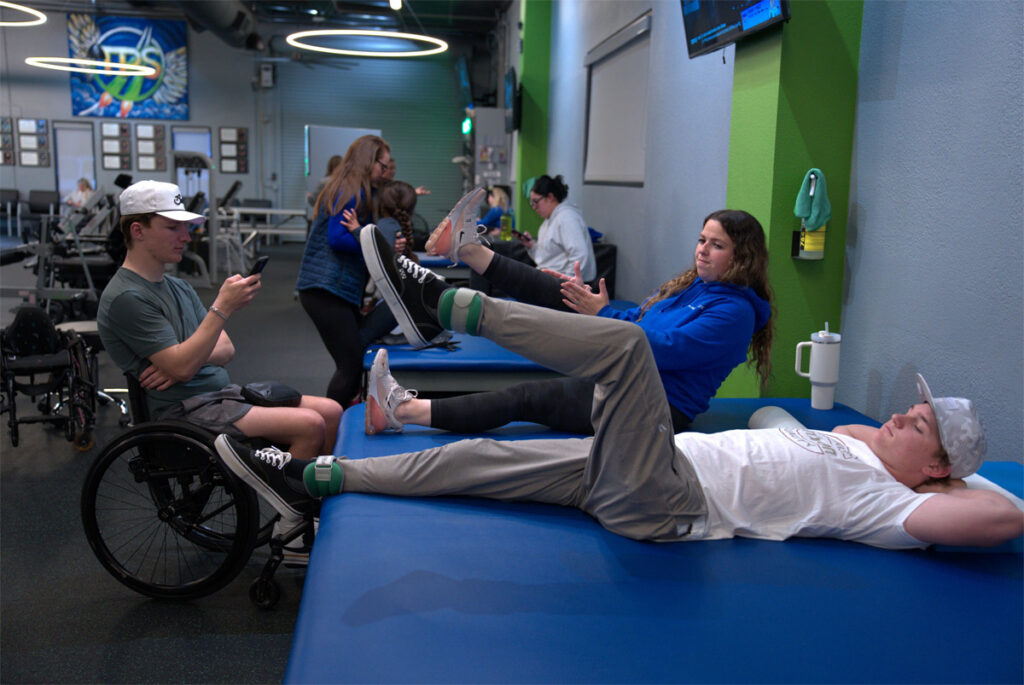
The analysis comes from The Perfect Step, a neurological recovery facility that has operated for nearly two decades, and Fit Habits, a retention analytics firm. It covers roughly 300 clients with session histories from late 2020 through mid-2026, with 87 forming the core group whose attendance records can be linked to repeated functional assessments. The assessments average about two years each.
Most new coaches spend their first year worrying about programming. The anxiety is understandable, and this data suggests it is pointed at the wrong variable.
Hal Hargrave co-authored the analysis and has run The Perfect Step for most of those two decades, watching the pattern long before anyone measured it.
“For nearly two decades, I’ve watched individuals come through the doors of The Perfect Step with devastating neurological injuries and diagnoses, often having been told there was little more they could do,” Hargrave said. “Yet, time and time again, the individuals who continued to show up, put in the work, and remain committed to their recovery were the ones we continued to see make progress. We believed in that relationship long before we had the data to support it. Was I nervous about what the research might reveal? Absolutely. But that’s what makes this so meaningful. We weren’t looking for numbers to validate a philosophy. We were willing to challenge what we thought we knew, and the findings reinforced something we’ve witnessed for 18 years.”
“Consistency creates opportunity, and opportunity creates the potential for progress.”
— Hal Hargrave, The Perfect Step
Frequency Was the Variable That Moved
Clients were sorted into three tiers by average monthly sessions, at roughly nine, five, and three. The high-frequency group improved by an average of 9.1 points on the facility’s 68-point functional assessment, with 83 percent improving. The moderate group gained 4.7 points, and the lower group gained 3.2. The gradient was orderly, with each step up in frequency matching a step up in improvement.
The rate difference is sharper than the totals suggest. High-frequency clients gained about 0.42 points per month, compared with 0.11 for the lower tier, roughly four times as fast. Over two years, that compounds into a gap of more than seven points between two people doing the same program.
The relationship also survived statistical adjustment. Each additional session per month predicted 1.35 additional points, holding baseline function, age, time since injury, and diagnosis constant.
Two details matter more for a new coach than the headline. Most clients improved in every tier, including those attending three times a month, which means consistency at any level beat inconsistency. And the relationship is graded rather than binary, so there is no threshold below which the work does nothing.
The Analysts Tested Whether It Ran Backward
The obvious objection is that improving clients book more sessions, making attendance a symptom of progress rather than a driver. The team tested that directly, and the design is the most useful part of the report.
They split each client’s timeline at its midpoint. They measured attendance only in the early window and functional change only in the later one. Later improvement cannot cause earlier attendance, so any surviving relationship points one direction.
It survived. Among the 48 clients with enough history, those averaging 10.9 sessions a month early went on to gain 7.3 points later. Those averaging 3.7 sessions early gained 2.6 points in the same later window. The authors describe the effect as moderate and sitting at the edge of conventional significance at that sample size, which is a fair characterization.
One more finding is worth carrying into your own practice. Gains did not stop after the first year. Across the group, clients averaged about 2.6 points of improvement per year of participation, and those with enough history to look past month twelve were still accruing gains. The early window most people assume exists never closed.
Hargrave has watched that assumption shape what clients and families decide to do next.
“One of the most heartbreaking things I’ve witnessed is someone being told that their window for recovery has closed,” he said. “Imagine being told that the potential to improve your independence, regain function, or enhance your quality of life has somehow expired because a certain amount of time has passed. That belief can be devastating, not just physically, but psychologically. What excites me most about our findings is that we observed continued functional improvements beyond that traditional first-year window. It doesn’t mean recovery is guaranteed, and it certainly doesn’t mean everyone will experience the same outcomes. But it challenges the idea that we should stop pursuing progress simply because the calendar tells us to.”
“At The Perfect Step, we’ve always believed that the opportunity to improve should never come with an expiration date.”
— Hal Hargrave
Run the Frequency Audit Before You Change the Program
When a client stalls, the instinct is to redesign the session. The audit below takes about twenty minutes and should come first, because it checks the variable this data says is doing the most work.
- Count actual sessions, not scheduled ones. Pull the last ninety days for each client and divide by three. Most coaches are surprised by the gap between the calendar and what actually happened.
- Set a floor and say it out loud. A floor is not a target. It is the number a client can hit during a bad week, with work travel, a sick kid, and a deadline, and naming it protects consistency when motivation doesn’t.
- Check attendance before touching the program. If frequency has dropped and nobody noticed, the stall has nothing to do with your exercise selection. Fixing the program first solves a problem the client may not have.
- Design for repeatability over impressiveness. A session that needs ideal conditions, full energy, and ninety minutes will be skipped. A session that survives a hard Tuesday gets attended, and attendance is what accumulates.
- Reassess quarterly, not weekly. This dataset reflects changes accrued over roughly two years, and a coach measuring progress against the last fourteen days will read normal variation as failure.
What This Does Not Say
The analysis is observational, drawn from a single facility’s records, and the authors explicitly state it is not a randomized trial. No client was assigned a frequency. Resources, home support, and overall health plausibly influence both attendance and outcomes in ways this design cannot separate. The authors say a prospective study is the necessary next step, and they are right.
The population also matters. These are clients living with spinal cord injury, stroke, traumatic brain injury, cerebral palsy, multiple sclerosis, and Parkinson’s disease, training in a specialized facility with clinical oversight. Working with neurological clients requires credentialing, medical clearance, and a referral relationship, and nothing here qualifies a new coach to take that work on.
Hargrave is direct about where that line sits and what crossing it properly looks like.
“I believe the health and fitness industry has an extraordinary opportunity to play a greater role in the lives of individuals living with neurological conditions, but that opportunity comes with tremendous responsibility,” he said. “Working with someone who has a spinal cord injury, stroke, or other neurological diagnosis requires more than enthusiasm and a good exercise program. It requires specialized education, an understanding of neurological function, the ability to recognize your professional limitations, and meaningful collaboration with medical and rehabilitation professionals. My advice to a new coach is to seek out education, find experienced mentors, and build relationships with specialized facilities like The Perfect Step. A great referral relationship isn’t about competing for a client; it’s about creating a continuum of care where professionals work together to give that individual every possible opportunity to improve. Ultimately, our responsibility isn’t simply to deliver exercise. It’s to help people pursue greater independence, function, and quality of life.”
Frequency also has a real cost. More sessions means more money, more transportation, and more fatigue, and for many clients the ceiling is set by their life rather than their willingness. A coach who treats frequency as the only lever will eventually ask for something a client cannot give.
What transfers is the priority order. The thing you control best in your first year is whether someone comes back, and the evidence says that is also the thing that matters most.
Related: The Best Places to Build a Career in Fitness & Wellness
FitHire: Find Clubs That Build Coaches, Not Just Schedules
The first year is easier somewhere that invests in your development rather than only in how many sessions you deliver. FitHire by Coach360 connects health, fitness, and wellness coaches with the clubs, studios, and brands hiring now.
Frequently Asked Questions
How often should a client train to see results?
More frequent training is associated with faster progress, but the key takeaway is that consistency at any level beats inconsistency. In this dataset, most clients improved even at roughly three sessions a month, while those at nine improved about four times faster. The practical move is setting a frequency floor a client can hit during a bad week rather than an ideal they will abandon.
What should a coach check first when a client stops progressing?
Attendance over the last ninety days, before changing anything in the program. Counting completed sessions rather than scheduled ones often reveals a drop nobody flagged, explaining the stall without any redesign. Reworking the programming first solves a problem the client may not have and costs the consistency that was already working.
Does progress stop after the first year of training?
Not in these records. Clients averaged about 2.6 points of functional improvement per year across their full participation, and those with enough assessment history were still gaining past month twelve. How the rate behaves over many years remains an open question that this kind of observational data cannot settle.
Can a general personal trainer work with clients who have neurological conditions?
Not without specialized credentialing, medical clearance, and a working relationship with the client’s clinical team. The facility behind this analysis operates with clinical oversight and specialized staff. A general trainer’s role with this population is usually collaborative and referral-based, and the scope here is a safety matter rather than a formality.
About Jessica H. Maurer
Jessica is a recognized fitness business consultant and strategist focusing on transforming businesses from overwhelmed to organized. Her international presentations, workshops, certifications, and consultations underscore her commitment to helping fitness professionals and businesses realize their full potential. When Jessica takes the stage, she’s sharing fresh ideas and inspiration that spark positive change. Jessica’s international presentations and consultations are about growth, career transformation, overall wellness, and making fitness a joyful journey. Her expertise spans education, program and instructor development, and brand evolution, making her a key player in elevating the industry. Jessica also played a pivotal role in developing the Mental Well-being Association’s certification for Fitness Professionals., always striving to bring a holistic approach to wellness that’s as uplifting as it is effective.
Jessica has presented at prestigious events like IDEA World, Fitnessfest ACSM Health & Fitness Summit, SCW Mania, AsiaFit, and more. She has worked with brands such as FIT4MOM, SFR, BOSU, Lebert Fitness, Savvier Fitness, SCW Fitness, FitSteps, canfitpro, IDEA, and VIBES music. She also has written content for the IDEA Fitness Journal, canfitpro Magazine, Mental Well-being Association, FIT4MOM, Motherly, and more.