


Almost every business decision in this industry starts with a building. You find a space, you sign a lease, you fill it with equipment, and then you go looking for people to put inside it. The building comes first and the humans come second, and nobody questions the order because that is how it has always been done.
The two women in this article built successful businesses, and neither of them started with the building. They started with a specific woman they wanted to serve, and then they built whatever structure that woman actually needed. For one of them that meant walking away from a franchise to open her own club. For the other it meant refusing to have a facility at all.
The two businesses could not look more different from the outside, and yet the decision underneath both of them is the same.
Related: The Coaching Skill Nobody Certifies For and Every Client Notices Immediately
Ann Gilbert: When the Franchise No Longer Fits the Woman in Front of Her
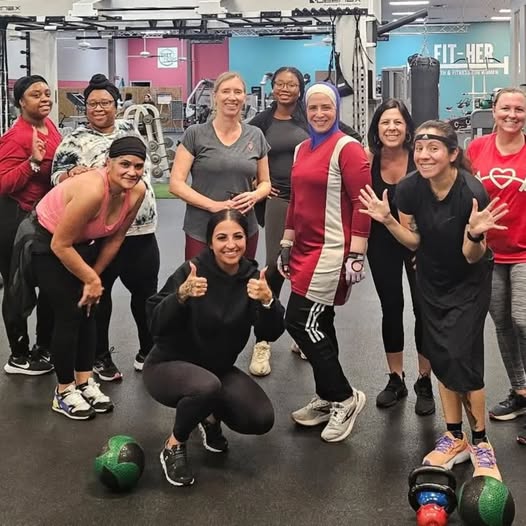
Ann Gilbert ran a franchise in the Tampa Bay area, meaning she operated someone else’s system. The programming, the branding, the marketing calendar, the model itself, all of it arrived from somewhere above her, and she executed it. That is the trade a franchise offers, and for a long stretch, it is a reasonable one.
Then she left it and built Fit-Her.
“We became solution-oriented. We started creating programs, rather than memberships, and we focused on speaking specifically to women’s needs: bone health, hormonal changes, mental health, and lean mass preservation. This has allowed us to face each decade in a woman’s life with innovative programming options and well-educated fit pros and coaches. To meet each and every one where they were when they walked through the doors, we refined the space, removing mirrors, adding recovery areas, and redesigning the outdated integration process. Upskilling the staff, many of whom had been in-house for as many as 20 years, and being available to speak one-to-one with potential members remains a challenge. We have found that online signs promote little more than a price, rather than the culture one experiences when walking through the doors.”
— Ann Gilbert, Founder, Fit-Her
Walking away from a franchise is not a small business decision. There is an operating system you are giving up, a name people recognize, a set of problems somebody else already solved for you. What you get in return is the ability to design a club around a specific woman rather than around a national template.
Fit-Her is a physical club, so this is not a story about escaping the building. It is a story about who the building is for, and about a woman who had been operating inside somebody else’s answer, deciding to write her own.
Jennifer Lungren: The Business That Refuses to Have a Door
Jennifer Lungren went in the opposite direction entirely. She looked at the middle-aged women she wanted to reach and concluded that the building was not an asset. It was the obstacle.
So she trains women in their living rooms. She runs group classes in churches and in parking lots. The overhead is close to nothing, so the price can be reasonable, and women who could never justify a boutique membership can actually afford to train.
“I wanted to create an environment where women could move their bodies and feel good. From the beginning, I recognized that traditional fitness spaces can be a significant barrier for many women. Big gyms, intimidating equipment, and the pressure of those environments often prevent them from ever walking through the door. When I designed my business, I centered it around meeting women where they are most comfortable. Whether in their homes, neighborhood community centers, or church spaces, I bring fitness into familiar environments where women feel safe, supported, and connected. Meeting women where they are makes movement more accessible and allows them to focus not only on physical strength but also on the confidence and mental well-being that come with it. Specifically, in-home training was led by busy women who didn’t see how they could make time for traditional fitness settings, so I go to them so they can put self-care closer to the top of their to-do lists.”
— Jennifer Lungren, Founder
There is a reason most coaches do not build this way, and it is not that they never thought of it. Going to the client is harder. It is more driving, more setup, more logistics, and there is no beautiful facility doing any of the selling for you.
“The driving, scheduling, and logistics require a great deal of effort. At times, coordinating everything can be the most challenging part of my week. True, there is no overhead for physical space, but there is the gas and mileage on my car. So this is not an overhead-free business model, and maybe I don’t see as many clients if I had a physical space, but that was never the vision for me. I like going to homes and being in simpler spaces. Every time I finish a session and see the confidence, strength, and joy on a client’s face, I’m reminded exactly why I chose this path. Those moments reaffirm that I am living out my mission: creating a space where women feel empowered to move, grow, and build lasting strength from the inside out.”
— Jennifer Lungren, Founder
The parking lot and home training is not a compromise she settled for. It is a deliberate answer to a question most operators never bother to ask: what would actually get this woman to show up?
What Both of Them Did Instead
Two women, two businesses that share almost nothing on paper, and one decision underneath both.
Neither of them started with a building, a franchise agreement, or a market analysis. They started with a woman. Ann’s woman had outgrown what a franchise template could offer her. Jennifer’s woman could not afford a gym or would not walk into one. Each of them then built whatever structure that specific woman actually required, and the structures ended up as opposites. Ann’s answer was to own her building. Jennifer’s answer was to have no building at all. Both answers were correct, because they were built around different women.
That is the part worth sitting with. There is no correct business model in this industry. There is only the model that fits the person you are actually serving, and most of us build it in the wrong order, starting with the structure and then hunting for humans to fill it.
The Question to Ask Before You Sign Anything
Before you take out the lease, buy the franchise, build the app, or raise your rates, describe the specific woman you are building this for. Not a demographic. A person. Where she lives, what her Tuesday looks like, what stops her from training, what she is actually lonely for.
Then look at the business you are about to build and ask whether she would ever walk through the door. If the answer is no, you are building in the wrong order, and no amount of good coaching inside that building will fix it.
FitHire — Connect With Coaches Building the Future of the Industry
The coaches designing the next generation of fitness businesses are the ones who started with the client instead of the floor plan. FitHire by Coach360 connects coaches with the operators and facilities building around real people rather than templates.
Frequently Asked Questions
What are women in fitness doing differently with their business models?
The most interesting women-led fitness businesses tend to start with a specific underserved client rather than with a facility, a franchise agreement, or a market template. Ann Gilbert left a franchise to build Fit-Her, a club designed around the women she was actually serving. Jennifer Lungren eliminated the facility entirely, training women in their homes and running classes in churches and parking lots to keep costs accessible for middle-aged women. The two businesses look nothing alike, and the underlying decision is the same: design the structure around the person rather than fitting the person into an existing structure.
Is a fitness franchise a good business model for coaches?
It depends entirely on whether the franchise’s template matches the client the coach wants to serve. A franchise provides an operating system, brand recognition, and pre-solved problems, which is a genuine advantage. It also constrains programming, pricing, and community decisions to a national template. Some coaches find that the template stops fitting the women in front of them and build independently so they can make those decisions themselves. The franchise question is not good or bad in the abstract. It is a question of fit.
How can a fitness coach build a business without a facility?
Eliminating facility overhead makes accessible pricing possible, which opens the business to clients who would never join a traditional gym or boutique studio. Coaches can train clients in their homes, run group sessions in community spaces such as churches, parks, and parking lots, and build the entire model around going to the client rather than asking the client to come to them. The trade-off is more logistics, more driving, and no facility doing the selling. What is gained is access to an underserved population and an economic model that does not require filling a room to survive.
What is the first question a coach should ask before choosing a business model?
Describe the specific person the business is being built for, in real detail rather than as a demographic: where she lives, what her week actually looks like, what prevents her from training, and what she is genuinely looking for beyond exercise. Then examine the business model under consideration and ask whether that person would realistically walk through its door. Most fitness businesses are built in the wrong order, starting with the structure and then searching for people to fill it, and that inversion is what caps the growth of otherwise good coaching.
About Jessica H. Maurer
Jessica is a recognized fitness business consultant and strategist focusing on transforming businesses from overwhelmed to organized. Her international presentations, workshops, certifications, and consultations underscore her commitment to helping fitness professionals and businesses realize their full potential. When Jessica takes the stage, she’s sharing fresh ideas and inspiration that spark positive change. Jessica’s international presentations and consultations are about growth, career transformation, overall wellness, and making fitness a joyful journey. Her expertise spans education, program and instructor development, and brand evolution, making her a key player in elevating the industry. Jessica also played a pivotal role in developing the Mental Well-being Association’s certification for Fitness Professionals., always striving to bring a holistic approach to wellness that’s as uplifting as it is effective.
Jessica has presented at prestigious events like IDEA World, Fitnessfest ACSM Health & Fitness Summit, SCW Mania, AsiaFit, and more. She has worked with brands such as FIT4MOM, SFR, BOSU, Lebert Fitness, Savvier Fitness, SCW Fitness, FitSteps, canfitpro, IDEA, and VIBES music. She also has written content for the IDEA Fitness Journal, canfitpro Magazine, Mental Well-being Association, FIT4MOM, Motherly, and more.