


As people age, maintaining independence, mobility, and mental sharpness becomes the top priority. Functional training works and so does brain training. Pairing both turns exercise into a strategy for staying strong, sharp, and out of hospital beds. For active agers, the goal shifts from chasing personal records to protecting autonomy for as long as possible.
What Are Cognitive Patterns and Functional Movements?
Cognitive patterns describe how the brain processes information: memory, focus, problem-solving, and decision-making. Functional movements are the physical mechanics that support daily life: standing from a chair, carrying groceries, climbing stairs, or reaching overhead.
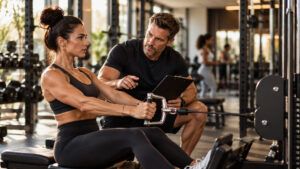
When combined, they create sessions that challenge the brain and body at the same time. This dual focus helps older clients stay mobile, confident, and mentally agile, benefits that directly support independence.
Functional Movements Protect Autonomy
Functional training mimics everyday movement or mechanics.
- Squats replicate toilet transfers.
- Carries build strength for groceries.
- Step-ups improve stair access.
- Presses make it easier to put heavy things overhead.
- Pushing makes it easier to move furniture.
This is why research-backed programs like Lifestyle-integrated functional exercise or LiFE and the 3-Step Workout aren’t flashy, but they are highly effective fitness programs for older adults, helping participants improve balance, maintain strength, and stay mobile.
From a coaching standpoint, it’s high-yield. Functional programs reduce fall risk, lower churn, give coaches repeatable metrics to program against, and ultimately make your club a safe space for older clients afraid of hurting themselves.
When your client lifts a laundry basket without pain, that’s when you know your program is working. When they do it again next week, that’s retention.
Movement Alone Isn’t the Full Picture
The most unfortunate aspect of cognitive decline is that it doesn’t wait for a diagnosis. Executive function, memory, and processing speed all change with age. The good news is that staying active helps. Regular aerobic and resistance exercise has been shown to support neuroplasticity and reduce the risk of dementia.
By now, it’s common knowledge that exercise builds the brain as much as it strengthens our body.
Researchers found that regular movement improves working memory, speeds up attention response, and supports better sleep cycles. And when clients move better and think clearer, they buy in. That drives program compliance without gimmicks.
Cognitive Patterns Are Measurable Inputs
Brain training is more than just a quick game of Sudoku. Measurable cognitive traits can be actively developed, including:
- Pattern recognition, working memory, and decision speed
- Word recall and number games
- Balance under pressure
- Short storytelling or problem-solving tasks
All of these exercises contribute to building cognitive resilience and overall brain health.
Contrary to what most people believe, being 50 doesn’t mean your brain is slower by default. Neuroplasticity doesn’t vanish at that age; it just needs training. Coaches who layer in mental work give the brain the same respect they give the posterior chain.
The Dual-Task Advantage
Movement + cognitive load = increased performance. Balance holds combined with counting backwards. Step-ups paired with city naming. Squat sets linked to word-list recall. These drills replicate real-life scenarios like carrying groceries while problem-solving or walking while making decisions.
The benefits are measurable: better balance, sharper memory, higher confidence, and a more adaptable brain. This dual-task approach makes training safer, more engaging, and directly relevant to daily life.
Program Design That Pays Off
Functional brain training doesn’t have to be complex. In fact, it should be anything but complicated.
Start with something fun and simple. One cognitive task, one physical movement. Test the baseline. Scale as needed.
- Balancing on one foot while naming objects in the room.
- Chair stands while counting backwards by fives.
- Step-ups while reciting a story or song.
- Walking around cones while solving simple math problems.
- Tossing and catching a ball while naming animals.
Short intervals work. 30 seconds of chair stands while listing fruits, followed by 30 seconds of rest. Build around consistency, not based on how tired they are. Two to three sessions per week, 20–30 minutes, is plenty.
Finally, use group settings where possible. The social factor builds adherence and reinforces learning. Clients get stronger together and build peer accountability, which improves attendance rates and lowers dropout.
Putting It All Together Safely
For active agers, safety is non-negotiable. Assess abilities and scaling intensity. Balance physical effort with cognitive challenge to avoid fatigue. Use clear instructions and simple visuals to support understanding.
Most importantly, build consistency. Repetition is where results compound, both physically and mentally.
For Coaches, It’s Good Business
Active agers spend on quality programming that protects their personal autonomy. Facilities that combine functional training and cognitive strategy pull ahead on retention and referrals. It reduces injury liability, increases lifetime value per client, and makes your club or program a cut above competition that’s always growing.
What happens if you ignore this demand? Clients drift into medical rehab or cognitive care programs instead of staying with your gym. The better play is to meet their needs directly with training that delivers measurable independence.
Final Thoughts
Physical strength keeps clients moving and cognitive strength keeps them independent. The combination keeps them on your roster.
Functional training and cognitive work are two sides of the same coin: keeping people capable. For coaches, that means fewer cancellations, more meaningful sessions, and a stronger business over time.
Ruben Pereyra
Ruben is the Senior Fitness Director at WESLEY Senior Homes in Des Moines. He holds a BS degree in Kinesiology and is a certified ACE personal trainer, Parkinson’s Fitness Specialist, Senior Fitness Specialist, WA Certified Coach, Speaker specializing in Senior Populations and the 2024 IDEA WORLD Emerging Trailblaizer of the Year recipient. For the past 16 years, Ruben has been an influential figure in the fitness industry, spreading awareness about the importance of movement and how it can positively impact people’s lives. Ruben is an entrepreneur who offers fitness services for every age group, including personal training, group exercise classes, brain cognitive function training, and fitness direction for schools and well-known corporations.