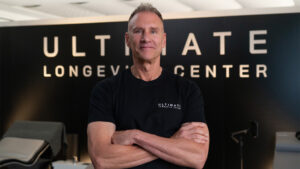



The line that stopped me in the Bruce Cardenas interview came about ten minutes in. He was describing the early days at Quest Nutrition, the startup he helped scale into a household name and a billion-dollar sale. I expected the usual founder-story rhythm: vision, grind, breakthrough. Instead he said this: “I always say I was the least qualified person to work in a nutrition company. My superpower was relationship building.”
I’ve interviewed a lot of founders who’ve built something big. Most of them will tell you what they knew. Bruce Cardenas wanted to tell me what he didn’t. And in that inversion, a coach reading this interview will find something more useful than another founder myth.
If you coach for a living, you’re in the same business Bruce was in. You’re not selling expertise first. You’re selling a relationship that happens to be built around expertise. Bruce figured that out at the scale of a nutrition brand, and the community he built at Quest is the same one he’s now building at Legendary Foods. The mechanics translate. If you understand how he built trust with coaches and community, you’ll understand how to build it with your own clients.
The Through Line Is Service, Not Strategy
Before Legendary Foods, before Quest, before any of the business résumé, Bruce’s career moved through the Marine Corps, LAPD, and executive protection. That’s the part most profiles lead with. Bruce doesn’t.
“The through line is service and discipline,” he says. “Every chapter, Marines, LAPD, executive protection, building brands, was about showing up for something bigger than myself. The environments changed, but the mindset didn’t. Execute, be accountable, protect the mission, and take care of people. That’s been the constant.”
The reason this matters for a coach: the discipline that makes someone good in uniform is the same discipline that makes someone good on the gym floor on a Tuesday at six a.m. It’s not passion. It’s not charisma. It’s the decision to show up prepared and present when nobody is watching. Bruce puts that on the coach reader directly: “It’s simple but not easy. It’s showing up prepared. It’s being present with your clients. It’s holding people accountable even when it’s uncomfortable. It’s doing the small things consistently, on time, every time. Purpose isn’t a speech. It’s your daily standards.”
Most coaches don’t have a brand problem. They have a consistency problem. The standards slip in the invisible moments, between sessions, when nobody is scoring the performance. That’s where the service-and-discipline framework stops being a military artifact and becomes a coaching tool.
Brand Consistency Over Brand Creativity
Inside Quest, Bruce watched a new team burn real money chasing the wrong things. He’s candid about it. “Looking back, there were a lot of things we did not know or understand as a new team. We started wasting a lot of money, doing things that took our eye off the ball. And that’s why I tell people brand consistency is far greater than brand creativity.”
For a coach building a personal brand, that line reorders the priority list. Most coaches think the problem is that their content isn’t creative enough, their offer isn’t bold enough, their positioning isn’t unique enough. Bruce’s answer, at Quest-scale, was the opposite. Show up the same way, in the same places, with the same message, for long enough that people stop having to guess what you stand for.
What most people don’t see about the Quest build, he says, is how much of it was just being present. “We didn’t talk at people, we listened. We were in gyms, at events, in conversations daily. It wasn’t a marketing strategy, it was survival. That connection is what built the brand.”
Translate that to a coaching practice. The coach who shows up at the same community events, checks in with the same clients on the same cadence, and answers the same questions patiently for years will out-earn the coach with better branding and inconsistent follow-through. Consistency compounds. Creativity alone doesn’t.
Lead With Value (Without Keeping Score)
This is the framework Bruce built his book around, and the one that translates most cleanly into a coaching practice. The premise is straightforward. The biggest opportunities in his career did not come from asking. They came from giving first, without tracking.
“Early on, I realized if you consistently bring value without keeping score, people notice. Trust builds. Relationships build. And over time, those relationships open doors you could never force.”
For a coach, the application is practical. The free consult that turns into nothing this month turns into a referral in eighteen months. The extra ten minutes after the session builds the loyalty that survives a price increase. The industry connection you make for a colleague comes back around. Lead with Value is not a motivational phrase. It’s a long-horizon compounding strategy that only works if you stop tracking returns on individual interactions.
Bruce’s own measure of whether it’s working: “Remember, if people like you, they’re going to listen. If they trust you, they’re going to buy. But if you transform their lives, they’re going to go to the highest mountain tops and scream your name and tell everybody they know.”
The honest tradeoff here is time. A lead-with-value approach costs more upfront than a transactional one. You give more away. You convert less on any individual touchpoint. What you gain is a client base that refers, stays, and builds your business for you. Most coaches quit this approach at month nine, right before it starts paying off.
Your Health Is Your Credibility
Ask Bruce what coaches get wrong about health and credibility, and the answer is sharp. “They separate it. Your health is your credibility. It doesn’t mean perfection, but it does mean alignment. If you’re asking people to live a certain way, you should be striving to live it too.”
He makes the point with a comparison most coaches will recognize. “I had a trainer for a couple years and I wanted to look like him. He represented what I wanted. If I had an out-of-shape trainer, obviously that would not resonate with me. But if I had a chubby chef, I could appreciate that because he’s making great food and he’s enjoying it. People can feel authenticity or the lack of it.”
The distinction matters for how you position yourself. A coach is not a chef. Clients are not buying the product. They’re buying the embodiment. They’re looking at you and asking, consciously or not, whether the outcome you’re selling actually lives in the person selling it. That doesn’t mean every coach has to be a physique competitor. It does mean the gap between what you teach and how you live is visible, and clients close deals based on it more than they’ll admit.
Bruce’s own sixty-pound transformation changed how he leads. “When you’ve lived both sides, disciplined and undisciplined, you lead with empathy but also with standards. I don’t just talk about health. I understand the struggle behind it. And from a business standpoint, I see health as performance. If you’re not taking care of yourself, you’re limiting your capacity to lead, think, and execute. Period.”
How Quest Treated Coaches (And Why It Matters for Yours)
The part of the interview that should matter most to a working coach is the part Bruce almost understates. At Quest, coaches were not a distribution channel. They were the brand.
“We respected them. We didn’t treat them like a distribution channel. We treated them like partners. Somehow, Quest created this almost cult-type of following and loyalty. And we did unique things with ambassadors, influencers, and coaches. It wasn’t just about selling protein. It was about building relationships and supporting them in their endeavors. To this day, we are more interested in what they are talking about, promoting, and selling as opposed to what we are promoting and selling.”
Read that last sentence twice. The brand is more interested in the coach’s business than in its own product. That’s the inversion most fitness brands never execute.
For a coach evaluating partnerships, this is the diagnostic. The brands worth partnering with are the ones that ask about your business, your audience, your programs, before they ask you to promote theirs. The ones that lead with their product pitch are a distribution channel pretending to be a partnership. Bruce’s model, carried from Quest into Legendary Foods, is the other one.
Leadership Is Behavior, Not a Title
The line Bruce gives to coaches who want to lead better is the one worth closing on. “Stop thinking of yourself as ‘just a coach.’ You’re a leader the moment someone trusts you with their time, their body, and their goals. Start acting accordingly. Communicate clearly. Set standards. Be consistent.”
“Leadership isn’t a title. It’s behavior.”
Most coaches underestimate the jurisdiction they’ve been given. A client who trusts you with their training is trusting you with their Tuesday morning, their energy levels, their self-concept, and often their household schedule. That is leadership jurisdiction, whether the coach sees it that way or not. The question is whether the behavior matches.
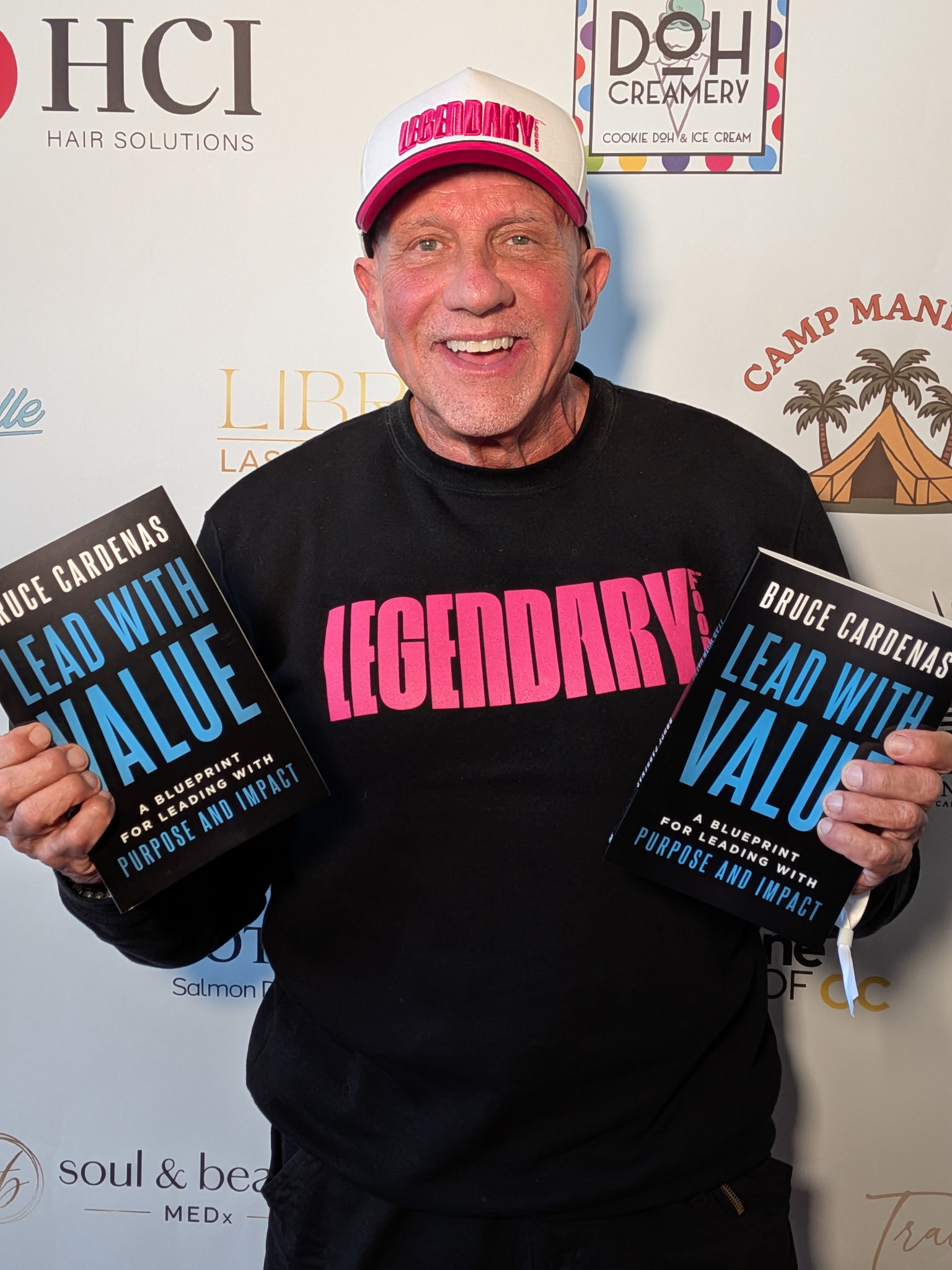
Bruce’s book, Lead with Value, is built for that coach. The one who wants to walk away feeling capable, not overwhelmed. “Not everything is transactional. You may build relationships that last a lifetime, and maybe not everyone will become a customer, but they still may recommend you to other people.”
FitHire — Find Your Next Coaching Role
The coaches thriving inside performance nutrition brands, studios, and hybrid practices are the ones operating like Bruce describes: service-first, consistent, and clear about the value they bring. If you’re ready for a role that matches that standard, browse openings at fithirebycoach360.com.
Frequently Asked Questions
Who is Bruce Cardenas and what is his role at Legendary Foods?
Bruce Cardenas is the founder of Legendary Foods, a performance nutrition brand building a coaching community around clean, craveable food. Before Legendary, Bruce was Chief Communications Officer at Quest Nutrition, where he helped scale the startup into a household name and navigated its landmark billion-dollar sale. He is also a former Marine, a former LAPD officer, a reserve deputy with the LA County Sheriff’s Department, a board member across multiple companies, and the author of the Lead with Value book.
What is the Lead with Value framework?
Lead with Value is Bruce Cardenas’s leadership philosophy and the title of his book. The core principle is that the biggest opportunities in a career come from giving value without keeping score. Trust compounds, relationships compound, and over time the consistency of giving opens doors that asking never could. For coaches, it functions as a long-horizon business strategy: the free advice, the extra ten minutes, and the referrals you make for colleagues return to you on a timeline most people quit before reaching.
What does Legendary Foods’ Bio Shift Research Foundation fund?
What do coaches get wrong about personal credibility, according to Bruce Cardenas?
The mistake most coaches make, per Bruce, is separating their personal health from their professional credibility. His position: your health is your credibility. It does not mean perfection, but it does mean alignment between what you teach and how you live. Clients evaluate that alignment whether they admit it or not, and the gap between the outcome a coach sells and the outcome the coach embodies is one of the most underdiscussed variables in coaching business performance.
What does Legendary Foods’ Bio Shift Research Foundation fund?
What do coaches get wrong about personal credibility, according to Bruce Cardenas?
The mistake most coaches make, per Bruce, is separating their personal health from their professional credibility. His position: your health is your credibility. It does not mean perfection, but it does mean alignment between what you teach and how you live. Clients evaluate that alignment whether they admit it or not, and the gap between the outcome a coach sells and the outcome the coach embodies is one of the most underdiscussed variables in coaching business performance.
If you want to follow the journey and learn more from Bruce, find him at BruceCardenas.com or on Instagram at @BruceECardenas.
About Erin Nitschke
Dr. Erin Nitschke, NSCA-CPT, NFPT-CPT, ACE Health Coach, ACE-CPT, Fitness Nutrition Specialist, Therapeutic Exercise Specialist, Pn1, FNMS, and DSWI Master Health Coach, is a seasoned college professor in health and human performance. She is a nationally recognized presenter, industry writer for IDEA, NFPT, Fitness Education Online, and Youate.com, and an active member of the ACE Scientific Advisory Panel. With extensive experience in health and exercise science, Erin specializes in holistic, evidence-based approaches to wellness. Her passion lies in empowering individuals to lead healthier, more vibrant lives through personalized coaching. Erin’s philosophy centers on education, accountability, and sustainable behavior change—guiding clients to achieve long-term success in nutrition, fitness, stress management, and overall well-being. To connect with Dr. Nitschke, email her at erinmd03@gmail.com or on Instagram: @nitschkeerin