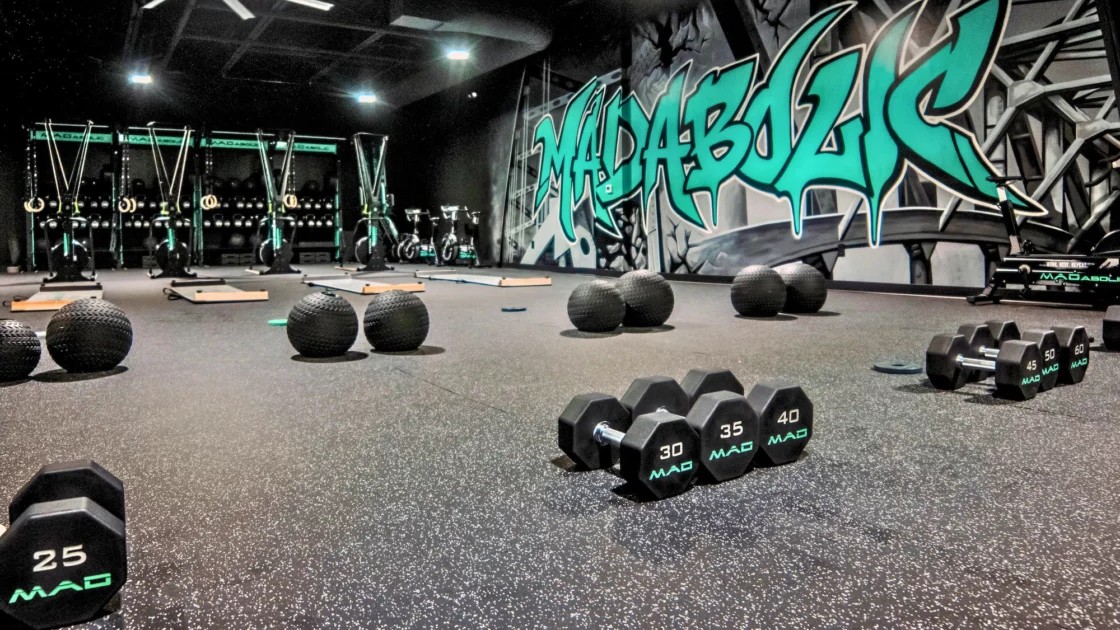



My client was 57, had been lifting on and off since his late twenties, and showed up to our first session with a printed list of exercises his last trainer had told him to avoid. Leg press was on it. So was the bench press. So was anything that “put stress on the spine,” which, by my read, was most of the things worth doing in a gym. He had been handed a fear-based program dressed up as a safety protocol, and he had followed it for eight months without getting meaningfully stronger. His joints were fine. His progress was not.
That list bothered me. Not because it was entirely wrong, but because it was wrong in the most common way programming for older clients goes wrong: it started with what to remove rather than what to build.
If you are coaching clients in their fifties and sixties, you have probably seen a version of this. Well-meaning adjustments that add up to a program so cautious it stops producing results. Or the opposite: a coach who runs a 54-year-old through the same block they would run a 28-year-old through, then acts surprised when the client shows up Thursday walking like they slept in a car.
The real programming adjustments for strength training over 50 are fewer than most coaches think and more specific than most coaches apply. Four of them genuinely make a difference. The rest is noise, or worse, unnecessary restriction disguised as caution. What follows is a clearer look at what’s actually worth changing, what isn’t, and a practical 8-week framework you can confidently use with the next client who walks in carrying a long list of things they’ve been told to avoid.
One of the most common mistakes coaches make with clients over 50 is assuming age is the defining variable. It rarely is. Training history, recovery capacity, orthopedic history, stress load, and sleep quality are all far more predictive of how someone will respond to a program than the number on their driver’s license.
A 55-year-old who has trained consistently for fifteen years is going to recover, adapt, and tolerate load very differently than a 55-year-old returning to the gym after a decade away. Programming them the same way simply because they share a demographic category is how you end up with training that serves neither person particularly well.
There are physiological shifts that become more consistent after 50. Connective tissue generally adapts more slowly than muscle tissue. The anabolic response to training is not as robust as it is in younger populations. Recovery between hard sessions often takes longer.
“After 50, the goal isn’t to train less. It’s to recover smarter, progress intentionally, and keep giving the body a reason to stay strong.”
— Ruben P. Thickstun, Active Aging Specialist, Global Presenter, Industry Trailblazer
None of that means people over 50 need fragile programming. It means they need intelligent programming, training that respects recovery, manages progression thoughtfully, and prioritizes consistency over unnecessary extremes.
Those shifts have specific programming implications. They do not imply lifting lighter, moving slower, or avoiding load. They imply sequencing load and recovery more deliberately.
Load Progression Rate and Recovery Interval: The Two Numbers That Change Most
The standard linear progression model, add five pounds when you complete all reps, works beautifully for newer lifters because the nervous system is adapting rapidly and the training stimulus does not need to be large to produce a response. After 50, that model tends to run out of road faster. Not because older clients cannot get stronger, but because the connective tissue adaptations that support heavier loading lag behind the muscular adaptations that would otherwise allow for it.
The practical adjustment is to slow the progression rate and lengthen the wave. Instead of weekly load increases, think in two-week blocks. If your client hits all their reps cleanly in week one at a given load and recovers well, that is your signal to nudge the weight in week two. If they hit the reps but reported lingering soreness on day three, hold the load and check recovery quality before adding anything. “Let’s keep the weight here and make sure the recovery side is catching up” is not a concession. It is the programming decision that keeps the client training in week six.
Recovery interval is the other number that shifts. In a client’s thirties, 60 to 90 seconds between working sets is often sufficient for compound movements at moderate intensity. After 50, the research on neuromuscular recovery points toward longer rest periods producing better subsequent set quality and lower injury risk at the same load. Two to three minutes between compound sets is not excessive. It is what the physiology asks for. The honest tradeoff here is that longer rest intervals extend session length. If your client has 45 minutes, that affects how many exercises fit in the block. Plan accordingly rather than compressing rest to fit more movements.
Eccentric Tolerance and Joint-Position Priorities: What to Actually Change About the Movement
Eccentric loading, the lowering phase of any lift, produces more muscle damage per unit of effort than the concentric phase. That is true at any age. After 50, the recovery from that muscle damage takes longer, and in clients who are new or returning to training, aggressive eccentric loading in early blocks is one of the most reliable ways to create soreness that derails the next session before it starts.
The adjustment is not to eliminate eccentrics. It is to control them early and load them deliberately later. In weeks one and two of a new block, cue a two-to-three second lowering tempo on compound movements: two seconds down on a Romanian deadlift, three seconds down on a squat or press. This builds the connective tissue tolerance you will need when loads increase in weeks five and six. By the back half of the block, controlled eccentrics at higher loads become a specific training tool rather than a soreness management problem.
Joint-position priorities are where the fear-based programming usually overreaches. Knees over toes. Lumbar flexion under load. Overhead pressing. These get flagged as dangerous in blanket terms, and for a small subset of clients with specific structural issues, some restrictions are genuinely warranted. For most 50-plus clients with no documented joint pathology, the issue is not the movement pattern, it is the load and the range of motion they have available on day one. A goblet squat with a four-inch range of motion is not dangerous. It is where the client is starting. A full-depth back squat at 80 percent of a one-rep max in week two of a new program is a different story.
The practical rule is to select joint-friendly loading positions first and earn the more demanding variations. A trap bar deadlift before a conventional deadlift. An incline press before a flat bench. A split squat before a Bulgarian split squat. These are not permanent restrictions. They are a sequencing decision that reduces unnecessary load on structures that are adapting more slowly than the muscles driving the movement. “We are going to use the trap bar for the first four weeks and then see where your hips and low back are before we look at anything from the floor” is a sentence that protects the program without creating the impression that the client is too fragile to deadlift.
What Does Not Change as Much as Coaches Think
The belief that 50-plus clients should train exclusively in high-rep ranges to protect their joints does not hold up. Research in resistance training and aging consistently shows that older adults respond to a wide range of loading parameters, including heavy training in the three-to-six rep range, and that heavier loading is specifically associated with better bone density outcomes than lighter high-rep work. The programming argument for including heavier work at appropriate points in the training cycle is strong. The argument for keeping all training light all the time is mostly habit and anxiety, not physiology.
The myth that soreness is always a warning sign also deserves pushback. Delayed onset muscle soreness in the 24-to-72-hour window after a new stimulus is normal across the lifespan. In 50-plus clients, it tends to peak later and resolve more slowly, which is useful information for session spacing. It is not, by itself, evidence that the training was wrong. The signal worth paying attention to is soreness that is joint-specific rather than muscular, soreness that does not resolve within 72 hours, or pain during the movement rather than after. Those patterns warrant a pause and a conversation. General muscle soreness after a new training stimulus does not.
And the myth that cardiovascular work should replace strength training after a certain age is perhaps the most consequential one to address directly. The research on muscle mass, bone density, insulin sensitivity, and fall prevention in older adults consistently points toward resistance training as the highest-leverage physical intervention for functional longevity. That does not mean cardio is irrelevant. Zone 2 work has its own strong evidence base for metabolic health. But if a 50-plus client has limited time and has to choose where to put their training hours, the strength work is the one to protect first.
The 8-Week Masters Strength Wave: 3 Days Per Week Protocol
The protocol below is built for a client who is training three days per week with at least one full rest day between sessions. It assumes no significant joint pathology, a moderate training history, and a client who is sleeping adequately and eating enough protein to support recovery. If any of those conditions are not met, the program will underperform and the fix is in the lifestyle variable, not the programming.
Each session follows the same structure: one primary lower body movement, one primary upper body push, one primary upper body pull, and one unilateral carry or core stability movement. Warm-up is ten minutes and includes hip circles, thoracic rotation, and two light warm-up sets of the first working movement before any working sets begin. That warm-up is not optional for this population.
| Week | Sets × Reps | Intensity | Primary Lifts | Coach Notes |
|---|---|---|---|---|
| 1–2 | 3 × 10 | 65–70% 1RM | Goblet squat, Romanian deadlift, seated row, incline press | Establish baseline. Prioritize depth and control. No grinding reps. |
| 3–4 | 3 × 8 | 70–75% 1RM | Trap bar deadlift, split squat, cable row, dumbbell press | Add load only if week 1–2 reps were clean and recovery was full. Watch split squat knee position. |
| 5–6 | 4 × 6 | 75–80% 1RM | Trap bar deadlift, Bulgarian split squat, chest-supported row, floor press | Recovery interval extends to 2.5–3 min. Monitor soreness pattern day 2 vs day 3 post-session. |
| 7 | 2 × 6 | 65% 1RM | Same as week 5–6 selection | Deload week. Keep movement, drop volume and intensity. Non-negotiable for 50+ clients. |
| 8 | 3 × 5 | 80–85% 1RM | Athlete choice from block — pick two primary lifts that felt strongest | Performance test week. Record results. Use as baseline for next 8-week block. |
A few things worth noting about how this block is structured. The deload in week seven is non-negotiable. Not optional based on how the client feels. Not something to skip if they had a great week six. For 50-plus clients, the cumulative fatigue that builds across six weeks of progressive loading is real even when it is not visible in session performance. The deload is where a significant portion of the adaptation from the previous six weeks actually consolidates. Skipping it to get one more hard week is one of the most reliable ways to produce a week-eight session that disappoints everyone.
The lift selection in the table is a starting framework, not a prescription. Swap the goblet squat for a leg press if the client has hip anatomy that makes deep squatting genuinely uncomfortable. Swap the floor press for a neutral-grip dumbbell press if shoulder impingement is a documented issue. The logic of the block, progressive load increase across a two-week ramp followed by a deload and a performance test, transfers to whatever movement selections best fit the client in front of you.
The client who showed up with the printed avoidance list eventually put 40 pounds on his trap bar deadlift over two eight-week blocks. His knees felt better at month four than they had at month one, which is what tends to happen when you load connective tissue progressively instead of either avoiding it or throwing weight at it faster than the tissue can adapt. He still has the list. He mostly uses it as a bookmark now.
“Movement after 50 should build confidence, not fear. The right strength program doesn’t make people smaller or more cautious, it reminds them what they’re still capable of.”
— Ruben P. Thickstun, Active Aging Specialist, Global Presenter, Industry Trailblazer
Strength training after 50 is not a different sport. It is the same sport with a more specific set of timing requirements. Get those right and the results are not modest. They are the kind that make a 57-year-old realize the fear-based program was not protecting him. It was just keeping him small.
Related: Absolute Recomp: Scaling Fitness Career Infrastructure
FitHire — Find Masters & Lifestyle Coaching Roles
Frequently Asked Questions
How often should clients over 50 lift weights, and does that change as they get older?
Three days per week is the most consistently supported training frequency for strength development in clients over 50 — enough stimulus to drive meaningful adaptation, enough recovery time between sessions to let connective tissue catch up with muscular adaptation. Some well-recovered, experienced clients do well with four days, particularly if they are splitting upper and lower body across sessions. Two days per week maintains muscle mass better than most coaches expect, and for clients with demanding work schedules or significant life stress, two quality sessions often outperform three rushed ones. What tends to matter more than the exact frequency is the spacing: at least one full rest day between sessions that include the same movement patterns, and a structured deload every sixth or seventh week regardless of how good the client feels going into it. The deload is where much of the adaptation from the preceding block actually takes hold.
What are the most important strength training adjustments for clients over 50 who are new to lifting?
Three adjustments matter most for someone new to lifting after 50. First, start with joint-friendly loading positions before progressing to more demanding variations: trap bar before conventional deadlift, incline or floor press before flat bench, split squat before Bulgarian split squat. These are sequencing decisions, not permanent restrictions. Second, build in a controlled eccentric tempo from day one — two to three seconds on the lowering phase of every compound movement. This builds connective tissue tolerance before the loads get heavy enough to stress it. Third, extend recovery intervals between working sets to two to three minutes for compound movements. Newer lifters of any age feel like they should be moving faster between sets. For 50-plus beginners, the longer rest produces better set quality and significantly lower soreness in the 48 hours following the session. All three adjustments slow the surface-level pace of the session. None of them slow the rate of actual progress.
Should clients over 50 avoid heavy lifting, or is that a myth?
It is largely a myth, and a consequential one because the clients who need the bone density and functional strength benefits of heavier loading most are often the ones being steered away from it. The research on resistance training in older adults consistently shows that clients over 50 respond to a wide range of loading parameters, including work in the three-to-six rep range at higher percentages of their one-rep max, and that heavier loading produces better bone density outcomes than light high-rep training. The practical qualifications are real: heavier loading requires a longer ramp-up period, more deliberate joint position selection, and more attention to recovery quality between sessions. For clients with documented orthopedic issues, some specific movements may be genuinely contraindicated. But the blanket recommendation to keep everything light is not protective. For most 50-plus clients, it is the thing standing between them and the results the training should be producing.
What does a good 8-week strength block look like for a masters athlete training three days per week?
The structure that works well for most 50-plus clients in a three-day-per-week format runs like this: two weeks at moderate intensity around 65 to 70 percent of one-rep max building baseline movement quality, two weeks stepping up to 70 to 75 percent with a modest volume increase, two weeks in the 75 to 80 percent range with four working sets and extended rest intervals, a mandatory deload week at reduced volume and intensity, and a performance week in week eight where the client works up to 80 to 85 percent on the movements that felt strongest across the block. The lift selection prioritizes trap bar or goblet squat patterns for lower body, incline or floor press for upper body push, and chest-supported or cable rows for upper body pull — all joint-position choices that reduce unnecessary load on adapting structures while still producing the training stimulus the block needs. The deload in week seven is the piece most coaches are tempted to skip. It is also the piece that determines whether week eight produces a genuine performance result or a flat session that leaves the client wondering what the last six weeks were for.
Erin Nitschke is a certified personal trainer, health coach, and exercise physiologist specializing in masters athlete programming and active aging performance.
About Erin Nitschke
Dr. Erin Nitschke, NSCA-CPT, NFPT-CPT, ACE Health Coach, ACE-CPT, Fitness Nutrition Specialist, Therapeutic Exercise Specialist, Pn1, FNMS, and DSWI Master Health Coach, is a seasoned college professor in health and human performance. She is a nationally recognized presenter, industry writer for IDEA, NFPT, Fitness Education Online, and Youate.com, and an active member of the ACE Scientific Advisory Panel. With extensive experience in health and exercise science, Erin specializes in holistic, evidence-based approaches to wellness. Her passion lies in empowering individuals to lead healthier, more vibrant lives through personalized coaching. Erin’s philosophy centers on education, accountability, and sustainable behavior change—guiding clients to achieve long-term success in nutrition, fitness, stress management, and overall well-being. To connect with Dr. Nitschke, email her at erinmd03@gmail.com or on Instagram: @nitschkeerin