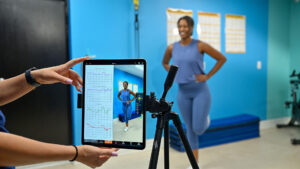



Your 9 AM client walks in, holds up her wrist, and says her Whoop recovery score is 38 percent. She wants to know if she should still train heavy today. That question, some version of it, is now a standard part of coaching. Wearable data has moved from novelty to fixture, and the coaches who know how to interpret it are making better programming decisions than the ones who ignore it or, worse, overreact to it.
Clients now arrive with detailed data on sleep quality, heart rate variability, resting heart rate, strain scores, daily movement, and sometimes continuous glucose readings. The data is only useful if you can translate it into programming decisions. That translation, reading what the numbers mean for the person standing in front of you, is the coaching skill this article is about.
“The future of fitness isn’t built inside four walls. It’s built across the data, devices, and daily decisions our members make.”
– Ted Vickey, Founder and CEO, FitWell
For coaches, that shift requires clear decision-making frameworks rather than passive data review.
The Metrics That Actually Change Your Programming
Not every wearable metric deserves equal attention. The goal is to prioritize the data points that change what you do in the session, not the ones that generate conversation without direction.
Start with resting heart rate and heart rate variability as your readiness indicators. A consistently elevated RHR relative to a client’s baseline signals accumulated fatigue, poor sleep, heightened stress, or the early onset of illness. HRV is more useful as a trend than a single-day score. Look at multi-day patterns: if HRV has been declining over a week while the client reports feeling fine, that disconnect is worth a conversation before you load the bar. Together, these two metrics tell you whether your client’s nervous system is ready for the session you planned or whether you need to adjust. When both trend in the wrong direction over several days, shift to lower-intensity work or recovery-focused programming. Recovery coaching principles apply directly here.
Sleep duration and quality contextualize everything else. Chronic short sleep explains plateaus, poor recovery, and elevated injury risk in ways training logs alone cannot. When sleep data shows consistent disruption, that is the first variable to address before adjusting programming. Pair it with strain scores and you have a readiness picture that goes beyond how the client feels walking in.
Strain scores add a third dimension to your readiness assessment. When a client’s strain score runs high but RPE stays moderate, cardiovascular efficiency is improving. That mismatch is a data point worth celebrating and worth using to justify a progression the client might otherwise resist. When strain is high and the client feels crushed, back off.
For clients with body composition or cardiometabolic goals, daily step count and non-exercise activity often matter more than the structured session. A client hitting every workout but averaging 3,000 steps on non-training days has a movement problem your program alone will not solve. That is a behavior change conversation, and wearable data gives you the evidence to start it.
Reading Patterns, Not Reacting to Numbers
The fastest way to misuse wearable data is reacting to a single day. A client reports weighing 185 pounds on Monday morning and 187 on Friday afternoon. That does not mean they gained two pounds of fat in four days. It means you are looking at two isolated data points shaped by hydration, meal timing, and time of day. Without a trend line across weeks, that number tells you nothing actionable. You are reading one paragraph and treating it like the whole chapter.
The same principle applies to every wearable metric. Look for patterns across 7 to 14 days, not single-session readings. Compare data against the client’s individual baseline, not population averages. Cross-reference physiological data with what the client actually tells you: their RPE, mood, soreness, and stress levels. When a number on a screen contradicts what the client reports feeling, that gap is where the coaching conversation lives.
Here is what this looks like in a session. Your Tuesday morning client shows low HRV trending over three days, reports high stress at work, and slept under six hours last night. You had a heavy squat progression planned. Instead, you shift to moderate-load posterior chain work with tempo control, add a longer warmup with breathing work, and use the cooldown to check in on what is driving the sleep disruption. That is using data to coach the person who showed up, not the one on the spreadsheet.
Consider the opposite scenario: a client’s strain score from yesterday’s session was high but her RPE was moderate. That tells you cardiovascular efficiency is improving. She is handling more physiological load with less perceived effort. That is worth celebrating and worth using to justify a progression she might otherwise resist.
If body composition progress stalls while step counts remain consistently low, address daily movement targets before cutting calories or increasing training volume. The wearable data gives you the evidence. Your job is to act on it.
Three questions to keep in your back pocket when reviewing data with clients: What was different this week? How did you feel compared to what your device is showing? What patterns are you starting to notice? These questions move the conversation from number-chasing to self-awareness, which is where lasting behavior change happens. Client retention depends on these kinds of coaching conversations.
When the Data Says Refer Out
Your scope is performance, fitness, and behavior change. It is not medical diagnosis. But because you are now reviewing metrics regularly, you will see patterns that fall outside what training adjustments can address. Knowing when to refer is the skill that protects both the client and your professional standing.
Persistently abnormal heart rate responses, unexplained tachycardia, or repeated irregular rhythm alerts from a wearable require a medical evaluation conversation, not a coaching adjustment. Chronic sleep disturbances accompanied by severe fatigue, mood disruption, or cognitive difficulties that do not respond to behavior changes you have already tried need the same referral. If a client is using continuous glucose monitoring and showing repeated irregularities, that data belongs in front of an endocrinologist, not in your programming notes. Signs of overtraining paired with hormonal or systemic symptoms require a medical professional, not more recovery days.
There is one more referral scenario that gets overlooked. If a client begins obsessing over their data, checking scores compulsively, letting a low recovery number ruin their day, or refusing to train because a metric dropped, that relationship with the device has become harmful. Refer to a mental health professional. Your role in every referral scenario is the same: identify the pattern, communicate your concern clearly, connect the client with the right specialist, and continue coaching within your lane.
Your client’s wearable is generating data whether you use it or not. The clients who wear these devices are already forming opinions about what the numbers mean. If you are not part of that conversation, someone else is filling the gap, and it might be a Reddit thread or an Instagram influencer with no coaching credentials. The coaches who learn to read patterns across days and weeks, adjust sessions based on what the data and the client together are telling them, and refer confidently when patterns exceed their scope are the ones clients trust with their health long after the session ends.
Coaches bringing data-informed programming into new training environments can explore opportunities on FitHire by Coach360, where studios and operators are hiring coaches who understand that modern coaching runs on observation, conversation, and the data between sessions.
Frequently Asked Questions
Which wearable metrics matter most for coaching decisions?
Resting heart rate and HRV trends for readiness. Sleep duration and quality for recovery context. Strain scores for load management. Daily step count for behavior change conversations with body composition clients. Track what changes your programming, not what fills conversation time.
How do I talk to clients who obsess over their wearable data?
Redirect from single-day scores to multi-week patterns. Frame data as one input alongside how they feel, how they are moving, and how they are recovering. If a client’s relationship with their device is creating anxiety or compulsive checking, that is a referral conversation with a mental health professional, not a coaching fix.
Should I require clients to share wearable data with me?
Do not require it. Invite it. Some clients find sharing empowering and it gives you better programming inputs. Others find it intrusive or anxiety-inducing. Let the client decide what they share and set clear expectations about how you will use it: to inform programming, not to judge compliance.
About Erin Nitschke
Dr. Erin Nitschke, NSCA-CPT, NFPT-CPT, ACE Health Coach, ACE-CPT, Fitness Nutrition Specialist, Therapeutic Exercise Specialist, Pn1, FNMS, and DSWI Master Health Coach, is a seasoned college professor in health and human performance. She is a nationally recognized presenter, industry writer for IDEA, NFPT, Fitness Education Online, and Youate.com, and an active member of the ACE Scientific Advisory Panel. With extensive experience in health and exercise science, Erin specializes in holistic, evidence-based approaches to wellness. Her passion lies in empowering individuals to lead healthier, more vibrant lives through personalized coaching. Erin’s philosophy centers on education, accountability, and sustainable behavior change—guiding clients to achieve long-term success in nutrition, fitness, stress management, and overall well-being. To connect with Dr. Nitschke, email her at erinmd03@gmail.com or on Instagram: @nitschkeerin