All Categories
All Categories

The emails came in on lunch breaks.
Brittni Shae was the primary occupational therapist on an orthopedic unit in Bradenton, Florida. Fresh hips, fused backs, total shoulders. Somewhere between morning rounds and afternoon charting, her phone filled with questions from women who had been following her fitness posts since 2010. Not clinical questions. Training questions. Nutrition questions. Questions about how to eat when you work a twelve-hour shift and get home exhausted.
She wrote a few one-off programs. Then PDF booklets. Then something that looked, by 2014, like an actual business.
“I realized my OT background was an advantage. I was a clinician who understood anatomy, movement, and how the body actually heals. I knew if I could just stay disciplined, the business would eventually catch up to the vision.”
Tax season confirmed what she already suspected. By 2015, the online work had grown large enough to generate a significant tax bill. Her best year in business to that point. She kept both careers. Ten years later, Team BShaeFit has served more than 750 clients, runs entirely online, and sits beside an ergonomics consultancy and an active IFBB Pro Fit Model career.

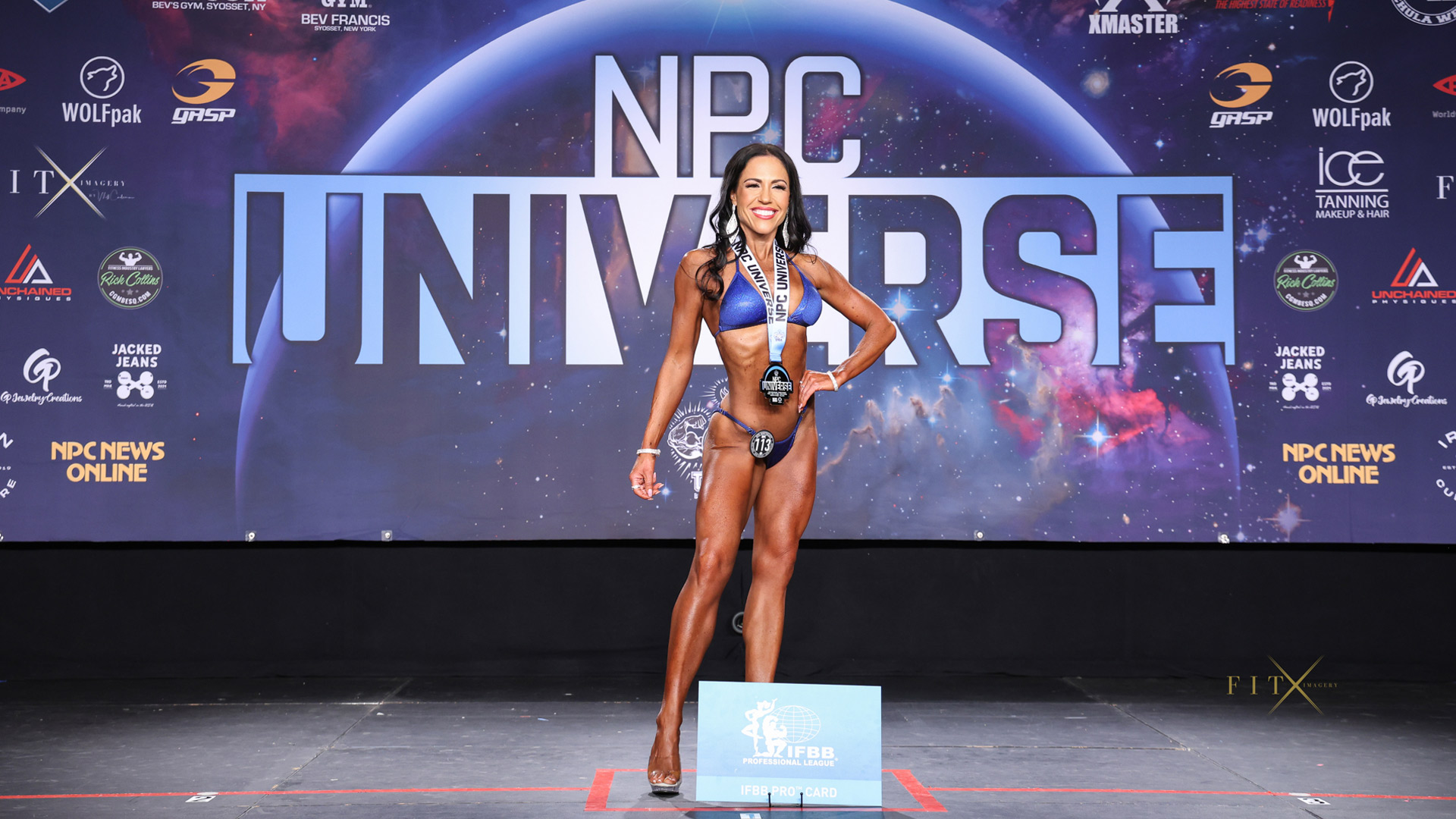
Brittni Shae competing at NPC Universe
Most personal training certifications teach exercise prescription. Occupational therapy teaches you to evaluate a whole person.
“There are so many factors as an OT that I see beyond just exercise. The environment, mindset, social habits, and physical limitations also play a role in the outcomes for a good exercise program.”
That changes the intake form. New Team BShaeFit clients share not just bodyweight and goals, but surgical history, chronic diagnoses, work hours, commute time, and family responsibilities. Two clients can run the same program on paper and adapt completely differently.
Her credential stack reflects that approach: ACE Certified Personal Trainer and Fitness Nutrition Specialist, Precision Nutrition Sleep, Stress, and Recovery Level 1, Certified Health Coach, and specialty certifications in foam rolling, rehab-oriented fitness, pre and postnatal training, and plyometrics. She holds a COEE credential for ergonomics work with employers.
“My passion is mostly with women’s health, postpartum needs, exercise science, and nutrition for wellness. I tend to select continuing education that is more related to my actual business.”
Not every certification changes how you coach. The ones Brittni carries do.
Her clinical background also means she catches what a standard intake misses: a pain description that sounds more like nerve irritation than soreness, swelling in the wrong pattern, or shortness of breath that warrants a physician conversation before training moves forward. Five years in sub-acute rehab and seven years on an orthopedic unit gave her a pattern library that a weekend certification cannot replicate.
During those hospital years she also helped implement the Marshall Steele Program alongside surgeons and Stryker consultants: early mobility protocols, structured home exercise plans, clear recovery expectations. She watched how healing timelines actually behave in real bodies. That knowledge now lives inside every program she writes for a client coming back from a procedure or managing a chronic condition.

IFBB Pro, coach, OT – Brittni holds it all simultaneously
Here is the part most coaches skip over when they admire Brittni’s client numbers: the structural decision that made 750 clients achievable without a facility, without staff, and without in-person sessions.
Email check-ins. Not calls.
“By offering options that provide weekly accountability via email, not calls, this allows me to charge less and have more clients and have them continue long term. Personal training with one-on-one sessions comes at a significantly higher price point, so long term is less common. I can charge someone with just monthly workouts for $75 versus a one-on-one session.”
That single structural decision unlocks three things simultaneously: a price point more clients can sustain, higher volume without proportional time cost, and better retention than session-based models produce. A client paying $75 per month for a customized program and weekly email accountability shows up differently than someone paying per session.
Brittni’s full offer ladder runs from that workout-only entry point through full one-on-one support with weekly feedback and program updates. Seasonal challenges, photoshoot transformations and Fit4TheHolidays, create group momentum and function as retention tools.
“The challenges are a great add-on for my current one-on-one clients too, which I charge a low one-time fee if they are a current client.”
The third round of her twelve-week photoshoot challenge ran January through March 2026. A partnership with Marek Health adds lab-driven context most online coaches cannot offer: blood work, hormones, lipids. It changes what personalized programming actually means.
At some point, five clinical days per week, emotionally heavy caseloads, a growing online roster, sponsorship obligations, and her own competition training all competed for the same hours. Motherhood arrived in the middle of that.
“I learned to set up boundaries and work times for client programming and check-ins, as well as a weekend schedule that is mostly off from client work. I have set programming days and check-in days. I also have a roster that I keep an eye on in regards to the amount of work I can handle.”
Her OT training gave her a framework for diagnosing the problem. In that discipline, you evaluate a person’s function in context: demands, environment, and cognitive load alongside physical capacity. She turned that lens on herself. The mismatch was obvious.
Roster caps are not a failure of ambition. They are a structural decision that protects the quality of feedback every client receives. Brittni built Alter Ergo, an ergonomics consultancy, into a separate lane of the week with defined start and end points rather than whenever you can fit this in. The system functions because the system has limits.

Brittni Shae on the IFBB Pro stage
Competing is extreme. Brittni knows it.
She moved from WBFF Pro Bikini to IFBB Pro Fit Model and competes with long off-seasons, sometimes three to seven years between prep cycles. That gap is intentional. It is how she holds the athlete identity and the lifestyle coaching identity without letting them contradict each other publicly.
“My expectations of consistency to get great results for a lifestyle client is 85 to 90 percent per week, six out of seven days. A competition prep client I expect 95 to 100 percent. I do set these expectations up front.”
She tracks macros rather than following a rigid meal plan during her own prep. She tells clients directly: her goals and their goals are different. That honesty is not a disclaimer. It is the thing that makes long-term client relationships possible.
Becoming a mother deepened her clinical eye.
“Going through my own fitness journey while pregnant and postpartum, I understand the pelvic floor function better and the needs we have for better core control.”
That is not a credential line on a bio. That is earned clinical knowledge that shows up in every postnatal program she writes.
Brittni’s business does not run on volume alone. It runs on discipline applied consistently across a long timeline.
The email check-in model requires you to actually respond to emails on schedule, not reactively. The roster cap means saying no to clients when you are at capacity, even when the revenue is appealing. The credential stack means investing in education that changes how you think, not just what you can list.
If you are building toward an online coaching business with real retention and recurring revenue, structure matters as much as marketing. You need a pricing model clients can sustain, a check-in cadence that fits your actual bandwidth, and an intake process that captures the full picture of who you are working with.
The work of evolving your coaching practice is rarely about adding more. One honest look at your check-in load, your roster size, and your pricing tells you whether you have built a business or an obligation. Usually the answer requires subtraction, not addition.
Can I build an online coaching business without leaving my current job?
Yes. Brittni Shae built Team BShaeFit entirely in the margins of a full hospital career: lunch breaks, evenings, weekends. The business grew alongside her OT caseload until the 2015 tax bill confirmed it was real. Start with what your schedule actually allows, not the schedule you wish you had.
What is the real difference between email check-ins and video calls for online coaching?
Scale. Calls require a calendar slot and real-time presence from both parties. Email check-ins let you respond during a dedicated block, keep a written record of every client’s progress, and support more clients at the same quality level. Brittni charges $75 per month for workout-only clients and structures full one-on-one support around email, not calls.
How do you set consistency expectations with coaching clients?
Use specific numbers set at intake. Brittni uses 85 to 90 percent per week, six of seven days, for lifestyle clients and 95 to 100 percent for competition prep. Those numbers are established in week one, not mid-cycle when a client is already struggling.
How do you decide which certifications are worth the investment?
Evaluate whether a credential changes how you think about clients, not just what you can list on a bio. Brittni selects continuing education that aligns directly with her actual client base: women’s health, postpartum needs, nutrition for wellness. If a certification does not show up in how you program, it is probably not worth the renewal cost.
About Robert James Rivera
Robert is a full-time freelance writer and editor specializing in the health niche and its ever-expanding sub-niches. As a food and nutrition scientist, he knows where to find the resources necessary to verify health claims.

By Robert James Rivera

By Dr. Erin Nitschke
By Jessica H. Maurer
By Dr. Erin Nitschke

By Robert James Rivera
By Jessica H. Maurer



Powering the Business of Health, Fitness, and Wellness Coaching