

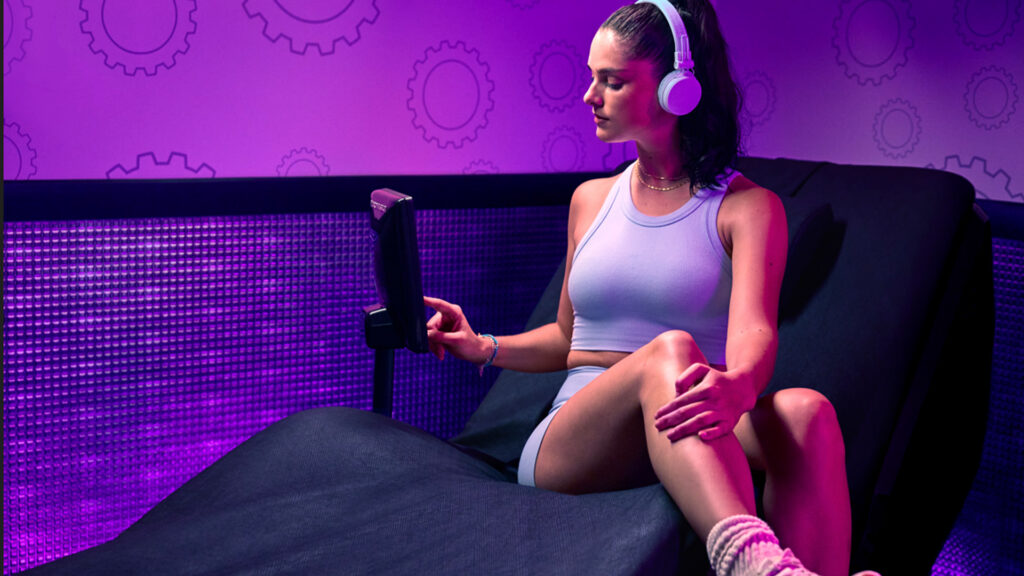
I remember walking into the gym years ago and seeing recovery tucked into whatever space was left. A foam roller in the corner, maybe a mat for stretching. It was always there but never really part of anything. Never fully integrated into the programming. Always an afterthought.
That is no longer the case, and the shift has real implications for fitness studio recovery revenue. Recovery is a priority now. For studio owners and operators, it is becoming the main event — not just something that supports the workout, but something clients are actively seeking out and requesting. In some cases, it is all they want.
The studios that have recognized this early are enhancing their client experience and building an entirely new revenue stream.
“Recovery is no longer extra. It is part of the experience and part of the value. At Excel Fitness (Planet Fitness), what we are seeing is simple. When members can train, recover, and recharge all in one place, they are more likely to use the club, stay consistent, and stay longer. That is why recovery matters. It is good for the member, and it is smart for the business.”
KHALED ELMASRI. FITNESS OPERATIONS MANAGER. EXCEL FITNESS (PLANET FITNESS)
What Clients Are Asking For Now
There has been a quiet shift in what people want when they walk through the doors of a gym or studio. The old conversation was about how hard to push, how fast to see results, and how much to fit into a single session. People are still motivated, but they are also tired, stressed, and bombarded with constant demands to produce.
Now, they are thinking about longevity, not just output. They want to feel better, not just work harder. The question is less about pushing limits and more about sustainability: can you help me recover so I can keep showing up? That question is where the opportunity lives.
The Recurring Revenue Structure
From a business perspective, recovery solves problems that many studio owners have been trying to address for years. Recovery services create value without requiring constant coaching. They give clients something to come back to again and again without demanding more hours from staff. It is supportive, not intensive, and that makes it scalable.
For many operators, that is the turning point. Growth does not have to mean doing more. It can mean offering something different.
For Burn Boot Camp, that answer looks less like high-end equipment and more like accessibility. Their core member is often a mom juggling work, kids, schedules, and everything in between. For her, recovery is not about booking a 30-minute session in a dedicated room. It is about having something she can actually fit into her day. That means guided cooldowns, app-based recovery content, and options like foam rolling, stretching, and their Motion format. Members are encouraged to choose what fits their needs, when it fits their life.
It’s Not the Equipment
Walk into most recovery-focused spaces now and you will see similar tools: saunas, cold plunges, compression boots, maybe a structured contrast therapy setup. What actually makes it work is not the equipment itself. It is how it feels to use it.
The lighting, the quiet, the transitions between stations, the intention behind the space: all of it shapes whether someone tries recovery once or builds it into their routine. When it feels like an afterthought, people treat it like one. When it feels intentional, it becomes part of how they take care of themselves.
The Access-First Recovery Model
It might start simple, with a drop-in session from someone curious about trying something new. Then it evolves into memberships, add-ons, and packages that combine training and recovery in a way that feels seamless. That is where it shifts from extra to essential.
Recovery can create recurring revenue without adding more sessions to a coach’s calendar. Clients who use recovery tend to stay longer, train more consistently, and hit fewer setbacks. They feel better, which means they keep coming back.
A Different Way to Grow
Recovery used to be what people did after the real work was done. Now, it is becoming part of the work itself — not because it is harder, but because it is valuable. In the next phase of fitness, it will not just be about who can push the hardest. It will be about who can help people come back, again and again, feeling just a little bit better than they did before.
FOR STUDIOS BUILDING A RECOVERY REVENUE LINE
FitHire by Coach360 connects studios and wellness operators with coaches who understand recovery programming, client retention, and the business of long-term fitness. FitHire by Coach360 connects coaches who can build this with operators actively hiring.
Frequently Asked Questions
How do studios price recovery services, and what models work best for add-on revenue?
The most sustainable pricing models treat recovery as a tiered offering rather than a flat fee. A drop-in rate lowers the barrier for first-time users. Bundled packages that combine training sessions with recovery access drive the strongest retention because clients become habituated to using both.
What recovery services have the lowest barrier to entry for a studio adding recovery for the first time?
Guided cooldowns and stretching protocols cost nothing to implement and can start immediately. App-based recovery content is the next logical step. Compression boots and infrared saunas represent a larger investment but have the strongest membership upsell potential once you have established a recovery culture.
How do you measure the ROI of recovery programming in a fitness studio?
Track retention separately for clients who use recovery services versus those who do not. Most operators who do this find that recovery users have a measurably longer average membership length. Track visit frequency and conversion rate from drop-in to membership.
Does recovery programming need to be high-end to generate revenue?
No. The Burn Boot Camp model is the clearest counterexample: no cold plunges, no dedicated recovery suite, strong recurring engagement through app-based content, guided cooldowns, and accessible movement formats. High-end equipment amplifies a recovery program that already works. It does not create one from scratch.
How does adding recovery affect staff workload and implementation timeline?
Access-first and app-based recovery models require almost no additional staff bandwidth once they are set up. A realistic implementation timeline for a basic recovery offering is four to six weeks: one to two weeks to finalize the service design and pricing, one week for staff training, and two to three weeks of soft launch before a full rollout.
About Erin Nitschke
Dr. Erin Nitschke, NSCA-CPT, NFPT-CPT, ACE Health Coach, ACE-CPT, Fitness Nutrition Specialist, Therapeutic Exercise Specialist, Pn1, FNMS, and DSWI Master Health Coach, is a seasoned college professor in health and human performance. She is a nationally recognized presenter, industry writer for IDEA, NFPT, Fitness Education Online, and Youate.com, and an active member of the ACE Scientific Advisory Panel. With extensive experience in health and exercise science, Erin specializes in holistic, evidence-based approaches to wellness. Her passion lies in empowering individuals to lead healthier, more vibrant lives through personalized coaching. Erin’s philosophy centers on education, accountability, and sustainable behavior change—guiding clients to achieve long-term success in nutrition, fitness, stress management, and overall well-being. To connect with Dr. Nitschke, email her at erinmd03@gmail.com or on Instagram: @nitschkeerin