


Coaching client retention across most personal training practices runs under six months. Dr. Darian Parker, PhD, keeps some clients for 18 straight years. That gap is not a natural gift. It is a session-level decision he makes before the first exercise begins.
Parker started at James Madison University as a graduate student, working one-on-one with clients in his first coaching role. There, he noticed that clients recalled how he made them feel more than what he programmed. So, that insight became the foundation of a 25-year practice.
Today, Parker owns Parker Personal Training LLC and holds the IDEA 2023 Personal Trainer of the Year title. Before that, he served as National Director of Fitness at a global leisure company. In other roles, he managed a luxury fitness club and led a career college. He is also a podcast host and adjunct professor at multiple colleges. By contrast, his long-term clients average over 10 years. They keep coming back. When the industry average runs under six months, those numbers are the result of a specific method, not chance.
Why Coaching Client Retention Starts at the Check-In
For Parker, every session opens the same way. He asks four questions: how are you feeling physically, socially, emotionally, and mentally? That check-in takes 90 seconds. It shapes what the next 45 minutes actually look like.
“Clients show up in different states and moods each and every time you work with them. The requirement is to flow and adapt to clients in real time to best serve them at that particular time,” Parker says.
When a client reports a hard week, Parker scales back the load and shifts toward mobility work. That call protects recovery. It also protects the relationship. Without it, compounding stress suppresses progress. Yet most coaches skip that check-in entirely. In practice, this is the decision that most directly explains his coaching client retention record.
For one client with weekly travel, long workdays, and family demands, Parker staggered session intensity. He also built recovery days into the weekly structure and designed hotel-friendly workouts for travel days. Six weeks in, the client reported a 12 percent increase in functional strength. Travel fatigue dropped. Adherence held. Because of one rule: no high-intensity session within 48 hours of travel days. That constraint removed the compounding stress that had been suppressing recovery between trips.
Recovery as the Foundation of Long-Term Client Trust
One client has trained with Parker for 18 years. She has described him as someone who reads fatigue before she says a word. Before she asks, he adjusts the session. That is not intuition. When built through consistent attention, that presence shows. When you see it, you know why clients stay.
So, Parker weaves applied science into every session alongside physical training. When a client struggles with adherence, he addresses it in the session itself. Instead, he helps them find a workable goal for that day. That reframes the obstacle as part of building resilience rather than a setback.
For one client navigating a divorce, a cross-country move, and a new job, Parker used flexible programming and reframing throughout. Without a pause, training continued. But she did not just stay in the program. She reported thriving in her sessions during the hardest months of her adult life. Today, that coaching client retention record stands at 18 years.
Two Inflection Points That Reshaped Parker’s Practice
Parker’s philosophy was shaped by two decisions most coaches face only in theory.

Early in his career, he managed a national portfolio of fitness clubs for a global leisure company. Also, he set programming standards across the US portfolio and some overseas locations. What he found was rigid uniformity: fixed systems that produced staff attrition, client dropout, and a culture of compliance. Rather than replace one fixed system with another, he built a tailored mentorship program for club managers. He did this across the full portfolio. He worked with each manager individually, finding specific gaps and designing support that fit each club’s culture. After that, staff attrition dropped. Client retention followed.
Yet the honest cost: tailored mentorship at scale is slow. It takes more investment per manager than a fixed program and does not produce uniform results on a set timeline. Parker chose it because the outcomes lasted longer. So, that same tradeoff appears in his individual coaching work. The adaptive method takes more prep per session than a fixed plan. Yet the payoff shows in year three, year five, and year ten.
“A long term career in coaching is all about flexibility in your approach and understanding the emotional compass of each person you work with. People grow and change as humans during your time with them, so you have to be willing to do the same,” Parker says.
The 2018 Virtual Pivot
That said, the second inflection point came in 2018. Parker attended a conference on the future of fitness and made a decision. Here, the call: move his entire client base to live virtual sessions. Not because of the pandemic. That was still two years away. So, he moved because the format worked.
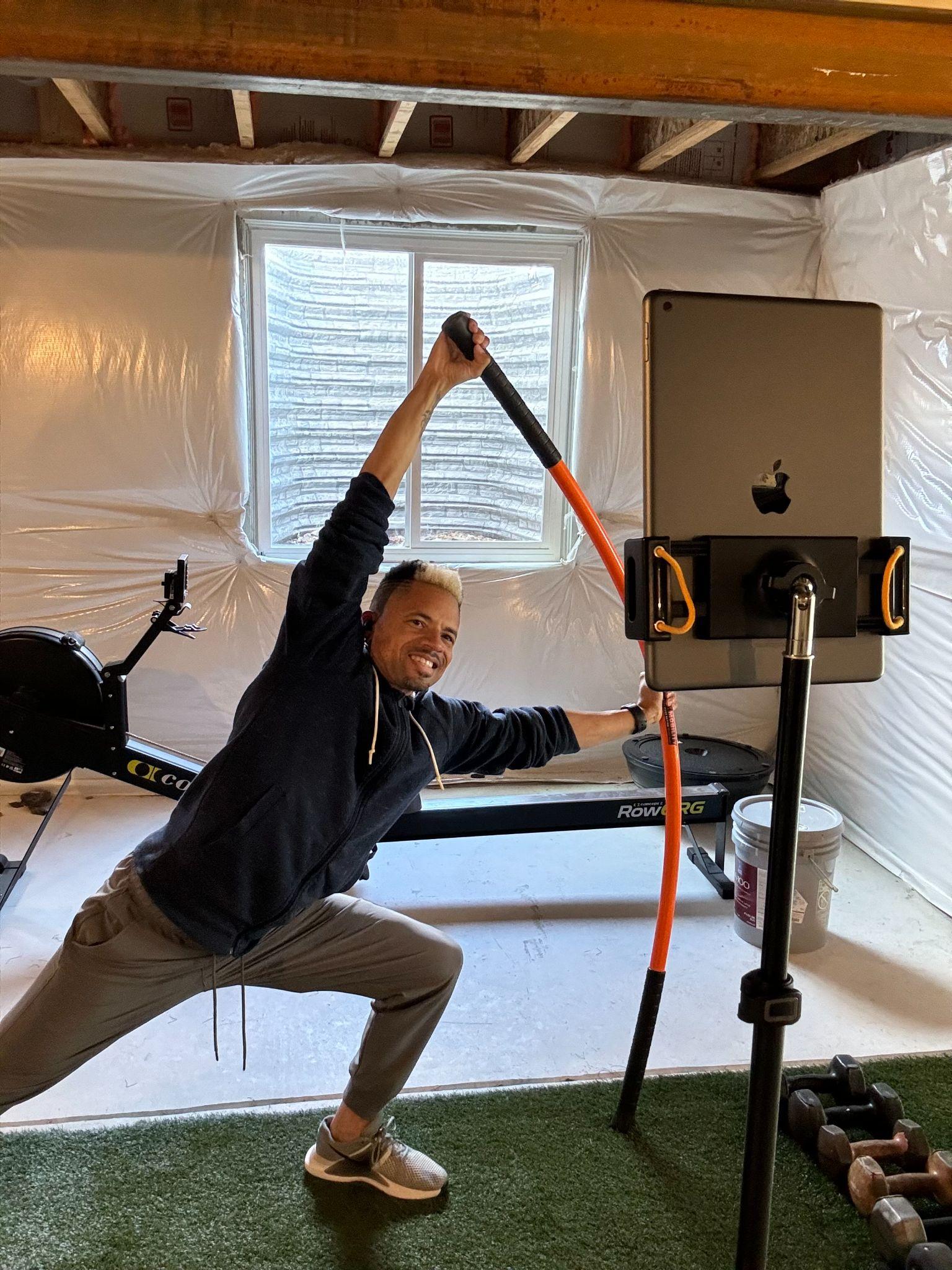
After 17 years in person, every client bond had to be rebuilt. So, that meant a new format for each one. While some clients adjusted quickly, others needed more time. A few did not make the transition. For those who stayed, adherence improved. Once those barriers were removed, clients trained consistently. Since then, his client base has grown. Today, virtual delivery is the core of Parker Personal Training LLC.
The Trainer Celebration Event: NYC, May 16
On May 16, Dr. Parker is co-hosting the Trainer Celebration Event with Mobius at Arrive Studio in New York City. The event runs from 12pm to 2pm EDT. The goal is to celebrate coaches and shift the talk from rivalry to community. That means space to rest, recover, and connect.
For coaches who invest in others, this event delivers it at scale. Whether you are earlier in your career or years in, this event is for you. It is designed for coaches who invest in others. They rarely take time to be honored themselves.
TRAINER CELEBRATION EVENT.
Arrive Studio, New York City.
Date: May 16, 2026. Time: 12:00 – 2:00 PM EDT. Co-hosted with Mobius.
A space to rest, recover, and connect. Register on Luma.
Three Session Habits for Coaching Client Retention
For coaches, Parker’s method translates into three practices. Each one can begin this week. Together, they are what coaching client retention looks like in practice.
First, open every session with the four-point check-in: physical, social, emotional, mental. That takes 90 seconds. When done consistently, it changes what happens in the next 45 to 60 minutes. It also signals to the client that their full situation matters, not just their workout numbers.
Coaching Client Retention Signals to Track
Second, track session notes on energy and mood alongside performance data. That record becomes a tool for catching patterns before they become dropout signals. When a client performs well on Tuesday and is flat by Thursday, that is a stress signal. The note from Tuesday makes it visible. For coaches, that is the whole tool.
Third, build one adaptive change into every program week. Make it a session that responds to how the client shows up, not how the plan assumed they would. That structural decision is the difference between a program and a coaching bond. For coaches, the gap is measurable. When it works, clients return year after year.
“Whether you are a younger coach getting in the business or someone transitioning into coaching from a different career, one thing must always be adhered to. You are in the people business and serving people in a vulnerable space with compassion, support and flexibility are a must for long-term success,” Parker says.
Coaching client retention for 18 straight years. How does a coach build that? One check-in at a time. When you start there, the rest follows. When the session opens with the right question, everything else follows.
FOR COACHES READY TO APPLY
FitHire by Coach360 connects coaches with clubs, studios, and training roles that fit their approach. Build your profile and let your method speak. Find your next role at FitHire by Coach360.
Frequently Asked Questions
Coaching client retention tracks how long clients stay with a coach. Yet most personal training practices lose clients in under six months. When coaches build adaptive, relationship-centered practices, they see retention measured in years. Stable client bonds produce stable businesses.
Parker opens each session with a 90-second check-in. The four areas: physical, social, emotional, mental. That input shapes the whole session. He also tracks mood and energy between sessions to catch stress signals before they become dropout signals.
Parker moved to live virtual training in 2018. That was two years before COVID-19 made virtual fitness common. His in-person clients followed. Since then, his client base has grown.
The adaptive approach takes more prep than a fixed plan. Coaches who use it report that cost in year one. When coaches apply it, the payoff shows in year three, year five, and year ten. Retention rates improve. Client outcomes last.
The Trainer Celebration Event is co-hosted by Dr. Parker and Mobius at Arrive Studio in NYC on May 16, 2026 from 12pm to 2pm EDT. The goal is to celebrate coaches and shift the talk from rivalry to community. Register at luma.com/9ruia96d.