


Joseph Dickson spent four years cycling through five NFL franchises. Every week was an audition. Every practice was a test. That survival education shaped how he built his coaching business at Dickson Performance on Maui, where tiered athlete development, community investment, and clear systems replaced the chaos of professional football with something durable.
His story is not about a former pro who coasted on name recognition. It is about a coach who evolved through setbacks, studied systems at the highest level, and then rebuilt those ideas inside the real constraints of a small island market.
What NFL Survival Teaches About Evolving as a Coach
In his senior year at Idaho, Joseph shattered his ankle in the fourth game. That injury landed right before the draft and, in his assessment, cost him a legitimate shot at being selected. He still earned a roster spot with Jacksonville in 2011, but that year brought its own obstacle: the lockout season.
He trained alone, away from veterans and coaching staff, without any of the normal rhythms of meetings or installs. When the lockout ended and the veterans returned, Jacksonville released him almost immediately. He went home to Maui and carried that weight hard.
“I spent two weeks at home feeling ashamed and defeated. Then I realized something important. I had just accomplished something most people never even come close to. I had nothing to be ashamed of, but I did have work to do.”
That shift still defines how he coaches. Moving through five franchises in four years taught him that talent alone does not protect anyone. Each team had its own playbook, culture, staff, and expectations. He had to read new environments fast, earn trust on contact, and contribute immediately.
“You have to learn how to read a room, earn trust fast, and contribute immediately,” Joseph said. “That survival education directly shapes how I build programs at Dickson Performance today. No two athletes respond the same. No two environments are identical.”
The constant evaluation carved one belief into everything he does: preparation is protection. As a player, that meant film study and playbook work. As a coach, it means clear progressions, standards that hold under pressure, and systems that don’t fall apart when life gets difficult.
Systems Thinking: From EXOS Influence to an Original Framework
During his playing career, Joseph trained at Athlete’s Performance, now EXOS. For the first time, he saw an integrated performance setting from the inside. Movement quality, speed work, strength, recovery, and energy systems all fed the same progression instead of sitting in separate corners.
That experience did not turn him into a brand loyalist. It turned him into a systems thinker.
“What impacted me most was how training was integrated,” he said. “It wasn’t random intensity. It was calculated development. But what I also learned over time is that systems evolve. Even what I experienced there is not what they’re doing now. That taught me something critical: never freeze your framework.”
When he returned to Maui, he did not paste a mainland performance model onto local athletes. He borrowed principles: clear movement standards, progressive loading, thoughtful warm-ups, and respect for the nervous system. Then he tested those ideas with his own athletes. Some pieces translated. Others did not fit the island’s realities, from field access to schedules to athletes with limited training history.
He kept what held up, dropped what didn’t, and built a Dickson Performance framework with its own identity. That willingness to evolve a coaching approach rather than copy one is the difference between borrowing ideas and building a business.
Building the Business Inside Real Constraints
Dickson Performance did not start as a standalone facility. It started inside The Club Maui, a commercial fitness center where performance memberships included full club access. That gave him a real facility, established foot traffic, and a chance to refine his model under a real roof instead of a fantasy version on paper.
The arrangement came with responsibility. He had to prove that his performance group would raise the standard on the floor, not disrupt it. No chaos, no reckless lifting, no culture clash with the host brand. He kept coaching presence visible and professional, set expectations for his athletes, and respected shared space.
“For coaches considering launching inside an existing gym, you must bring value, not friction,” Joseph said. “You must clearly define your lane. And you must protect your brand standards without alienating the host environment.”
Towards the end of 2024, The Underdog Foundation, his nonprofit, acquired the lease to a 12,000 square foot facility in central Kahului. Dickson Performance now leases space within that building and operates independently. The nonprofit builds community infrastructure. The training business delivers elite development inside the same walls. Youth athletes on scholarship train alongside competitive athletes who pay full price.
Tiered Development: Placing Athletes Where They Can Succeed
Many athletes arriving on Maui were undertrained. Not because they lacked talent, but because they lacked exposure to structured development. Most showed up with a weak strength base, limited movement quality, and no consistent training history. A few random hard sessions would not fix that.
Joseph built a tiered system. At the base sits a foundational track, typically two sessions per week, built for adults and youth who need habits, strength basics, and competency in core movement patterns. Above that sits a youth development track with doses that match growth stages and maturation instead of parent ambition. At the top sits an elite performance tier, three focused sessions per week for competitive athletes with the capacity for higher training stress.
“The tiers aren’t about exclusivity. They’re about appropriate dosage. Place athletes where they can succeed, not where their ego or their parents want them. Structure protects development.”
Placement is a coaching decision, not a marketing one. He uses movement screens, strength levels, training maturity, and lifestyle to decide where each athlete belongs. If someone pushes for the elite tier before their body is ready, he holds the line. That discipline is what separates a coaching business built on outcomes from one built on selling access.
When Coaching Extends Beyond the Weight Room
Joseph had already seen how training can anchor people during hard seasons. During COVID, before Dickson Performance formally existed, he trained athletes in his garage because they needed structure and connection. When the Maui wildfires hit, that instinct resurfaced with new urgency.
Families lost homes. Kids lost fields, routines, and any sense of normal. Training became part of restoring something predictable. A space with a schedule and expectations, even when everything outside felt unstable.
Through The Underdog Foundation, he launched the Gorilla Athletic Scholarship Fund. Youth athletes affected by the fires could train at Dickson Performance without cost barriers. The Foundation also helped drive the Maui TUF Initiative, building tiny homes for displaced families. Community-driven coaching sits at the center of how he defines his role.
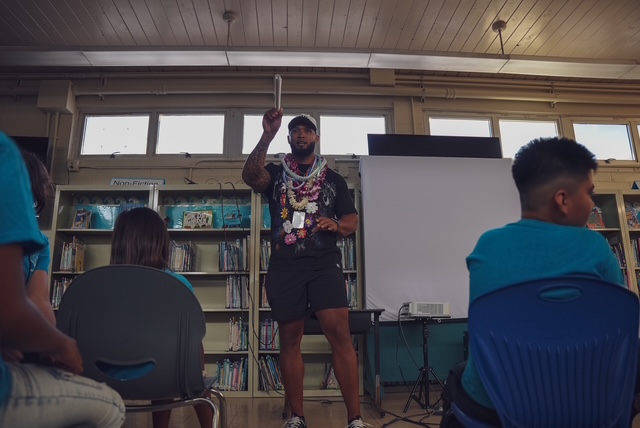
“Coaching responsibility doesn’t end at performance metrics,” Joseph said. “When athletes walk through our doors, I’m not just thinking about speed and strength. I’m thinking about who they’re becoming, how they respond to adversity, and how they will serve others one day.”
Pricing a Coaching Business in a High-Cost, Small Market
Operating in Maui means high living costs and tight family budgets, especially after the fires. At the same time, a coaching business cannot survive as a charity. If the operation fails, the service disappears.
Joseph built his pricing around three ideas: understand the real financial pressure your community faces, deliver value that justifies what you charge, and treat relationships as long-term rather than transactional. He uses a personal test. Would he pay this amount for this service if he stood on the other side of the counter? If the answer is no, he adjusts. But he refuses to discount his rates so low that he burns out and loses the ability to lead. Access is handled through scholarships, not discounted pricing.
“The one thing I wish I had understood earlier is that coaching skill and business skill are different disciplines,” he said. “I wish I had studied business more intentionally. But adversity became my education. And in many ways, learning it through experience made it stick.”
That admission is worth sitting with. Many coaches assume sharp training skills will automatically lead to business stability. Joseph learned they don’t. Leases, partnerships, budgets, payroll, and risk all needed their own education curve. He took his lumps, then turned hard-won knowledge into slower, more deliberate decisions.
Frequently Asked Questions
How do you start a coaching business inside an existing gym?
Joseph started Dickson Performance inside The Club Maui before moving to an independent facility. His advice: bring value to the host environment rather than friction. Define your lane clearly, protect your brand standards, and prove that your athletes elevate the culture on the floor. A shared space gives you real infrastructure and foot traffic while you refine your model.
How should coaches structure tiered programming for mixed-level athletes?
Assessment drives placement, not marketing. Use movement screens, strength baselines, training maturity, and lifestyle factors to place athletes in the right tier. Joseph runs a foundational track (two sessions per week for habit-building), a youth development track (matched to growth stages), and an elite tier (three sessions per week for athletes ready for higher intensity). Placement is a coaching decision.
Can you build a sustainable coaching business in a small market?
Joseph argues the advantage of a small market is that consistency and authenticity get rewarded. There is less competition, more opportunity to become the local standard, and deeper community relationships. The trade-off is tighter margins and the need to price with discipline: high enough to sustain the business, accessible through scholarships rather than discounts.
Dickson Performance on Maui is a case study in evolving a coaching business inside real geographic and economic constraints. Joseph built it through NFL survival instincts, systems thinking borrowed from the highest levels of performance training, and a refusal to freeze his framework. For coaches still early in building their own model, his path is a reminder: preparation is protection, systems must evolve, and the gap between coaching skill and business skill is one worth closing deliberately.
Coaches looking for performance training roles or operators hiring for facilities like Dickson Performance can explore active listings on FitHire by Coach360.
About Robert James Rivera
Robert is a full-time freelance writer and editor specializing in the health niche and its ever-expanding sub-niches. As a food and nutrition scientist, he knows where to find the resources necessary to verify health claims.