What’s Actually in Your Protein Bar Almost Wrecked Her Health
For years, Mel Scott ate a protein bar almost every day, the way most athletes do. She was a lifelong athlete who understood training and nutrition better than most people ever will, and the bar was the easy part, the thing she did not have to think about. It turned out to be the thing she should have been thinking about the entire time.
By the time she understood that, her health had already come apart.
When the Healthy Choice Is the Problem
Mel developed a range of autoimmune issues that seriously compromised her health. If you have coached someone through an autoimmune diagnosis, you already know the shape of it. The symptoms are loud, and the cause is silent, and that gap can stretch for years while a person cycles through specialists and elimination diets and hope. For an athlete, it carries an extra weight, because her whole relationship with herself was built on a body that answers when she calls it. Hers stopped answering.
What she eventually landed on was her diet. More specifically, the products she had trusted most.
She started pulling out the ingredients she suspected were driving her inflammation, and the closer she looked at labels, the worse it got. The biggest offenders were not the foods anyone would flag. They were the so-called healthy protein products she had been eating daily for years, full of artificial sweeteners and emulsifiers and seed oils, all of it tucked behind packaging that told her it was good for her.
A word of caution here, because this is where a story like Mel’s can go sideways in the retelling. The science on several of these ingredients is genuinely contested, and no coach should walk out of this article repeating claims as settled fact. What is not in dispute is what happened to her. She moved toward whole foods, cut the products she suspected, and her health improved. After years without an answer, that was enough for her to act on.
Mel says, “I had spent years believing I was doing the right thing for my health, and then I realized the products I trusted were the very things I needed to take a closer look at. Once I started feeling better by taking these products out, I couldn’t just go back to eating them because the package said they were healthy. I had to start asking what was actually in the food I was putting into my body.”
The Gap She Could Not Fill
Here is the part every coach and every busy client will recognize. Mel moved her eating toward whole foods and it worked, but she still trained hard and still had a life, which meant she still needed the thing a protein bar is supposed to be.
She could not find one she trusted. The clean options were plant-based, and she wanted whey for its bioavailability. The whey options were full of the exact ingredients she had just spent years pulling out of her kitchen. Somewhere along the line the market had decided clean and whey belonged in separate aisles, and an athlete who wanted both was out of luck. So she built it herself. Not with a business plan, but with a problem nobody else was going to solve for her.
“I could have just gone without protein bars, but as an athlete and a person with a hectic life, I knew how useful they were. I also knew exactly what I needed from one, and I couldn’t find it. At that point, I figured I had nothing to lose by trying to solve the problem myself. And if I could make something that worked for me, maybe I could make it possible for other people, too,” Mel shares with us.
Three Years and Hundreds of Prototypes
Wanting a better product and actually making one are separated by a distance most people never cross. It is where the majority of good ideas go quietly to die. Mel spent three years and hundreds of prototypes crossing it.
What she ended up with rests on one unusual decision. Nearly every organic bar on the market is plant-based. Hers is not. She used organic whey sourced from farms that avoid synthetic pesticides, herbicides, and GMOs, which lands squarely in the gap she had fallen into herself, serving people who want the bioavailability of whey in a clean format that mostly did not exist before.
Then there was taste, which is where most healthy products quietly give up. She wanted hers to be good, not good-for-a-protein-bar. Chocolate coating, caramel, nougat, and none of the dry chalkiness or chemical aftertaste that so many bars carry around like it is unavoidable. For a woman who had already given up a long list of foods to get her health back, building something that did not feel like one more sacrifice was not a marketing choice. It was the entire point

Why This Is a Women in Wellness Story
It would be easy to file this under product development. That misses what actually happened.
Mel’s company started the way a lot of the most interesting women-led businesses in this industry start: somebody ran headfirst into a problem the market had no interest in solving and got tired of waiting. She advocated for her own health when the existing options failed her. Then she built the answer.
Coaches should be paying attention to this pattern, because it is quietly changing what clients bring into the gym. The women solving these problems tend to be the ones who lived them. They are not working from a spreadsheet of market opportunities. They are working from their own bodies and their own frustration and stubbornness about not accepting that the healthy option had to come with a catch.
“I hope people pay attention to what’s actually in the foods they’re eating, whether they ever buy Linear or not. And if there’s a problem you can’t find a solution for, don’t be afraid to try to solve it yourself,” Mel says. “Necessity is the mother of invention. If the industry doesn’t want to hear about the problem, that shouldn’t stop you. I hope other women take that from my story: you don’t have to settle for what exists. You can create what’s missing.”
What Coaches Can Take From It
The practical lesson is the one Mel learned the hard way. The language on the front of a package and the ingredients on the back are two different documents. Clients trust the marketing because nobody has ever given them a reason not to, and part of the job is teaching them to read past it without turning every grocery run into an interrogation.
Keep her story in your back pocket for the client who is doing everything right and cannot understand why she feels so wrong.
The larger lesson is about who is building the future of this industry, and increasingly it is the women who got failed by it first. They took their health into their own hands. When the thing they needed did not exist, they spent three years and hundreds of prototypes making it. Mel is one of them. She will not be the last one you hear about this year.
FitHire — Connect With the Innovators Shaping the Future of Fitness
The people redefining performance nutrition and wellness are often the ones who lived the problem first and built the solution themselves. FitHire by Coach360 connects professionals with the brands, founders, and organizations changing what this industry offers the people it serves.
https://coach360marketplace.com/
Frequently Asked Questions
Who is Mel and what did she build?
Mel is a lifelong athlete who developed a range of autoimmune issues that seriously compromised her health. After coming to believe that ingredients common in mainstream protein products, including artificial sweeteners, emulsifiers, and seed oils, were contributing to her inflammation, she overhauled her diet around whole foods. Unable to find a protein bar that was both clean and made with whey protein, she spent three years and hundreds of prototypes developing one herself. Her bar uses organic whey protein sourced from farms that avoid synthetic pesticides, herbicides, and GMOs.
What makes her protein bar different from other organic options?
Most organic protein bars on the market use plant-based protein. Hers is distinct in using organic whey protein, which appeals to people who prefer the bioavailability of whey but want a clean, organic option that has historically been difficult to find. The bar is also built around taste, with a chocolate coating, caramel, and nougat designed to avoid the dry, chalky texture and aftertaste common to many protein bars.
Why do some athletes react poorly to mainstream protein products?
Individual responses to food ingredients vary, and nutrition science remains genuinely contested on the health effects of certain additives. Some people report that ingredients common in processed performance products, such as artificial sweeteners, emulsifiers, and certain oils, contribute to digestive discomfort or inflammation for them personally. This is an individual experience rather than a universal rule, and anyone with autoimmune concerns or persistent symptoms should work with a qualified medical professional rather than self-diagnosing based on ingredient lists. A coach’s role is to help clients read labels critically and notice their own responses, not to diagnose.
What can coaches learn from founders like Mel?
Founders who build products out of their own health struggles often surface problems the broader market has overlooked, which makes their stories useful for coaches tracking where the industry is heading. Mel’s experience is a reminder that marketing language on the front of a package does not always match the ingredient list on the back, and that clients doing everything they believe is healthy may still be consuming products that do not serve them. For coaches, the practical takeaway is to help clients become critical label readers and to stay curious about the wave of women-led wellness brands being built from lived experience.
About Jessica H. Maurer
Jessica is a recognized fitness business consultant and strategist focusing on transforming businesses from overwhelmed to organized. Her international presentations, workshops, certifications, and consultations underscore her commitment to helping fitness professionals and businesses realize their full potential. When Jessica takes the stage, she’s sharing fresh ideas and inspiration that spark positive change. Jessica’s international presentations and consultations are about growth, career transformation, overall wellness, and making fitness a joyful journey. Her expertise spans education, program and instructor development, and brand evolution, making her a key player in elevating the industry. Jessica also played a pivotal role in developing the Mental Well-being Association’s certification for Fitness Professionals., always striving to bring a holistic approach to wellness that’s as uplifting as it is effective.
Jessica has presented at prestigious events like IDEA World, Fitnessfest ACSM Health & Fitness Summit, SCW Mania, AsiaFit, and more. She has worked with brands such as FIT4MOM, SFR, BOSU, Lebert Fitness, Savvier Fitness, SCW Fitness, FitSteps, canfitpro, IDEA, and VIBES music. She also has written content for the IDEA Fitness Journal, canfitpro Magazine, Mental Well-being Association, FIT4MOM, Motherly, and more.
What BODYBAR Pilates Figured Out About the Category Everyone Else Was Selling Wrong
I have sat through more franchise pitch decks than I can count, and nearly all of them describe the same version of Pilates: the modality you turn to when you cannot do the hard thing, or the one you do after the hard thing already hurt you. BODYBAR Pilates is the rare operator I have covered that rejected that positioning outright, and if you run a studio, the results are worth your attention.
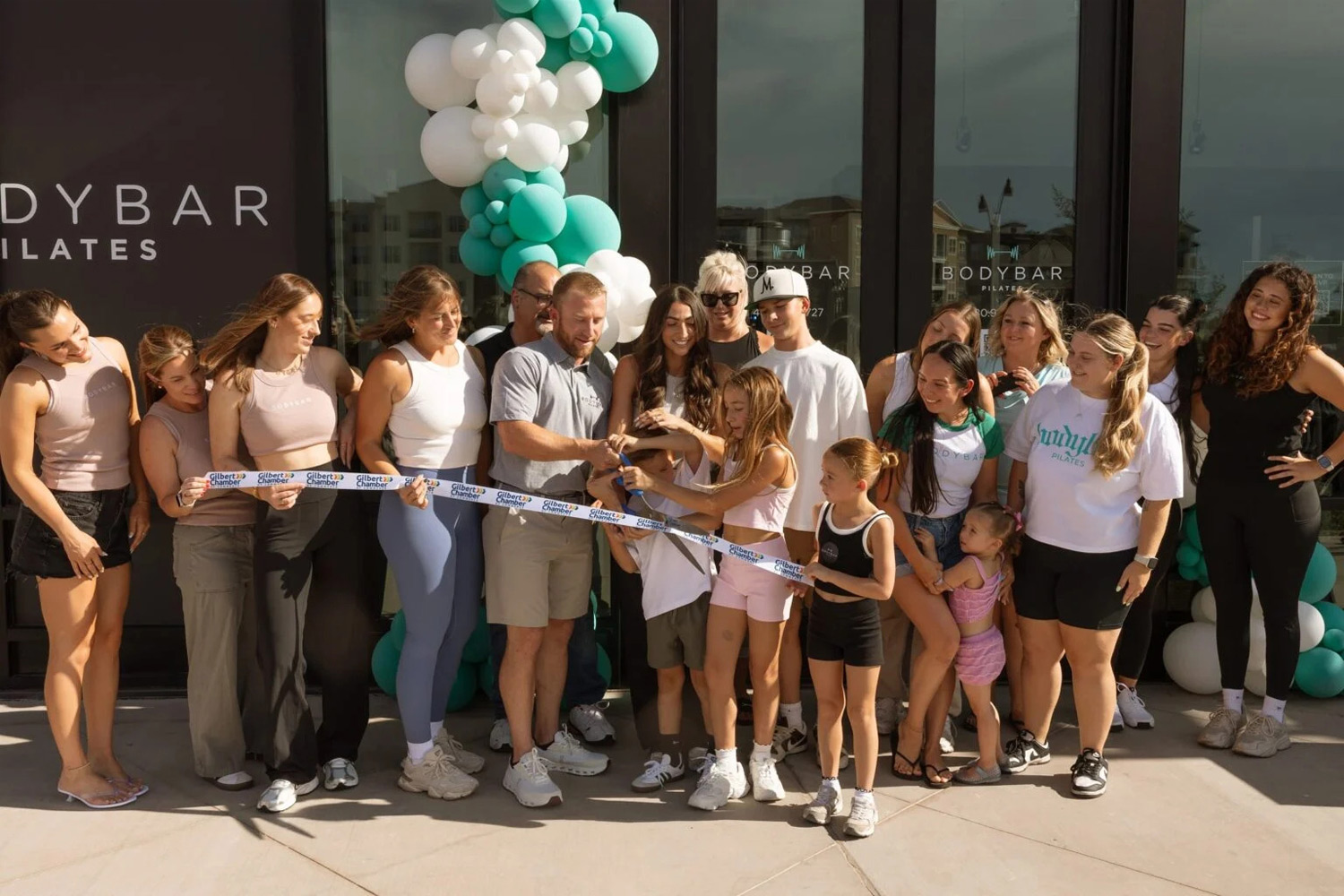
Studios leaned into the gentle positioning for decades because it worked, and an entire category grew up around being the soft landing. BODYBAR Pilates went the other direction, and the results are worth an operator’s attention. The brand has now opened 93 locations across 25 states with plans to open 24 more locations before year’s end.
The line they use to describe themselves gives away the strategy. The shake is shared, the names are real, and tomorrow you will feel muscles you forgot you had. Nothing about that is gentle. It is a promise of difficulty delivered inside a promise of belonging, and getting both of those into one sentence is harder than it looks.
Kamille McCollum, owner and president of BODYBAR Pilates, explains: “In 2012, I had the unique opportunity to take an athletic Pilates class before many people. I was training for a marathon, so I was in great shape, and I quickly realized how effective Reformer Pilates was in building strength without impact.
Then, I visited other Reformer Pilates studios and realized there was a huge opportunity to serve a population who loves high-intensity but also wants the benefits of Pilates. I knew the population would love our signature Performance | Athletic Reformer class. As I opened my first BODYBAR location, my instructors and I made sure even our lower-intensity classes were still challenging and pushing clients to find their inner athlete.”
The Repositioning Underneath the Growth
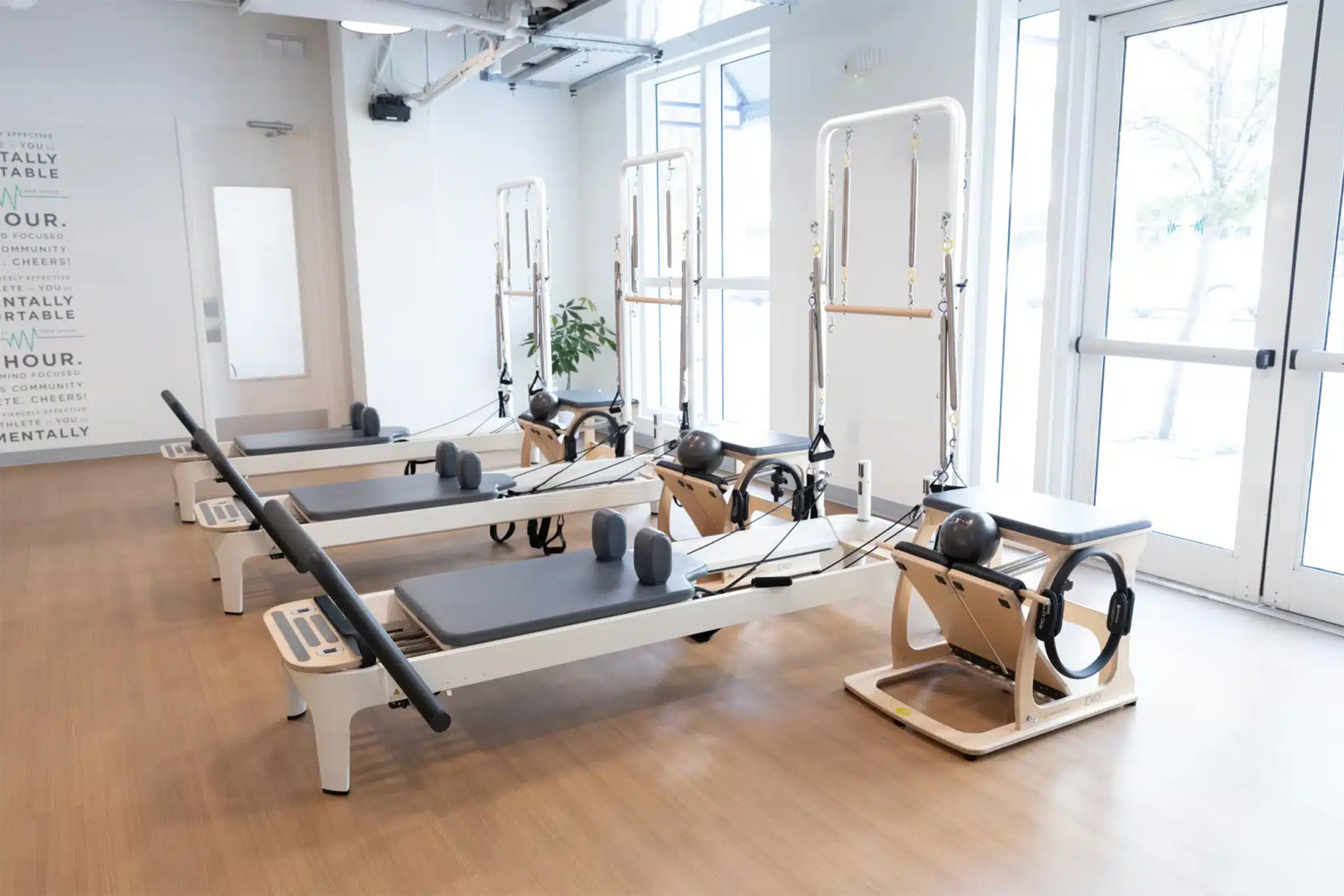
BODYBAR describes its method as blending the precision of Reformer Pilates with a more athletic, hands-on approach, so members are not just moving but building. That distinction sounds like marketing until you sit with what it actually changes.
It changes who walks in. A studio positioned as gentle attracts people who believe they need gentle, which is a smaller and more fragile market than most operators want to admit. A studio positioned around strength, stability, and endurance without high-impact strain attracts the deconditioned beginner and the athlete looking for cross-training, and those two people can occupy the same reformer without either feeling out of place.
It also changes retention math. Someone doing Pilates as rehabilitation leaves when the rehabilitation is finished. Someone doing Pilates as strength training has no natural end date.
That is the quiet business insight buried in a positioning decision, and it applies well beyond Pilates. Plenty of operators have built a facility around what a client is recovering from rather than what they are building toward, and it caps them without ever seeing why.
Solving for the Door
The other thing BODYBAR does well is unglamorous, and most operators underinvest in it badly.
They treat first-visit anxiety as an operational problem with an operational solution. Their first-timer guide says plainly that walking into a new reformer class can feel intimidating and that you are not the only one who feels it. Then it removes every unknown a nervous person might be carrying. Reserve your spot. Arrive ten to fifteen minutes early for a quick intro. Bring comfortable clothes, water, and grip socks. Here is what the class will be like. Here is what to do afterward.
None of that is sophisticated. All of it is the difference between a trial member who returns and one who does not.
Reformer Pilates carries a particular version of this barrier, because the equipment is genuinely unfamiliar to a newcomer in a way a dumbbell is not. A person who has never seen a reformer does not know how to get on it, and the fear of looking foolish in front of a room keeps a measurable number of interested people from ever booking. BODYBAR built the answer into the operation instead of leaving it to whichever instructor happened to be at the desk.
Every operator should be able to name what their own version of that barrier is. Most cannot.
What the Owners Are Actually Buying

The franchise numbers tell a story on their own. There are more owners than studios, which points to a development pipeline of signed agreements ahead of open doors and to ownership groups holding multiple units. For a brand at this stage, that ratio usually reflects owners who opened one location and then committed to another.
What draws those owners is worth understanding, because it is not only the unit economics.
“As someone who always wanted to own my own business, I am in love with BODYBAR. Not only does BODYBAR provide an opportunity to workout, but it also has a true sense of community, allowing everyone to meet new friends and feel like they can fit in.”
— Ashley Van Emmerik, BODYBAR Utah Owner
Read that again as an operator rather than as a member. She is describing the product and the reason she bought it in the same breath. In her mind, the community is not a benefit sitting alongside the workout. It is the thing she is selling.
That alignment matters more than franchise brochures suggest. An owner who believes in the room will run the room differently, and members feel the difference within a visit or two.
“At BODYBAR Pilates, we look for owners who love health, wellness, and people, and who are coachable. Owning your own business is not always easy, and there is a lot of work to do. We’ve spent years building playbooks that work, and the owners who win are the ones who trust those documents and hold their staff accountable. The ones that struggle typically are trying to reinvent something we’ve already solved.”
— Kamille McCollum, Owner and President, BODYBAR Pilates
The Consistency Problem Every Multi-Unit Operator Faces
Growing across over 30 states creates the problem that eventually humbles every expanding brand: the experience has to feel the same in Utah as it does anywhere else.
BODYBAR’s stated approach addresses this in three pieces. Form-forward coaching with clear cues, smart progressions, and options that meet a member where they are. Athletic programming built for strength, stability, and endurance without high-impact strain. And consistency in the class formats themselves, familiar enough that a member can master them while varied enough to keep progressing.
That third piece is the one operators tend to get wrong in both directions. Change the formats constantly and members never build competence, which is the actual source of confidence and the reason they stay. Never change anything and they get bored and drift. The narrow band between those two failures is where retention lives, and finding it is a programming decision most studios make by accident.
“As we grow, we are constantly being innovative with our training and support. The workout is one of the things I am most passionate about, so I am always working closely with our Fitness Department. We have produced an instructor app that allows instructors to build their class plans within the framework of the BODYBAR Method. Our HQ support team focuses on supporting our owners, and we have a team member at every new location that opens.”
— Kamille McCollum
What an Operator Can Take From This
You do not need to be in Pilates for any of this to be useful.
Look at how your facility is positioned and ask whether you are selling what a client is escaping or what they are building. The first has a natural expiration date and the second does not. Then look honestly at the moment a nervous first-timer walks through your door and count how many unknowns you have left sitting in front of them.
BODYBAR grew to 100 studios by taking a category everyone had agreed was gentle and deciding it could be hard, then making sure nobody felt stupid walking into it. Those two moves are not specific to reformers. They are available to almost any operator willing to look at their own positioning with the same honesty.
Related: The Hiring Signal Most Operators Miss Until It Is Too Late
FitHire — Browse Studio Operations and Instructor Roles
The studios setting the standard in boutique fitness are the ones investing in instruction quality and member experience at every location. FitHire by Coach360 connects instructors and operations professionals with the brands building something worth joining.
Frequently Asked Questions
What is BODYBAR Pilates?
BODYBAR Pilates is a modern Reformer Pilates studio and boutique fitness brand built around strength, form, and community. Its small-group reformer classes are led by specially trained instructors and designed to accommodate every fitness level, including complete beginners. The brand’s method blends the precision of Reformer Pilates with a more athletic, hands-on approach, focusing on strength, stability, and endurance without high-impact strain. By the end of the year, BODYBAR will operate 93 studios across 25 states with 113 franchise owners.
How is BODYBAR different from traditional Pilates studios?
The primary difference is positioning. Where much of the Pilates category has historically been marketed as a gentle or restorative option, BODYBAR frames its classes as athletic and strength-building. That shift changes both who the studio attracts and how long members stay: strength training has no natural end point the way recovery-oriented Pilates does. The programming emphasizes form-forward coaching, progressive challenges, and class formats consistent enough for members to master while varied enough to keep them progressing.
What should operators learn from BODYBAR’s approach to first-time visitors?
BODYBAR treats first-visit anxiety as an operational problem rather than a personal one. Its teams recognize that walking into a new reformer class can feel intimidating, then eliminate the unknowns by specifying what to expect before, during, and after class, what to bring, and how to choose a first class. Reformer Pilates carries a heightened version of this barrier because the equipment is unfamiliar to newcomers. Any operator can apply the same principle by identifying their own facility’s intimidation barrier and building the answer into the operation rather than leaving it to whoever is at the front desk.
What does BODYBAR franchise ownership involve?
BODYBAR supports franchise owners from the first conversation through opening day and beyond. The brand currently has 127 franchise owners across 204 territories, a ratio that reflects both signed development agreements ahead of openings and existing owners expanding into additional units. Owners frequently cite the community aspect of the brand alongside the business opportunity, which matters operationally, since an owner who believes in the studio culture tends to run the room differently than one who views it purely as a transaction.
Jessica H. Maurer covers Club & Studio operations for Coach360News.
About Jessica H. Maurer
Jessica is a recognized fitness business consultant and strategist focusing on transforming businesses from overwhelmed to organized. Her international presentations, workshops, certifications, and consultations underscore her commitment to helping fitness professionals and businesses realize their full potential. When Jessica takes the stage, she’s sharing fresh ideas and inspiration that spark positive change. Jessica’s international presentations and consultations are about growth, career transformation, overall wellness, and making fitness a joyful journey. Her expertise spans education, program and instructor development, and brand evolution, making her a key player in elevating the industry. Jessica also played a pivotal role in developing the Mental Well-being Association’s certification for Fitness Professionals., always striving to bring a holistic approach to wellness that’s as uplifting as it is effective.
Jessica has presented at prestigious events like IDEA World, Fitnessfest ACSM Health & Fitness Summit, SCW Mania, AsiaFit, and more. She has worked with brands such as FIT4MOM, SFR, BOSU, Lebert Fitness, Savvier Fitness, SCW Fitness, FitSteps, canfitpro, IDEA, and VIBES music. She also has written content for the IDEA Fitness Journal, canfitpro Magazine, Mental Well-being Association, FIT4MOM, Motherly, and more.
What Makes a Visionary Coach? 2025 Winner Josefine Holmberg’s Story
I’ve spent the past few weeks reading through last year’s Top 25 Most Inspiring Coaches list while we build out this year’s expanded Top 26 Most Visionary Coaches of 2026, and one story keeps pulling me back. Coach360 named that first list in 2025, and the response told me something I already suspected: people are hungry to celebrate the coaches who changed them. This year the recognition returns, expanded and sharpened into the Top 26 Most Visionary Coaches of 2026, and nominations are open now through August 19.
Before you nominate, it is worth looking at who this honor celebrates. Josefine Holmberg earned her place on last year’s list, and her story is exactly the kind of recognition this list exists to surface. It is also a reminder that somewhere in your own gym or network, there is a coach whose story deserves the same visibility, waiting for someone to put her name forward.
She grew up on a small farm in Sweden, which is a long way in every sense from the Hollywood sets where she would eventually build a career. Her path into fitness did not begin with ambition. It began with a diagnosis.
The Diagnosis That Started Everything
At seventeen, Holmberg was diagnosed with celiac disease. For many teenagers, that would register as a limitation. For her, it became the doorway. She turned to weightlifting to rebuild her strength and her confidence, and in the process she discovered something she would spend the rest of her career trying to give other people. She found out what it feels like to reclaim your own body.
That experience became the foundation of how she coaches. She earned her first certification through Eleiko in Sweden, the beginning of a professional path built on a deeply personal understanding of what strength actually does for a person. It is not only physical. For a young woman who had just been handed a chronic illness, strength was the thing that gave her agency back, and that is a lesson she has carried into every client relationship since.
“After my diagnosis I felt extremely fragile, and my body was so broken down. Weightlifting is what saved me. It built my body back up and it made me feel better mentally too. That feeling is the whole reason I became a personal trainer. I wanted other people to feel the way lifting made me feel, physically and mentally. I am honestly obsessed with that feeling, and I want every client to walk away knowing it from the inside.”
— Josefine Holmberg
This is exactly the kind of origin the recognition is meant to surface. Holmberg’s expertise is not borrowed from a textbook. It was earned in her own body first.
From a Swedish Farm to Hollywood Sets
In 2015, Holmberg made a bold move to Los Angeles. While studying for her fitness instruction certificate through UCLA Extension, she connected with a fellow Swedish trainer, and that single relationship changed the trajectory of her career.
What followed reads like a highlight reel. She trained elite clients including music producers and actors, among them Ben Affleck, Sarah Paulson, and Max Martin. She served as the trainer for Mackenzie Davis during the filming of Terminator: Dark Fate, work that put her on set alongside Gabriel Luna and in the orbit of industry icons like Linda Hamilton and Arnold Schwarzenegger. In one of the most competitive fitness markets in the world, she built a reputation on two things at once: the technical skill to design project-based transformations for demanding roles, and the relational ability to build genuine trust with high-profile clients who could hire anyone.
That combination is worth naming because it is what actually distinguishes a great coach from a merely qualified one. Plenty of trainers understand programming. Far fewer can pair that expertise with the kind of personal attention that makes a client feel known rather than processed. Holmberg’s whole Hollywood career was built on doing both, for clients whose schedules, bodies, and goals changed with every role.
Pioneering What Comes Next
The part of Holmberg’s story that most clearly earned her a place on last year’s list is what she did after she had already made it.
Rather than settling into the celebrity-trainer identity she had built, she relocated to Florida and transitioned into remote coaching. She recognized that her expertise did not have to be bound to a single zip code, and she rebuilt her model to maintain her long-term client relationships while extending her reach beyond any geographic limit. She saw where the industry was heading and moved toward it deliberately, rather than waiting to be pushed.
Her advice to other coaches considering the same move reflects how thoughtfully she made it. She stresses preparation, urging trainers to genuinely understand the demands of online training before they attempt to switch. And she is pointed about authenticity, encouraging coaches to reject the prescribed formulas for social media content and instead find their own voice, sharing what feels natural and aligned with their actual business rather than performing someone else’s playbook.
“The decision came down to reach. In person, I could help the clients who could physically get to me, and I loved that work, but I kept thinking about all the women I could never reach that way. Women in other cities, other countries, women who would never walk into a Hollywood gym. Going remote was how I could take everything I had learned and put it in front of women around the world. What some coaches miss is that great coaching was never about being in the room. It is about being genuinely invested in the person.”
— Josefine Holmberg, on leaving in-person celebrity training for remote coaching
Why Her Story Is Your Reminder to Nominate
Look closely at Holmberg’s path, and you see a woman who kept turning constraints into direction. A celiac diagnosis became the reason she found strength training. A move across the world with no guarantees became a Hollywood career. A comfortable identity became something she was willing to leave in order to build what came next. Behind the visible chapters there is another one she has spoken about openly: a long and difficult recovery from Lyme disease that required her to advocate for herself even with well-meaning doctors before she got a diagnosis, and a multi-year road back to the sport she loves.
That thread, the self-advocacy, the refusal to accept a ceiling, the willingness to rebuild, is what so many women in this industry will recognize in themselves. It is what last year’s Most Inspiring honor was created to celebrate, and it is what this year’s Top 26 Most Visionary Coaches will celebrate again.
“It meant so much to me and was so unexpected. When you build an unconventional path, you spend a lot of time wondering if anyone sees the work, so being named alongside coaches I admire was really special and it gave me a push at exactly the right moment. What I hope it signals to other women is that there is no one right way to build this career. And to the coach standing where I once stood, on a farm or in a small gym with a big dream that feels crazy: believe in yourself and go after it. My dream looked impossible from where I started too. It was not.”
— Josefine Holmberg, one year on from being named a 2025 Most Inspiring Coach
Which brings it back to you. Josefine Holmberg made last year’s list because her work deserved to be seen. This year’s list is open now, and the coaches who belong on it are already out there doing the quiet, unglamorous, life-changing work that rarely gets acknowledged. The best of them are often the last people to put themselves forward, which means the recognition depends on someone else deciding their work should be visible. That someone can be you.
Nominations for the 2026 Top 26 Most Visionary Coaches close on August 19. If Josefine’s story brought someone to mind, take two minutes and nominate them.
Related: Top 26 Most Visionary Coaches — Nominations Now Open
FitHire — Where the Industry’s Best Coaches Find Their Next Opportunity
The coaches shaping the future of this industry are the ones building bold, unconventional careers on their own terms. FitHire by Coach360 connects standout professionals with the organizations and opportunities that match the caliber of their work.
Frequently Asked Questions
Who is Josefine Holmberg?
Josefine Holmberg is a fitness coach and one of Coach360’s 2025 Top 25 Most Inspiring Coaches. Originally from a small farm in Sweden, she turned to weightlifting after being diagnosed with celiac disease at seventeen, then earned her first certification through Eleiko. After moving to Los Angeles in 2015, she built a career training high-profile clients including Ben Affleck, Sarah Paulson, Max Martin, and Mackenzie Davis, whom she trained for Terminator: Dark Fate. She has since relocated to Florida and transitioned to remote coaching, extending her work beyond geographic limits while maintaining her long-term client relationships.
What was the Coach360 Top 25 Most Inspiring Coaches list?
The Top 25 Most Inspiring Coaches was Coach360’s 2025 recognition of fitness professionals whose work and stories exemplified the impact coaches have on their clients and the industry. Josefine Holmberg was among those honored. In 2026 the recognition returns as the Top 26 Most Visionary Coaches, expanding the list and sharpening the criteria toward the coaches building the models, methods, and communities shaping the next era of the profession.
How can I nominate a coach for the 2026 Top 26?
Nominations for the Top 26 Most Visionary Coaches of 2026 are open now through August 19, and anyone can nominate, including clients, colleagues, employers, and fellow coaches. You can nominate a coach you train with, work alongside, or admire from a distance, and the process takes only a couple of minutes. Because many of the best coaches never put themselves forward, nominations from others are often how deserving professionals get the recognition they have earned. The full Top 26 report will be released September 7, free to the public.
What made Josefine Holmberg an inspiring coach?
Holmberg’s story reflects resilience and a refusal to accept limitations. She transformed a celiac diagnosis into a career in strength training, built a Hollywood coaching reputation from an unproven cross-continental move, and then left the security of the celebrity-trainer model to pioneer a remote coaching practice. Her openness about recovering from Lyme disease and advocating for her own health, along with her emphasis on authenticity over formula, reflects the kind of determination and forward thinking that the Most Inspiring recognition was created to honor.
Jessica H. Maurer writes on coaching careers and the Coach360 Top 26 Most Visionary Coaches series for Coach360News.
About Jessica H. Maurer
Jessica is a recognized fitness business consultant and strategist focusing on transforming businesses from overwhelmed to organized. Her international presentations, workshops, certifications, and consultations underscore her commitment to helping fitness professionals and businesses realize their full potential. When Jessica takes the stage, she’s sharing fresh ideas and inspiration that spark positive change. Jessica’s international presentations and consultations are about growth, career transformation, overall wellness, and making fitness a joyful journey. Her expertise spans education, program and instructor development, and brand evolution, making her a key player in elevating the industry. Jessica also played a pivotal role in developing the Mental Well-being Association’s certification for Fitness Professionals., always striving to bring a holistic approach to wellness that’s as uplifting as it is effective.
Jessica has presented at prestigious events like IDEA World, Fitnessfest ACSM Health & Fitness Summit, SCW Mania, AsiaFit, and more. She has worked with brands such as FIT4MOM, SFR, BOSU, Lebert Fitness, Savvier Fitness, SCW Fitness, FitSteps, canfitpro, IDEA, and VIBES music. She also has written content for the IDEA Fitness Journal, canfitpro Magazine, Mental Well-being Association, FIT4MOM, Motherly, and more.
These Actions Fix a Squat Faster Than Any Cue
I once worked with a coach who easily hit two minutes on a single squat cue. He got into hip-hinge mechanics, named the femur, connected ankle mobility to depth, and stayed enthusiastic the whole way through. I nodded at every part of it, then the client squatted, and it looked identical to the rep before he started talking. I had stopped listening after the first cue, which is exactly what most clients do to you.
Try timing yourself the next time you cue a squat. Start the clock when you open your mouth and stop it when the client starts moving, or count how many words you say before she starts to move. Most coaches have never done this, and the numbers are often uncomfortable.
Your certification taught you what a good squat looks like. It did not teach you how to get one out of a person standing in front of you. And it almost certainly did not teach you that most of the time, the answer is not a better sentence.
The Explanation Problem
Here is what is happening in a client’s head when you explain a movement. She is converting your words into a picture, then converting the picture into a plan, then converting the plan into a body doing something, all while she is under a bar and slightly nervous. That is three translations, and something is lost in every one of them.
Now consider what happens when you put a chair behind her and ask her to sit down. No translation at all. The chair does the coaching, and her body finds the answer before her brain has finished processing the question.
That is the principle underneath everything that follows. Change what she is standing in, standing on, or holding before you change what you are saying. Words come last, and they come one at a time.
Her Knees Cave In
Take the weight off before you say anything, and watch her squat with an empty bar.
If the knees track fine unloaded and collapse the moment you add weight, this is not a cueing problem. It is a load problem, and no amount of clever language will make her strong enough for the weight she is currently under. Take it off, build the strength, come back.
If they cave even with no load, she does not own the position yet, and now you are teaching rather than correcting.
Put a band above her knees and let her push out against it for the whole set. She gets continuous feedback, she can feel the position rather than imagine it, and the reference does not disappear the moment she walks away to check on someone else.
If you are going to speak, do not say “knees out.” That names the outcome without giving her anything to do, and she does not know how to push her knees out any more than she knew how to stop them from caving. Give her the feet instead, because the knee is downstream of the hip and the foot. “Spread the floor apart with your feet” cues external rotation at the hip, and she experiences it as something to do with the ground rather than a correction of her body.
Related: Mobility Is Programming, Not Warm-Up: The Coach’s Protocol for Treating It Like a Training Variable
Her Heels Lift
Put a box or a chair behind her and ask her to sit down and stand up.
The chair tells you what a cue never will. If the heels stay down the moment she has something behind her, the problem was never her ankles. Her body did not trust where it was going, and it was clawing at the floor to keep from falling. That is a pattern-and-confidence problem, and it gets fixed by repeating the sit-and-stand until the pattern belongs to her, then raising the box, and then taking it away.
If the heels still lift with the chair there, now you have real information. That is likely a mobility restriction, and no cue on earth will conjure a range that a joint does not have. Elevate the heels, shorten the range, and put ankle work in the warm-up.
Either way, notice what did not happen. Nobody explained the squat. The environment changed, and her body answered the question.
Her Chest Collapses Forward at the Bottom
Watch her depth before you say a word, because this is usually not a chest problem.
If the torso is fine until a certain point and then folds, she is going deeper than her hips or her ankles currently allow, and her spine is making up the difference. Stop her at the depth she owns. The rounding disappears on its own, and now you have a squat you can load.
If depth is not the issue, watch her breathing. A torso folds because nothing is holding it up, and a client who is not bracing has no structure to resist the load.
Whatever you do, do not say “chest up.” It is the most overused sentence on any gym floor and it creates a client who lifts her sternum, hyperextends her lower back, and flares her ribs toward the ceiling. The squat is not fixed. One fault has been traded for a more expensive one.
What works is bracing the whole system rather than correcting one segment. If you want a tactile cue, place one hand lightly on her upper back and ask her to maintain contact with it throughout the rep. She now has one reference point and one job, which is all any client can manage under load.
One Cue Per Rep
When you do decide to speak, say one thing.
New coaches stack cues because they can see three faults and want to fix all three. So the client hears “knees out, chest up, brace your core, and go a little deeper,” and she now has four jobs and executes none of them. That guarantees a worse rep than the one you were trying to improve.
Pick the fault most likely to hurt her and cue only that one. Everything else waits. Frequently, the other faults resolve on their own once the primary one is fixed, because the body is a system and most compensations are downstream or upstream of a single root problem.
“You are not being paid to be right. You are being paid to change what happens next.”
— What I tell newer coaches more than anything else
Build the Vocabulary Anyway
Every cue in this article will eventually stop working. You will say “spread the floor” so many times that it turns into wallpaper, and your clients will stop hearing it, and you will not notice because you have stopped hearing it too.
So build the vocabulary before you need it. Film your sessions for a week and count how many times you reach for the same phrase. Then take that phrase away from yourself for the next week and find three other ways to deliver the same correction. It will be uncomfortable, and your coaching will get noticeably sharper because you will be forced to look at the movement rather than reach for the sentence you always reach for.
That coach who talked at me for two minutes was not a bad coach. He knew more about the squat than I did at the time. What he had not learned yet was that his job in that moment was never to teach me the squat. It was to change my next rep, and there were four or five things he could have done with the load, the room, or a chair to accomplish it before he ever opened his mouth.
Say less. Watch more. Change the environment first, and save your words for the things a chair cannot fix.
Related: Functional Movement Training: How to Coach the Patterns That Transfer to Real Life
FitHire — Browse Coaching Roles That Value Movement Expertise
The facilities worth working for know the difference between a coach who can describe a squat and a coach who can fix one. FitHire by Coach360 connects newer coaches with operators who invest in coaching craft and give you room to develop it.
Frequently Asked Questions
What should a coach do before cueing a squat fault?
Change something in the environment and watch what happens. Taking the load off tells you whether a knee cave is a strength problem or a pattern problem. Placing a chair behind the client indicates whether the heel lift is due to a mobility restriction or to fear of falling backward. Watching where in the range the torso folds tells you whether a chest collapse is about depth or about bracing. Each of these gives the coach real information before a single word is spoken, and frequently the constraint itself corrects the fault without any cue at all.
What is the best cue for a client whose knees cave in during a squat?
First determine whether it is a cueing problem at all. If the knees track well with no load but collapse under weight, the client is simply too strong for the language and not strong enough for the bar, and the answer is to reduce the load rather than find better words. If a cue is warranted, avoid “knees out,” which names the outcome without giving the body an executable instruction. Cues directed at the feet work better because knee position is downstream of the hip and the foot. Asking the client to spread the floor apart with their feet produces external rotation at the hip and, as a byproduct, corrects the knee. A band placed above the knees provides continuous feedback for the entire set and does not disappear when the coach walks away.
How many cues should a coach give per repetition?
One. Stacking cues gives the client several jobs at once and typically results in none of them being executed, producing a worse repetition than the one the coach was trying to improve. The correct approach is to identify the fault most likely to cause harm, cue only that, and let the rest wait. Frequently, the remaining faults resolve on their own because the body is a system and most compensations are downstream or upstream of a single root problem.
Why does changing the environment work better than explaining a movement?
Explaining a movement asks a client to convert words into a picture, the picture into a plan, and the plan into a body doing something under load, and something is lost in each translation. Changing the environment, such as removing load, adding a chair, or adding a band, removes the translation step entirely and lets the body find the answer directly.
Jessica H. Maurer writes on coaching methodology and practitioner development for Coach360News.
About Jessica H. Maurer
Jessica is a recognized fitness business consultant and strategist focusing on transforming businesses from overwhelmed to organized. Her international presentations, workshops, certifications, and consultations underscore her commitment to helping fitness professionals and businesses realize their full potential. When Jessica takes the stage, she’s sharing fresh ideas and inspiration that spark positive change. Jessica’s international presentations and consultations are about growth, career transformation, overall wellness, and making fitness a joyful journey. Her expertise spans education, program and instructor development, and brand evolution, making her a key player in elevating the industry. Jessica also played a pivotal role in developing the Mental Well-being Association’s certification for Fitness Professionals., always striving to bring a holistic approach to wellness that’s as uplifting as it is effective.
Jessica has presented at prestigious events like IDEA World, Fitnessfest ACSM Health & Fitness Summit, SCW Mania, AsiaFit, and more. She has worked with brands such as FIT4MOM, SFR, BOSU, Lebert Fitness, Savvier Fitness, SCW Fitness, FitSteps, canfitpro, IDEA, and VIBES music. She also has written content for the IDEA Fitness Journal, canfitpro Magazine, Mental Well-being Association, FIT4MOM, Motherly, and more.
Cold Therapy Is Not Just a Recovery Tool: Here Is What It Is Doing to the Brain
For about a year now, my Instagram feed has consisted of a few things: cold plunges, protein, and creatine. Somebody is always submerged up to the collarbone with a look of transcendence on their face, and somebody else is always explaining scoop timing. Apparently, that is the whole industry right now.
While I am joking slightly, the cold plunge has really had a moment over the past year. The gap between what coaches are saying about cold plunges and what the research actually shows is wide enough to drive a truck through.
Most coaches are recommending cold exposure as a recovery tool for soreness and inflammation, the stuff that lives in the tissue. That is defensible. It is also the smallest reason to use it, and if that is the only conversation you are having with clients about the cold, you are missing the part that keeps them coming back to it.
What the Cold Is Actually Doing
Cold works because it is stressful; that is the mechanism, not a side effect. Put a body in cold water, and homeostasis is threatened immediately, so everything fires at once. The heart rate climbs, the breath goes short and fast, blood retreats from the hands and feet, and stress signals light up the whole system.
Whether that is useful depends on the dose, the context, and what happens afterward, which is a calculation you have already made a thousand times without anyone needing to explain it to you. You run it every time you decide how hard to push a client this week.
What the cold gives you is a rehearsal. Stress arrives, the person stays with it, recovery follows, and something adapts. That is the same sequence you use to build a stronger back squat, except the thing getting stronger is not tissue. It is the nervous system’s ability to get knocked out of balance and find its way home again. Nobody ever built resilience by avoiding stress. They built it by getting better at the return trip.
The Alertness Piece, and Why It Cuts Both Ways
Norepinephrine handles alertness, attention, and the mobilization of energy under stress, and cold sends it up through sympathetic activation. A 2024 review in The Journal of Neuropsychiatry and Clinical Neurosciences describes cold-water immersion as triggering several hormone and neurotransmitter systems at once, norepinephrine and dopamine included. It points to neurohormesis as the mechanism.
Here is what almost nobody says out loud. That activation is not a gift to every client. Some of the people on your schedule have been running hot for months, hyped on too little sleep and too little food, with a nervous system that has forgotten how to come down.
You cannot hand that person a plunge, call it recovery, and expect the math to work. You are adding load to a system already asking you to remove some. A few of them will thrive anyway, which you will discover by screening rather than by hoping.
Related: A Coach’s Guide to Heart Rate Variability Training
The Reward Loop That Matters More Than the Chemistry
Everyone calls dopamine the reward chemical. It is closer to a motivation system, the thing that decides whether effort is worth spending.
But the chemistry is not what interests me. What interests me is what happens after somebody gets out, and the energy that carries into the afternoon. They chose to do a hard thing, they stayed in it, and they came out feeling more capable than when they went in. You run that same loop every time you add weight to a client’s bar. Effort turns into evidence of capability, and the cold hands over that evidence faster than a barbell does.
The dopamine story deserves more skepticism than it gets. A 2025 study of winter swimmers observed stress hormones and catecholamines respond, while dopamine largely remained steady. Whether it moved at all seems to hinge on how cold the water was, how long the person stayed in, how accustomed they already were, and when anyone bothered to measure. So the claim to make with a client is modest. Cold exposure can influence stress-related neurochemistry, and for some people, at some doses, it may lift mood and motivation.
The Timing Detail Nobody Is Coaching
A 2023 study on short-term head-out whole-body cold-water immersion found that participants reported more positive affect and less negative affect afterward, with those mood shifts correlating to changes in functional brain connectivity across networks governing emotion regulation and attention.
Not every study shows an immediate lift. A separate 2023 investigation found that positive mood did not spike right away, while cortisol and negative mood were both lower several hours later.
That nuance is the most useful thing in this body of research, and almost nobody is coaching it. For some clients, the real shift is a delayed drop in negative affect, a steadier afternoon, and a day that does not spiral the way it usually does.
This means a client who plunges right before a high-stress obligation may walk in more keyed up rather than less. Practiced earlier in the day, paired with intentional breathing, and given time to rebound toward parasympathetic balance, it is far more likely to deliver the steadiness they were actually after.
The Line You Do Not Cross
A 2020 randomized controlled trial found whole-body cryotherapy improved mood and quality-of-life measures when added to pharmacological treatment for people in a depressive episode. The finding is promising, and it is also precisely where coaches need to be most disciplined.
Cold exposure does not replace therapy, medication, or comprehensive mental healthcare. It may help some individuals regulate stress physiology and build self-efficacy. Those are different claims, and the gap between them is where your credibility lives. When a client is genuinely struggling, a plunge is not what they need from you. What they need is a referral.
How to Coach It
Start with screening. Cardiovascular disease history, uncontrolled hypertension, arrhythmias, a history of fainting or panic responses to intense physiological sensation, Raynaud’s phenomenon or other circulatory disorders, and pregnancy all require medical clearance before a client goes anywhere near this.
For everyone else, start absurdly small. Fifteen to thirty seconds of cool-to-cold water at the end of a warm shower, slow, deep breathing to manage the gasp reflex, and gradual increases that are not daily by default. Track sleep, mood stability, recovery, and stress perception.
Let it stay optional. The moment cold exposure becomes a test of whether someone is tough enough, you have lost the thread.
“We are practicing regulation here, not proving toughness. If your nervous system feels worse afterward, we adjust, or we stop. You get to choose the dose.”
— A coaching cue for clients starting cold exposure
The goal was never to endure the cold. The goal is to build the capacity to meet hard things and come back from them. If the plunge is not doing that for a specific person, then for that person, it is not working, regardless of what your feed says.
FitHire — Browse Health and Longevity and Recovery Coaching Roles
The coaches who understand recovery as both a physiological and mental practice are building the most durable client relationships. FitHire by Coach360 connects coaches with facilities that treat recovery, longevity, and mental wellbeing as core to the coaching offer rather than an add-on.
Frequently Asked Questions
What does cold exposure actually do to the brain?
Cold exposure triggers sympathetic nervous system activation, which increases norepinephrine signaling and drives the alertness people report after a plunge. A 2024 review in The Journal of Neuropsychiatry and Clinical Neurosciences describes cold-water immersion as activating multiple hormone and neurotransmitter systems, including norepinephrine and dopamine, and frames neurohormesis as a possible mechanism for adaptive benefit. Research from 2023 also found that mood improvements following cold-water immersion correlated with changes in functional brain connectivity across networks governing emotion regulation and attention.
Is cold therapy appropriate for every client?
It is not. Many clients are already living in a chronically sympathetically activated state due to poor sleep, under-fueling, and unmanaged life stress, and for those individuals, cold exposure can function as additional stress on an already taxed system rather than as recovery. Cold exposure also requires medical clearance for anyone with a cardiovascular disease history, uncontrolled hypertension, arrhythmias, a history of fainting or panic responses, circulatory disorders such as Raynaud’s phenomenon, or who is pregnant. Screening comes before enthusiasm, and the practice should remain optional rather than framed as a test of toughness.
When should a client do cold exposure for the best mental benefit?
Timing matters more than most coaches realize. Research from 2023 found that positive mood did not always increase immediately after cold-water immersion, but that cortisol and negative mood were both lower several hours later. A client who plunges immediately before a high-stress obligation may enter it with residual sympathetic activation and feel more keyed up rather than calmer. Practicing earlier in the day, pairing it with intentional breath regulation, and allowing time for the system to rebound toward parasympathetic balance is more likely to produce the emotional steadiness clients are seeking.
Where is the line between cold exposure and mental health treatment?
Cold exposure is a physiological regulation tool, not a substitute for therapy, medication, or comprehensive mental healthcare. A 2020 randomized controlled trial found whole-body cryotherapy improved mood and quality-of-life measures when added to pharmacological treatment for people in a depressive episode, but that finding describes an addition to care, not a replacement for it. When a client is genuinely struggling, the coach’s job is to refer, not to program around it.
About Jessica H. Maurer
Jessica is a recognized fitness business consultant and strategist focusing on transforming businesses from overwhelmed to organized. Her international presentations, workshops, certifications, and consultations underscore her commitment to helping fitness professionals and businesses realize their full potential. When Jessica takes the stage, she’s sharing fresh ideas and inspiration that spark positive change. Jessica’s international presentations and consultations are about growth, career transformation, overall wellness, and making fitness a joyful journey. Her expertise spans education, program and instructor development, and brand evolution, making her a key player in elevating the industry. Jessica also played a pivotal role in developing the Mental Well-being Association’s certification for Fitness Professionals., always striving to bring a holistic approach to wellness that’s as uplifting as it is effective.
Jessica has presented at prestigious events like IDEA World, Fitnessfest ACSM Health & Fitness Summit, SCW Mania, AsiaFit, and more. She has worked with brands such as FIT4MOM, SFR, BOSU, Lebert Fitness, Savvier Fitness, SCW Fitness, FitSteps, canfitpro, IDEA, and VIBES music. She also has written content for the IDEA Fitness Journal, canfitpro Magazine, Mental Well-being Association, FIT4MOM, Motherly, and more.
How Women Are Rewriting the Business Model
Almost every business decision in this industry starts with a building. You find a space, you sign a lease, you fill it with equipment, and then you go looking for people to put inside it. The building comes first and the humans come second, and nobody questions the order because that is how it has always been done.
The two women in this article built successful businesses, and neither of them started with the building. They started with a specific woman they wanted to serve, and then they built whatever structure that woman actually needed. For one of them that meant walking away from a franchise to open her own club. For the other it meant refusing to have a facility at all.
The two businesses could not look more different from the outside, and yet the decision underneath both of them is the same.
Related: The Coaching Skill Nobody Certifies For and Every Client Notices Immediately
Ann Gilbert: When the Franchise No Longer Fits the Woman in Front of Her
Ann Gilbert ran a franchise in the Tampa Bay area, meaning she operated someone else’s system. The programming, the branding, the marketing calendar, the model itself, all of it arrived from somewhere above her, and she executed it. That is the trade a franchise offers, and for a long stretch, it is a reasonable one.
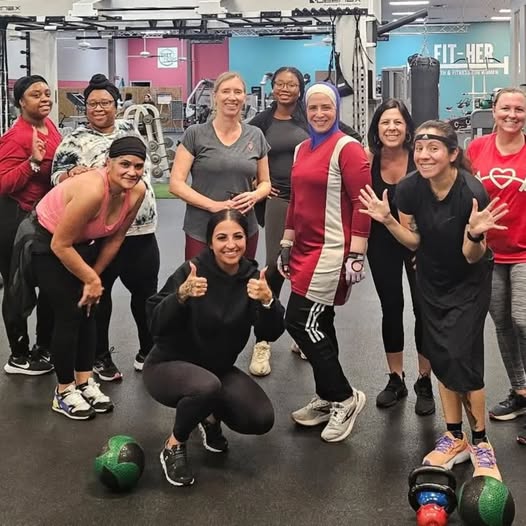
Then she left it and built Fit-Her.
“We became solution-oriented. We started creating programs, rather than memberships, and we focused on speaking specifically to women’s needs: bone health, hormonal changes, mental health, and lean mass preservation. This has allowed us to face each decade in a woman’s life with innovative programming options and well-educated fit pros and coaches. To meet each and every one where they were when they walked through the doors, we refined the space, removing mirrors, adding recovery areas, and redesigning the outdated integration process. Upskilling the staff, many of whom had been in-house for as many as 20 years, and being available to speak one-to-one with potential members remains a challenge. We have found that online signs promote little more than a price, rather than the culture one experiences when walking through the doors.”
— Ann Gilbert, Founder, Fit-Her
Walking away from a franchise is not a small business decision. There is an operating system you are giving up, a name people recognize, a set of problems somebody else already solved for you. What you get in return is the ability to design a club around a specific woman rather than around a national template.
Fit-Her is a physical club, so this is not a story about escaping the building. It is a story about who the building is for, and about a woman who had been operating inside somebody else’s answer, deciding to write her own.
Jennifer Lungren: The Business That Refuses to Have a Door
Jennifer Lungren went in the opposite direction entirely. She looked at the middle-aged women she wanted to reach and concluded that the building was not an asset. It was the obstacle.
So she trains women in their living rooms. She runs group classes in churches and in parking lots. The overhead is close to nothing, so the price can be reasonable, and women who could never justify a boutique membership can actually afford to train.
“I wanted to create an environment where women could move their bodies and feel good. From the beginning, I recognized that traditional fitness spaces can be a significant barrier for many women. Big gyms, intimidating equipment, and the pressure of those environments often prevent them from ever walking through the door. When I designed my business, I centered it around meeting women where they are most comfortable. Whether in their homes, neighborhood community centers, or church spaces, I bring fitness into familiar environments where women feel safe, supported, and connected. Meeting women where they are makes movement more accessible and allows them to focus not only on physical strength but also on the confidence and mental well-being that come with it. Specifically, in-home training was led by busy women who didn’t see how they could make time for traditional fitness settings, so I go to them so they can put self-care closer to the top of their to-do lists.”
— Jennifer Lungren, Founder
There is a reason most coaches do not build this way, and it is not that they never thought of it. Going to the client is harder. It is more driving, more setup, more logistics, and there is no beautiful facility doing any of the selling for you.
“The driving, scheduling, and logistics require a great deal of effort. At times, coordinating everything can be the most challenging part of my week. True, there is no overhead for physical space, but there is the gas and mileage on my car. So this is not an overhead-free business model, and maybe I don’t see as many clients if I had a physical space, but that was never the vision for me. I like going to homes and being in simpler spaces. Every time I finish a session and see the confidence, strength, and joy on a client’s face, I’m reminded exactly why I chose this path. Those moments reaffirm that I am living out my mission: creating a space where women feel empowered to move, grow, and build lasting strength from the inside out.”
— Jennifer Lungren, Founder
The parking lot and home training is not a compromise she settled for. It is a deliberate answer to a question most operators never bother to ask: what would actually get this woman to show up?
What Both of Them Did Instead
Two women, two businesses that share almost nothing on paper, and one decision underneath both.
Neither of them started with a building, a franchise agreement, or a market analysis. They started with a woman. Ann’s woman had outgrown what a franchise template could offer her. Jennifer’s woman could not afford a gym or would not walk into one. Each of them then built whatever structure that specific woman actually required, and the structures ended up as opposites. Ann’s answer was to own her building. Jennifer’s answer was to have no building at all. Both answers were correct, because they were built around different women.
That is the part worth sitting with. There is no correct business model in this industry. There is only the model that fits the person you are actually serving, and most of us build it in the wrong order, starting with the structure and then hunting for humans to fill it.
The Question to Ask Before You Sign Anything
Before you take out the lease, buy the franchise, build the app, or raise your rates, describe the specific woman you are building this for. Not a demographic. A person. Where she lives, what her Tuesday looks like, what stops her from training, what she is actually lonely for.
Then look at the business you are about to build and ask whether she would ever walk through the door. If the answer is no, you are building in the wrong order, and no amount of good coaching inside that building will fix it.
FitHire — Connect With Coaches Building the Future of the Industry
The coaches designing the next generation of fitness businesses are the ones who started with the client instead of the floor plan. FitHire by Coach360 connects coaches with the operators and facilities building around real people rather than templates.
Frequently Asked Questions
What are women in fitness doing differently with their business models?
The most interesting women-led fitness businesses tend to start with a specific underserved client rather than with a facility, a franchise agreement, or a market template. Ann Gilbert left a franchise to build Fit-Her, a club designed around the women she was actually serving. Jennifer Lungren eliminated the facility entirely, training women in their homes and running classes in churches and parking lots to keep costs accessible for middle-aged women. The two businesses look nothing alike, and the underlying decision is the same: design the structure around the person rather than fitting the person into an existing structure.
Is a fitness franchise a good business model for coaches?
It depends entirely on whether the franchise’s template matches the client the coach wants to serve. A franchise provides an operating system, brand recognition, and pre-solved problems, which is a genuine advantage. It also constrains programming, pricing, and community decisions to a national template. Some coaches find that the template stops fitting the women in front of them and build independently so they can make those decisions themselves. The franchise question is not good or bad in the abstract. It is a question of fit.
How can a fitness coach build a business without a facility?
Eliminating facility overhead makes accessible pricing possible, which opens the business to clients who would never join a traditional gym or boutique studio. Coaches can train clients in their homes, run group sessions in community spaces such as churches, parks, and parking lots, and build the entire model around going to the client rather than asking the client to come to them. The trade-off is more logistics, more driving, and no facility doing the selling. What is gained is access to an underserved population and an economic model that does not require filling a room to survive.
What is the first question a coach should ask before choosing a business model?
Describe the specific person the business is being built for, in real detail rather than as a demographic: where she lives, what her week actually looks like, what prevents her from training, and what she is genuinely looking for beyond exercise. Then examine the business model under consideration and ask whether that person would realistically walk through its door. Most fitness businesses are built in the wrong order, starting with the structure and then searching for people to fill it, and that inversion is what caps the growth of otherwise good coaching.
About Jessica H. Maurer
Jessica is a recognized fitness business consultant and strategist focusing on transforming businesses from overwhelmed to organized. Her international presentations, workshops, certifications, and consultations underscore her commitment to helping fitness professionals and businesses realize their full potential. When Jessica takes the stage, she’s sharing fresh ideas and inspiration that spark positive change. Jessica’s international presentations and consultations are about growth, career transformation, overall wellness, and making fitness a joyful journey. Her expertise spans education, program and instructor development, and brand evolution, making her a key player in elevating the industry. Jessica also played a pivotal role in developing the Mental Well-being Association’s certification for Fitness Professionals., always striving to bring a holistic approach to wellness that’s as uplifting as it is effective.
Jessica has presented at prestigious events like IDEA World, Fitnessfest ACSM Health & Fitness Summit, SCW Mania, AsiaFit, and more. She has worked with brands such as FIT4MOM, SFR, BOSU, Lebert Fitness, Savvier Fitness, SCW Fitness, FitSteps, canfitpro, IDEA, and VIBES music. She also has written content for the IDEA Fitness Journal, canfitpro Magazine, Mental Well-being Association, FIT4MOM, Motherly, and more.
Top 26 Most Visionary Coaches — Nominations Now Open
Somewhere right now, a coach is writing a program at midnight for a client who will never know how long it took. Another is sending a 5 a.m. text to talk someone into showing up. A third is celebrating a client’s first unassisted pull-up like it is her own. This work happens quietly, in gyms and living rooms and church parking lots, and most of it goes unseen by anyone except the person whose life is changing because of it.
Coach360 built the Top 26 to make that work visible. Last year we honored the Top 25 Most Inspiring Coaches, and the response from the community told us something we already suspected. People are hungry to celebrate the coaches who changed them. This year we are expanding the list, sharpening the criteria, and opening nominations to the whole industry. The Top 26 Most Visionary Coaches of 2026 is now accepting nominations.
Why the Focus Shifted to Vision
Last year’s honor celebrated inspiration, and inspiration still matters. This year we wanted to name something more specific. The coaches shaping the next era of this industry are not simply the hardest working or the most beloved, though they are often both. They are the ones seeing around the corner, building models and methods and communities that did not exist before they made them.
A visionary coach is not always the one with the biggest following or the fullest schedule. She is the one who noticed a population nobody was serving and built something for them. He is the one who questioned a practice everyone accepted and found a better way. They are the coaches whose ideas other coaches end up borrowing three years later without knowing where they started.
That is what we are looking for in 2026. Not just excellence, though excellence is the floor. We are looking for the coaches who are quietly deciding what this profession becomes next.
Why This Recognition Matters
The fitness profession asks for a rare combination of technical knowledge, emotional intelligence, and relentless commitment. Coaches navigate early mornings and late evenings, sacrifice personal time to fit client schedules, and study constantly to keep pace with exercise science, nutrition research, and injury prevention. They become confidants, accountability partners, and steady voices in their clients’ lives, all while holding professional boundaries.
For all of that, the industry rarely gives coaches a platform to share their stories or receive public acknowledgment. Many work in relative anonymity, their impact measured only in the transformed lives of their clients rather than in any broader professional recognition. That gap affects careers, earning potential, and the way coaching is perceived as a profession.
The Top 26 exists to close that gap. It gives coaches a platform to showcase their expertise, share their philosophies, and reach a wider audience. By elevating exceptional professionals, Coach360 lifts the entire coaching community and makes plain the profound impact these individuals have on their clients and the industry.
How Nominations Work
Nominations are open now to anyone who wants to put a coach forward. Clients, colleagues, employers, and fellow coaches are all welcome to nominate. You can nominate a coach you train with, a coach you work alongside, or a coach whose work you admire from a distance.
Selections will be made based on coaching excellence, client outcomes, professional development, and community impact, with particular attention this year to the forward-looking vision that defines the honor. The coaches who make the list will represent a range of specialties and settings, from strength and conditioning to Pilates, from rehabilitation to performance, working in boutique studios, large chains, private practice, and online.
Nominations close on August 19, 2026. The full Top 26 report will be released September 7, 2026, free and accessible to everyone, the same way last year’s report was.
Who You Should Be Thinking About
Think about the coach who changed how you see this work. The one whose approach made you rethink your own. The one who built something out of nothing, served a population everyone else ignored, or simply showed up with a consistency and a heart that made everyone around them better.
That coach deserves to be on this list. The only thing standing between them and the recognition is someone taking two minutes to put their name forward.
Nominate a coach today. Then share this with someone who knows a coach worth celebrating, because the best of this industry are often the last people to nominate themselves.
Nominate now at coach360news.com/top-26-most-visionary-coaches-of-2026.
Related: Coach360’s Top 25 Most Inspiring Coaches of 2025 Report
For Coaches Defining What’s Next
Being recognized as visionary starts with the platform to be seen. FitHire by Coach360 connects nominees and honorees with employers looking for coaches who are already shaping where this industry is headed.
Frequently Asked Questions
What is the Coach360 Top 26 Most Visionary Coaches of 2026?
The Top 26 Most Visionary Coaches of 2026 is Coach360’s annual recognition of the fitness professionals shaping the next era of the industry. It builds on last year’s Top 25 Most Inspiring Coaches, expanding the list and sharpening the criteria to focus on vision, meaning the coaches who are building models, methods, and communities that did not exist before them. Honorees are selected based on coaching excellence, client outcomes, professional development, and community impact, and they represent a range of specialties and settings, from strength and conditioning to Pilates, from private practice to online coaching. The full report is released free to the public.
How do I nominate a coach for the Top 26?
Nominations are open to anyone, including clients, colleagues, employers, and fellow coaches. You can nominate a coach you train with, work alongside, or simply admire from a distance. Submit your nomination through the official nomination link before the deadline, and be prepared to speak to what makes the coach’s work exceptional, whether that is their client outcomes, their community impact, or the forward-looking vision that defines this year’s honor. There is no limit on who can nominate, and the process takes only a couple of minutes.
What makes a coach “visionary” rather than just successful?
A successful coach delivers excellent results and builds a strong practice. A visionary coach does that and something more: they see around the corner. Vision shows up as noticing a population nobody was serving and building something for them, questioning a widely accepted practice and finding a better way, or developing ideas that other coaches adopt years later. A visionary coach is not necessarily the one with the largest following or the fullest schedule. They are the one quietly influencing what the profession becomes next, which is exactly what the Top 26 aims to recognize and celebrate.
About Jessica H. Maurer
Jessica is a recognized fitness business consultant and strategist focusing on transforming businesses from overwhelmed to organized. Her international presentations, workshops, certifications, and consultations underscore her commitment to helping fitness professionals and businesses realize their full potential. When Jessica takes the stage, she’s sharing fresh ideas and inspiration that spark positive change. Jessica’s international presentations and consultations are about growth, career transformation, overall wellness, and making fitness a joyful journey. Her expertise spans education, program and instructor development, and brand evolution, making her a key player in elevating the industry. Jessica also played a pivotal role in developing the Mental Well-being Association’s certification for Fitness Professionals., always striving to bring a holistic approach to wellness that’s as uplifting as it is effective.
Jessica has presented at prestigious events like IDEA World, Fitnessfest ACSM Health & Fitness Summit, SCW Mania, AsiaFit, and more. She has worked with brands such as FIT4MOM, SFR, BOSU, Lebert Fitness, Savvier Fitness, SCW Fitness, FitSteps, canfitpro, IDEA, and VIBES music. She also has written content for the IDEA Fitness Journal, canfitpro Magazine, Mental Well-being Association, FIT4MOM, Motherly, and more.
The Hiring Signal Most Operators Miss Until It Is Too Late
I have sat across from many operators in the weeks after a coach quit, and the conversation almost always goes the same way. They are surprised. They did not see it coming. The coach was fine, the schedule was full, the clients seemed happy, and then a resignation letter landed on a Tuesday, and now there is a hole in the schedule and a handful of members quietly deciding whether they are still coming.
Here is what I have come to believe after enough of those conversations. The coach did not leave on Tuesday. The coach left months ago. Tuesday was just the day they told you.
Nobody wakes up one morning and decides to stop caring. It happens slowly, over months, and it leaves fingerprints on everything the whole time. You can see it in the rebooking rate, in the schedule, in the small things a coach quietly stops doing without ever mentioning it. The reason operators miss it is that none of it looks like a warning. A dip in rebookings looks like a bad stretch. A client who drifts away looks like someone whose life got complicated. All of it looks like something that will probably resolve itself, so you leave it alone, and by the time you can name it out loud, the members are already gone.
The Coach Whose Sessions Are Full But Whose Clients Do Not Rebook
This is the one that hides best, because on paper, nothing is wrong. The schedule looks healthy. The coach is putting in the hours. If you are looking at utilization, that coach is performing.
But watch the rebooking behavior instead of the calendar. Everything that can be observed from across the room is still fine. The coach cues correctly, counts the reps, and finishes on time. What has gone missing is the part of the job that was never in the job description, and it is the part clients actually pay for: the noticing, the question that proves someone was listening last week, the small evidence that they are a person and not a name on a schedule. Clients almost never complain about losing that, mostly because they cannot name it. They just quietly stopped rebooking and decided it was about their schedule.
The operational consequence shows up as a slow bleed rather than a spike. You will not see a wave of cancellations. You will see a package renewal rate that has drifted down a few points across one coach’s book while everyone else holds steady, and you will not think much of it until you are looking backward from a resignation.
The Coach Who Stops Asking for Anything
Early in a coach’s tenure, they ask for things. Can I try this with a client? Can I get on the schedule for that certification? What do you think about how I handled this? The asking is a sign of investment, and it is easy to mistake it for high maintenance when you are busy.
When the asking stops, most operators feel relief because it’s one less thing on the list. What is actually happening is that the coach has stopped believing the answer matters, and a coach who has stopped believing the answer matters has already begun the process of leaving. The requests do not dry up because they have become content. They dry up because they no longer see a future in the building.
This one costs you twice as much. You eventually lose the coach, and in the meantime, you lose the ideas, the initiative, and the quiet cultural contribution of someone who was invested enough to push. The team feels it before you do.
The Coach Who Has Gone Quiet in the Room
Every facility has a rhythm to it that has nothing to do with the schedule. It is who lingers after their last session, who talks to the members who are not their clients, who is in the conversation when the team is standing around the front desk at 6 p.m.
When a coach withdraws from that, it registers as a personality thing. She is more introverted lately. He seems tired. It is easy to explain away because it is not a performance issue and it is not insubordination. It is just an absence.
But that withdrawal is one of the most reliable signals there is, and it damages more than the coach’s own retention numbers. A facility’s culture is not built in meetings. It is built in those unstructured minutes, and a coach who has emotionally exited is subtracting from that culture in a way the whole team absorbs. The friction that shows up later, the sense that the staff is not gelling, often traces back to someone who left the room emotionally months before they left it physically.
Why These Signals Get Missed
None of these are dramatic. That is exactly the problem. Operators are trained to watch for the loud failures: the coach who is late, the coach who gets a complaint, the coach whose numbers crater. Those are easy to see and easy to address.
Disengagement is quiet. It looks like competence with the life drained out of it, and competence is hard to argue with. So the operator waits, because there is nothing concrete to raise, and the coach interprets that silence as confirmation that no one is paying attention, which accelerates the very thing the operator is failing to notice.
The coaches worth keeping are almost never the ones who tell you they are struggling. They are the ones who go quiet and hope someone asks. What I have watched work, over and over, is embarrassingly simple. Operators who catch this early are not running sophisticated analytics. They are asking a specific question, early and repeatedly, and actually waiting for the answer:
“What is something you want to be doing here that you are not doing right now?”
— The one question that surfaces disengagement months before a resignation
That question surfaces disengagement months before a resignation does, because it invites a coach to name a future in your building. A coach who cannot answer it has already stopped picturing one.
The retention conversation in this industry is almost always about members. It should start with the person who is standing in front of them.
Related: The Coaching Skill Nobody Certifies For and Every Client Notices Immediately
FitHire — Hire Coaches Who Fit Before the Damage Is Done
The cost of a coaching hire that quietly stops working is paid in member retention long before it shows up as a resignation. FitHire by Coach360 connects operators with coaches whose values, ambition, and communication style fit the culture they are building, so the fit is right from the first day rather than discovered in the exit interview.
Frequently Asked Questions
What are the early signs that a coaching hire is not working out?
The earliest signals are quiet rather than dramatic. Watch for a coach whose schedule looks full but whose clients have stopped rebooking at their previous rate, which indicates the relational work that drives retention has stopped, even though the sessions are still being delivered. Watch for a coach who has stopped making requests, asking for certifications, floating ideas, or seeking feedback, because that silence usually means they have stopped seeing a future in the building. And watch for withdrawal from the unstructured moments in the facility, the lingering after sessions and the informal conversations, because that is often where emotional departure shows up first. None of these look like performance problems, which is precisely why they get missed.
Why do operators miss the signs of a disengaged coach?
Operators are conditioned to look for loud failures: lateness, complaints, collapsing numbers. Disengagement produces none of those. It looks like competence without energy, and competence is difficult to raise as a concern. There is nothing concrete to address, so the operator waits for something more definitive, and the coach reads that silence as evidence that nobody is paying attention. That interpretation accelerates disengagement, meaning the operator’s hesitation to act on a soft signal makes the outcome more likely rather than less.
How does a disengaged coach affect member retention?
The damage arrives as a slow bleed rather than a visible spike. A disengaged coach continues delivering technically adequate sessions while ceasing the relational work that makes clients want to return: the noticing, the follow-up, the sense that a client is genuinely known. Clients rarely articulate this as a complaint. They simply stop rebooking and attribute it to their own schedules. The result is a renewal rate that drifts downward across one coach’s book while the rest of the facility holds steady, which is easy to overlook until it is examined in hindsight after a resignation.
What can an operator do when they notice a coach disengaging?
The most effective intervention is early and conversational rather than procedural. Asking a coach what they want to be doing in your facility that they are not currently doing invites them to name a future in the building, and a coach who cannot answer that question has usually stopped imagining one. Asking it early and repeatedly surfaces disengagement months before it becomes a resignation, at a point where the situation is still recoverable through a development conversation, a new responsibility, or a clear path forward. The window to act is wide, but only for operators who watch the quiet signals rather than wait for the loud ones.
About Jessica H. Maurer
Jessica is a recognized fitness business consultant and strategist focusing on transforming businesses from overwhelmed to organized. Her international presentations, workshops, certifications, and consultations underscore her commitment to helping fitness professionals and businesses realize their full potential. When Jessica takes the stage, she’s sharing fresh ideas and inspiration that spark positive change. Jessica’s international presentations and consultations are about growth, career transformation, overall wellness, and making fitness a joyful journey. Her expertise spans education, program and instructor development, and brand evolution, making her a key player in elevating the industry. Jessica also played a pivotal role in developing the Mental Well-being Association’s certification for Fitness Professionals., always striving to bring a holistic approach to wellness that’s as uplifting as it is effective.
Jessica has presented at prestigious events like IDEA World, Fitnessfest ACSM Health & Fitness Summit, SCW Mania, AsiaFit, and more. She has worked with brands such as FIT4MOM, SFR, BOSU, Lebert Fitness, Savvier Fitness, SCW Fitness, FitSteps, canfitpro, IDEA, and VIBES music. She also has written content for the IDEA Fitness Journal, canfitpro Magazine, Mental Well-being Association, FIT4MOM, Motherly, and more.
Why Fitness Coaches Get Bored (And How to Fix It Without Ruining Your Clients’ Results)
You have been told to watch for burnout, so you have learned how to protect your schedule, energy, and boundaries. But nobody told you that the first crack in your career could be boredom, and that it would set in while you are doing everything right.
Here is the setup nobody explains to a new coach. You will teach the same movement patterns to a dozen different people in a week. You will cue the same squat, the same hinge, the same press, over and over, and you will say the same three things to fix them because those three things work. Your motivational lines will start to sound familiar to you long before they do to anyone else. You will start to notice urges to constantly update your clients’ plans, create new exercise variations, and scroll social media searching for the next big move.
This is boredom sneaking in. Boredom is not a character flaw, nor is it a sign you chose the wrong career. It is a structural feature of the job. The danger is not the boredom itself. The danger is what most coaches do to escape it.
How Boredom Can Turn Into Burnout
When a coach gets bored, the instinct is to create. New programming. New exercises. New complexity. A fresh warm-up for every client, a novel finisher, a constantly rotating menu of movements designed to keep the coach engaged. It feels productive. It feels like the opposite of phoning it in.
It is also how many coaches end up in burnout. Overcreation is exhausting in a way that consistency is not. Every new program is prep time, mental load, and a fresh set of variables to track. Multiply that across a full client roster and the coach who was merely bored is depleted, having generated an enormous amount of work to solve an internal problem by changing external things that did not need to change.
There is a second cost that matters more. Your clients do not need novelty. They need consistency. Progress comes from repeating a movement enough times to actually adapt to it, from the boring accumulation of reps under a stable program. The client who gets a brand-new workout every session is not getting a better experience. They are getting a coach’s boredom disguised as innovation, and their results suffer as a result. What bores the coach is often the very thing that works for the client.
“Stop trying to make the workout more interesting and start making your own coaching more difficult. Keep the client’s program stable. Put the novelty where it belongs — on you — in the form of deliberate constraints that sharpen your craft without touching the thing that is working for the client.”
Move the Challenge From the Program to Yourself
Film your sessions for a week and identify the cue you lean on most. Everyone has one — the phrase that comes out of your mouth on autopilot twenty times a day. Then give yourself a rule: you cannot use that phrase for one week. If it slips out, the week restarts.
Maybe your phrase is brace your core. You say it forty times a day without thinking. Ban it for a week, and suddenly you have to find another way in. Maybe it becomes lace your ribcage together or stack your ribs on top of your pelvis. You will be astonished at how much this forces you to actually see the movement in front of you. Your cueing vocabulary will double, and the client never knows anything has changed except that their coach has gotten sharper.
Keep the workout identical but rebuild the warm-up. The main work remains consistent because it drives the client’s adaptation, but the warm-up becomes your sandbox. New movement prep, new activation patterns, and new ways to open the session. The client gets variety in the place where variety costs them nothing, and you get a small creative problem to solve every day.
Give yourself a training lens for the week. Coach everything unilaterally rather than bilaterally and watch how it changes what you notice about your clients’ asymmetries. Or remove propulsion from the movements entirely and find other variables — tempo, range, position — to keep things progressive. The client’s program still makes sense and continues to advance. You are just running it through a constraint that makes you think harder about the levers you have.
Why This Is a Business Skill, Not Just a Personal One
This is not a wellness tip about staying motivated. It is one of the first real professional competencies a new coach can build, and it shows up directly in the length and quality of a coaching career.
The coaches who burn out early are very often the ones who never learned to separate their own need for stimulation from their clients’ need for consistency. The coaches who last built a private practice of self-imposed challenges that kept them engaged for years while their clients received the stable, repetitive, effective programming that actually produced results.
“An operator who hears a young coach explain how they keep their own coaching sharp without churning their clients’ programs is hearing someone who understands the difference between their experience and their clients’ outcomes. That is a level of professional maturity most new coaches have not reached, and it signals a coach who is built to last.”
Boredom is coming. It is part of the job. What you do with it is up to you.
Related: The Motivation Check-In: Identifying Burnout vs. Boredom as a Coach
FitHire — Find Roles That Invest in Coach Development
The best facilities know that a coach’s longevity depends on staying engaged without burning out. FitHire by Coach360 connects newer coaches with operators who invest in professional development and understand that a sustainable coaching career is built deliberately.
Frequently Asked Questions
Why do fitness coaches get bored when their clients are not?
Coaches and clients experience the same training session from opposite sides. A client might run a program two or three times a week and feel steady progress each time. The coach runs that same movement pattern with a dozen clients across the week, cueing the same corrections repeatedly. The repetition that produces results for the client produces monotony for the coach. This is a structural feature of the job rather than a sign that the coach dislikes their work, and it tends to surface a few months into a new role once the initial novelty of the profession wears off.
Is it bad to change a client’s workout to keep things interesting?
Changing a client’s program primarily to relieve the coach’s own boredom usually works against the client. Progress depends on repeating movements enough times to adapt to them, which means consistency is a feature of good programming, not a limitation. A client who receives a brand new workout every session often progresses more slowly because no single stimulus is applied long enough to produce adaptation. The coach’s boredom is real and worth addressing, but changing the client’s program is the wrong lever.
How can a coach stay engaged without changing the client’s program?
The most effective approach is to impose deliberate constraints on your own coaching while keeping the client’s training consistent. Film your sessions and ban your most overused cue for a week to force a richer cueing vocabulary. Keep the main workout identical but redesign the warm-up as your creative outlet. Adopt a coaching lens for the week, such as coaching everything unilaterally or removing propulsion and finding other ways to progress a movement. Each of these challenges your craft and keeps the work mentally engaging without disrupting the stable programming your clients need to see results.
How does managing boredom help prevent coach burnout?
Boredom left unmanaged tends to push coaches toward overcreation — constantly generating new programming, exercises, and complexity to stay stimulated. That overcreation dramatically increases mental load and prep time across a full client roster, which is a direct path to burnout. By channeling the need for novelty into personal coaching challenges rather than into the clients’ programs, a coach relieves the boredom without generating unsustainable amounts of extra work. This protects both the coach’s energy and the clients’ results.
About Jessica H. Maurer
Jessica is a recognized fitness business consultant and strategist focusing on transforming businesses from overwhelmed to organized. Her international presentations, workshops, certifications, and consultations underscore her commitment to helping fitness professionals and businesses realize their full potential. When Jessica takes the stage, she’s sharing fresh ideas and inspiration that spark positive change. Jessica’s international presentations and consultations are about growth, career transformation, overall wellness, and making fitness a joyful journey. Her expertise spans education, program and instructor development, and brand evolution, making her a key player in elevating the industry. Jessica also played a pivotal role in developing the Mental Well-being Association’s certification for Fitness Professionals., always striving to bring a holistic approach to wellness that’s as uplifting as it is effective.
Jessica has presented at prestigious events like IDEA World, Fitnessfest ACSM Health & Fitness Summit, SCW Mania, AsiaFit, and more. She has worked with brands such as FIT4MOM, SFR, BOSU, Lebert Fitness, Savvier Fitness, SCW Fitness, FitSteps, canfitpro, IDEA, and VIBES music. She also has written content for the IDEA Fitness Journal, canfitpro Magazine, Mental Well-being Association, FIT4MOM, Motherly, and more.
The Fitness Brand That Started With a Microcredit Loan and 31 Italian Studios Is Now Hiring Its First U.S. Team
Jasmine Haffadi did not launch StoreFit with investor money, a growth team, or a market analysis. She launched it in 2020 with a state-guaranteed microcredit loan, a concept she believed in, and the kind of stubbornness that tends to look like vision in retrospect. The gyms around her were closing. She was opening. Four years later StoreFit has 31 active studios across Italy, 20 more on the way, and eight million euros in combined network revenue. The brand has never lost a single location since the day it opened.
Now she is bringing it to Boca Raton, FL. And she needs at least three trainers to help her do it right from the start.
“When I opened the first studio, the world was shutting everything down. Gyms were closing, people were afraid, and I was signing a lease with money from a government microcredit loan. I had no investors, no team, just one very strong conviction: that people needed something completely different from what fitness had offered them until that moment.”
— Jasmine Haffadi, Founder, StoreFit
The Concept Is Simple. That Is the Point.
Twenty minutes. One client. One trainer. No gym floor crowded with equipment a first-timer does not know how to use. No group class where the wrong move is visible to fifteen strangers. Just a focused, personalized session using EMS technology that activates deep muscle groups in the time most people spend warming up for a conventional workout.
StoreFit was not built for the person who already loves the gym. It was built for the person who has spent years telling themselves they are not a gym person. That population is enormous, underserved, and extraordinarily loyal when someone finally gets it right for them.
“The thing that struck me most, from the very first day, is the look on someone’s face when they walk in for the first time. There is a kind of guarded hope, as if they are saying: I want to believe in this, but I have already failed so many times. Our work does not begin when we turn on the EMS equipment. It begins the moment that person walks through the door.”
— Jasmine Haffadi, Founder, StoreFit
That sentence is the whole brand. Not the technology, not the twenty-minute format, not the Italian origins. The fact that for a significant number of their clients, walking into a StoreFit studio is the first time in their life they have ever done something like this. The coach in that room is not just delivering a session. They are the person who made fitness feel possible for the first time.
Why Boca Raton and Why a Founding Team
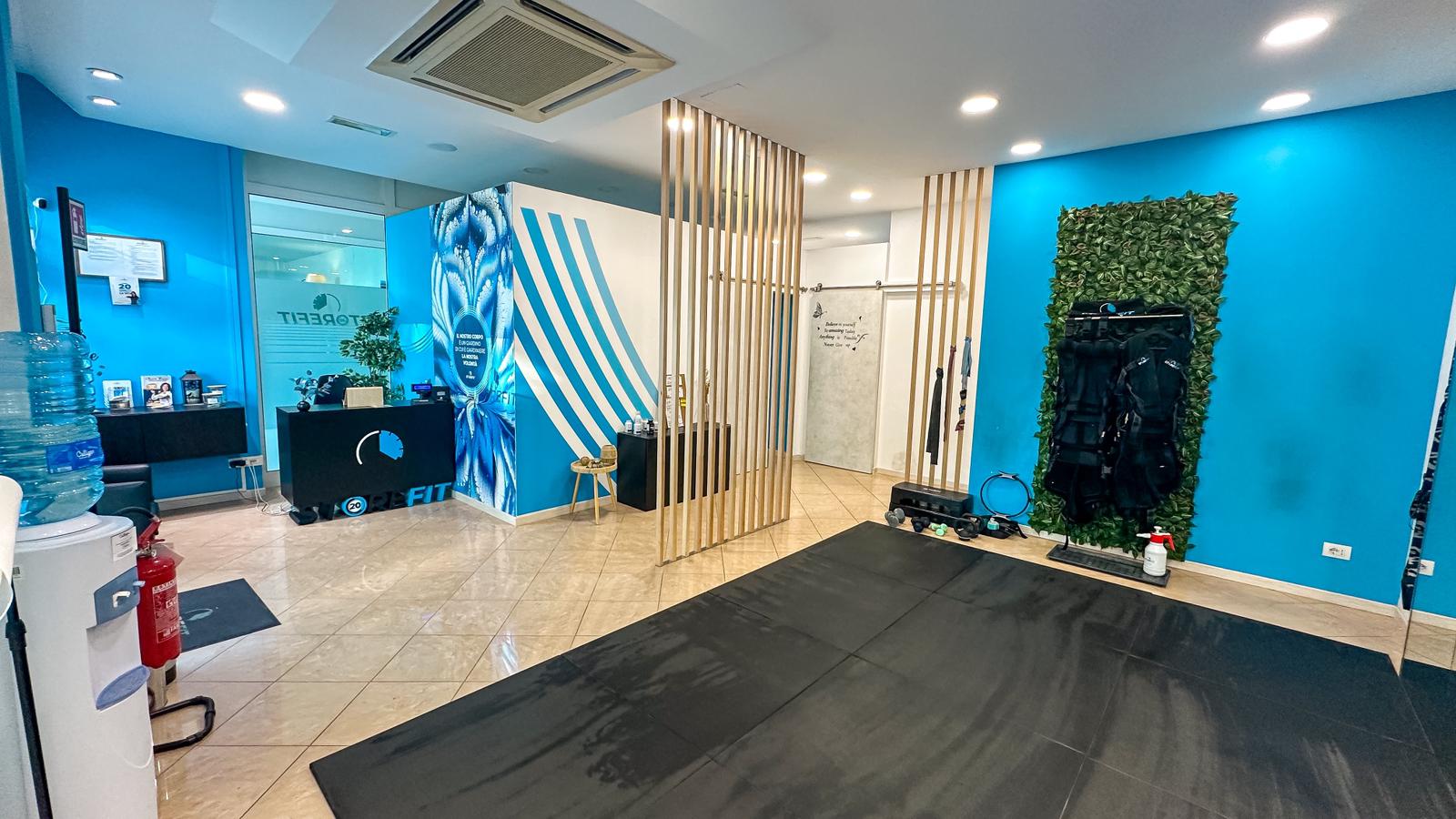
This year, while building the U.S. launch, Jasmine also published her first book. Il nome che ho scelto, which translates as The Name I Chose, came out with Mondadori Electa, one of Italy’s most respected publishers, and was presented in Milan in June. The book is about identity, reinvention, and what it takes to build something original when the world around you was not designed with you in mind.
The culture of a business reflects the values of the person who built it, and Jasmine’s track record over four years and thirty-one studios, without a single closure, suggests she builds things that last.
The Boca Raton location sits at 5999 N. Federal Highway, Suite 3. Three positions are available, full-time and part-time. Full EMS training and certification support are provided, so prior experience with the technology is not required. NASM, ACE, ISSA, or an equivalent personal trainer credential is. Everything else — the EMS protocols, the StoreFit method, the specific way of working with clients who are new to fitness — gets taught.
“What I am looking for in the three people who will open Boca Raton with me is not a perfect resume. I am looking for someone who wakes up in the morning wanting to build something, not just execute something. Positions at an established brand will always exist. The chance to be among the first three people to write StoreFit’s American story exists only right now.”
— Jasmine Haffadi, Founder, StoreFit
What a Founding Team Role Actually Is
Most trainer positions ask you to step into something already running. A founding team role asks something different. The three coaches who join StoreFit Boca Raton now will be making decisions that shape how this location operates, what the client experience feels like, and what standard the brand becomes known for in the United States.
The honest version of what that means is that some days the systems will not be fully built yet. The client base starts at zero. The playbook is being written in real time. The trainers who are energized by that environment rather than unsettled by it are the ones who tend to look back on their founding-team roles as the defining chapter of their careers, rather than just a job they had before something else came along.
StoreFit has thirty-one studios in Italy that started the same way. None of them closed. The person who built them is now building one here, and she is looking for three people to do it with her.
Related: The Fitness Job Market in 2026: Where the Openings Are and Where They Are Going
FitHire — Join the StoreFit Founding Team in Boca Raton
StoreFit is assembling the founding team for their first U.S. location and they are looking for three personal trainers who want to be part of something from the very beginning. FitHire by Coach360 connects fitness professionals with opportunities like this one. If you are a certified personal trainer in the Boca Raton area with a passion for working with first-time fitness clients, this is the role worth applying for.
Frequently Asked Questions
What is StoreFit?
StoreFit is an Italian boutique fitness brand founded in 2020 around one specific belief: fitness should be available to people who have never tried it before. Every studio is built around a 20-minute one-on-one format in a judgment-free environment. The brand currently operates 31 active studios across Italy with 20 more opening, combined network revenue of eight million euros, and has never closed a single location since it opened. The first U.S. studio is opening in Boca Raton, Florida.
How does EMS training work?
EMS stands for Electro Muscle Stimulation. During a session, low-frequency electrical impulses activate deep muscle groups that conventional training takes significantly longer to reach, which is how StoreFit produces real results in twenty minutes. The technology is widely used in European fitness and rehabilitation settings and is particularly well-suited for clients who are new to exercise because the session is short, personalized, and does not require the client to arrive knowing anything. All StoreFit trainers receive full EMS training and certification before working with clients regardless of prior experience.
What certifications does StoreFit Boca Raton require?
A personal trainer certification through NASM, ACE, ISSA, or an equivalent recognized organization is required. Prior EMS experience is not, because StoreFit provides full training and certification support to every founding team member. What the brand actually prioritizes beyond the credential is harder to teach: a genuine desire to work with people who have never exercised before, the interpersonal warmth to make that experience feel safe, and the communication skills to build a client relationship that lasts beyond the first session.
What does a founding team role at StoreFit Boca Raton mean for a trainer’s career?
It means building something rather than inheriting it. The three trainers who join StoreFit Boca Raton now will shape how the studio operates, what the client experience feels like, and what standard the brand becomes known for in the United States. As StoreFit expands across the country, founding team members carry a relationship with the brand and a role in its American origin story that no later hire can replicate.
About Jessica H. Maurer
Jessica is a recognized fitness business consultant and strategist focusing on transforming businesses from overwhelmed to organized. Her international presentations, workshops, certifications, and consultations underscore her commitment to helping fitness professionals and businesses realize their full potential. When Jessica takes the stage, she’s sharing fresh ideas and inspiration that spark positive change. Jessica’s international presentations and consultations are about growth, career transformation, overall wellness, and making fitness a joyful journey. Her expertise spans education, program and instructor development, and brand evolution, making her a key player in elevating the industry. Jessica also played a pivotal role in developing the Mental Well-being Association’s certification for Fitness Professionals., always striving to bring a holistic approach to wellness that’s as uplifting as it is effective.
Jessica has presented at prestigious events like IDEA World, Fitnessfest ACSM Health & Fitness Summit, SCW Mania, AsiaFit, and more. She has worked with brands such as FIT4MOM, SFR, BOSU, Lebert Fitness, Savvier Fitness, SCW Fitness, FitSteps, canfitpro, IDEA, and VIBES music. She also has written content for the IDEA Fitness Journal, canfitpro Magazine, Mental Well-being Association, FIT4MOM, Motherly, and more.
« Previous PageNext Page »

Subscribe to our Newsletter
Powering the Business of Health, Fitness, and Wellness Coaching