The Burnout Blind Spot: Why Fitness Coaches Are the Last to See It Coming
It is April, and Marcus has not taken a day off since August. His 6 a.m. class is packed, his afternoon one-on-ones are fully booked, and his client retention is the highest in the building. At home, he is short with his partner, sleeps eight hours, wakes up tired, and quietly dreads the job he once chose with excitement. His manager has not noticed anything is wrong. Neither has Marcus.
That last detail is the one worth sitting with. The professional identity built around energy and service leaves little room to notice depletion. By the time most coaches name it, it has been running for a while.
The World Health Organization classifies burnout as an occupational phenomenon driven by unmanaged workplace stress. Research suggests that as many as one in three personal trainers and strength coaches meet the criteria for high burnout. That number is not a personality problem. It is a structural one.
The Load Coaches Carry That Never Shows Up on a Calendar
A trainer who leads a 6 a.m. bootcamp, four back-to-back one-on-ones, and a 7 p.m. group session has not just worked eleven hours. They have spent eleven hours managing clients’ energy and staying present through every rep. This emotional labor does not show up in a scheduling app, and it is rarely considered when evaluating whether a workload is sustainable.
“The early signs of burnout are rarely noticeable — things like subtle shifts in energy, presence, and engagement. Most coaches don’t realize that something is off because they are still doing the work, but without the same level of connection and enthusiasm.”
MELANIE LEWIS. FOUNDER. INSPIRE FITNESS. HOUSTON TX
Coaches Know This Science. They Stop Applying It to Themselves.
Cortisol and adrenaline work well in short bursts. When stress never fully shuts off, the brain’s decision-making capacity slows. The threat-detection system stays active, producing irritability, mental fog, and difficulty recovering regardless of sleep duration. That is not fatigue from a hard week. That is a nervous system that has stopped cycling between stress and recovery. Burnout is a recovery problem, not a motivation problem.
The Five Signals That Show Up Before the Crisis Does
Burnout does not begin with dramatic warning signs. The first signals are quiet, accumulate over time, and are easy to rationalize away.
1. Recovery stops working. After a full night’s sleep, a rest day, or a long weekend, Monday feels exactly like Friday. When rest no longer restores you, the nervous system is communicating something beyond normal tiredness.
2. Client energy shifts from fuel to friction. When walking into a full class starts to feel heavy rather than energizing, the pattern is worth noticing.
3. Coaching on autopilot. The cues are correct, the timing is right, the session gets done — but the coach is not fully present. The WHO identifies this as the cynicism dimension of burnout.
4. Small problems feel disproportionately large. When a last-minute cancellation or scheduling conflict starts to feel like a major disruption, the nervous system has lost its buffer.
5. Losing professional curiosity. When the drive for continuing education and new programming fades, it usually means there is nothing left to give.
“I look at the energy and enthusiasm of the coach first. When this starts to change — even though they are showing up for clients every day — it is often an early sign that something is off.”
MELANIE LEWIS. FOUNDER. INSPIRE FITNESS
The Mistake Coaches Make When They Finally Notice
The instinct when these signals appear is to push through. That is the same mistake coaches identify immediately in their clients. The more effective move mirrors what works in training periodization: build recovery into the plan before the crisis arrives. A lighter week every month. A capped client load. One real conversation with a mentor or peer.
“The coaches who sustain long-term success in this industry aren’t the ones doing the most. They are the ones who know how to manage their schedule, set boundaries, and stay consistent over time.”
MELANIE LEWIS. FOUNDER. INSPIRE FITNESS
The Coaches Who Last Are the Ones Who Are Still There
Client retention is not only a programming competency or a relationship skill. It is presence — which requires a nervous system that has not been running on overdrive for three consecutive years without a real recovery phase. The coaches who build 10-, 15-, and 20-year careers are not the ones who never got tired. They are the ones who recognized depletion early enough to do something about it.
BUILD A CAREER THAT LASTS — CAREER LAB LAS VEGAS 2026
Career Lab by Coach360 is designed for coaches who want to build a sustainable career, not just survive a demanding one. Register here.
Frequently Asked Questions
What are the early signs of burnout in fitness coaches?
The first signals are usually recovery that stops working and a shift in client energy. When rest no longer restores you and sessions that previously energized you begin to drain you, it is more than normal tiredness. Disproportionate irritability at small problems and fading professional curiosity are also early signs.
How is coach burnout different from regular tiredness?
Regular tiredness resolves with rest. Burnout does not. If you wake up after a full night’s sleep or take a rest day and feel no different, the nervous system has moved past normal recovery. Burnout is a sustained state of depletion that requires structural changes, not just a weekend off.
Can a fitness coach experience burnout and boredom simultaneously?
Yes, and it happens often. The distinction matters because the responses differ — burnout requires recovery and protection while boredom requires new challenge. Applying the wrong solution makes both worse.
Does continuing education help prevent burnout?
Yes, in two ways. Learning keeps work engaging and interrupts the boredom that accelerates burnout. Training in sustainable career practices also reduces the reactive, high-volume workload that depletes coaches over time.
About Jessica H. Maurer
Jessica is a recognized fitness business consultant and strategist focusing on transforming businesses from overwhelmed to organized. Her international presentations, workshops, certifications, and consultations underscore her commitment to helping fitness professionals and businesses realize their full potential. When Jessica takes the stage, she’s sharing fresh ideas and inspiration that spark positive change. Jessica’s international presentations and consultations are about growth, career transformation, overall wellness, and making fitness a joyful journey. Her expertise spans education, program and instructor development, and brand evolution, making her a key player in elevating the industry. Jessica also played a pivotal role in developing the Mental Well-being Association’s certification for Fitness Professionals., always striving to bring a holistic approach to wellness that’s as uplifting as it is effective.
Jessica has presented at prestigious events like IDEA World, Fitnessfest ACSM Health & Fitness Summit, SCW Mania, AsiaFit, and more. She has worked with brands such as FIT4MOM, SFR, BOSU, Lebert Fitness, Savvier Fitness, SCW Fitness, FitSteps, canfitpro, IDEA, and VIBES music. She also has written content for the IDEA Fitness Journal, canfitpro Magazine, Mental Well-being Association, FIT4MOM, Motherly, and more.
Deliberate Practice for Career Milestones: How Lisa Greenbaum Built 25 Years Into a System
I have interviewed coaches at every career stage, and the ones who build something lasting share a quality that is harder to name than credentials or hustle. They have a practice structure that generates feedback. Not just experience — feedback. Lisa Greenbaum is one of the clearest examples I have encountered of what that looks like over a 25-year career.
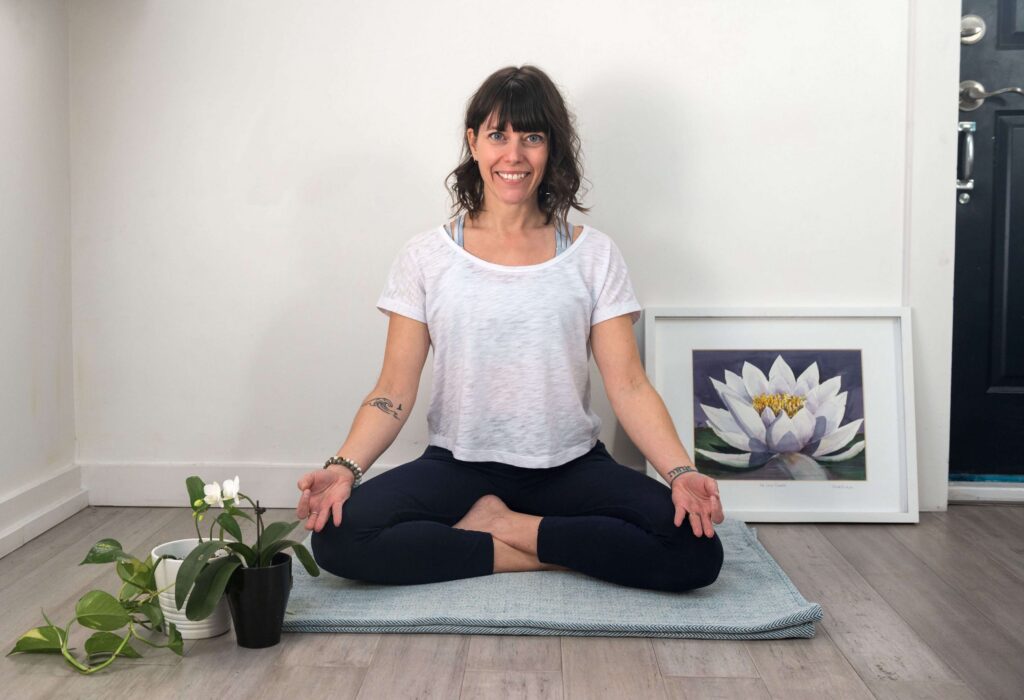
Greenbaum has been teaching group fitness and yoga in Toronto since 2001. She has completed over 1,000 hours of yoga teacher training and has taught fitness professionals across five countries. She won the canfitpro Delegates’ Choice Award for Canadian Presenter of the Year in 2018, was named to Optimyz Magazine’s 100 Health and Fitness Influencers in Canada five consecutive years, and in October 2026, her first book will be published by Human Kinetics/Lotus Books: Beyond the Pose: Lessons from the Yamas and Niyamas for Mindful, Authentic Living. She is the founder of Sangha Yoga Collective, an online membership and teacher-training platform centered on trauma-informed yoga and mental health.
The Inflection Point That Built an Online Coaching Business Model
“From very early on in my career, I knew that I wanted to share education directly with fitness professionals. This meant making sure I had a well-rounded experience beyond simply teaching amazing classes. I acquired admin and business experience in coordinator roles. As a mind/body instructor, I took any complimentary certification I could find, which ultimately led me down the path of Yoga. I also showed up. I attended every instructor meeting, helped out at events, and developed relationships with others who are as passionate about the industry as I am.”
LISA GREENBAUM. FOUNDER. SANGHA YOGA COLLECTIVE
Most fitness careers follow a familiar arc. Greenbaum followed this path before choosing a different direction at a point where most coaches stay the course. Winning the canfitpro Canadian Presenter of the Year award was not the turning point. It confirmed a change she had already made: choosing to build her own infrastructure around her practice instead of relying on platforms she did not control.
“Sangha means community in Sanskrit, so the need to have a central hub for our community was imperative right from the beginning. Having had the opportunity to teach in so many different countries also means that I have students all around the world that I want to stay in touch with. I also recognize that there is a gap between fitness professionals and their educators, and being able to continue to mentor my students has always been important to me.”
LISA GREENBAUM
Sangha Yoga Collective grew out of that decision. A free entry level with a yoga-for-mental-health course, guided meditations, and philosophy content. A paid Sangha Library membership with a broader resource base. At the center is a 200-hour Yoga Teacher Training, accredited by Yoga Alliance, offered in a mix of in-person and online formats. Every part of the model is intentional — the scope is deliberate. Greenbaum teaches what she has spent 25 years mastering: trauma-informed yoga, mental health, and community.
Scope of Practice Mastery as Career Architecture
The fitness industry creates pressure to offer every service. Greenbaum’s career demonstrates a different architecture. Her real depth sits at the intersection of yoga, mental health, and community. The focus is not a limitation — it is the strategy.
“A few times, I’ve found myself at a fork in the road, having to make some hard decisions. In 2018, I walked away from a big role to go out on my own. And while the financial stability was there, my value system was not aligned, and because of that, I have never regretted my decision.”
LISA GREENBAUM
That decision produced measurable results. In one week, Sangha Yoga Collective recorded 17 organic sessions with 94 percent new users — no paid ads, no promotions. Coaches with clear expertise in a defined area attract the right audience without chasing it.
The Deliberate Practice Feedback Loop Most Coaches Never Build
“Staying committed to my own Yoga practice is imperative in my continued growth as a Yoga Teacher. I, like so many others, have experienced a high degree of trauma over the last 10 years, and managing my mental health is key. Studying new somatic techniques, along with ancient Kirya-based Yoga practices, is a big part of this. In this way, I am a forever student, always learning and adapting within the ups and downs of life.”
LISA GREENBAUM
Coaches who build lasting careers are not always the ones who work hardest early. They are the ones who build feedback systems that keep working over time. This means having mentors even after formal mentorship ends, regularly reviewing what works and what does not, and continuing to learn in rooms where they are not the most experienced person.
What Her Career Keeps Asking
For coaches at a turning point, Greenbaum’s work raises a question worth sitting with: what are you practicing deliberately, and what are you just doing repeatedly?
The difference between deliberate practice and repetition is not about hours logged or classes taught. It is about whether a real feedback loop exists, whether progress is being measured, and whether the gaps that matter for the career are being closed. Greenbaum’s 25 years of teaching, her upcoming book, her Yoga Alliance-accredited training, and her membership platform did not happen because of time alone. They happened because her practice was designed from the start to produce those outcomes.
FOR COACHES MAPPING THEIR NEXT CAREER MOVE
Coaches who build deep expertise in a defined area — and can demonstrate it — are exactly who operators seek for senior and specialist roles. FitHire by Coach360 connects coaches with facilities looking for that depth.
Frequently Asked Questions
What is deliberate practice for fitness coaches and why does it matter?
Deliberate practice means practicing with a specific intention to isolate and improve a single variable, then evaluating the result against real feedback. Research on expertise consistently shows that the quality of the feedback loop matters more than the volume of hours alone.
What is scope of practice mastery and how does it apply to coaching careers?
Scope of practice mastery means developing deep competency in a defined area rather than broad familiarity across many. Coaches with a mastered scope attract more specific clients, command stronger positioning, and build careers that compound over time.
How did Lisa Greenbaum build Sangha Yoga Collective?
Sangha Yoga Collective is built on a layered membership model: a free community portal, a paid Sangha Library membership, and a 200-hour Yoga Alliance-accredited teacher training program delivered in a hybrid format, producing certified instructors who carry the methodology into their own communities.
What does trauma-informed yoga training involve for fitness instructors?
Trauma-informed yoga training teaches instructors to recognize how trauma affects physical and emotional responses and to adapt language, pacing, and cueing accordingly. It moves beyond physical instruction to nervous system awareness, teaching coaches to create environments where students feel safe practicing at their own pace.
About Jessica H. Maurer
Jessica is a recognized fitness business consultant and strategist focusing on transforming businesses from overwhelmed to organized. Her international presentations, workshops, certifications, and consultations underscore her commitment to helping fitness professionals and businesses realize their full potential. When Jessica takes the stage, she’s sharing fresh ideas and inspiration that spark positive change. Jessica’s international presentations and consultations are about growth, career transformation, overall wellness, and making fitness a joyful journey. Her expertise spans education, program and instructor development, and brand evolution, making her a key player in elevating the industry. Jessica also played a pivotal role in developing the Mental Well-being Association’s certification for Fitness Professionals., always striving to bring a holistic approach to wellness that’s as uplifting as it is effective.
Jessica has presented at prestigious events like IDEA World, Fitnessfest ACSM Health & Fitness Summit, SCW Mania, AsiaFit, and more. She has worked with brands such as FIT4MOM, SFR, BOSU, Lebert Fitness, Savvier Fitness, SCW Fitness, FitSteps, canfitpro, IDEA, and VIBES music. She also has written content for the IDEA Fitness Journal, canfitpro Magazine, Mental Well-being Association, FIT4MOM, Motherly, and more.
Mental Wellness Intake Framework for Coaches: The Dual-Continuum Approach
A client walks in for session three with clean nutrition, full attendance, and every rep counted. Midway through the warm-up, the energy is gone. Your push cues are not landing. Yet nothing seems wrong on the surface. Understanding mental wellness — where this client sits on the dual-continuum — is the first step, not the last.
What the Dual-Continuum Model Reveals
Traditionally, mental health framing uses a single axis, ranging from severe illness to no illness. By adding a vertical dimension, the model captures what the single axis misses. At the top sits flourishing: clients who thrive, set PRs, and drive their own sessions forward. Languishing sits at the bottom. Yet these clients have no clinical diagnosis. They feel stuck, flat, and cut off from progress.
Mental wellness in this framework is not the absence of illness. It is an active state. A client can be entirely free of any clinical diagnosis and still operate in a languishing state. Pushing hard on that client does not produce a breakthrough. Instead, it often speeds up dropout, injury, or burnout.
This model does not ask coaches to become therapists. Instead, it asks coaches to notice which quadrant a client occupies and respond. The honest limit worth naming: this is an orientation tool, not a clinical one. It sharpens your read of the room. It does not replace assessment by a licensed mental health provider.
Mental Wellness Intake: Four Questions That Work
Sharon Gam, PhD, trains clients in strength work and mental wellness. Before each session, clients rate their mood, energy, stress, and self-confidence on a 1–10 scale via a short Google Form. They write a workout intention on a whiteboard during warm-up. This is not a long-term goal. Instead, it is something specific they want to feel or achieve that day.
“Depending on what they write, I might ask why that intention matters today,” Gam says. “It opens a talk that points me toward their mental wellness.” Third comes the session close. She asks clients to reflect on what they set out to feel versus what they felt. That step helps clients notice progress they would otherwise miss.
Here are four intake questions coaches can embed in a standard check-in:
- How is your energy today relative to your physical readiness?
- How mentally present do you feel during sessions, not just physically?
- How connected are you to progress outside the gym: sleep, work focus, social life?
- When your schedule gets disrupted, how quickly do you get back on track?
The answers will not produce a clinical picture. They will tell you whether to reduce load, restructure the session, or check in next week. Gam documents responses in session notes and tracks patterns. Clients who score low in heavy work periods show a mental wellness signal she would not otherwise catch.
“Often I notice recurring patterns. These help me shape the long-term program and open talks about their mental wellness over time.”
SHARON GAM, PHD. PERSONAL TRAINER. STRENGTH AND MENTAL WELLNESS
Scope of Practice and the Referral Protocol
The dual-continuum model draws the boundary as clearly as it defines the framework. You adapt sessions, add breathing cues, and run check-ins. You do not diagnose or treat. When check-ins show repeated low scores or outside disruption, your role changes. It shifts from modifier to navigator.
Gam builds her referral network with care. “The right fit matters with mental health providers, just as it does with fitness providers,” she says. “I meet providers in person before I recommend them. If I know them, I can describe their style to a client. That makes the referral land.” Keep a short list of two or three mental health providers whose work you know.
The language that works sounds like this: “You have been consistent in training. Some patterns suggest added support could help. I would like to connect you with a mental health provider.” Frame it as a skilled recommendation, not a critique. That framing keeps the relationship intact and gets the client to act.
Session Design for Languishing Clients
Detecting languishing does not mean removing challenge. Instead, it means aligning the session to what the client can absorb that day. When intake signals languishing, use three moves. First, reduce circuit length and add variety to cut cognitive load. Second, build in one brief social exchange between sets. Third, add a single directed breath cue during rest. Not a full block. Just a 10-second focus reset between compound movements.
For clients showing signs of flourishing, maintain intensity. Use their strong mental state to push for a PR or test new movements. Weekly check-ins tracked alongside training metrics reveal patterns worth acting on. A client who languishes in busy work weeks but recovers after social events shows a mental wellness signal. You would not find it in load data alone.
The honest tradeoff: check-ins add two to three minutes per session. Added late in the coaching relationship, they can feel out of place. Added from day one as part of intake, clients treat them like any other standard step. According to the Global Wellness Institute, adding wellness to exercise programs shows gains in both reducing illness and building flourishing states.
The Business Case for Mental Wellness Integration
“Focusing on mental wellness has been good for my business,” Gam says. “I attract my ideal clients, my clients stay longer, and my clients are happier.” She states this clearly on her website. Mental wellness is how she stands apart in fitness. That is not a branding result. It is a systems result.
Studios that run mental wellness check-ins protect clients and grow staff skill. Coaches who read the dual-continuum model respond to what is happening rather than guessing. Lower coach burnout is a real lever. It starts with intake that gives coaches a frame for what they see on the floor.
Record your check-in process in writing. It signals rigor and protects your scope of practice. When built into onboarding, it creates a training floor for any coach you hire or manage. Studio owners who add this to onboarding build a culture where mental wellness signals get the same care as training data. That consistency turns a reactive team into one that drives retention.
FOR COACHES READY TO APPLY
Coaches who build mental wellness into their practice can find aligned studios on FitHire by Coach360. Create your profile and let your method speak for itself.
Frequently Asked Questions
How often should I run these mental wellness intake questions?
First, run a full check-in at initial intake. From there, a two-question version at the start of each session takes under two minutes. Subtle shifts in energy and focus are almost always the first sign that a client is drifting toward languishing.
What if a client resists mental wellness talks?
Instead, frame questions around performance: energy levels, sleep quality, training focus. Most clients who resist mood-based framing engage with output framing right away. You get the same data under a different label.
How do I initiate a referral without damaging the coaching relationship?
Use language tied to what you have seen: “You have been consistent. I want to make sure you get full support. I would like to connect you with someone in this area.” Frame it as adding support, not ending your work together.
Can the dual-continuum model work in group fitness?
Yes. In group settings, read the room rather than asking direct questions. Observe energy, focus, and presence. Adjust pacing, offer brief rest intervals, or add a mindful transition. Address visible languishing signals across the group without singling anyone out.
Group Fitness: How Ellen de Werd Built WARRIOR
Group fitness lost one of its most recognized voices in 2020. Ellen de Werd was a top-10 Beachbody Master Trainer and a long-standing Fitness Director. Coaches across the industry knew her well. When the pandemic pressed pause, all of it disappeared. Conferences stopped. Live events dissolved. The stage lights went out.

However, this is not a comeback story. Instead, it is a blueprint for how coaches rebuild when a platform disappears. It is also a lesson in what stays when everything borrowed is gone.
When Identity Disappears Overnight
For 25 years, Ellen’s career had a rhythm: teach, travel, present, repeat.
For Ellen, losing Beachbody Live was not just a career disruption. It was personal. The role had held her expertise, her community, and her sense of belonging in the industry. When it disappeared, so did the structure that held those pieces together.
However, the real cost was not immediate clarity. Instead, it was confusion.
“I worried that my value in the industry was in jeopardy,” Ellen says. “I was afraid I was no longer important without that title.”
Still, recovery did not happen in a dramatic breakthrough. Instead, it unfolded slowly on a yoga mat. That in-between phase lasted longer than most coaches admit in public. The honest cost of losing a platform-built career is that silence. Not the peaceful kind. Indeed, the kind that echoes.
Building a Group Fitness Company With No Safety Net
WARRIOR began in 2020. There were no investors, no team, no plan. While the industry around her was contracting, Ellen wrote and illustrated courses by hand. As a result, funding came from her own savings: careful choices about where to spend and where to stretch.
However, turning that course work into a recognized group fitness company required precision. Meeting the cert standards of ACE, NASM, and AFAA was not optional. It also meant building systems for instructor intake. Those systems had to stand without legacy backing.
What Was at Stake
After 25 years, she had just lost the platform her career was built on. Specifically, starting over in a shrinking market: without backing, without a team, without an industry name. If WARRIOR did not work, there was no version two. Otherwise, she would quietly fade from a field she had spent her career building.
In practice, this is where most ideas stall. Not for lack of vision, but because the system requires more than most people plan for.
“I completed my 200-hour yoga teacher training but deep down really struggled with my slightly ADHD temperament,” Ellen explains. “Traditional yoga classes felt boring. I had such a hard time sitting still. Therefore, I created WARRIOR Rhythm to provide a yoga-ish format for others who, like me, wished they loved yoga. It’s unconventional, bold, and different. It worked. People wanted it.”
The response surprised her. “People and instructors began to reach out,” she continues. “They asked about what they were seeing me do on a mat. It dawned on me that I had a real business chance.”
Ellen did not just create workouts. She built a framework that could be evaluated, accredited, and scaled.
“I marvel at how it has grown. I look back now amazed.”
ELLEN DE WERD. FOUNDER. WARRIOR RHYTHM
How WARRIOR Builds Group Fitness Instructors
WARRIOR Rhythm is not easily defined. Indeed, that is exactly the point.
It blends yoga flows, breath work, HIIT, and strength work into a single group fitness class. The phrase Ellen uses, “where woo-woo meets WAAHOOOO,” captures something deeper than branding. For example, it reflects a collision of intensity and reflection: two states most group fitness formats treat as opposites.
However, the challenge is not creating that mix. Instead, the challenge is teaching instructors how to deliver it with integrity.
In WARRIOR training, coaches learn to do this without mental whiplash. They guide students from high effort into recovery, weaving in breath work. In practice, this means using language and pacing to guide nervous system shifts, not just physical transitions.
For instance, a pure HIIT class elevates stress hormones. While a pure yoga class can lower them, WARRIOR moves students through both states in a single session. It teaches the body not just how to push, but how to recover. As a result, that ability to shift becomes a skill students carry outside the studio.
The Lesson From the Yoga Mat
Six years ago, Ellen de Werd was sitting on a yoga mat. She was processing the loss of a platform that had defined her career.
Today, WARRIOR has 6 branded group fitness formats and spans 14 countries. Meanwhile, a network of master coaches supports the system. The company hosts its own yearly conference and retreat. As of March 2026, WARRIOR has its own studio.
“Opening the brick-and-mortar studio feels like the peak of it all,” Ellen says. “The keys to the front door feel like a symbol of my entire career. We now have a headquarters. But more than that, a home.”
But the distance between those two moments is not explained by strategy alone. Instead, it is explained by one truth: platforms can disappear. However, skill, perspective, and voice do not.
What Group Fitness Coaches Keep After a Platform Disappears
For coaches, the instinct is to search. Ellen’s journey says: build from what cannot be taken.
The industry will continue to shift. Business models will evolve. Platforms will rise and fall. However, the coaches who endure ask better questions. They build something that belongs entirely to them.
In short, for coaches in this field, everything can be revoked. What you build from the ground up cannot.
Not borrowed, not licensed, not dependent.
Just built.
Hers.
FOR OPERATORS HIRING NOW
Post your opening. Find specialty group fitness instructors on FitHire by Coach360. Post your opening and let the format speak for itself.
Frequently Asked Questions
How does WARRIOR Rhythm meet cert standards for group fitness instructors?
Specifically, the WARRIOR course work meets the cert standards of ACE, NASM, and AFAA. Ellen built the company with accredited in mind. She created intake tools and training records that cert bodies could review.
For Operators and Instructors
Can studio studios license WARRIOR Rhythm formats for their group fitness program?
Yes. While each format is distinct, WARRIOR Rhythm has 6 branded group fitness formats available through instructor cert training. Operators can reach WARRIOR-trained instructors through its global network, now active in 14 countries. WARRIOR blends mindfulness, HIIT, yoga flows, and strength training.
What makes WARRIOR Rhythm different from standard group fitness formats?
Instead of treating intensity and mindfulness as separate disciplines, WARRIOR moves students through both states in a single session. Instructors train to use language and pacing as nervous system tools, not just coaching cues. It is for students who want the challenge of HIIT and the reset of yoga. They should not have to choose between them.
How long does it take to become a certified group fitness instructor in WARRIOR Rhythm?
Certification timelines depend on format. WARRIOR training courses qualify for cert credits through ACE, NASM, and AFAA. Master trainer pathways exist for instructors who want to teach other instructors. This is how WARRIOR scaled to 14 countries while keeping delivery standards.
Coaching Client Retention: Dr. Parker’s 25-Year Method
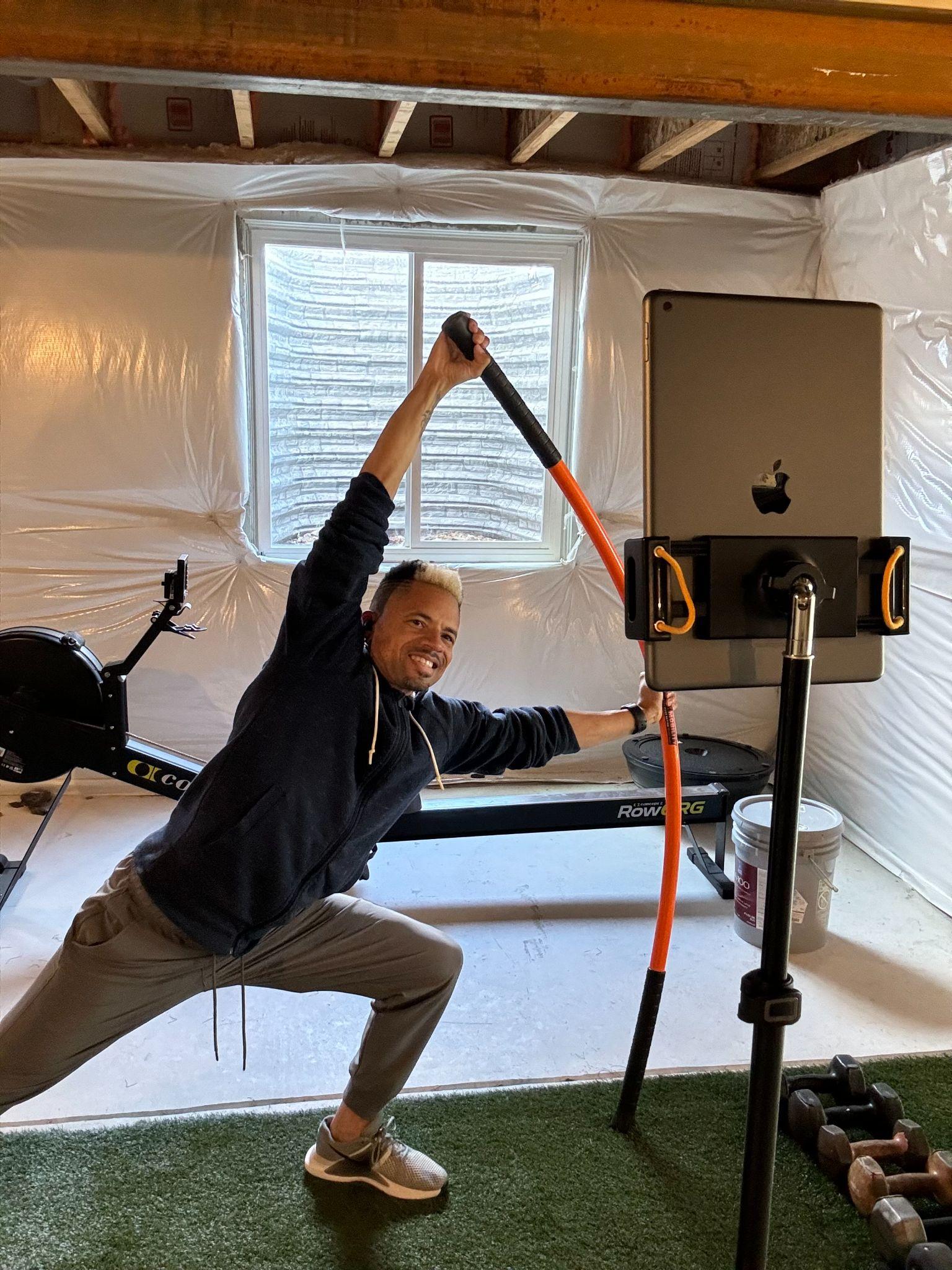
Coaching client retention across most personal training practices runs under six months. Dr. Darian Parker, PhD, keeps some clients for 18 straight years. That gap is not a natural gift. It is a session-level decision he makes before the first exercise begins.
Parker started at James Madison University as a graduate student, working one-on-one with clients in his first coaching role. There, he noticed that clients recalled how he made them feel more than what he programmed. So, that insight became the foundation of a 25-year practice.
Today, Parker owns Parker Personal Training LLC and holds the IDEA 2023 Personal Trainer of the Year title. Before that, he served as National Director of Fitness at a global leisure company. In other roles, he managed a luxury fitness club and led a career college. He is also a podcast host and adjunct professor at multiple colleges. By contrast, his long-term clients average over 10 years. They keep coming back. When the industry average runs under six months, those numbers are the result of a specific method, not chance.
Why Coaching Client Retention Starts at the Check-In
For Parker, every session opens the same way. He asks four questions: how are you feeling physically, socially, emotionally, and mentally? That check-in takes 90 seconds. It shapes what the next 45 minutes actually look like.
“Clients show up in different states and moods each and every time you work with them. The requirement is to flow and adapt to clients in real time to best serve them at that particular time,” Parker says.
When a client reports a hard week, Parker scales back the load and shifts toward mobility work. That call protects recovery. It also protects the relationship. Without it, compounding stress suppresses progress. Yet most coaches skip that check-in entirely. In practice, this is the decision that most directly explains his coaching client retention record.
For one client with weekly travel, long workdays, and family demands, Parker staggered session intensity. He also built recovery days into the weekly structure and designed hotel-friendly workouts for travel days. Six weeks in, the client reported a 12 percent increase in functional strength. Travel fatigue dropped. Adherence held. Because of one rule: no high-intensity session within 48 hours of travel days. That constraint removed the compounding stress that had been suppressing recovery between trips.
Recovery as the Foundation of Long-Term Client Trust
One client has trained with Parker for 18 years. She has described him as someone who reads fatigue before she says a word. Before she asks, he adjusts the session. That is not intuition. When built through consistent attention, that presence shows. When you see it, you know why clients stay.
So, Parker weaves applied science into every session alongside physical training. When a client struggles with adherence, he addresses it in the session itself. Instead, he helps them find a workable goal for that day. That reframes the obstacle as part of building resilience rather than a setback.
For one client navigating a divorce, a cross-country move, and a new job, Parker used flexible programming and reframing throughout. Without a pause, training continued. But she did not just stay in the program. She reported thriving in her sessions during the hardest months of her adult life. Today, that coaching client retention record stands at 18 years.
Two Inflection Points That Reshaped Parker’s Practice
Parker’s philosophy was shaped by two decisions most coaches face only in theory.

Early in his career, he managed a national portfolio of fitness clubs for a global leisure company. Also, he set programming standards across the US portfolio and some overseas locations. What he found was rigid uniformity: fixed systems that produced staff attrition, client dropout, and a culture of compliance. Rather than replace one fixed system with another, he built a tailored mentorship program for club managers. He did this across the full portfolio. He worked with each manager individually, finding specific gaps and designing support that fit each club’s culture. After that, staff attrition dropped. Client retention followed.
Yet the honest cost: tailored mentorship at scale is slow. It takes more investment per manager than a fixed program and does not produce uniform results on a set timeline. Parker chose it because the outcomes lasted longer. So, that same tradeoff appears in his individual coaching work. The adaptive method takes more prep per session than a fixed plan. Yet the payoff shows in year three, year five, and year ten.
“A long term career in coaching is all about flexibility in your approach and understanding the emotional compass of each person you work with. People grow and change as humans during your time with them, so you have to be willing to do the same,” Parker says.
The 2018 Virtual Pivot
That said, the second inflection point came in 2018. Parker attended a conference on the future of fitness and made a decision. Here, the call: move his entire client base to live virtual sessions. Not because of the pandemic. That was still two years away. So, he moved because the format worked.
After 17 years in person, every client bond had to be rebuilt. So, that meant a new format for each one. While some clients adjusted quickly, others needed more time. A few did not make the transition. For those who stayed, adherence improved. Once those barriers were removed, clients trained consistently. Since then, his client base has grown. Today, virtual delivery is the core of Parker Personal Training LLC.
The Trainer Celebration Event: NYC, May 16
On May 16, Dr. Parker is co-hosting the Trainer Celebration Event with Mobius at Arrive Studio in New York City. The event runs from 12pm to 2pm EDT. The goal is to celebrate coaches and shift the talk from rivalry to community. That means space to rest, recover, and connect.
For coaches who invest in others, this event delivers it at scale. Whether you are earlier in your career or years in, this event is for you. It is designed for coaches who invest in others. They rarely take time to be honored themselves.
TRAINER CELEBRATION EVENT.
Arrive Studio, New York City.
Date: May 16, 2026. Time: 12:00 – 2:00 PM EDT. Co-hosted with Mobius.
A space to rest, recover, and connect. Register on Luma.
Three Session Habits for Coaching Client Retention
For coaches, Parker’s method translates into three practices. Each one can begin this week. Together, they are what coaching client retention looks like in practice.
First, open every session with the four-point check-in: physical, social, emotional, mental. That takes 90 seconds. When done consistently, it changes what happens in the next 45 to 60 minutes. It also signals to the client that their full situation matters, not just their workout numbers.
Coaching Client Retention Signals to Track
Second, track session notes on energy and mood alongside performance data. That record becomes a tool for catching patterns before they become dropout signals. When a client performs well on Tuesday and is flat by Thursday, that is a stress signal. The note from Tuesday makes it visible. For coaches, that is the whole tool.
Third, build one adaptive change into every program week. Make it a session that responds to how the client shows up, not how the plan assumed they would. That structural decision is the difference between a program and a coaching bond. For coaches, the gap is measurable. When it works, clients return year after year.
“Whether you are a younger coach getting in the business or someone transitioning into coaching from a different career, one thing must always be adhered to. You are in the people business and serving people in a vulnerable space with compassion, support and flexibility are a must for long-term success,” Parker says.
Coaching client retention for 18 straight years. How does a coach build that? One check-in at a time. When you start there, the rest follows. When the session opens with the right question, everything else follows.
FOR COACHES READY TO APPLY
FitHire by Coach360 connects coaches with clubs, studios, and training roles that fit their approach. Build your profile and let your method speak. Find your next role at FitHire by Coach360.
Frequently Asked Questions
Coaching client retention tracks how long clients stay with a coach. Yet most personal training practices lose clients in under six months. When coaches build adaptive, relationship-centered practices, they see retention measured in years. Stable client bonds produce stable businesses.
Parker opens each session with a 90-second check-in. The four areas: physical, social, emotional, mental. That input shapes the whole session. He also tracks mood and energy between sessions to catch stress signals before they become dropout signals.
Parker moved to live virtual training in 2018. That was two years before COVID-19 made virtual fitness common. His in-person clients followed. Since then, his client base has grown.
The adaptive approach takes more prep than a fixed plan. Coaches who use it report that cost in year one. When coaches apply it, the payoff shows in year three, year five, and year ten. Retention rates improve. Client outcomes last.
The Trainer Celebration Event is co-hosted by Dr. Parker and Mobius at Arrive Studio in NYC on May 16, 2026 from 12pm to 2pm EDT. The goal is to celebrate coaches and shift the talk from rivalry to community. Register at luma.com/9ruia96d.
Collegiate Fitness Event Design: Trotter’s Protocol
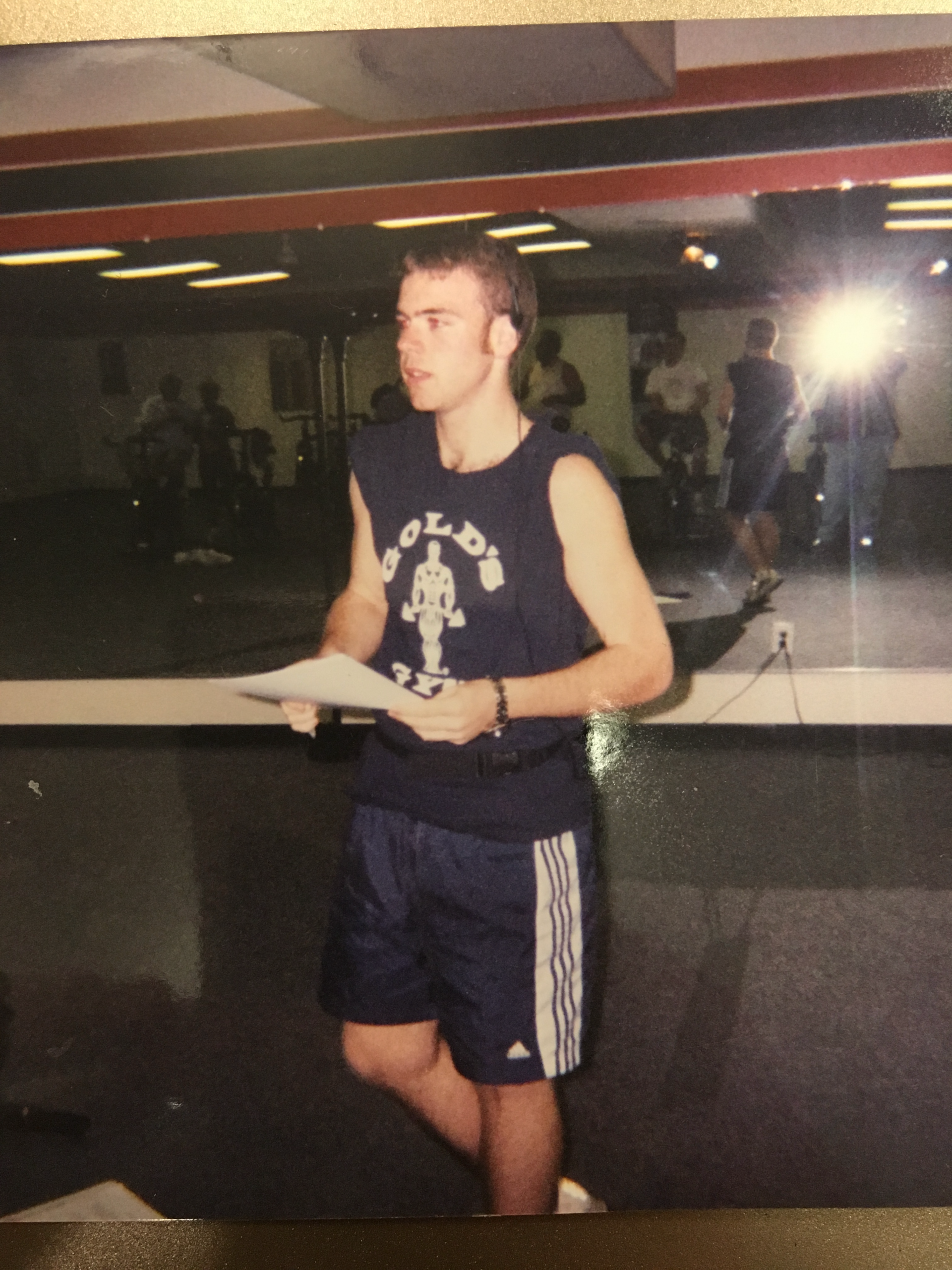
Collegiate fitness program design has one real test: does an event change what people do the week after they leave? Steven A. Trotter, MS, has spent more than twenty years building toward that answer. He started in a Gold’s Gym in high school, leading his first group fitness class from handwritten notes. That session gave him one finding he has never revised. People remember how an experience made them feel, not what was on the agenda.
Trotter is the founder of Globetrotter Wellness Solutions. He created Collegiate Fitness, a platform connecting student fitness leaders and campus recreation staff through events, training, and mentorship. A co-author of Fitness Facility Management, he teaches college courses in health, fitness, and wellness. Since 2017, his collegiate fitness network has grown to more than 750 directors and thousands of student staff nationwide.
The Pattern Behind Collegiate Fitness Events
Early in his career, Trotter ran campus recreation programs. He began tracking a pattern. Some events produced real follow-through. Others left people drained. Content was not the variable. Instead, design was.
“Very early in my career, I realized that self-determination theory explains a lot about how people learn and grow. People want to know that someone sees them as an individual, that they have the tools and support they need, and that they have ownership in the process. When those needs are met, people are far more likely to engage and take action,” Trotter says.
So, in 2009, he launched Globetrotter Wellness Solutions. After that, he traveled campus to campus, leading workshops for student leaders and recreation staff. Those sessions were simple in scope but planned in design. Each one gave attendees new angles on their work and a clear next step to carry back. Over time, the workshops grew into full summits. Each gathering became a test of the design ideas he was building.
He learned that logistics shape outcomes. The order of a day and the size of a group both matter. Even the room layout can lift or kill a lesson.
The Collegiate Fitness Design Framework
Self-determination theory (SDT) names three core needs: skill, choice, and connection. Skill means people leave with tools they can use. Choice means they had real input in the process. Connection means they felt part of something larger than a campus job.
Before any session, Trotter asks one question: will everyone leave feeling seen, capable, and linked to a larger field? When even one need is unmet, follow-through drops. A keynote builds skill but kills choice. A free networking block offers connection but no structure. Without all three needs met in every session, the collegiate fitness design model is incomplete.
Sequence, Space, and Scale
Sequence is the most missed lever. When trust comes first, harder work becomes possible. But place a hard session before trust is built and you will get resistance. Trotter calls this front-loading safety. That is the first thing most planners get wrong.
For Trotter, space is a design choice. Round room layouts increase dialogue. Yet rows suppress it. Nor is the flow between sessions an afterthought. Without planned room choices, the setting works against the lesson.
Scale shapes what learning is possible. For groups above 25, structured breakouts are needed. When groups stay below 12, open sessions work well. Once a group exceeds 50, the lead shifts from guide to curator. Each size calls for its own session plan. That said, confusing them produces events that feel flat or chaotic.
Two Proof Points: SE FitExpo and the Directors Summit
SE FitExpo draws more than 600 attendees from 50 colleges. It is the East Coast’s premier collegiate fitness and wellness event. This year, it ran three days at Clemson University. At that scale, FitExpo builds the kind of community no single campus can match. Students leave knowing they belong to a larger field. After the event, the community stays.
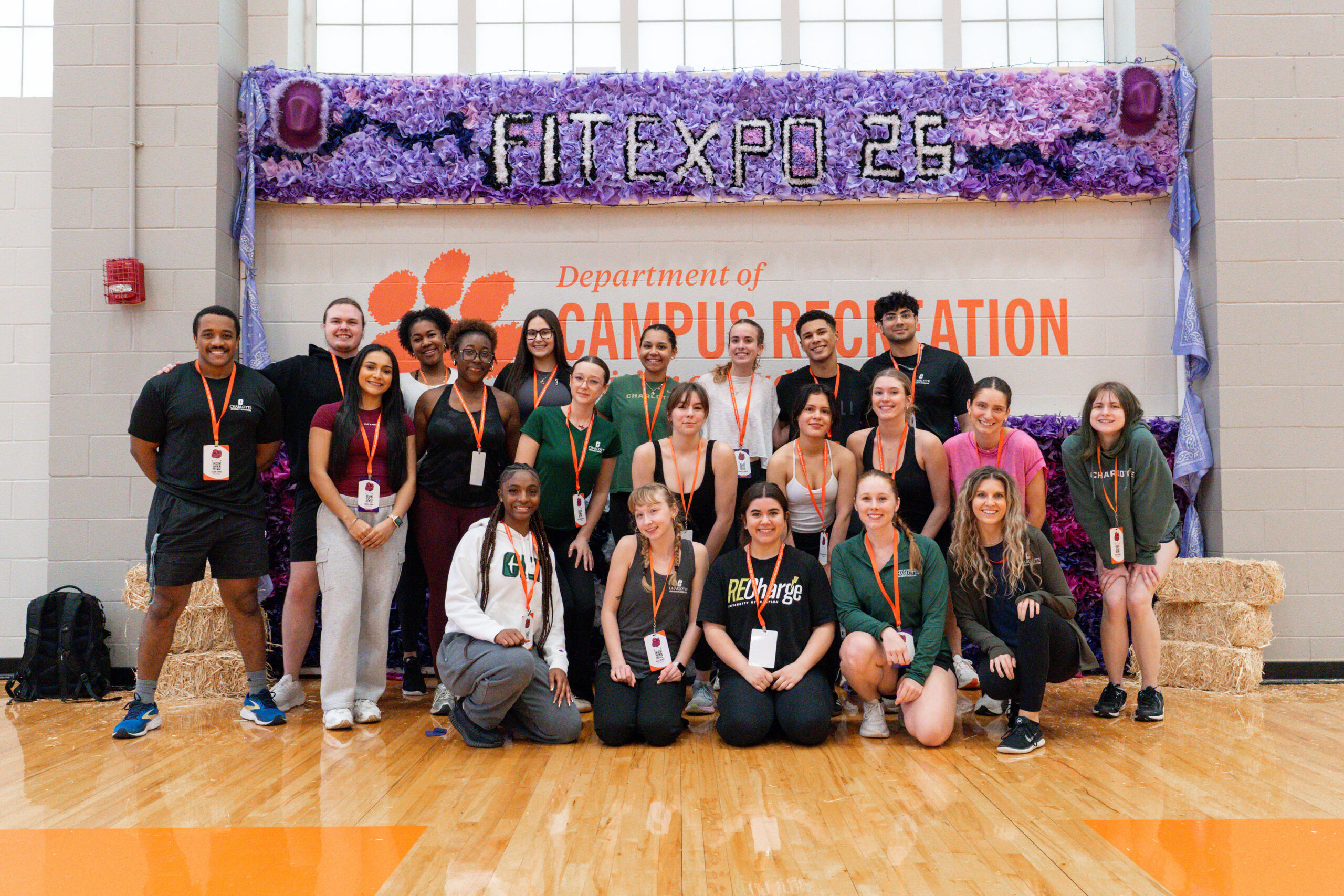
By contrast, the Collegiate Fitness Directors Summit runs smaller by design. The 2026 event is June 16–18 in Charleston, SC. Here, the goal of each session is one clear takeaway. For example, that means a leadership plan, an ops checklist, or a peer problem-solving format. The goal is not inspiration. It is use.
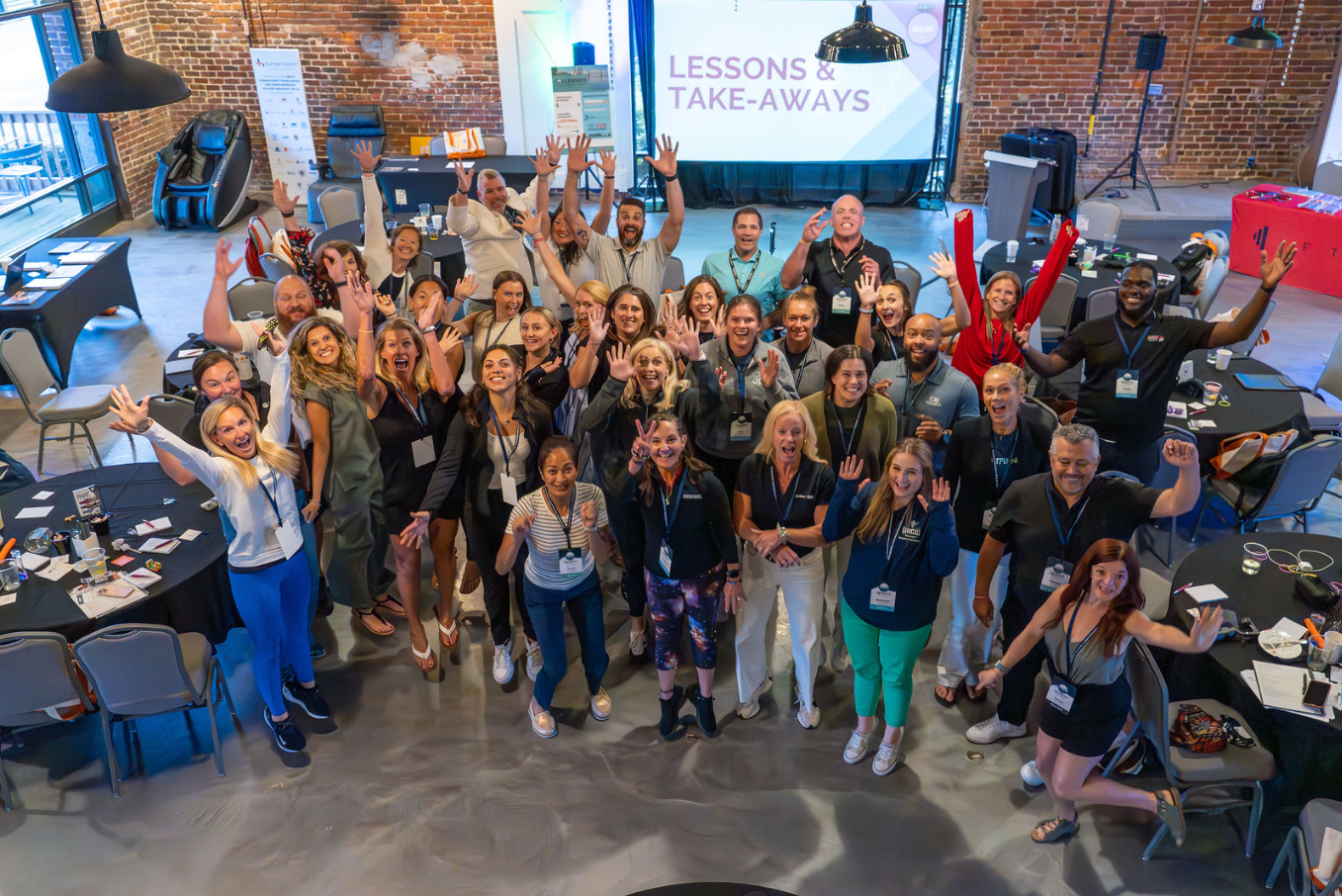
“The purpose of our events is simple. We’re curating experiences where people can connect, learn, and see what’s possible for themselves and their teams. For students, it’s often the first time they realize they’re part of a larger profession. For collegiate fitness directors, it’s a chance to step away from campus and engage with peers who are shaping the future of the industry. When those groups come together and step into something bigger than themselves, the energy in the room is electric,” Trotter says.
While each event stands alone, the design links both ends of the same pipeline. FitExpo brings in student coaches at the start of their career. The Summit develops the directors who will eventually hire them. That arc is planned.
The Honest Cost and the Standard
Designing for all three SDT needs takes 30 to 40 percent more planning time. When the test is skipped, planners run high-energy events that change nothing — and wonder why nothing stuck. In practice, the test takes one hour. Most planners skip it. The test works. That is the gap.
In short, what Trotter has built is not a set program. It is a test framework. The three variables are checkpoints, not formulas: sequence, space, and scale. Because every campus has its own culture, what works in one setting may fail in another. Still, each team has its own dynamic. The model requires presence, observation, and real-time adjustment. Still, no package replaces those skills.
“What excites me most right now is where the collegiate fitness community is heading. Through Collegiate Fitness, we’re building an ecosystem that supports leaders at every stage, from student instructors discovering their potential to fitness directors shaping the future of campus recreation. When we invest in developing people and bringing them into meaningful experiences, we don’t just strengthen programs. We shape the future of collegiate fitness,” Trotter says.
For leaders ready to apply this: run the SDT test before anything else. Before booking a venue or a speaker, map each session to the three needs. That one step splits a growth program from an activity calendar. Twenty years of collegiate fitness events. One question that never changed. Did what happened in the room change what happens next week? Design to answer it.
FOR COACHES AND DIRECTORS READY TO MOVE
FitHire by Coach360 connects fitness coaches with clubs, studios, and campus programs. Build your profile and let your work speak. Search open roles at FitHire by Coach360.
Frequently Asked Questions
Collegiate fitness program design builds events, workshops, and summits for lasting behavior change. The goal is to move past high-energy events. When done well, people leave with clear skills and real bonds with their field.
Self-determination theory names three core needs that drive learning: skill, choice, and connection. When all three are present, people are more likely to apply what they learned after the event ends. Trotter uses SDT as a session-by-session test for every event he designs.
SE FitExpo is the East Coast’s premier collegiate fitness and wellness event. It draws more than 600 attendees from 50 colleges each year. The 2026 event ran three days at Clemson University. It is the main entry point for student fitness leaders entering campus recreation as a career.
The 2026 Collegiate Fitness Directors Summit runs June 16–18 in Charleston, SC. The event focuses on leadership and peer problem-solving for campus fitness directors. Each session is built to produce one clear takeaway that directors can use when they return to campus.
Block Periodization: Plan Training Around Client Life
Block periodization is not a training technique. It is a planning skill, and it is the one that separates coaches who manage sessions from coaches who manage outcomes.
She walked in on a Tuesday with her training log in one hand and a confession in the other. Summer was coming. Her kids were out of school in three weeks, which meant road trips, a family reunion in Colorado, and a stretch of weeks when “consistent training” meant something entirely different than the program you’d been building together. The strength block you’d designed for the next eight weeks would need to bend.
You had two options: try to maintain the block anyway and watch it fall apart by week three, or redesign it around what was actually going to happen. Block periodization gives you the framework to choose the second option before the crisis arrives.
What Periodization Actually Is and Why It Matters Now
Periodization is the systematic organization of training into phases, each with a distinct focus (strength, hypertrophy, endurance, or maintenance), adjusted over weeks and months to produce consistent adaptation without accumulating breakdown.
Pete McCall, MS, CSCS, NASM-CPT, exercise physiologist, podcast host of All About Fitness, and author of Smarter Workouts, describes where the concept originated.
— Pete McCall, MS, CSCS, NASM-CPT | Exercise Physiologist & Host, All About Fitness Podcast
The principle has been in the science for sixty years. The application, adapting it to clients who aren’t athletes, who have unpredictable schedules, and who need to keep training through the full arc of a year, is the coaching skill.
Most coaches understand periodization conceptually. Fewer apply it systematically. And the gap between those two groups is measurable in client retention.
The Planning Conversation Most Coaches Skip
Here is the mistake: most coaches start with the training block and try to fit the client’s life around it. Block periodization works the other way.
Before writing a session, the more useful work is a single planning conversation. Three questions.
When is your busiest stretch at work this year? When is travel going to compress your schedule? What family seasons (school breaks, holidays, anything that changes the weekly rhythm) should I know about now?
McCall runs this exact conversation at the start of every client engagement.
— Pete McCall, MS, CSCS, NASM-CPT
What this conversation produces is a training calendar that looks like the client’s actual life, not the idealized version. Two conference travel seasons. A six-week holiday stretch. A summer with school-age kids. Once those patterns are visible, the block structure maps itself.
How to Structure Your Periodization Blocks
Think in three tiers.
High-intensity blocks belong in the calendar’s stable periods. When the client’s work schedule is predictable, travel is low, and mental energy is available for pushing toward new benchmarks. A 10-to-12-week strength block in January through March, for example, when post-holiday routine is usually locked in and the client is motivated.
Maintenance blocks absorb the disrupted periods. These are not failures. They are planned, and they protect everything built in the high-intensity phase. Sessions get shorter. Loads stay at 70–80% of recent working weight. The goal is frequency and movement quality, not progression. A client who completes four 40-minute sessions during a travel-heavy month has not lost ground. They’ve held it.
Transition blocks bridge the two. They’re 2-to-4 weeks of lower volume at moderate intensity, used to rebuild momentum after a maintenance stretch and set up the next high-intensity block. This is where coaches who think in seasons earn their edge: the transition block is proactive, not reactive.
A 12-week strength block can compress to 8 if the client’s calendar accelerates faster than expected. The structure should flex without breaking. The point is having a structure to flex.
Choosing the Right Periodization Model
Block periodization is not the only tool. Knowing when to use something else is part of the same professional skill.
Linear periodization, which gradually increases intensity over time, is the right call more often than coaches admit. For a client with a stable schedule, consistent attendance, and a straightforward goal like building to a new squat max over 12 weeks, linear is clean, predictable, and effective. Block periodization’s flexibility is a feature for variable-schedule clients. For clients with consistent habits, that flexibility is unnecessary complexity.
Undulating periodization, which varies intensity and volume session by session or week by week, works for clients who need variety to stay engaged and can commit to showing up consistently enough to benefit from the variation. The problem with undulating for most general population clients is the assumption it requires: consistent attendance. When life intervenes and sessions are missed, the programming loses its logic.
Conjugate periodization, which develops multiple training qualities simultaneously, is primarily an athlete model. Advanced clients pursuing multiple performance goals can benefit from adapted versions, but it’s not the right starting point for a coach working with non-athletes.
The honest summary: block periodization is the most adaptable framework for coaching non-athletes across the full arc of a year. Use the others when the client and goal fit.
The Mistake Worth Watching For
When a client misses sessions during a maintenance block, the instinct is to compensate: push harder in the next session to make up for what was lost. This is the pattern that turns a well-designed maintenance phase into an injury.
Maintenance blocks exist precisely because the client’s bandwidth is reduced. Missing sessions during a maintenance phase is not a setback. It is the maintenance phase working as intended. The appropriate response is to continue the plan, not to accelerate it.
Clients often interpret maintenance as failure, as evidence that they’re not making progress. The framing matters. A maintenance block is not a rest period with lighter weights. It is deliberate stimulus management. The body is consolidating the adaptations from the previous high-intensity block. Protecting that adaptation is the point.
The Professional Skill Most Coaches Haven’t Named Yet
What block periodization actually requires is not knowledge of training science. Coaches who can write a smart periodized program are not rare. What’s rarer is the coach who builds the planning infrastructure around the program, who maps the client’s year before writing the first session, who communicates block transitions as professional decisions rather than schedule adjustments, and who holds the long view when the client is in a maintenance stretch and frustrated by the slower pace.
That is periodization literacy as a professional skill, not a scheduling trick.
Career Lab by Coach360, continuing education programs in programming and exercise physiology, and deliberate practice in annual client planning are the clearest paths to building it.
The coaches who keep clients for years are the ones clients believe can see further than the next session.
Studios and operators hiring at scale increasingly want coaches who can manage a client’s training year, not just write a good session. FitHire tracks continuing education and programming credentials as part of its matching process, connecting coaches building this level of competency with operators who recognize it as a retention differentiator.
How to communicate training phases to clients who want to see faster results
What studio operators look for when hiring coaches with general population programming skills
Frequently Asked Questions
About Jessica H. Maurer
Jessica is a recognized fitness business consultant and strategist focusing on transforming businesses from overwhelmed to organized. Her international presentations, workshops, certifications, and consultations underscore her commitment to helping fitness professionals and businesses realize their full potential. When Jessica takes the stage, she’s sharing fresh ideas and inspiration that spark positive change. Jessica’s international presentations and consultations are about growth, career transformation, overall wellness, and making fitness a joyful journey. Her expertise spans education, program and instructor development, and brand evolution, making her a key player in elevating the industry. Jessica also played a pivotal role in developing the Mental Well-being Association’s certification for Fitness Professionals., always striving to bring a holistic approach to wellness that’s as uplifting as it is effective.
Jessica has presented at prestigious events like IDEA World, Fitnessfest ACSM Health & Fitness Summit, SCW Mania, AsiaFit, and more. She has worked with brands such as FIT4MOM, SFR, BOSU, Lebert Fitness, Savvier Fitness, SCW Fitness, FitSteps, canfitpro, IDEA, and VIBES music. She also has written content for the IDEA Fitness Journal, canfitpro Magazine, Mental Well-being Association, FIT4MOM, Motherly, and more.
Coaching in 2030: Skills You Need to Build Right Now
A client walks in with her Oura ring data on her phone, her cortisol panel from last month, and a question about whether to push today’s session or scale back. You have forty-five seconds to make a call. Coaching in 2030 is already happening in the studios where the most adaptable professionals work. That call will define who competes in it.
The picture four industry leaders describe is clear: data literacy, multidisciplinary collaboration, aging population programming, and hormonal health competency are shifting from advanced differentiators to baseline expectations. Coaches who build those skills now will, as a result, lead the next decade. The ones who wait will discover they are catching up to a standard, not setting one.
We asked four of them to share what they see coming and what decisions coaches need to make right now.
The Data Gap Defining Coaching in 2030
Most coaches are already receiving client data. Whoop readouts. Oura ring outputs. Blood glucose trends. However, the problem is not access. Instead, it is the framework for applying it inside a session. Michael Piercy, MS, CSCS,D, RSCC, PES, Owner and Founder of The LAB in New Jersey, is watching that gap become the defining divide between mid-tier and elite coaching.
— Michael Piercy, MS, CSCS,D, RSCC, PES | Owner and Founder, The LAB
The skill Piercy is describing is not technical. In other words, it is interpretive. Knowing how to modify a training block based on HRV data, cortisol patterns, or blood glucose readings requires applied physiology that most certification programs do not currently teach. Coaches who seek that education now, before it becomes standard, will own premium positioning when the market catches up.
Your Next Hire Might Be a Physical Therapist
Hal Hargrave, President and CEO of The Perfect Step, a recovery organization working with individuals living with spinal cord injuries and neurological disorders, has built his operation around clinical partnership. In practice, his version of coaching integration goes further than most fitness coaches currently attempt. That is exactly why it matters.
— Hal Hargrave | President and CEO, The Perfect Step
That word, “guides,” is worth pausing on. The future Hargrave describes does not require coaches to become physical therapists. Specifically, it requires them to understand enough clinical language to work alongside those professionals effectively. Coaches who have built relationships with local clinicians, who can read a physical therapy assessment, and who communicate programming changes to physicians are not just better coaches. As a result, they are harder to replace.
The Population Most Coaches Are Not Yet Ready For
Debbie Bellenger, COO of FitBodies, Inc., frames the aging population challenge in practical terms. In fact, the demographic data on this shift is well documented. Programming demands for this population run deeper than most coaches currently handle. And the coaches who figure this out will serve a client segment that is both underserved and highly motivated.
— Debbie Bellenger | COO, FitBodies, Inc.
Here is what most coaches have not fully reckoned with yet: working with adults 55+ requires a genuine understanding of bone density, balance mechanics, fall prevention, and how chronic medications affect training response. That is not general population programming with lighter weights. In short, it is a distinct specialty. Coaches who pursue deliberate education in these areas are not adapting to a future trend. They are entering an underserved market that already exists.
As new tools enter this space, including GLP-1 medications becoming more common among this population, coaches who understand the intersection of pharmacology and training programming will serve clients that others cannot.
The Hormonal Health Education Gap Nobody Is Talking About
This is the most underserved competency gap in coach education right now. And most certification organizations have not caught up.
Nikki Polos, founder of Workout Worthy, works with women over 40. This client population is navigating hormonal transitions, metabolic changes, and burnout that standard programming consistently fails. Polos has built her practice around integrative coaching at the intersection of hormonal health and movement.
— Nikki Polos | Founder, Workout Worthy
Women over 40 represent a growing client population seeking professional coaching support. Not inspiration, but clinical-quality guidance on how training connects to hormone patterns, sleep quality, and metabolic adaptation. Coaches who have sought education in hormonal health and integrative nutrition for this population are early to a market that is arriving whether they are ready or not.
The One Skill Coaching in 2030 Demands
Across four perspectives and four distinct areas of coaching evolution, one pattern holds. None of the competencies described here require a decade of study to begin. They require a decision.
Data literacy. Multidisciplinary collaboration. Aging population programming. Hormonal health. These are learnable.
None of these competencies will feel urgent until they are overdue. The coaches who are hardest to compete with in 2030 are the ones who started building in 2026, not because they saw the future more clearly, but because they decided not to wait for permission to be better.
Career Lab by Coach360, continuing education programs in functional medicine coaching, and deliberate relationships with one local clinical practitioner are accessible starting points for coaches who choose to pursue them now.
Start before 2030 makes it obvious you should have.
Studios and operators already screening for coaches with demonstrable competency growth, not just years of experience. FitHire tracks credential markers and continuing education in its matching process, connecting coaches building toward 2030-level competency with operators who know that advanced coach quality is the retention fix they need.
Certifications worth building before 2030, explore continuing education programs tracked by FitHire.
How operators screen for coaches with continuing education credentials, what hiring managers look for in the FitHire matching process.
Frequently Asked Questions
About Jessica H. Maurer
Jessica is a recognized fitness business consultant and strategist focusing on transforming businesses from overwhelmed to organized. Her international presentations, workshops, certifications, and consultations underscore her commitment to helping fitness professionals and businesses realize their full potential. When Jessica takes the stage, she’s sharing fresh ideas and inspiration that spark positive change. Jessica’s international presentations and consultations are about growth, career transformation, overall wellness, and making fitness a joyful journey. Her expertise spans education, program and instructor development, and brand evolution, making her a key player in elevating the industry. Jessica also played a pivotal role in developing the Mental Well-being Association’s certification for Fitness Professionals., always striving to bring a holistic approach to wellness that’s as uplifting as it is effective.
Jessica has presented at prestigious events like IDEA World, Fitnessfest ACSM Health & Fitness Summit, SCW Mania, AsiaFit, and more. She has worked with brands such as FIT4MOM, SFR, BOSU, Lebert Fitness, Savvier Fitness, SCW Fitness, FitSteps, canfitpro, IDEA, and VIBES music. She also has written content for the IDEA Fitness Journal, canfitpro Magazine, Mental Well-being Association, FIT4MOM, Motherly, and more.
Mental Wellness Coaching: Read Clients Beyond the Rep
A client arrives for a Wednesday evening session fifteen minutes late.
She apologizes, sets her bag down, and starts the warm-up. Three minutes in, something is off. Her range of motion is restricted, her breathing is fast, and she has answered two questions with one-word responses. You have trained her for eight months. You know this is not fatigue. Something happened today. The HIIT workout you planned is exactly the wrong response.
Reading that moment correctly is a coaching skill. Acting on it by adjusting intensity, changing the emotional tone of the session, and making the next forty-five minutes feel manageable rather than demanding is what separates a coach who produces results from a coach whose clients actually stay.
Motivation is not just about physical transformation. For many clients, the strongest reason to exercise is feeling better mentally. ACMS survey data consistently shows that 40 to 45 percent of adults report improving mental health and reducing stress as a primary reason they are physically active, often ahead of weight loss or appearance. Mental wellness coaching does not require a clinical credential. It requires understanding how emotional and psychological states affect physical performance, and developing the awareness to respond when those states shift.
Mental Wellness and Mental Illness Are Not the Same Thing
This distinction matters more than most fitness education frameworks acknowledge.
Mental health conditions are diagnosable clinical illnesses that require treatment from licensed professionals. Mental wellness refers to a person’s overall sense of emotional well-being, resilience, purpose, and life satisfaction. These are not opposite ends of the same spectrum. They exist on two separate but related continuums, a framework psychologists call the dual continuum model.
A client may live with anxiety or depression while still experiencing meaningful progress in their mental wellness through relationships, purpose, and movement. Another client may have no clinical diagnosis and still arrive burned out, overwhelmed, and emotionally depleted three sessions in a row.
Everyone has mental wellness. Not everyone has a diagnosable condition. As a coach, your role is the former: supporting wellness through exercise, encouragement, and awareness. Diagnosing or treating mental health conditions is outside your scope of practice, and that line exists for good reason.
Why Movement Changes How the Brain Feels
Physical activity increases neurotransmitters associated with mood and motivation: endorphins, dopamine, serotonin. As Rebar and colleagues found, “Acute bouts of exercise reliably improve affective responses and reduce symptoms of anxiety” (Rebar et al., 2015). That effect is not reserved for long-duration cardio or high-intensity training. Even moderate movement in a single session can shift emotional state measurably.
Beyond neurochemistry, regular activity builds what psychologists call self-efficacy, the belief that you can influence your own outcomes. When a client finishes a session, the brain registers competence. That experience compounds. Over weeks and months, completing workouts consistently makes clients better at handling work stress, family pressure, and daily friction, not because the workouts solved those problems, but because the brain now has evidence that it can.
Coaches who understand that are programming for two systems at once.
The Biggest Retention Leak in Most Coaching Practices
Coaches tend to program in the modalities they know best. That is rational. It is also why clients quietly disappear.
When movement consistently produces positive emotions: relief, confidence, connection, a genuine sense of effort rewarded, the brain begins associating that style of exercise with those rewards. Over time, this emotional feedback loop becomes one of the strongest drivers of adherence. When it is absent, the dropout rarely happens in a dramatic conversation. Clients reschedule, then reschedule again, then go quiet.
Chris Janice has been lifting for over thirty years. When asked why he keeps showing up, his answer had nothing to do with programming design: “Nothing can match the feeling of happiness that I get when I walk through those doors. And I mean walk through both ways. Walking in makes me happy because I kept a promise to myself. When I walk out, I feel energized, like I can tackle whatever the world throws at me.”
The coaches whose clients stay for years are rarely the ones with the most sophisticated periodization. They are the ones whose clients leave each session feeling better than when they arrived. That is not a soft outcome. That is the retention mechanism.
If a client does not enjoy the style of movement you are programming, the most professional response is not to push harder. It is to have a referral network ready. Keeping a list of coaches who work in different modalities, environments, and styles means you can guide a client toward a better fit rather than watching them disengage. You cannot serve every client. Matching the right client to the right environment is a coaching skill, not a failure.
What You Are Actually Dealing With When Perception Gets in the Way
Exercise is not just muscles and energy systems. Clients bring history into every session.
A client who has experienced panic attacks may associate elevated heart rate and breathlessness with overwhelming anxiety, not exertion. A client who spent years being embarrassed in school sports or gym class carries those memories into the weight room. These experiences do not disappear when someone hires a trainer. They shape how physical sensations get interpreted.
If a client already carries high background stress from work, high-intensity exercise compounds that physiological state rather than relieving it. A racing heart and rapid breathing feel identical whether they come from a sprint interval or a difficult meeting. No amount of encouragement overrides how their nervous system has learned to interpret those signals.
Adjusting intensity, extending the warm-up, slowing down the pacing: these are not accommodations. They are how you create a session the client can actually absorb.
The Mistake Coaches Make When They Notice Something Is Wrong
Most coaches intuitively sense when something is off with a client. The mistake is what happens next.
The default response is encouragement: push through it, get the heart rate up, let the endorphins do the work. Sometimes that is exactly right. But for a client arriving already dysregulated, stressed, emotionally drained, and operating on poor sleep, a high-intensity session adds load to a system that is already at capacity. The coach ends the session feeling like they delivered. The client leaves more depleted than when they walked in, and quietly starts reconsidering whether they need this session in their week.
The better read is the check-in question before the warm-up. “How has your day been?” is not small talk. It is a brief diagnostic. A client who says “rough” or trails off tells you the session plan needs adjustment. A three-minute conversation before you start costs nothing. It surfaces information that changes how you coach the next forty-five minutes.
Evolving as a coach is less about adding new programming tools and more about developing the awareness to read what is actually in the room. The coach who can do that consistently builds a client roster that does not need constant rebuilding.
Knowing When to Refer
There are moments when a client needs support beyond what training can provide.
Persistent panic attacks, ongoing depression that is interfering with daily functioning, disordered eating patterns, or significant emotional distress: these are signals that referral is the right move. Referral is not the end of the coaching relationship. It is how you remain part of a broader support network for a client who needs more than exercise.
Maintaining a working list of trusted professionals, licensed therapists, psychologists, primary care physicians, means you have somewhere specific to point a client rather than a vague “you might want to talk to someone.” Specificity matters when a client is struggling. When movement, supportive coaching, and professional care work together, outcomes improve across both physical performance and mental wellness.
Frequently Asked Questions
Why does exercise make people feel better mentally?
Physical activity stimulates neurotransmitters including endorphins, dopamine, and serotonin, chemicals that reduce pain perception, improve emotional balance, and support a sense of well-being. Research by Rebar and colleagues (2015) found that even a single session of exercise reliably improves affective responses and reduces anxiety symptoms. Over time, consistent movement also builds self-efficacy, the belief that you can handle what the day brings.
How do I know if a client’s emotional state should change my session plan?
The signs are usually subtle. A client arrives late, goes quiet, struggles with movements that are normally manageable, or shows rapid breathing and limited focus. When the energy in the room feels different from their typical baseline, pay attention. Ask a simple check-in question before the warm-up: “How has your day been?” A short answer tells you a lot. If a client appears overwhelmed, adjust: lower intensity, extend the warm-up, shift to controlled strength work. The goal is a session they can absorb, not one they survive.
What should a coach do if a client shares serious mental health concerns?
Diagnosing or treating mental health conditions is outside the scope of practice for fitness coaches. If a client discloses persistent panic attacks, severe depression, or disordered eating patterns, referral to a licensed mental health professional is the appropriate response. You can continue supporting their physical activity while encouraging them to seek additional care. Having a specific referral list, therapists, psychologists, physicians, means you can offer a real next step rather than a vague suggestion.
Does supporting mental wellness require additional certification?
Not necessarily, but targeted education helps. Training in behavior change, motivational interviewing, and stress management strengthens your ability to read clients and adjust sessions in real time. What matters most is understanding your scope of practice. Coaches support mental wellness through exercise and environment. Diagnosing or treating clinical conditions belongs to licensed professionals. The line exists for your protection as much as your client’s.
About Jessica H. Maurer
Jessica is a recognized fitness business consultant and strategist focusing on transforming businesses from overwhelmed to organized. Her international presentations, workshops, certifications, and consultations underscore her commitment to helping fitness professionals and businesses realize their full potential. When Jessica takes the stage, she’s sharing fresh ideas and inspiration that spark positive change. Jessica’s international presentations and consultations are about growth, career transformation, overall wellness, and making fitness a joyful journey. Her expertise spans education, program and instructor development, and brand evolution, making her a key player in elevating the industry. Jessica also played a pivotal role in developing the Mental Well-being Association’s certification for Fitness Professionals., always striving to bring a holistic approach to wellness that’s as uplifting as it is effective.
Jessica has presented at prestigious events like IDEA World, Fitnessfest ACSM Health & Fitness Summit, SCW Mania, AsiaFit, and more. She has worked with brands such as FIT4MOM, SFR, BOSU, Lebert Fitness, Savvier Fitness, SCW Fitness, FitSteps, canfitpro, IDEA, and VIBES music. She also has written content for the IDEA Fitness Journal, canfitpro Magazine, Mental Well-being Association, FIT4MOM, Motherly, and more.
Functional Movement Training: How to Coach the Patterns That Transfer to Real Life
Picture a client who has trained with you three times a week for six months. She can deadlift 135 pounds, shows up consistently, and gives full effort every session. Then one morning, she texts you: she threw out her back loading her carry-on into an overhead compartment.
Not lifting a barbell. Loading a suitcase.
That gap between gym performance and real-world movement is exactly what functional movement training is designed to close. If your programming doesn’t address it deliberately, you are building strength that stops at the gym door.
What Functional Movement Training Actually Means
Contrary to what social media sometimes suggests, functional movement training is not about combining four exercises into one. It is about helping clients move more efficiently so they can handle the activities that matter most to them.
Squatting, hinging, lunging, pushing, pulling, rotating, and carrying are the seven patterns that show up in every client’s day, whether or not they realize it. These aren’t seven separate exercises. They’re the movement categories every human body uses outside the gym.
Kia Williams is an award-winning fitness instructor, author, and veteran personal trainer. She frames the scope:
“Functional training focuses on multi-joint, multi-planar movement patterns and core stabilization techniques that are versatile and lend themselves to real-life and cross-functional applications, including daily living scenarios and various work and sport-related activities. It’s important to note that functional training encompasses overall stability, mobility, strength, balance, and coordination, which are beneficial for reducing injury risk, aiding injury rehabilitation, and ideally resulting in independent and pain-free movement.”
Kia Williams, award-winning fitness instructor, author, and veteran personal trainer
When those patterns improve, the transfer shows up where clients actually feel it. A client who squats properly can pick up a toddler without bracing for impact. A strong hip hinge means loading a suitcase overhead without incident. Carrying capacity, which is the most undercoached of the seven, makes grocery runs and gym bags feel lighter week to week.
Functional Movement Training vs. Traditional Strength Work
Traditional strength training isolates. A leg extension builds the quadriceps in one plane, on a machine, without asking the hip, ankle, or core to contribute. That isolation has real value, particularly for rehabilitation and hypertrophy work. But isolation doesn’t teach the body to coordinate.
Functional movement training asks multiple joints and muscle groups to work together under load. A bicep curl strengthens the bicep independently. A pull-up recruits the arms, shoulders, back, and core simultaneously, teaching the body to stabilize and transfer force across the entire chain. A leg extension builds the quadriceps; a squat strengthens the hips, knees, ankles, and trunk, making tasks like lifting a heavy box off the floor or picking up a child safer and easier.
Williams keeps her own programming deliberately simple:
“It’s a simple formula for my clients and me: lateral squat, single-leg deadlift, step-ups and step-downs, incline pushups, seated or bent-over rows, standing rotational med ball throws, and weighted carry or farmer’s carry. It’s functional and adaptable to our lives.”
Kia Williams
Both approaches belong in a well-built program. Functional movement training shifts the emphasis from isolated strength to strength clients can actually use. That distinction matters most when a client asks why they’re still getting hurt outside the gym despite training consistently.
How to Apply Functional Movement Training in Your Next Session
The best part about functional movement training is that it doesn’t require an entirely new program. Most workouts already include squats, lunges, presses, pulls, and carries. The difference is in how you coach them.
Start with the intake question that most coaches skip: what does this client actually need to do outside the gym? Lifting a child, carrying groceries, climbing stairs, managing a physical job. Those answers tell you which patterns to prioritize and how much range of motion and load are actually relevant to this person.
Before load goes on the bar, establish position. Posture, balance, and stability under a controlled setup make every subsequent rep safer and more productive. Skipping this step is where functional movement programming breaks down in practice.
Then connect the cue to the client’s actual life. Williams’ kinesthetic cue library is worth keeping in your coaching vocabulary:
“I like to use kinesthetic cues and similes when cueing to reinforce directives and make instructions and goals more relatable, visual, and approachable for my clients. For example: ‘Brace your abs, pulling your belly button away from the waistband of your pants, making your abs go strong as if you’re bracing for impact.’ ‘Set your scapula, taking your shoulders up, back, and down into your back pockets like you’re standing taller.’ ‘Prepping for a plank, spread your fingers wide on the floor like you’re trying to leave a starfish imprint in the sand. Push away from the floor like a push-up, or as you’re pushing down a full load of laundry in the hamper.’”
Kia Williams
These cues do two things at once: they correct position and they tell the client why the position matters. When a rep connects to something real in the client’s life, it stops being a set-and-rep obligation and becomes a skill they own.
Why Clients Who Feel It Outside the Gym Stay Longer
Clients care about results. What keeps them training is how their bodies perform in everyday life. When a client can connect what happens in the gym to what changes outside it, they understand why exercise matters.
Functional movement training gives them that connection. Every squat, hinge, push, or carry becomes more than sets and reps. The training becomes a skill they trust in daily life: the reason three bags of groceries from the parking lot isn’t an event, the reason picking up their kid doesn’t hurt, the reason they aren’t sore after a travel day.
Building that connection doesn’t require a new program. It requires coaching with purpose: asking clients what functional improvements matter most at intake, checking back on those benchmarks throughout the relationship, and designing sessions that answer one question. Does this client move better in their life because of what we do in here?
Evolving your coaching in 2026 often means not adding new methods. It means coaching the patterns you already program with more deliberate transfer in mind.
FAQ: Functional Movement Training for Coaches
Functional movement training develops strength in the patterns clients use in daily life: squatting, hinging, lunging, pushing, pulling, rotating, and carrying. The measure of success isn’t how much they lift in the gym. It’s how well they move outside it.
No. The majority of functional movement work can be done with bodyweight, dumbbells, kettlebells, or resistance bands. Equipment matters less than coaching the patterns deliberately and tying each movement to something specific in the client’s daily life.
Traditional strength training often builds isolated muscle strength in single planes of motion. Functional movement training develops coordination across multiple joints and muscle groups, so the strength clients build transfers to the tasks that matter to them outside the gym.
Not for all clients or all goals. The most effective programs combine both. Isolation work supports hypertrophy and rehabilitation. Functional movement work ensures that strength transfers to real life. For most clients, the combination is what produces lasting results and long-term adherence.
Pay attention to what clients report between sessions, not just what happens during them. A client who trains consistently but complains of back pain after travel, struggles to keep up physically with their kids, or describes everyday tasks as harder than they should be is showing you a transfer gap. A movement screen at intake and periodic functional benchmarks, asking clients how specific daily tasks feel compared to six months ago, give you the data to identify and close that gap before it becomes a reason they question whether training is working.
About Jessica H. Maurer
Jessica is a recognized fitness business consultant and strategist focusing on transforming businesses from overwhelmed to organized. Her international presentations, workshops, certifications, and consultations underscore her commitment to helping fitness professionals and businesses realize their full potential. When Jessica takes the stage, she’s sharing fresh ideas and inspiration that spark positive change. Jessica’s international presentations and consultations are about growth, career transformation, overall wellness, and making fitness a joyful journey. Her expertise spans education, program and instructor development, and brand evolution, making her a key player in elevating the industry. Jessica also played a pivotal role in developing the Mental Well-being Association’s certification for Fitness Professionals., always striving to bring a holistic approach to wellness that’s as uplifting as it is effective.
Jessica has presented at prestigious events like IDEA World, Fitnessfest ACSM Health & Fitness Summit, SCW Mania, AsiaFit, and more. She has worked with brands such as FIT4MOM, SFR, BOSU, Lebert Fitness, Savvier Fitness, SCW Fitness, FitSteps, canfitpro, IDEA, and VIBES music. She also has written content for the IDEA Fitness Journal, canfitpro Magazine, Mental Well-being Association, FIT4MOM, Motherly, and more.
« Previous PageNext Page »

Subscribe to our Newsletter
Powering the Business of Health, Fitness, and Wellness Coaching