


Delaney Wood measures her success by how capable her clients become. The founder of Strong Sis Squad LLC in Scottsdale, Arizona, was named Coach360’s Visionary of the Year for 2026, and the idea that earned her the top spot runs counter to how most coaching businesses are built. “My goal has never been to create clients who rely on me forever,” she says. “It’s to equip them with the knowledge, confidence, and tools to become their own strongest advocate.”
Most coaching relationships deepen a client’s reliance on the coach. Hers deepens the client’s understanding of her own body.
What Makes a Coach a Visionary?
A visionary is not someone who has already arrived. Coach360 founder and CEO Kathleen Ferguson describes it as the ability to see beyond where you are today, to imagine what could be better or different or possible, and to keep moving toward it even when the path is not completely clear.
Ferguson is direct about what the word leaves out. “There is struggle in becoming,” she wrote in her letter opening the report. “There are setbacks, doubts, pivots, risks that don’t work out and moments when you question whether you are even moving in the right direction.”
The twenty-six coaches in this year’s class were not selected for reaching a destination. They were selected for what they are still building.
What Does a Coach Actually Do?
Coaching is more than a program, a workout, or a scoreboard result. The Next 26 manifesto defines it as the ability to see what people can become before they can see it for themselves, along with the work of building confidence, creating accountability, earning trust, and making health, performance, and belonging feel possible.
Read those two definitions next to each other and something useful appears. Vision and coaching are the same faculty aimed in different directions. A visionary sees what could be next for a profession. A coach sees what could be next for a person.
Wood aims it a third way. She stays closely involved in guiding and assessing progress, and she teaches the reasoning alongside every adjustment. Clients learn why a change is being made, which lets them recognize their own progress in real time and makes the results more durable.
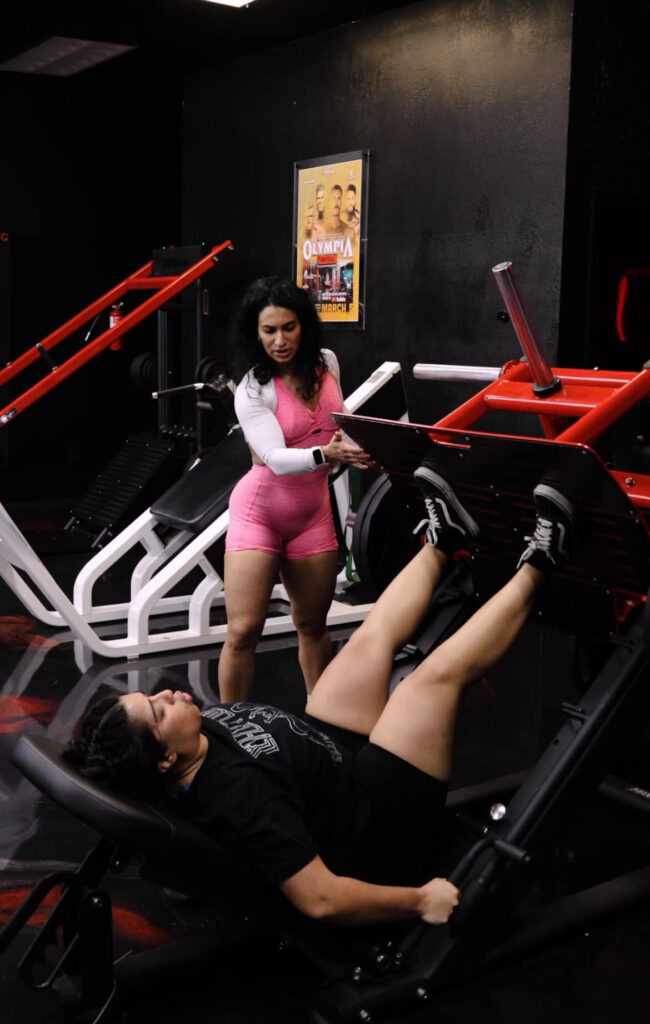
Wood shares, “I don’t just want a client to perform an exercise because I told them how; I want them to understand what they’re doing, what muscles we’re trying to engage, why their positioning matters, and how that movement translates outside of the gym.
I’m very meticulous about teaching proper form and technique. I’ll explain which muscle groups we’re targeting, what they should be connecting with throughout different parts of the movement and why I might adjust their stance, range of motion, tempo or positioning. If I notice them compensating somewhere, I want them to understand what I’m seeing and why we’re correcting it rather than simply giving them another cue to follow.
I also connect those movements back to their individual lives. I train mothers, business owners, nurses, and women with completely different physical demands. Building stronger legs, glutes, core, back, or grip strength isn’t only about progressing an exercise in the gym. It contributes to their ability to move well, remain physically capable and handle the demands of their everyday lives.
As they progress, I’ll start asking questions like, “Where did you feel that?” “What muscle do you feel working here?” or “What felt different about that rep?” Their feedback helps me see whether they’re actually understanding their own movement.
I know it’s landed when they start recognizing those things on their own such as when they adjust their setup without me prompting them first, can identify when they’re compensating or tell me exactly what they felt during a set. That’s where I see the education really starting to stick. I’m still there coaching and assessing them, but now they’re becoming much more aware and intentional with their own training.”
Where the Method Came From
Wood entered the industry in 2019 as a beginner. She was the heaviest she had ever been, had no gym experience, and didn’t know where to start. She lost more than fifty pounds, prepped for her first bodybuilding show in 2020, won the Overall title in the Wellness Division, and began training clients in September of that year.
Her method reads as autobiography. She remembers being too nervous to walk into a gym alone, and not having the support or resources to build lasting habits. Understanding is what she wished someone had given her.
Six years later, she coaches more than 200 women in person and online, across weight loss, muscle building, and pre- and postpartum training. The client she points to as the real result is not the one on the scale. It is the one who no longer fears food and trusts her own decisions.
“What I remember most about being a beginner was simply not knowing where to start.”
— Delaney Wood, Founder of Strong Sis Squad
“What I remember most about being a beginner was simply not knowing where to start. There’s so much information thrown at you, so many expectations you can place on yourself and it can feel like you’re supposed to change everything at once,” shares Wood.
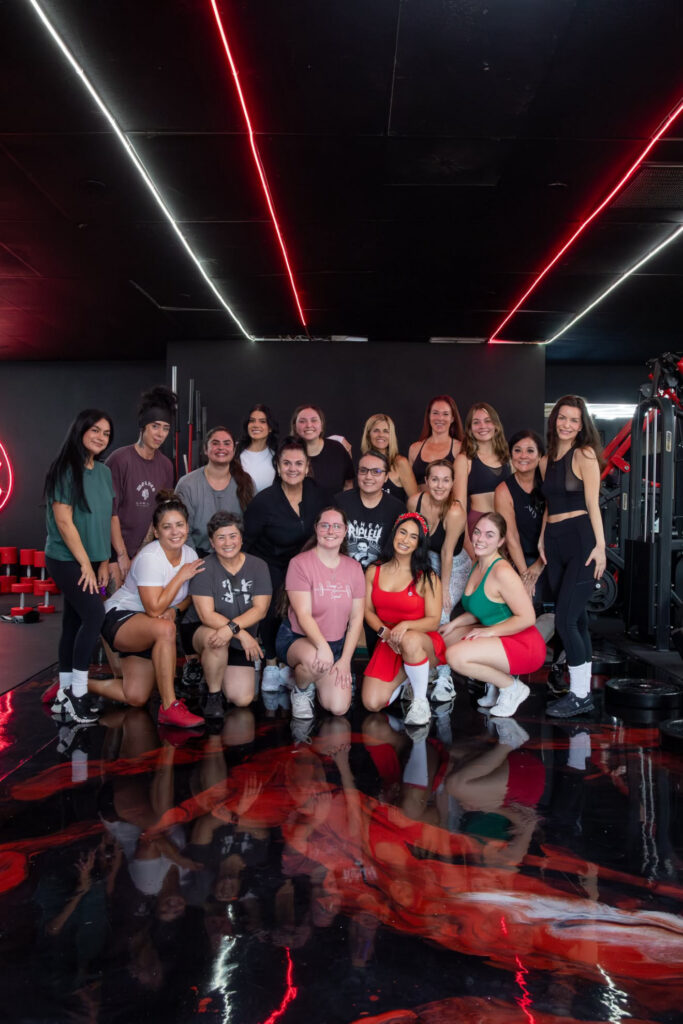
“That experience taught me that what a new client needs first is support and a space where they feel safe enough to learn. If someone is walking into a brand new gym to train with me, I never underestimate how intimidating that environment can feel. Before I expect them to perform, I want them to feel comfortable being there, ask questions, be willing to make mistakes, remain open-minded, and learn at their own pace.
From there, we start slowly and build. That applies to their training, nutrition habits, hydration goals, sleep, stress management, and the other habits that influence their progress. I don’t expect someone to overhaul their entire life in the first week because sustainable change rarely happens that way.
I also think this process has an emotional side that isn’t talked about enough. As you become physically stronger and start changing your habits, you’re also letting go of old expectations, behaviors, and sometimes even versions of yourself that no longer serve you. I want my clients to embrace that instead of feeling like they have to rush through it.
For me, coaching a beginner is about meeting her exactly where she is. I remove the pressure to have everything figured out and help her build confidence one layer at a time. Eventually, all of those small pieces start coming together, and I want her to actually enjoy becoming that stronger version of herself along the way”
The Problem With Building Something That Works
Running a practice this personal takes hours, and Wood runs Strong Sis Squad herself. She trains clients in person for six to eight hours on an average day before turning to her remote roster.
She has named the tension clearly.
“The hardest part has been learning how to grow Strong Sis Squad without losing what makes it special in the first place. I built this business around genuinely knowing the people I coach.”
— Delaney Wood, Founder of Strong Sis Squad
So far, she’s focused on intention over volume: setting clear business goals and pursuing the few that align with them, rather than trying to manage everything at once. Next, she wants a community large enough to change how women view strength and coaching, built without sacrificing the individual attention the practice was founded on.
Wood continues, “As I continue to grow, I’m becoming much more intentional about creating systems that allow me to reach more women without making the coaching experience feel less personal. That means finding better ways to organize communication, education, check-ins, programming, and different coaching formats so I can serve more women while still knowing the client behind the progress.
I never want a client to feel like she’s just another number on a roster. I can streamline certain things behind the scenes, but the relationship, attention to biofeedback, and individual decision-making are qualities I’m not willing to automate or remove from my coaching.
I’ve also decided I don’t want to grow simply to say my business is bigger. I would rather grow intentionally and protect the quality of the experience than take on more women than I can genuinely support. As my reach expands, my goal is still for every woman I coach to feel seen, heard, and understood.
For me, growth isn’t about removing myself from the process; it’s about building a stronger structure around what I already do well so I can create a bigger impact without losing the connection that made me love coaching and serving others in the first place.”
Wood has not finished solving how to grow a practice built on knowing people individually. She can see what it should become, and she is still building toward it.
FitHire — Your Next Role Is Looking for You
FitHire by Coach360 connects health, fitness, and wellness coaches with the clubs, studios, and brands hiring now. Build your profile once and let the right opportunities find you.
Frequently Asked Questions
Who won Coach360’s Visionary of the Year in 2026?
Delaney Wood, a performance and lifestyle coach and the founder of Strong Sis Squad LLC in Scottsdale, Arizona, was named Visionary of the Year in The Next 26. She is a NASM Certified Personal Trainer and was recognized in the Changemaker category, selected as the overall winner alongside twenty-five finalists.
What is The Next 26?
The Next 26 is Coach360’s 2026 recognition report honoring coaches shaping what the profession becomes, organized into six categories: builders, innovators, connectors, performers, educators, and changemakers. Honorees were selected from nominations and applications submitted across the Coach360 community. The report is supported by ABC Fitness, Daxko, and Linear Bar.
What does it mean to coach for self-sufficiency?
It means teaching the reasoning behind the work rather than only the work itself. In Wood’s version, every programming or nutrition adjustment comes with an explanation, so clients learn to interpret their own progress and adjust with confidence. The coach stays closely involved in guiding and assessing, and the client gains the understanding that keeps results durable over time.
Jessica H. Maurer is a contributing author and editor for Coach360News, writing feature profiles on the fitness industry’s most visionary coaches.
About Jessica H. Maurer
Jessica is a recognized fitness business consultant and strategist focusing on transforming businesses from overwhelmed to organized. Her international presentations, workshops, certifications, and consultations underscore her commitment to helping fitness professionals and businesses realize their full potential. When Jessica takes the stage, she’s sharing fresh ideas and inspiration that spark positive change. Jessica’s international presentations and consultations are about growth, career transformation, overall wellness, and making fitness a joyful journey. Her expertise spans education, program and instructor development, and brand evolution, making her a key player in elevating the industry. Jessica also played a pivotal role in developing the Mental Well-being Association’s certification for Fitness Professionals., always striving to bring a holistic approach to wellness that’s as uplifting as it is effective.
Jessica has presented at prestigious events like IDEA World, Fitnessfest ACSM Health & Fitness Summit, SCW Mania, AsiaFit, and more. She has worked with brands such as FIT4MOM, SFR, BOSU, Lebert Fitness, Savvier Fitness, SCW Fitness, FitSteps, canfitpro, IDEA, and VIBES music. She also has written content for the IDEA Fitness Journal, canfitpro Magazine, Mental Well-being Association, FIT4MOM, Motherly, and more.