


The fitness industry has spent decades promoting exercise as medicine while overlooking one important and powerful health intervention.
If you’re a coach, you spend a great deal of time tracking progress. Everything from increases in strength, improvements in cardiovascular fitness, to better movement quality and healthier blood pressure, the countless changes that reinforce why exercise matters. Those outcomes deserve attention because they’re measurable and supported by decades of research. They also carry meaning for the client and their program.
But there is another outcome that rarely appears in an assessment report. It isn’t reflected in body composition scans or performance testing, yet it may influence long-term health just as profoundly. It’s the outcome related to belonging.
Every time you introduce a new member to the regulars before class, remember a client’s name after months away, or create an environment where people genuinely look forward to seeing one another, you’re doing more than improving the workout experience. You’re creating opportunities for social connection at a time when meaningful human relationships have become increasingly difficult to find.
The fitness industry often describes community as a “bonus” or a feature that enhances the client experience. The evidence suggests coaches should begin thinking about it differently. Social connection isn’t simply something that makes exercise more enjoyable. It is increasingly recognized as an important contributor to health and longevity. Coaches may never diagnose or treat loneliness, but they are uniquely positioned to create environments where people feel seen, welcomed, and connected. That may be one of the most important health outcomes this profession delivers.
The Belonging Effect
Coaches don’t intentionally set out to reduce loneliness. Their primary focus is generally on helping people move better and achieve the best version of themselves.
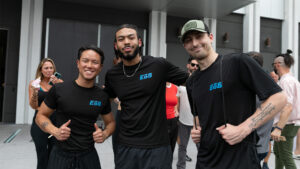
However, somewhere between the initial consultation and the hundredth workout, something else begins to happen. Clients learn one another’s names. They notice when someone misses class, celebrate birthdays, cheer for each other’s achievements of personal records, and ask about grandchildren, vacations, surgeries, and job interviews. What started as a place to exercise slowly becomes a place where relationships develop through consistency, shared experience, and mutual encouragement.
As you’ve amassed time in the industry, you’ve witnessed this transformation without giving it much thought. The client who originally stood quietly in the corner now arrives early to catch up with friends. The member who almost canceled after a difficult week decides to come anyway because “everyone will wonder where I am.” The walking group that formed after a six-week challenge is still meeting two years later.
None of those moments are accidental. They represent one of the most overlooked outcomes in fitness. One coaching reminder worth carrying into every session is this:
“Sometimes the reason a client keeps showing up has less to do with the workout than with how they feel when they walk through the door.”
That realization changes how coaches think about adherence. People rarely remain committed to exercise because every workout feels exciting. They stay because the experience becomes connected to relationships, identity, routine, and a sense of belonging.
Dania Valladares, CEO of Agora Fitness, shares this about belonging:
“For me it was seeing people come back to the gym, and to their training groups, through injuries. Someone can’t load the shoulder, can’t run, can barely do half of what they came for and they still show up. That’s when I realized they were getting the benefit of community even when the workout is at a minimum that day, or that month. The training was never the only reason they were there.”
— Dania Valladares, CEO, Agora Fitness
Coaching Relationships Create More Than Accountability
Ask experienced coaches why clients remain with them for years, and very few will begin by talking about programming. What they describe instead is trust.
They talk about conversations that happen as the client arrives or after the session ends. They remember the client who announced a pregnancy, the retiree navigating life after losing a spouse, or the client who finally admitted he had been struggling with anxiety. Over time, the coaching relationship becomes far more than instruction around exercise technique. It becomes one of the few consistent relationships some clients experience each week. That’s magic. That’s transformative.
This does not mean coaches become therapists, counselors, or mental health professionals. Professional boundaries remain essential. A coach’s role is not to treat loneliness or solve the complex social challenges clients may face outside the facility. When a client’s isolation appears to go deeper than gym-based connection can reach, such as persistent hopelessness, withdrawal, or signs of depression, the responsible step is a warm, direct referral to a licensed counselor, physician, or the client’s existing care team, not an attempt to fill that role personally. A coach’s role is something both simpler and more consequential within that boundary.
Gyms, clubs, and studios are third spaces, outside the home and office. Coaches create spaces where people feel welcomed, respected, and connected. Listening without judgment, remembering names, asking thoughtful questions, and noticing when someone who rarely misses class suddenly disappears for two weeks, those seemingly ordinary interactions communicate something many clients need to hear without words: you matter here.
For older adults, recent retirees, caregivers, remote workers, individuals who have relocated to a new community, or anyone navigating significant life transitions, that message can become an important part of why they continue showing up.
Community Is a Longevity Strategy
When longevity is discussed in the fitness industry, the conversation usually centers on resistance training, cardiorespiratory fitness, sleep, nutrition, mobility, and metabolic health. Those factors remain foundational because they directly influence how well people age.
But healthy aging is about more than preserving muscle mass or improving aerobic capacity. It’s also about preserving relationships.
People who remain socially connected are more likely to stay physically active, maintain independence, participate in meaningful activities, and continue engaging with the world around them. In many ways, community reinforces the very behaviors coaches spend their careers trying to help clients develop.
Think about the environments you’ve enjoyed coaching in most. Were they filled with great equipment? Or were they filled with people who knew one another and invested in each other’s lives?
A room full of individuals completing workouts independently may improve fitness. A room full of people encouraging one another, celebrating progress together, and genuinely caring whether someone returns creates something much larger than exercise adherence. It creates a culture of belonging. That culture cannot be replicated by any machine on the training floor.
Valladares connects this directly to the research on longevity: “Because social connections and belonging are proven to be key factors in longevity. There is actually scientific proof that highlights social connections as one of the common traits in the Blue Zones, where people live the longest.” The 2023 U.S. Surgeon General’s advisory on the loneliness epidemic reached a similar conclusion, identifying social connection as a factor associated with longer life expectancy and reduced risk of several chronic conditions.
“And in my experience I’ve seen beautiful communities emerge from all kinds of fitness. Zumba groups that dress alike. All the clients of the same coach working out together on the day they don’t have their trainer. Or simply going for a coffee after. Working out shows our true self at vulnerable times. That’s why the bonds at the gym are profound.”
Designing for Connection Is Part of Good Coaching
The strongest fitness communities do not develop by chance. They’re intentionally cultivated by coaches who understand that every interaction contributes to the culture of the facility.
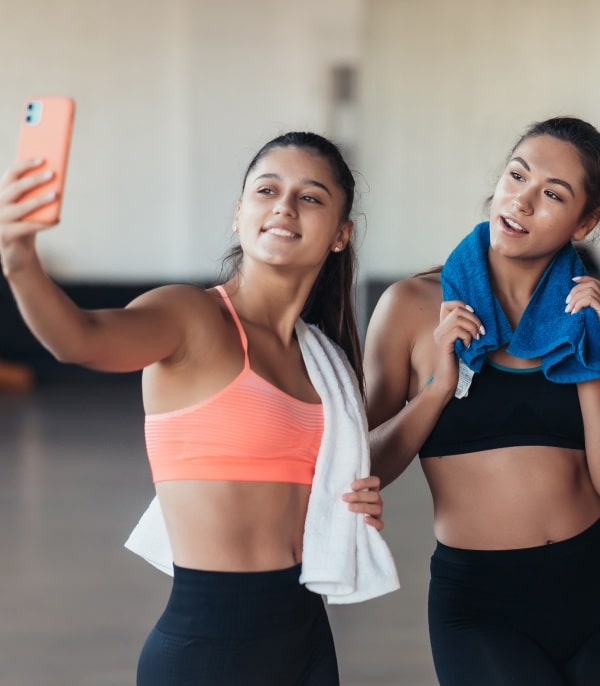
Connection begins with remarkably ordinary behaviors. Greeting clients by name. Introducing new members before class. Pairing people together during partner activities. Celebrating consistency alongside performance. Creating opportunities for conversation before and after sessions rather than rushing everyone in and out of the room.
These moments may seem small in isolation, but together they establish psychological safety and foster relationships that extend beyond the workout itself.
One coach described her philosophy this way: “I don’t just want clients to know the exercises. I want them to know they have people here who are glad they came.”
That perspective changes the role of the coach from someone who simply delivers programming to someone who intentionally shapes the environment in which health behaviors become sustainable. People stay where they feel they belong.
Coaches can do simple things consistently to make clients feel welcomed, valued, and connected. Valladares personally offers this advice:
“Care. An exceptional coach understands the entire system around their client, not just the hour in front of them. They can react to their energy and stress levels, be empathetic and adjust without rigidity. And they do it while having the magic touch to push and help us become our best version. Feeling seen and still being asked for more is what makes people feel valued.”
— Dania Valladares, CEO, Agora Fitness
When it comes to building community, Valladares puts it simply: you don’t stage it, you create the conditions for it. Use people’s names. Introduce clients who have something in common instead of letting them train next to each other as strangers. Don’t rush anyone out the door the second the session ends. Community can’t be scheduled, but it shows up when people feel known.
Perhaps We’ve Been Measuring the Wrong Things
The fitness profession has become increasingly sophisticated in measuring physical progress. Coaches assess things like movement quality, HRV, recovery, strength and power, body composition, and endurance. These metrics certainly have value, and they have their place in the bigger picture of progress. That said, very few facilities ask questions like: Do you feel connected to people here? Have you developed friendships through this community? Would someone notice if you stopped coming?
Those answers may tell as much about a client’s long-term likelihood of staying active as any fitness assessment performed. If the goal is to improve health over a lifetime rather than simply produce short-term results, perhaps belonging deserves a place among the outcomes coaches intentionally cultivate.
After all, clients may arrive because they want to improve their health. Many stay because they found a community that quietly became part of it.
The Opportunity Already Exists
The loneliness epidemic is often framed as a challenge for healthcare systems, policymakers, and mental health professionals. Each has an important role to play. But so do coaches in this space, working within the scope of practice described above.
Think about it. Every welcoming conversation, every thoughtful introduction, each time a coach notices an absent client, and every facility that creates an environment where people feel valued rather than evaluated. Those moments may never appear in marketing materials as dramatic transformations. They probably won’t trend on social media or become the centerpiece of a sales campaign.
They may, however, represent one of the most meaningful contributions this profession makes to public health. This is not to say that exercise, strength, and biometrics don’t matter. They absolutely do.
But in a world where genuine human connection and compassion have become increasingly scarce, perhaps the room full of people who know one another is doing longevity work that no piece of equipment in the building can replicate.
Related: Oxygen Yoga & Fitness: Heat, Movement, and Community
FitHire — Browse Coaching Roles in Community-Centered Facilities
Coaches who understand that belonging is part of the job are exactly who community-centered facilities are looking to hire. FitHire by Coach360 connects coaches with operators who invest in culture, not just class schedules.
Frequently Asked Questions
Why should fitness professionals care about loneliness?
Social isolation and loneliness are increasingly recognized as important factors influencing health and longevity, a conclusion echoed in the 2023 U.S. Surgeon General’s advisory on the loneliness epidemic. While coaches do not diagnose or treat loneliness, they can create welcoming, inclusive environments where clients develop meaningful social connections that support long-term participation in healthy behaviors.
What is the difference between loneliness and social isolation?
Social isolation refers to having limited social contact or support, whereas loneliness is the subjective feeling of being disconnected from others. A client can attend a busy gym and still feel lonely, making the quality of relationships just as important as the quantity.
How can coaches foster social connection without stepping outside their scope of practice?
Simple practices such as learning clients’ names, introducing new members, encouraging positive interactions, noticing prolonged absences, and creating psychologically safe environments help build community while remaining well within a coach’s professional role. When a client’s needs appear to go beyond what community connection can address, the appropriate step is a referral to a licensed professional, not an attempt to provide clinical support directly.
Why is community important for longevity?
Strong social relationships reinforce healthy behaviors, improve exercise adherence, and contribute to overall well-being. Coaches who intentionally cultivate belonging are supporting a dimension of health that complements exercise, nutrition, sleep, and other longevity-focused interventions.
Erin Nitschke writes on health, longevity, and evidence-based programming for Coach360News.
About Erin Nitschke
Dr. Erin Nitschke, NSCA-CPT, NFPT-CPT, ACE Health Coach, ACE-CPT, Fitness Nutrition Specialist, Therapeutic Exercise Specialist, Pn1, FNMS, and DSWI Master Health Coach, is a seasoned college professor in health and human performance. She is a nationally recognized presenter, industry writer for IDEA, NFPT, Fitness Education Online, and Youate.com, and an active member of the ACE Scientific Advisory Panel. With extensive experience in health and exercise science, Erin specializes in holistic, evidence-based approaches to wellness. Her passion lies in empowering individuals to lead healthier, more vibrant lives through personalized coaching. Erin’s philosophy centers on education, accountability, and sustainable behavior change—guiding clients to achieve long-term success in nutrition, fitness, stress management, and overall well-being. To connect with Dr. Nitschke, email her at erinmd03@gmail.com or on Instagram: @nitschkeerin