


The coaches whose clients stay for years are not always the ones with the most sophisticated programming. They are the ones who figured out how to make movement feel like something a client genuinely looks forward to. Not a program they are pushing through, but a practice they would notice losing.
Maricris Lapaix Hyland has been building toward that kind of coaching since her competitive volleyball days, when she first noticed that athletes who loved the game improved faster than those chasing outcomes. Her observation became her business philosophy. Her business now includes contributions to Nike Training Club, Women’s Health, Self Magazine, NASM, and Chris Hemsworth’s Centr app, plus a new app of her own called Move with Maricris.
What runs underneath all of it is the same idea she has held since those volleyball years: joy in movement is not a soft outcome. It is the reason people keep showing up long after the original goal has been met.
“When I was first building my client list, I had a few clients that reached out for specific transformations, like a wedding. While it was great to push clients toward a goal, with such a specific goal in mind, everything is tailored to a specific experience that lasts just a moment in time. Therefore, there was no intention to instill long-term habits. I knew as a coach, I wanted to build something long-term. Not just for business retention, but to really be able to coach clients in all seasons of life to navigate what’s in front of them, and instill sustainable habits and healthy mindsets. I recognized I was more wellness-driven to support lifestyles.”
— Maricris Lapaix Hyland
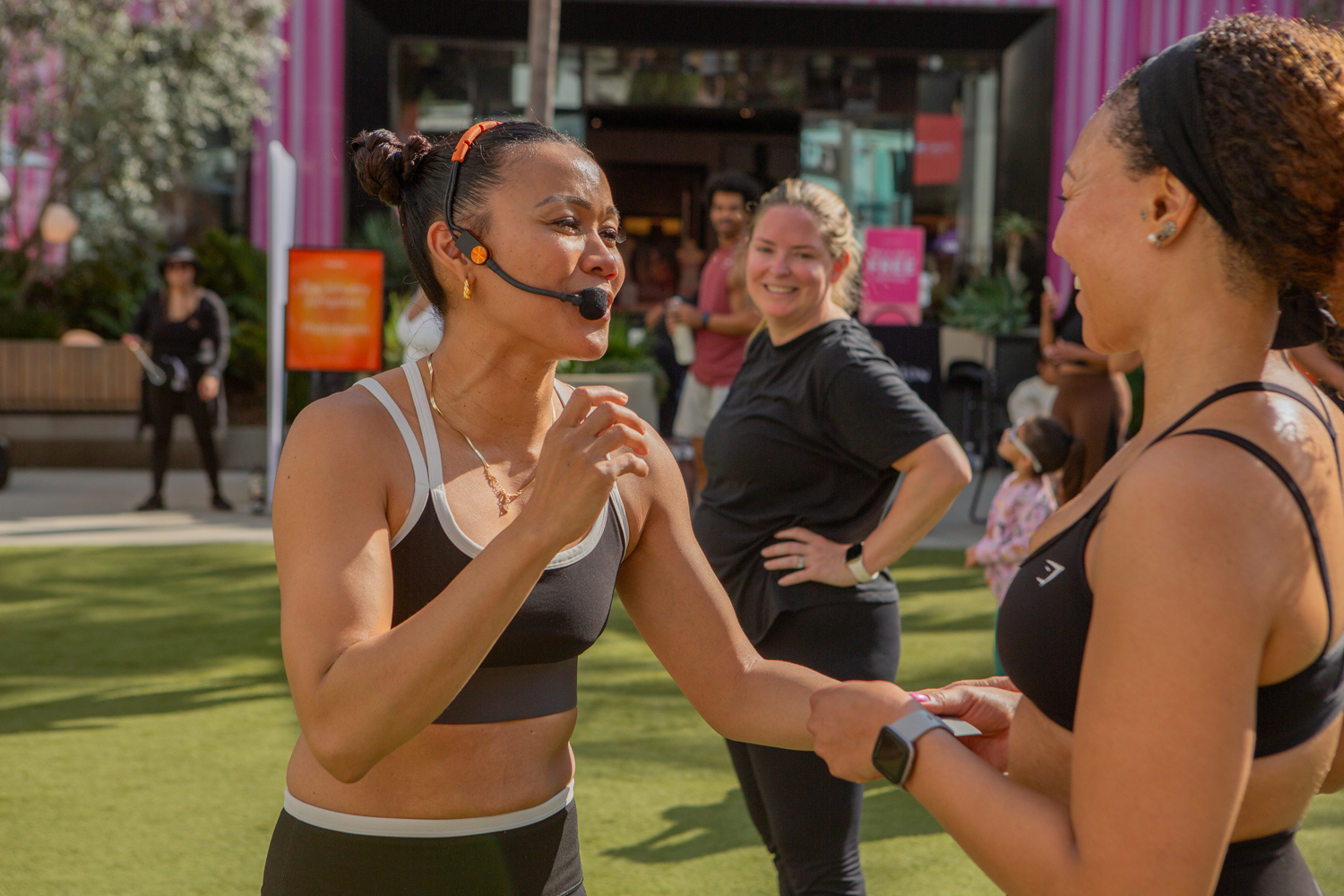
Why the Lifestyle Positioning Changes Everything Downstream
There is a moment in most coaching relationships where something shifts. The client stops coming in because they have a goal, and starts coming in because this is just what they do now. When that happens, the coach has stopped selling sessions. They have started delivering something harder to name and much harder to replace.
Maricris Lapaix Hyland built her entire brand around getting to that moment faster. The Move with Maricris app is the infrastructure she built to make it scalable. Those are different products. They have different retention mechanics, different revenue models, and different demands on the coach’s time and energy.
Maricris built the app around the understanding that her most influential athletic years were never about aesthetics. They were about the ability to move and play. The commitment and the results were byproducts of finding joy in the movement, and she has carried that understanding into every coaching relationship since.
“When your goal is to find joy in your movement, the commitment and results will naturally come.”
— Maricris Lapaix Hyland
That philosophy is a retention strategy. Clients who are chasing joy in movement do not finish a program and disappear. They are building a practice, and a practice does not have an end date.
For existing coaches reading this, the implication is direct. The clients who stay for years are almost never the ones who hit their original goal and decided to keep going. They are the ones whose relationship with movement changed during the coaching relationship, from something they were doing to something they were becoming. The coach who facilitates that shift is building a life infrastructure, and that is a fundamentally different thing to sell.
“When I started as an independent trainer, one of my biggest worries initially was, how do I get my client to renew next month? Being so new to the industry, I initially thought I had to have constant variety with my workouts to keep my clients engaged and excited to come back. I thought this would get them to renew packages. However, as I figured out the type of client I was attracting, which was someone who either was new to fitness or felt like they were starting from scratch, I began to understand their need to be nurtured. It was the combination of care and understanding in helping them build at a pace suited to them, coupled with the right amount of challenge. And the more we celebrated the small wins and saw how showing up regularly was the game-changer to sustainable change, they started to shift their own goals and recognize that they wanted this to be long-term. And that’s how I’ve maintained clients for years. Fitness is lifelong, with seasons where you can turn up the intensity for life-specific goals.”
— Maricris Lapaix Hyland
The App as a Lifestyle Infrastructure Model
The Move with Maricris app is worth understanding as a model of what lifestyle-coaching infrastructure looks like when built deliberately.
Inside the app, workouts are designed to support energy rather than exhaust it. Nutrition guidance is simple and flexible. It is built to fit what a client actually needs on a given day, rather than what a meal plan prescribed three weeks ago. The community component puts women with full schedules side by side. They share the experience of making it work in real life, rather than performing a version of wellness that does not survive contact with a Tuesday.
“This becomes more than just a place to work out. It’s a space to find your rhythm and build something that lasts.”
— Maricris Lapaix Hyland
That framing, a space rather than a program, is the architectural difference between a lifestyle coaching model and a session model. A program has a beginning and an end. A space is somewhere you return to. The retention mechanic is built into the language before the client ever opens the app.
For coaches who are not building an app, the principle still transfers. The question is whether the coaching environment you have created feels like a program the client is moving through, or a practice the client is building. The former produces graduation. The latter produces retention.
“The biggest thing I’ve learned from building the Move with Maricris app is to ask my community what they need. There are so many fancy ways you can market an app beautifully and look polished, but if you strip all that away, your community just wants you to feel like you have their back. Hitting that on the mark is what makes you the perfect coach for someone. From my own experiences and from speaking with the women in my community, I understand that I’m working with busy women with full workloads who hold so many roles. My biggest responsibility as their coach is to finally be someone supporting them. I need to simplify everything as much as possible so they can take action without feeling like they’re working in a gray area.”
— Maricris Lapaix Hyland
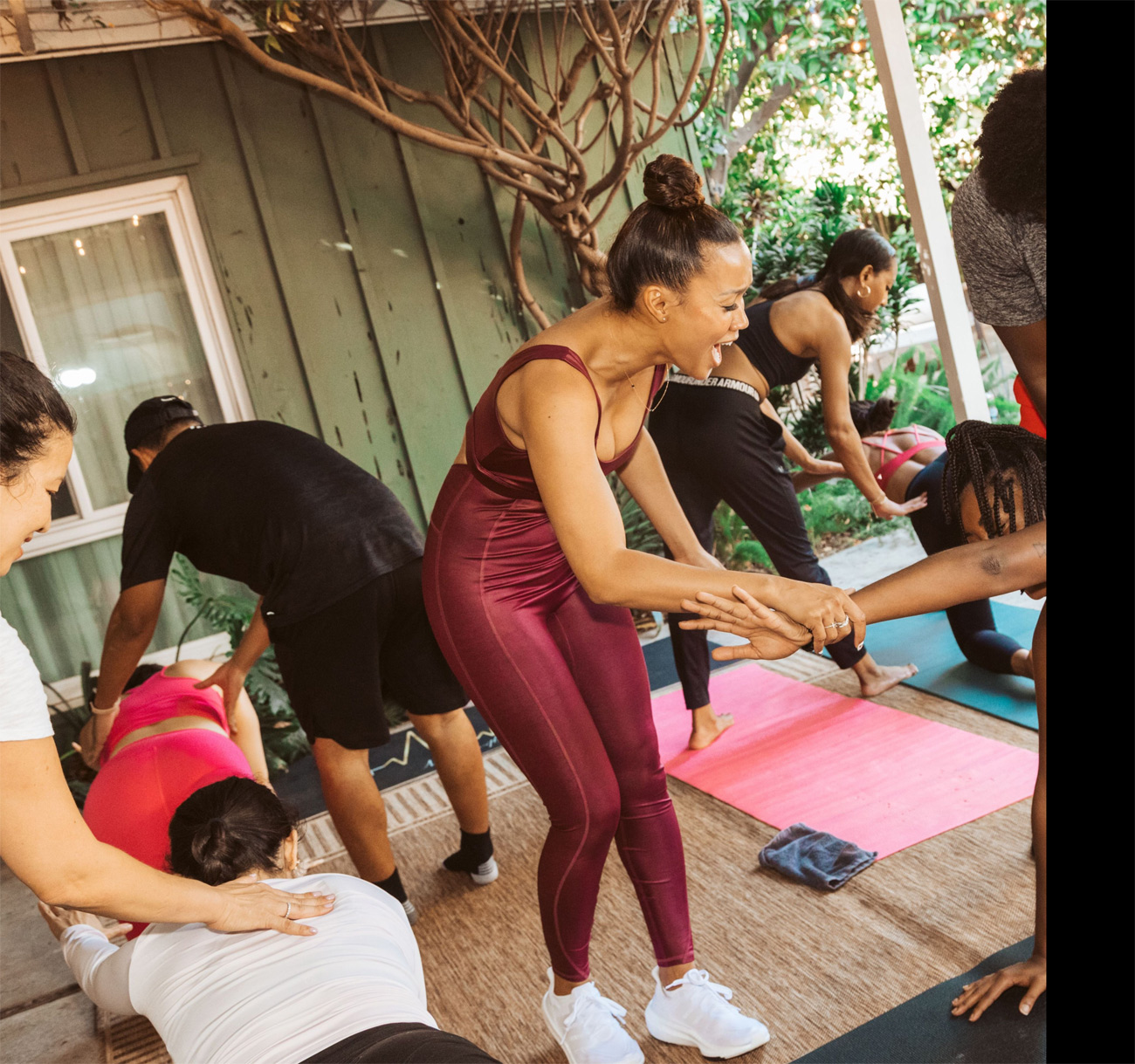
The Strategic Shift Most Coaches Are Not Making
The coaches who are growing sustainable practices right now are not the ones with the best programming. They are the ones who changed what they are selling and built the infrastructure to deliver it consistently.
Maricris’s trajectory illustrates what that shift looks like at scale. Nike Training Club. Women’s Health. Self Magazine. NASM. Centr. Each collaboration is evidence that the lifestyle coaching positioning resonates beyond an individual client base and into the broader wellness culture. The brand she built is not centered around a transformation promise. It is built around a philosophy of movement that does not expire when the twelve weeks end.
That is the positioning most coaches have not yet made, and it is the widest gap right now. The market for transformation programs is saturated and increasingly price-sensitive. The market for coaches who can build genuine lifestyle infrastructure around a client’s actual life is less crowded and far more durable.
The honest tradeoff is the build time. Shifting from a session model to a lifestyle model requires new skills. Behavior change coaching. Habit formation. The ability to design programming that fits a client’s life, rather than asking the client’s life to fit the programming. It requires building community infrastructure, whether that is an app, a group coaching model, or something else. And it requires patience with a revenue curve that looks different in month three than a full session book does.
What it produces on the other side of that build is a practice that does not require constant client acquisition to sustain itself. Clients who are building a lifestyle with a coach do not graduate. They deepen.
“I wish I had recognized what my true intention was as a coach earlier on. I’ve always been driven academically to learn everything I need to be ‘certified’ professionally, as well as learn all the business strategies, and I feel like I was lost in it from time to time. It wasn’t until I explained to my business coach what I do and how I interact with my clients that she pointed out that I’m guiding lifestyle transformations. That’s when it clicked. I’m not just throwing workouts together.”
— Maricris Lapaix Hyland
What Joy in Movement Actually Produces
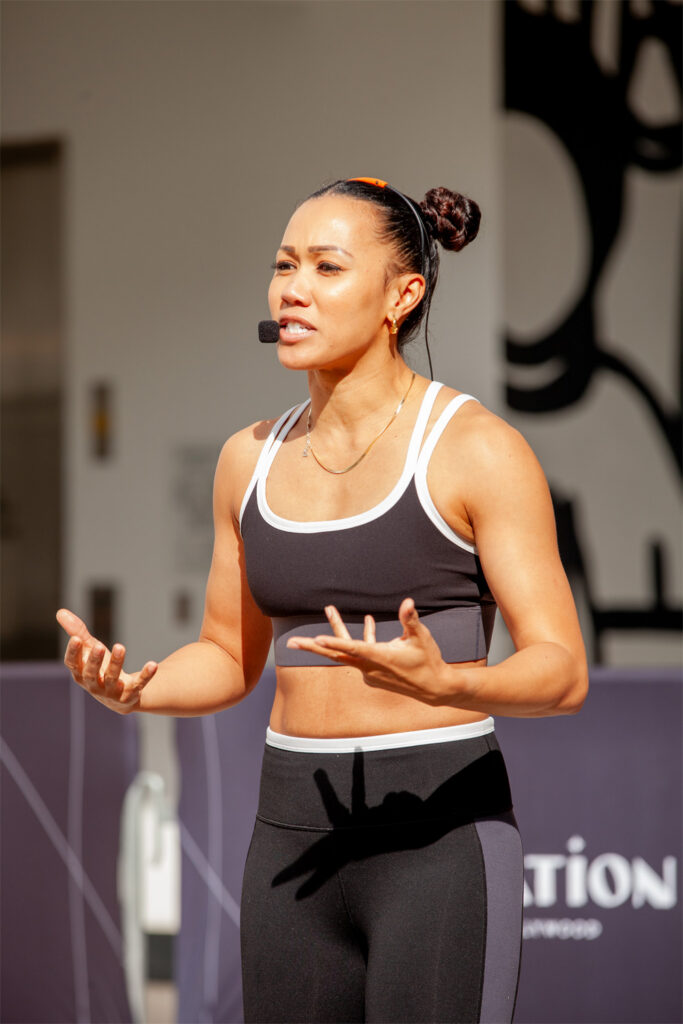
Maricris grew up playing volleyball. She was not training to look a certain way. She was training because she wanted to compete at a high level, and the sport demanded it. Her mental and physical health improved because she was doing something she loved hard enough to get genuinely good at it. She has been trying to recreate that experience for her clients ever since.
That origin story is the coaching philosophy. When movement is connected to something a client actually cares about, the commitment follows naturally. When it is connected only to an aesthetic outcome, the commitment lasts as long as the motivation does, which is rarely long enough.
For coaches who are still selling the before-and-after, that reframe is worth sitting with. The client who is chasing joy in movement is not going anywhere. The client who is chasing a number on a scale will leave the moment the number stops moving, or the moment they reach it.
Lifestyle coaching is the long game because it connects coaching to the part of a client’s life that has no end date. The Move with Maricris app is one model for what that looks like, built into a platform. The principle behind it is available to any coach who is ready to change what they are selling and build the infrastructure to deliver it.
The coaches who are winning right now are the ones who have already made that shift. The window to be early is still open, but it is narrowing.
Related: Hybrid Training Is the New Standard: How to Coach Clients In-Person and Online
FitHire — Browse Lifestyle & Wellness Coaching Roles
The coaches building lifestyle-based practices are exactly who wellness-forward studios, corporate wellness programs, and integrative health facilities are hiring right now. FitHire by Coach360 connects coaches who have made the shift to lifestyle and behavior change programming with operators building environments designed to support it.
Frequently Asked Questions
What is lifestyle coaching in fitness, and how is it different from traditional personal training?
Traditional personal training is typically built around a defined goal and endpoint. A client hires a trainer to lose weight, build strength, or prepare for an event, and the relationship is structured around reaching that goal. Lifestyle coaching starts from a different premise. Rather than building toward an endpoint, it builds the habits, behaviors, and relationships with movement that sustain health outcomes indefinitely. The client is building a practice rather than finishing a program. That distinction changes the retention mechanics, the revenue model, and the demands on the coach. All of it favors a more durable relationship that does not require constant new-client acquisition to sustain.
What is behavior change coaching, and why does it matter for fitness professionals?
Behavior change coaching is the practice of helping clients build sustainable habits rather than simply delivering programming. It draws on research in habit formation, motivation, and psychology to create interventions that fit a client’s actual life rather than an idealized version of it. For fitness professionals, it matters because it addresses the root cause of the retention problem most session-based models create. Clients who receive behavior change coaching alongside fitness programming are more likely to maintain their results over the long term. The coaching relationship changes how they think about movement, not just what they do during sessions.
What is healthspan coaching and how does it differ from fitness programming?
Healthspan coaching focuses on the quality and longevity of a client’s active years rather than specific fitness metrics or aesthetic outcomes. Where traditional programming optimizes for performance or appearance, healthspan coaching optimizes for vitality, resilience, and the ability to move well across decades. It typically integrates recovery, sleep, stress management, nutrition, and movement into a single framework rather than treating exercise as an isolated intervention. For coaches shifting toward lifestyle-based positioning, it represents one of the fastest-growing areas of client demand, particularly among midlife women seeking a coaching relationship that addresses their whole lives rather than a single goal.
How do fitness coaches transition from a session-based model to a lifestyle coaching model?
The transition requires developing three things most fitness certifications do not cover. The first is behavior change competency: the ability to help clients build habits that survive the disruptions of real life, rather than programming that works only under ideal conditions. The second is community infrastructure, whether that is a group coaching model, a digital platform, or a structured peer accountability system that keeps clients connected to their practice between sessions. The third is a willingness to reframe what success looks like, from clients who hit goals and graduate to clients who deepen their relationship with movement over the years. The revenue curve looks different in the short term. The practice it produces is significantly more sustainable.
What makes a fitness coaching app successful for lifestyle-focused coaches?
The apps that retain users longest are built around rhythm rather than transformation. Apps designed around a twelve-week program produce strong initial engagement and high dropout at the program endpoint. Apps designed around sustainable daily practice retain users because the app becomes part of their life infrastructure rather than a tool they use until the program ends. That means workouts built to support energy rather than deplete it, flexible nutrition guidance that adapts to real life, and a community that normalizes the experience of navigating a full schedule. For coaches considering a digital platform, the design question that matters most is what the client is coming back for after the novelty wears off.
About Jessica H. Maurer
Jessica is a recognized fitness business consultant and strategist focusing on transforming businesses from overwhelmed to organized. Her international presentations, workshops, certifications, and consultations underscore her commitment to helping fitness professionals and businesses realize their full potential. When Jessica takes the stage, she’s sharing fresh ideas and inspiration that spark positive change. Jessica’s international presentations and consultations are about growth, career transformation, overall wellness, and making fitness a joyful journey. Her expertise spans education, program and instructor development, and brand evolution, making her a key player in elevating the industry. Jessica also played a pivotal role in developing the Mental Well-being Association’s certification for Fitness Professionals., always striving to bring a holistic approach to wellness that’s as uplifting as it is effective.
Jessica has presented at prestigious events like IDEA World, Fitnessfest ACSM Health & Fitness Summit, SCW Mania, AsiaFit, and more. She has worked with brands such as FIT4MOM, SFR, BOSU, Lebert Fitness, Savvier Fitness, SCW Fitness, FitSteps, canfitpro, IDEA, and VIBES music. She also has written content for the IDEA Fitness Journal, canfitpro Magazine, Mental Well-being Association, FIT4MOM, Motherly, and more.
Jessica H. Maurer writes on the business of coaching, lifestyle programming, and the wellness industry for Coach360News.