All Categories
All Categories


When clients skip a day, they lose momentum. For coaches and gym owners, that means lower retention and ultimately, lower revenue.
Most setbacks begin with micro-faults: a hip dropping during gait, a rounded lumbar spine in a deadlift, or a shoulder drifting forward during push-ups. Coaches can’t always catch these in real time, especially in hybrid or group formats.
That’s where AI-linked wearables shift the equation from reactive rehab to proactive correction.
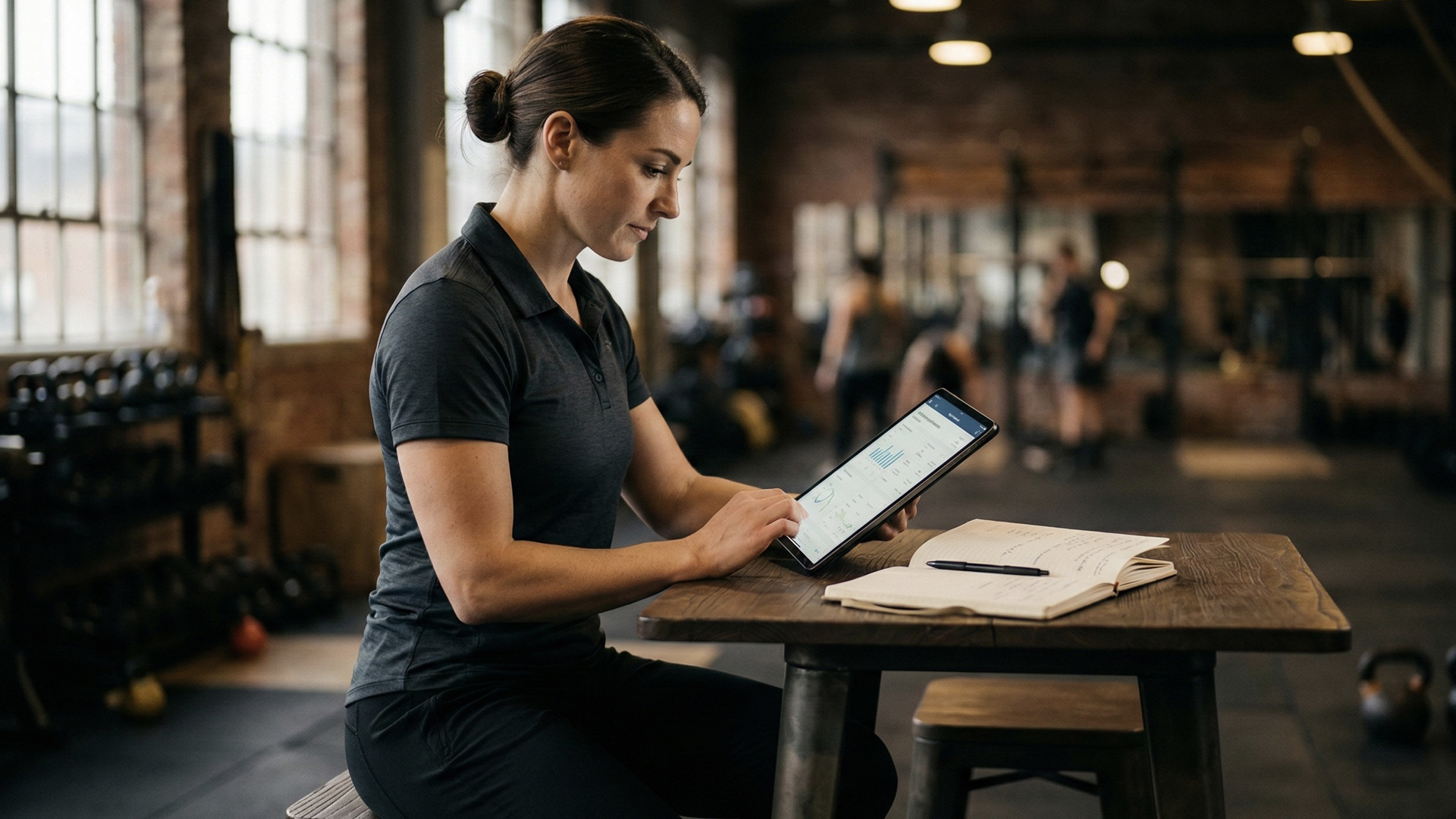
Newer tech platforms like Fitbit’s Gemini-powered health coach integrates HRV, readiness scores, and movement data. When gait analysis reveals asymmetry, or posture tracking shows compensations under load, the AI logs patterns a coach would miss in a crowded floor.
The same applies with HRV dips: instead of waiting for fatigue to show as missed lifts, the system alerts that recovery reserves are down.
For the client, this looks like a nudge on their wrist. For coaches like you, it’s an early-warning system.
Collecting data is only the first step. The real impact happens when coaches turn alerts into targeted drills that protect progress and prevent setbacks. A wearable might raise the flag, but it’s the coach who delivers the fix.
Here’s how to translate common data signals into action:
Imagine this: A traveling executive lands from a week of red-eye flights. The data on their wearable tells you your client has poor HRV and gait asymmetry.
Should you push through a heavy squat session? The smarter move would be to pivot to mobility and flexibility training, inverted rows, and split squats. In this manner, your client’s progress continues without breakdown.
Another example would be a client who hasn’t had a good night’s sleep recently.
The AI coach adjusts the plan and it suggests subbing out high-load deadlifts, adding bodyweight circuits, and preserving intensity through more condensed sessions. This way, your client stays engaged, avoids flare-ups, and doesn’t fall back into a detraining spiral.
Every missed session puts your club’s revenue at risk. When coaches use wearable-linked insights, they reduce injury downtime and keep billing consistent.
Positioning ‘AI-informed corrective training’ as a premium service makes for an easy upsell. The ideal audience? Traveling clients, healthcare professionals, busy professionals with limited workout time, and older adults who value longevity.
The fusion of AI and fitness programs is proof that the client won’t lose ground when schedules or stress levels rise.
AI coaches like Google’s Fitbit Gemini can recommend adjustments, but the real ROI is in the human overlay. A wearable may flag lumbar stress, but only a coach can decide if today’s fix is a Pallof press circuit or a regression to unloaded hip hinges.
What this means is while the machine tells you what you can do, you, the coach who knows your clients more than any AI, decides what your clients should do.
Biomechanics-informed data from wearables is no longer niche. Gait analysis, posture tracking, and HRV feedback are tools that move corrective exercise from guesswork to precision. The advantage is twofold: progress preserved for clients and retention preserved for businesses.
In the end, clients aren’t looking for perfect plans. They want training that still works when life gets messy.
About Robert James Rivera
Robert is a full-time freelance writer and editor specializing in the health niche and its ever-expanding sub-niches. As a food and nutrition scientist, he knows where to find the resources necessary to verify health claims.

By Dr. Erin Nitschke

By Dr. Erin Nitschke

By Dr. Erin Nitschke
By Robert James Rivera
By Elisa Edelstein

By Robert James Rivera



Powering the Business of Health, Fitness, and Wellness Coaching