

Emergencies inside the fitness club don’t announce themselves. They don’t care how long you’ve been coaching or what certs are framed on the wall. Cardiac events, sudden collapses, breathing trouble, they show up inside normal gym sessions, usually out of nowhere. And they don’t give you time to “think it through.” They ask for a response measured in seconds.
Emergencies Do Not Respect Programming or Experience
Gyms plan hard for performance and safety during movement. Warm-ups, spotting, regressions, load management, all of it. The gap shows up when the problem isn’t mechanical anymore; when the body shuts down instead of just breaking form. In this case, knowing a lot isn’t the same as doing the right thing.
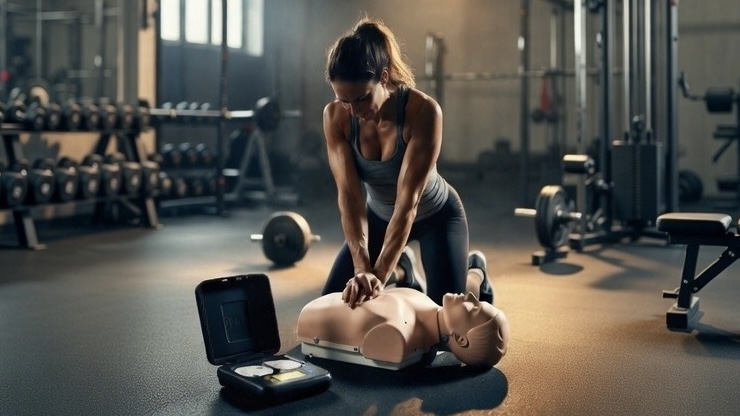
CPR and AED training closes that gap. It gives you a protocol when your nervous system goes into fight-or-flight. It trades panic for sequence. The simplicity is kind of the whole point.
- Check
- Call
- Compress
- Shock if needed
Why Coaches Are Often the First Line of Response
Coaches are closest to the floor, the ones watching people under real stress. You see breathing change, posture shift, skin color go odd, awareness fade, sometimes before anyone else even realizes it’s happening.
Front desk staff can call for help, sure, but members might freeze or hesitate. Coaches usually step forward because they’re already in it.
That responsibility is already sitting on your shoulders. Training just makes you ready to carry it well.
What CPR and AED Training Actually Changes Inside a Facility
Certification changes how a coach shows up when things go sideways. A trained coach’s voice steadies, their instructions get simple and direct.
From Bystander to Decision-Maker in Seconds
Without CPR and AED training, even strong fitness coaches can stall for a moment. With it, the decision-making compresses fast. Hands move, roles get assigned, someone clears space, someone calls emergency services. More importantly, a trained person starts providing care when everyone else is just looking or recording what’s happening.
That shift protects the gym member in distress first and everyone else in the room. Watching a coach act with calm, clear precision builds trust that sticks.
The Business Case Gyms Rarely Talk About
A lot of operators file CPR and AED training under compliance, or insurance, or “we should probably.”
That framing sells it short. Preparedness is part of what your place stands for, even if you never put it on a poster. Parents notice, and so do the older members. The same goes for higher-risk clients, such as those training or rehabilitating after an injury or after medical treatment. They stay longer when they believe the environment takes responsibility seriously.
Trust, Retention, and Risk Live on the Same Line
When something happens, the response becomes the story people tell. Prepared coaches reduce risk exposure, shorten recovery timelines, and protect the culture you’ve worked hard to build. And there’s a recruiting effect, too. Coaches want to work where standards exist.
Implement Training Without Disrupting Gym Operations
Adding CPR and AED training doesn’t mean blowing up your schedule or pausing the gym business. Most certifications run in short blocks, so you can fold them into gym member onboarding, quarterly education days, or an annual recert cycle.
Then, some gyms rotate staff through sessions so the floor stays covered. Others treat it like a paid professional standard, not an optional add-on that people “get around to.”
In the end, it’s all about staying consistent.
AED locations should be obvious, protocols should be rehearsed, not assumed, and new hires should know expectations from day one. Once emergency training becomes routine, it stops feeling like an “emergency thing” and starts acting like any other core system in the gym.
Final Thoughts
Clients expect more than energy and good programming. They expect competence across the full spectrum of care provided in a gym. No, CPR and AED training doesn’t turn coaches into medical professionals, but it does make them reliable. It shows the facility understands its role beyond making sure clients look and feel good.
About Robert James Rivera
Robert is a full-time freelance writer and editor specializing in the health niche and its ever-expanding sub-niches. As a food and nutrition scientist, he knows where to find the resources necessary to verify health claims.