Fitness Industry Intelligence
The Career Network for Health, Fitness & Performance
I watched a new trainer step onto the floor with a clipboard, a half-full class roster, and three members already waiting for answers.
One needed help with the machines. Another wanted a beginner workout. The third had a knee concern, which meant the trainer had to slow down, listen, and know what the next safe step should be.
That is where the Planet Fitness PT program becomes more than a floor assignment. If you run a club, you are asking one person to protect member confidence, keep the floor moving, and turn basic guidance into trust.
The role can look simple from the outside. A trainer on the floor. Members asking for help. Small group sessions, machine instruction, and basic workout guidance. Inside the club, it is a different thing. It is where a lot of the member experience gets decided.
Jeremy Smoot started as the only fitness trainer in his first Ohana Growth Partners club. Members came to him with different goals, fitness levels, and physical considerations. There was not always another trainer beside him to absorb the hard moments. Smoot had to learn fast, solve problems inside the structure, and build confidence by doing the job in front of members.
For owner-operators, the lesson is how to turn that role into a leadership pipeline.
Many trainers leave because the role feels flat. Picture being the one trainer on one floor with unclear standards and limited feedback. Worse, no visible next step. The trainer may have the certification, energy, and intent, but after a year, the job can still feel like the same shift on repeat.
When trainers churn, the business loses member familiarity, onboarding consistency, class continuity, and future management talent. The next hire then starts from zero, and the same weak handoff repeats.
Ohana Growth Partners is a useful case study because its size makes the trainer path feel real, not theoretical.
The company says it owns and runs more than 90 Planet Fitness clubs across eight states and Washington, D.C., with over 600,000 members. Recent acquisition coverage puts it at 94 clubs after it added 10 locations in Michigan.
That kind of scale gives the company enough clubs, staff, and member volume to build a trainer pipeline that can actually work. A trainer pathway inside one club supports one employee. A trainer pathway across a large franchise group becomes an operating system.
Smoot’s path shows the pipeline in action. He started as a fitness trainer, moved into Manager of Fitness Training Support, then Senior Manager. Now he serves as National Fitness Training Director, overseeing fitness operations across more than 90 locations.
The trainer role is not treated as a dead-end floor job. It becomes an entry point into broader fitness operations, team leadership, and management.
Ohana says trainers go through a strategic onboarding process that lets them understand the company, meet the team, learn the role, and see what success looks like day to day. Trainers also work alongside other OGP trainers selected for different strengths and styles.
The first 90 days should answer practical questions:
The framing for the trainer in this window is simple: this week, learn the floor, learn the members, and learn what a good handoff looks like.
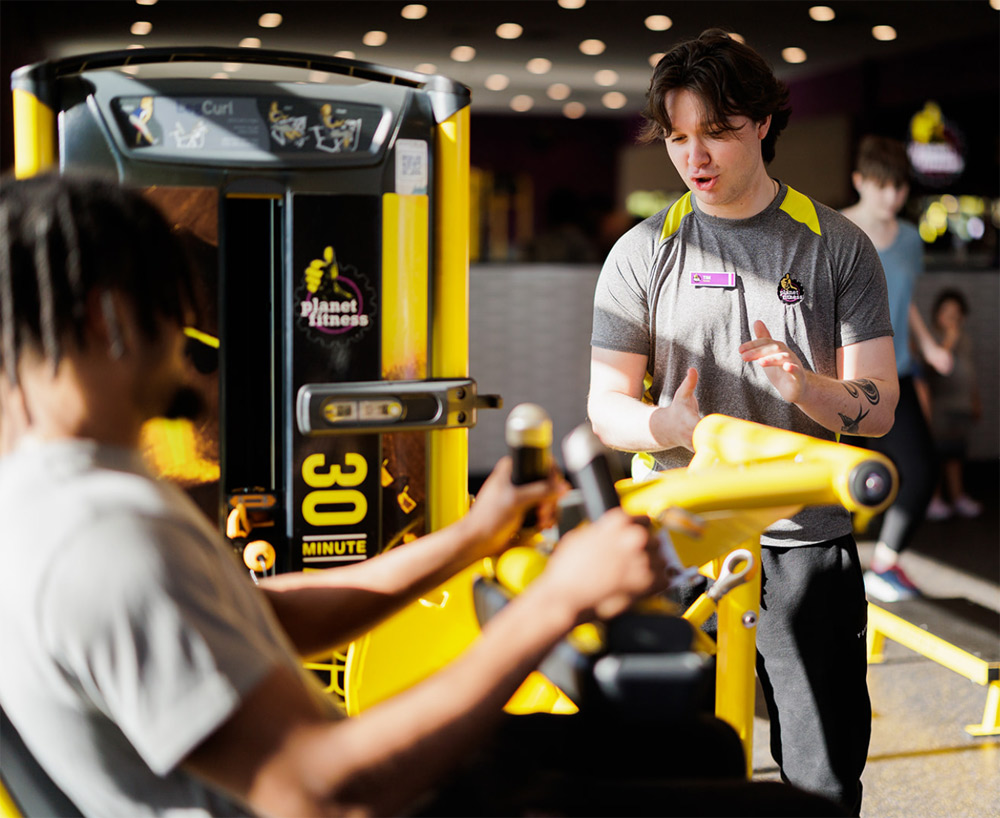
Ohana’s model recognizes that trainers are often the only trainer in their club. It gives them responsibility, but it also creates isolation. To close that gap, OGP trainers stay connected through monthly virtual meetings within their state or territory.
Those meetings give trainers a place to share best practices, discuss challenges, and stay current on fitness trends.
A solo trainer still needs a coaching team. Smaller operators should copy the logic without copying the exact scale. Run one monthly trainer call, one shared programming review, one short coaching audit, and one example from a stronger coach.
The point is to stop the trainer from solving every floor problem alone.
Planet Fitness positions PE@PF as free fitness training where certified trainers show members around the gym, teach cardio and strength machines, lead small group training, and help design exercise programs. That role touches new-member confidence every day.
Smoot’s view of growth is direct. He wants trainers to become well-rounded professionals who understand leadership, communication, operations, and accountability.
“If you’re at OGP and you’re still in the same role five years later, it’s usually because you made that choice. The opportunities to grow are there, but you have to lean into them. Growth is something we genuinely care about here. It’s part of who we are, and honestly, it’s right there in our name.”
— Jeremy Smoot, Director of Fitness Training, Ohana Growth Partners
A trainer’s next step may be assistant manager, general manager, fitness support lead, regional fitness support, training director, or another operations role.
That growth path demands more than exercise knowledge. It requires schedule discipline, member communication, accountability, team judgment, and the ability to solve problems.
The trainer who coaches members and understands the business becomes more valuable than a trainer who only delivers sessions.
Related: Fit Pro Programming: Building Instructor-Focused Education with Multi-Modal Certifications
A trainer pipeline takes management time. Operators have to invest in onboarding, meetings, feedback, continuing education, and real trainer development. It is easier to hire a trainer, hand them the schedule, and hope they figure it out.
That ease is where the problems start. Ohana keeps growth moving through discounted continuing education and reimbursement options. Trainers get a way to build skill early, before bad habits settle in.
Development is part of the job. It is not something a trainer should chase alone after hours, with no clear signal from the company.
The payoff is a stronger bench, but consistency has to hold. Someone has to own the pathway. They have to check progress, set the meeting rhythm, protect the standard, and show the next step before that trainer starts looking somewhere else.
Start with a simple 30-60-90 day trainer pathway:
The operating principle is straightforward: do not wait until a trainer asks about growth. Show them the map before they start looking elsewhere.
FITHIRE — BROWSE FITNESS LEADERSHIP ROLES
Coaches who can lead members, support systems, and grow into management roles are valuable in fitness operations. Browse roles if you want to work where coaching skill and leadership potential carry real weight.
A trainer role with no path can turn into a churn risk fast. Give that same role structure, coaching support, and room to move, and it becomes a staffing advantage.
From Ohana’s model, the best trainer pipeline does not start at the promotion. It starts when the first floor shift is treated like the first step in a real career. The trainer knows what good work looks like, who they can learn from, and which skills will move them forward.
Build the path early. Make the floor role worth staying for.
What is the Planet Fitness PT program?
Planet Fitness PE@PF is free fitness training for members. Certified trainers show people how to use cardio and strength machines, run small group sessions, and help build basic exercise plans. For trainers, it creates a floor-based role tied directly to member confidence.
Why does Ohana’s trainer pathway matter for operators?
It shows how the trainer role can become a leadership pipeline. The role starts on the floor, but it does not have to stay there. With the right development, those same skills move into management, operations, and regional support.
How can smaller clubs copy this model?
Start small. A 90-day trainer pathway, monthly development check-ins, and a clear promotion map does a lot. The system does not need to be complex. It just needs to show trainers what good work looks like, how they are progressing, and where that work leads.
What skills help a trainer move beyond the floor?
Trainers tend to move faster when they build communication, accountability, member support, and operational judgment. Exercise knowledge still matters, but leadership roles usually ask for more. Trainers have to solve problems, support the team, and understand how the member experience affects club performance.
Robert James Rivera is a Coach360 contributing editor covering the business of coaching, trainer development, and the operational systems behind high-retention fitness businesses.
About Robert James Rivera
Robert is a full-time freelance writer and editor specializing in the health niche and its ever-expanding sub-niches. As a food and nutrition scientist, he knows where to find the resources necessary to verify health claims.


Powering the Business of Health, Fitness, and Wellness Coaching