Fitness Industry Intelligence
The Career Network for Health, Fitness & Performance
I was standing next to a client between sets while he sat on the edge of the bench, phone in hand. He turned the screen toward me and asked what his recovery score meant for the rest of the session.
He had not slept well, his HRV had dropped, and his wearable told him he was not ready to train hard. He did not ask whether he should lose fat or get stronger. What he asked was whether the numbers meant something was wrong. If you coach adults now, the longevity conversation is already in your room. That is why the longevity coaching panel at Career Lab matters.
Career Lab by Coach360 comes to Las Vegas on July 17 and 18, 2026, built around a simple promise: build the career you want in fitness, and grow it, expand your business, and earn CECs in a single day designed for your growth. It is not a sit-and-listen conference. The day blends strategy, community, and movement, so you leave having actually built something.
The format is hands-on. Focused breakout sessions put you in small groups where you can ask questions and get tailored guidance across brand, business, and coaching tracks. Workshops have you working on your offers, pricing, content, and career strategy with live support. A Move & Mingle group workout connects you with other fitness pros through training rather than small talk. The agenda runs from a morning keynote on designing your 2026 career roadmap, through breakouts and an afternoon keynote, into the industry-leader panel block in the early afternoon, and closes with a session that turns the day into a concrete 2026 plan. You also earn CECs recognized by major certification bodies, which is part of why coaches treat the day as professional development rather than a networking detour.
The longevity panel sits inside that block of real talk with industry leaders. It is built for the coach who keeps getting the recovery-score question on the gym floor and wants a sharper answer than a shrug. The panel is set to focus on recovery, biomarkers, sleep, performance, and long-term health strategy, with industry leaders and familiar faces including Dr. Jonathan Mike, Faithlyn Derla, Bob Thomas, and moderator Nathan Hyland.
“This event brings together people who are serious about growing, evolving, and redefining what success in fitness really looks like, and that’s a conversation worth being in.”
— Dr. Jonathan Mike, Owner of Scientific Strength
Coaches are no longer only managing workouts. They are managing client expectations around healthspan, recovery, readiness, and wearable data. The panel exists because that shift is already here, and the coaches who handle it well are the ones with a method, not an opinion.
ACSM named wearable technology the No. 1 global fitness trend for 2026, and noted that nearly half of U.S. adults now own a fitness tracker or smartwatch. Clients now walk into sessions with numbers before they have any context for them. Before you explain a wearable score, ask what changed first: sleep, stress, soreness, travel, food, alcohol, illness, or training load.
The goal is to slow the conversation down before a single metric becomes the whole plan, not to turn the coach into a clinician. A coach can use data to ask better questions. They can adjust load, shift intensity, track patterns, and discuss habits. What they should not do is diagnose a lab value or turn a wearable score into a medical conclusion.
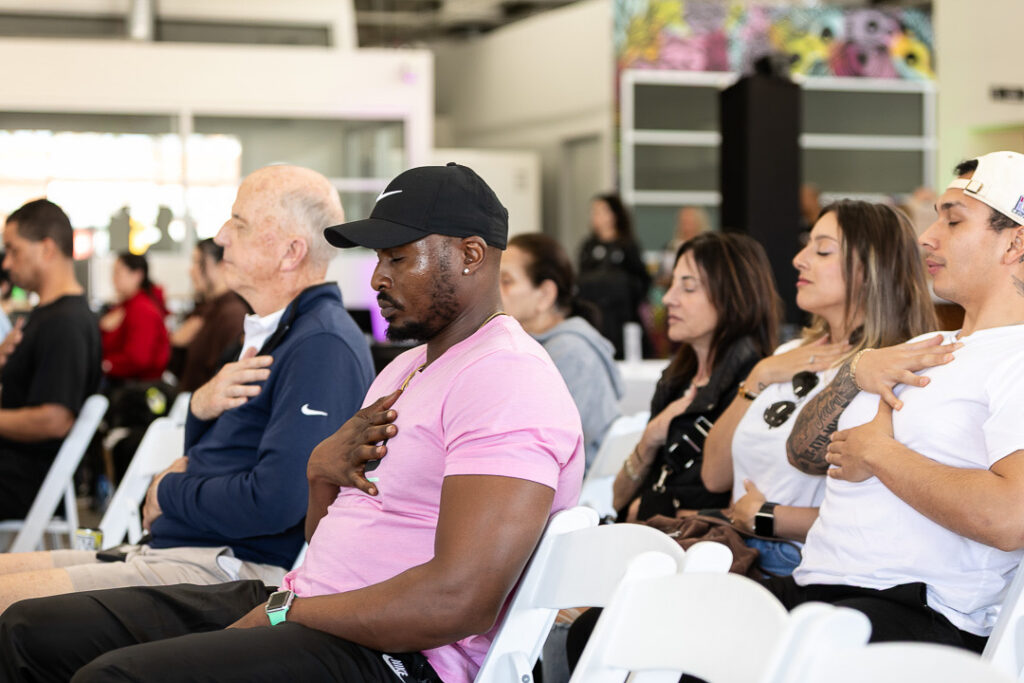
Poor sleep, high soreness, and low readiness should change how you coach the day. They should not push you into diagnosis. The American Heart Association includes sleep in Life’s Essential 8, alongside physical activity, diet, nicotine exposure, weight, cholesterol, blood sugar, and blood pressure. The AHA sleep metric recommends 7 to 9 hours of sleep daily for optimal cardiovascular health in adults, and the CDC places physical activity inside chronic disease prevention, where 150 minutes of moderate weekly activity can reduce disease risk.
A client with poor sleep, heavy soreness, high stress, and weak readiness does not need blind intensity. They need a coach who can read the week and adjust the session: holding load, moving from intervals to Zone 2, reducing volume, or changing the day’s goal.
“I love seeing these coaches show up hungry to receive from all the speakers and panelists. And best yet, we all learn from each other.”
— Nathan Hyland, Co-Founder & Managing Partner, Lapaix Hyland GBC
Life’s Essential 8 includes blood pressure, cholesterol, blood sugar, and weight, and notes that hemoglobin A1c can reflect long-term blood sugar control in diabetes or prediabetes. That still does not make lab interpretation a coaching job. An evidence-based longevity coach should ask whether a clinician reviewed the result, ask what guidance the client received, and align exercise habits with that guidance. They should not diagnose, prescribe, adjust medication, or explain abnormal labs.
Use this cue:
“Bring that result back to your clinician. Once they give you guidance, I can help you build the habits around it.”
That line protects the client as well as the coach. The coach’s job is to support training, recovery, movement, and behavior inside scope. It is the clinician who should be in charge of interpreting the marker.
Longevity-advantage clients are asking for more than hard sessions. They want:
ACE’s 2025 healthspan guidance gives practical strategies for health coaches and exercise professionals, built on aerobic training, resistance training, balance, flexibility, structured sessions, and lifestyle activity. A coach who understands longevity builds repeatable systems around strength, aerobic work, mobility, recovery, sleep habits, and consistency.
Use this as the referral framework for longevity coaching.
Clients need coaches who can help them train better. They also need coaches who know when the answer belongs to a clinician.
More data can improve coaching, but it can also create noise. Wearables can drive anxiety, and biomarker talk can drift into medical advice. One bad sleep score can make a coach overcorrect, and one readiness score can distract from the bigger pattern. Your job is not to chase every metric. It is to notice patterns, adjust training, and refer when the signal belongs outside coaching. That is the kind of discipline longevity coaching requires.
Related: Longevity Fitness Coaching: How to Shift Clients From Short Cuts to Long Games
The Longevity Advantage panel takes place at Career Lab Las Vegas on July 17. Coaches will hear how leaders are thinking about recovery, sleep, biomarkers, performance, and long-term client health strategy, and will leave with CECs and a 2026 plan.
Reserve your seat at coach360news.com/career-lab-by-coach360-vegas
What is the Longevity Advantage panel at Career Lab?
It is a Career Lab Las Vegas panel on what clients expect from coaches around recovery, sleep, biomarkers, performance, and long-term health strategy. It sits inside the event’s industry-leader panel block and is built for coaches who are already fielding wearable and readiness questions on the floor.
What should an evidence-based longevity coach know?
An evidence-based longevity coach should understand strength, aerobic training, recovery, sleep, habit design, biomarker awareness, and referral boundaries. They support health behaviors without diagnosing or treating, and they know which questions belong with a clinician.
Can coaches talk about biomarkers with clients?
Yes. Coaches can ask whether a clinician reviewed the result and can use provider guidance to shape training support. They should not interpret labs, diagnose, prescribe, or adjust medication. The line is between supporting the habits around a result and interpreting the result itself.
Why does sleep matter in longevity coaching?
Sleep affects recovery, readiness, energy, and training response. Coaches can support basic sleep habits and adjust programming around poor recovery. They should refer when signs point to a medical sleep issue, such as a suspected sleep disorder.
This article previews a Career Lab by Coach360 panel and is intended as professional education for fitness coaches. It does not constitute medical advice. Interpreting labs and biomarkers, and any decisions about medication or treatment, belong with a qualified clinician.
I have walked into a lot of fitness clubs over the last two decades. The equipment keeps getting better. The programming keeps getting smarter. The aesthetics keep getting sleeker. What I have not found, not once, in any of them, is a deliberate strategy for why members should actually come back. Not for the treadmill. For each other.
That is the diagnosis veteran club operator Herb Lipsman arrived at after four decades managing some of Houston’s most prestigious properties: The Houstonian Hotel, Club and Spa; VillaSport Athletic Club and Spa; Golf Club of Houston; and consulting roles at River Oaks, Lakeside, and Houston Country Clubs. His conclusion is not just a product pitch. It is a read on where an entire industry has structurally underperformed.
“Our industry has done a great job of creating ever-improving facilities and equipment, more creative programs and services. But as an industry we have failed at the most obvious way of attracting more members and keeping them: making each member feel seen, heard, and like they truly matter.”
— Herb Lipsman, Co-Founder, SOZO Clubs
The numbers are starting to validate that critique. Vogue named wellness-focused private member clubs one of the biggest trends of 2026. Midtown Athletic Club’s president has called social wellness the industry’s next major opportunity. Concepts like Othership in Toronto, Remedy Place in New York, and Proper Club in Santa Monica are drawing waitlists without a single squat rack as their marquee amenity.
Category momentum and category execution are two different things. If you operate a club today, the question is not whether to add community programming. The question is whether you actually know how to build it.
Most social wellness concepts entering the market right now are being built by hospitality entrepreneurs or wellness investors. That is not a disqualifier. It does create a specific blind spot: the gap between what a club looks like at opening and what it looks like 18 months later.
SOZO Clubs, the social wellness concept Lipsman is launching with co-founders Gary Henkin and Dan Lynch, is being designed from a different starting point. Lipsman has managed P&Ls, navigated retention crises, and staffed clubs through boom-and-bust cycles. The SOZO model, built around fitness studios, recovery lounges, social settings, curated coworking spaces, and outdoor retreats, is explicitly designed around operational durability, not just design ambition.
On the revenue side, SOZO is positioned between the upper end of upscale multi-purpose athletic clubs and the lower end of traditional country clubs. That is a deliberate move to serve the 30-plus demographic that most fitness concepts have historically underserved. The specific tier structure and build economics remain confidential pre-launch, but the pricing philosophy reflects a core operator conviction: that connection is a premium product when it is delivered with consistency.
For operators evaluating whether to evolve an existing model or build something new, the economic case for social wellness is not speculative anymore. Recovery modalities (sauna, cold plunge, compression, red light) are becoming standard amenity expectations at the premium tier, not differentiators. The clubs still treating them as upsells are falling behind. The clubs treating them as the anchor for a broader longevity and wellbeing ecosystem are capturing a spending category, healthspan-focused consumers in their 40s, 50s, and 60s, that the traditional gym model was never designed to serve.
Social wellness gets operationally hard at the staffing layer. You cannot staff it the way you staff a traditional club.
A front desk employee at a conventional gym checks IDs and answers phone calls. A team member at a social wellness club reads a room, remembers that the member who just walked in lost her husband six months ago, and connects her with three other members who share her interest in early-morning yoga. That is a fundamentally different role.
Lipsman calls what he is looking for “Servant Hearts”: people who are genuinely curious about others and who find meaning in facilitating connection rather than closing transactions. He argues they exist in every market, in every job category. The problem is not scarcity. It is that most hiring processes, built around credentials and certifications, are poorly designed to find them.
“If those in ownership or the C-suite do not exemplify and model this philosophy, there is no chance this sort of culture will form and prevail. It starts at the top.”
— Herb Lipsman, Co-Founder, SOZO Clubs
This has direct implications for coaches and wellness professionals watching this transition. The role of the coach in a social wellness environment is shifting. The session is no longer the product. The relationship is. Coaches who can facilitate group experience, build member cohorts around shared wellness goals, and serve as connective tissue within a community are becoming the highest-leverage operators in any club. Credentials still matter. Relational intelligence is the new floor.
The longevity category (peptides, NAD+ infusions, GLP-1 adjacency, biomarker testing) is moving fast enough that every operator with a recovery lounge is now asking whether to offer it. The answer depends entirely on your regulatory posture, your clinical partnerships, and your willingness to build a compliant infrastructure before you build the marketing.
SOZO is among the operators thinking seriously about longevity programming as an integrated layer rather than an add-on. Lipsman frames it as an educational imperative as much as a revenue opportunity:
“We intend to become community leaders for educating the public, both future members and non-members, on the latest advances in wellness, longevity, and healthspan.”
— Herb Lipsman
That framing matters. Clubs that lead with longevity as a content and community platform, and layer in services from there, tend to build more durable member relationships than clubs that lead with the service catalog.
For operators considering this path, the structural questions to answer first are: Who is the clinical or medical partner? What liability framework governs the services? How are team members trained to present these modalities without making therapeutic claims? These are not roadblocks. They are the infrastructure that separates a sustainable longevity revenue line from a compliance liability.
When you distill 40 years of premium club management into a single operational truth, Lipsman’s is this: the industry has consistently failed at the most obvious driver of retention.
“A member who doesn’t feel seen, heard, or appreciated will be a temporary member.”
— Herb Lipsman
He has heard the line too many times: “I’m your best member. I pay my dues and never come.” Every club has them. The social wellness model, done right, makes that statement impossible, because the value is not housed in equipment or programming schedules. It is housed in relationships that members cannot replicate anywhere else.
SOZO is planning its first location in a Houston suburb, targeting a 2028 opening, with plans to leverage Lipsman’s deep Houston-area network of former colleagues, members, and community leaders as a launch engine. AI-assisted targeting and digital community-building are part of the go-to-market plan, tools that operators of Lipsman’s generation did not have access to and that the next generation of club builders would be foolish to ignore.
The social wellness category is going to get crowded before it gets disciplined. Expect luxury-end concepts with beautiful designs and thin operational depth, the ones that opened in 2025 and 2026, to begin struggling by 2027. The clubs and coaches that survive the hype cycle will be the ones who figured out what they were actually selling and built the internal systems to deliver it consistently.
Here is the honest tradeoff: every dollar you spend on recovery infrastructure is a dollar you are not spending on the staff training, member-facing rituals, and community programming that make the recovery infrastructure feel like more than a hardware purchase. The physical infrastructure is easier to build than the cultural infrastructure. Most new concepts get the sequence backwards.
For operators, the framework is straightforward: assess whether your current programming model creates structured opportunities for members to meet each other. If it does not, start there, before adding recovery bays or longevity panels.
For coaches, the question is whether your identity is built around the session or the relationship. The session is becoming commoditized. The coach who understands recovery modalities, who can speak intelligently about healthspan, and who knows how to facilitate a member community is building something an algorithm cannot replace.
The industry is moving. SOZO is one case study in how an operator is thinking about the transition with genuine operational seriousness. The question for everyone else is straightforward: what is your version of that answer?
FITHIRE
Hiring for the social wellness era is different. Wellness Director, Longevity Program Manager, and Member Experience roles require operators who can read a room, not just run a P&L. FitHire surfaces the talent the next generation of clubs is built on.
How do longevity fitness studios compete with medical spas and telehealth longevity clinics offering the same peptide and recovery services?
Most medical spas and telehealth platforms are built around a transactional visit model. You book, you receive the service, you leave. The fitness studio that wins in this space is not competing on clinical depth, it will not beat a medical office on that dimension. It competes on environment, consistency, and community. Members who come three times a week for breathwork and cold exposure are building a habit anchored to a place and to people. That stickiness does not exist in a clinical setting. The studio’s job is to make the non-clinical experience compelling enough that members prefer the club context even when the clinical service is technically equivalent. That means the room has to feel right, the staff has to know your name, and other members have to become reasons to come back.
What does the longevity studio revenue model look like for a club operating at 10,000 to 15,000 square feet?
The honest answer is that the margin structure varies significantly based on how much of the square footage is equipment-dependent versus experience-dependent. Red light panels, cold plunge infrastructure, and hyperbaric chambers carry real capital cost and maintenance overhead. The higher-margin longevity offerings tend to be programming-based: educational workshops on healthspan, community groups organized around shared wellness goals, curated social experiences that require facilitation more than hardware. Operators building a recovery floor should model both tracks: the equipment-dependent revenue that comes in fast but competes on price, and the programming revenue that builds slower but carries higher retention and lower replacement cost. The SOZO model prices membership at the upper end of upscale athletic clubs and the lower end of country clubs, a positioning that signals the value proposition is not equipment access but member experience.
How do you evaluate whether your staff culture is actually producing member connection or just going through hospitality motions?
The clearest operational test is whether your staff can tell you something specific and personal about at least half the members they interacted with last week. Not their membership tier or their preferred modality, but something from their life. A staff member who can say that a particular member mentioned her son just started college, or that another member is preparing for his first triathlon, is doing the relationship work. A staff member who can tell you that a member comes in Tuesdays and Thursdays and prefers the far cold plunge is doing hospitality. The first profile builds retention. The second does not. The difference matters because the member who feels known is not comparison-shopping your facility against the next red light studio that opens nearby.
Is the social wellness club model viable outside major metro markets?
The social dimension of the model actually performs better in mid-size and suburban markets than in dense urban ones, for a specific reason. In a major metro, a member has fifteen alternatives within a fifteen-minute commute and a different social context every day. In a suburb or mid-size city, a club that becomes genuinely embedded in the community, that knows its members, connects them to each other, and participates in local wellness education, has a geographic and relational moat that is hard to replicate. SOZO is launching in a Houston suburb precisely because that context rewards the depth of member relationship the concept is built on. The longevity modalities travel. The community architecture is harder to import from a coastal concept, which means operators who build it in secondary markets may have more durable positions than they expect.
Erin Nitschke is a Coach360 contributing editor covering club operations, longevity and recovery programming, and the business infrastructure behind high-performing fitness and wellness businesses.
About Erin Nitschke
Dr. Erin Nitschke, NSCA-CPT, NFPT-CPT, ACE Health Coach, ACE-CPT, Fitness Nutrition Specialist, Therapeutic Exercise Specialist, Pn1, FNMS, and DSWI Master Health Coach, is a seasoned college professor in health and human performance. She is a nationally recognized presenter, industry writer for IDEA, NFPT, Fitness Education Online, and Youate.com, and an active member of the ACE Scientific Advisory Panel. With extensive experience in health and exercise science, Erin specializes in holistic, evidence-based approaches to wellness. Her passion lies in empowering individuals to lead healthier, more vibrant lives through personalized coaching. Erin’s philosophy centers on education, accountability, and sustainable behavior change—guiding clients to achieve long-term success in nutrition, fitness, stress management, and overall well-being. To connect with Dr. Nitschke, email her at erinmd03@gmail.com or on Instagram: @nitschkeerin
She came in on a Tuesday carrying a coffee she hadn’t touched. Eight months into training. A few weeks earlier, she had PR’d her deadlift. I looked at her Whoop band before we began and saw a recovery score of 31, resting heart rate up fourteen beats from her average, and HRV trending down. I swapped her session before she set her bag down.
That swap took forty seconds. The client did not feel like she was getting less out of her session. She felt like I was paying attention to how she was showing up. I kept that client for another two years.
That is what wearable data in coaching actually does when it is built into the system. Not the data itself, but the workflow that turns the data into a decision before the client walks through the door.
If you run a facility or manage a team of coaches, you have probably watched this play out on the wrong side. A coach with a stack of wearable screenshots from clients and no idea what to do with them. The data is there. A logical, thoughtful protocol is not.
The coaches who are retaining clients at high rates right now are not necessarily the ones with the best programming instincts. They are the ones who have built a repeatable intake and session-adjustment process around the data their clients are already generating. The difference is infrastructure and strategy.
Gyms sometimes treat wearables as a value-add: something to mention during the sales process and then hand off to the client to figure out. That is not integration. That is decoration. The gap is not data access. Your clients already have it. The gap is the layer between the data and the coaching decision.
Heart rate variability for coaches is not a reading to admire. It is an input that should change what happens in the next session. When HRV drops below a client’s personal average for three consecutive mornings, that is not an abstract warning. It is a concrete signal that the nervous system has not recovered, and if you push a high-intensity session on top of it, you are training into a hole. Some clients will white-knuckle through it and say nothing. Some will drop off.
The tradeoff is real and worth naming directly: using wearable data well requires your coaches to make calls that the client may not understand in the moment. Pulling back a session when someone feels ready to go is counterintuitive. You need a client education layer built into the process, or the data-driven adjustment reads as the coach being overly cautious.
This is not a fifteen-minute analysis. Coaches who do this well are spending two to three minutes per client, per day, on three specific numbers: HRV relative to personal baseline, resting heart rate trend over the prior five days, and sleep quality score. Not absolute values. They are looking for trends relative to the individual.
Personal baseline matters more than population averages. A resting heart rate of 58 means something completely different for a 42-year-old recreational lifter than for a former collegiate rower. Coaching with wearable technology is only useful when the reference point is the client in front of you, not a chart from the device manufacturer.
The three-point protocol produces one of three session calls: proceed as programmed, modify load and intensity by 15 to 20 percent, or pivot to active recovery entirely. For clients who push back on a modified session, the cue that tends to land is some version of: “Your body already trained hard last night. We’re here to support recovery.” That language reframes the modification as an extension of the work, not a reduction of it.
How to use Whoop data with clients starts before the first session. During onboarding, or during a quarterly check-in for existing clients, run a fifteen-minute data review. Not to interpret everything, but to establish the client’s personal baselines across four weeks and to set the thresholds that will trigger session modifications.
For Whoop users specifically, the strain and recovery pairing is immediately actionable for programming adjustments. A client coming in with a day strain already at 14 by noon, from a commute and two stress calls, is a different training input than the same client on a calm Sunday morning. Neither the client nor the coach is managing the numbers. They are managing the decision the numbers point to.
The intake structure runs four steps. First, connect the Whoop account or have the client screenshot that morning’s recovery report. Second, compare to the four-week rolling baseline established at onboarding. Third, apply the three-tier session call from the pre-session protocol. Fourth, note the call in the session log so patterns surface over time. A client who routinely shows suppressed HRV on Mondays is telling you something about their weekend that the programming should account for.
Owner-operators running multi-coach facilities: this is where coaching with wearable technology either scales or collapses. If each coach is using their own method of reading the data, the outcomes vary and the process cannot be replicated. A shared intake document, even a simple one built in Google Sheets, with the four-step structure means any coach can pick up any client and apply the same protocol.
Wearable data scope of practice is a liability concern that becomes real the moment a coach interprets a low HRV reading as a cardiac symptom or tells a client to see a cardiologist based on a consumer device. That is outside the lane.
The boundary is this: coaches use the data to make training decisions. Not diagnostic decisions, and certainly not medical referrals based on device readings. The three-tier session call (proceed, modify, or pivot) stays entirely within training programming. The moment the interpretation moves toward health status rather than readiness for physical effort, the coach refers to the appropriate provider or clinician and documents that referral.
Build that boundary into the coach training and into the client-facing materials. Clients who understand the difference between “your device is telling us your recovery is low, so we’re adjusting today’s session” and “your device is flagging a health concern” are less likely to conflate the two. It also raises the perceived professionalism of the process considerably.

Integrating wearables into training programs is not a retention strategy by itself. It becomes one when the workflow produces something clients can feel: the sense that coaching is adapting to them specifically, not running a template with their name at the top.
The operators who have built this into their systems report two consistent outcomes. First, clients who feel seen at the data level tend to communicate more. They check in when travel disrupts sleep. They flag stressful weeks before they show up undertrained and frustrated. The data creates an opening for a different kind of conversation. Second, the modification calls (the ones where a coach pulls back a session based on HRV) become retention moments rather than disappointments when the client understands why they are happening.
A facility running twelve coaches and three hundred active clients can track session modification rates by coach and correlate them to renewal rates. That is not a sophisticated analytics build. That is a column in a spreadsheet updated weekly. The coaches whose modification rate is zero are probably not reading the data. The coaches whose modification rate is 40 percent probably overcorrected. The ones in the 12 to 18 percent range, adjusting one in six to eight sessions based on wearable inputs, tend to show the highest retention. That is a number worth knowing.
Max Darsonval, founder of Velocity AI, frames the underlying problem with the current generation of wearables this way:
“The wearable category has gotten very good at telling you what already happened. Heart rate, sleep scores, recovery, it’s all rear-view. The problem is the training session ends before the data is useful.”
— Max Darsonval, Founder, Velocity AI
Darsonval continues:
“Velocity’s bet is that the value isn’t in the dashboard the next morning. It’s in the rep you’re about to do.”
— Max Darsonval, Founder, Velocity AI
That distinction matters for operators evaluating where the category is going. The first generation of wearable integration is morning-recovery data driving today’s session call. The next generation is in-session data driving the next rep. The operators building the workflow now are positioning their coaches to absorb the next wave without rebuilding the system.
FITHIRE — FIND CERTIFIED COACHES WHO TRAIN WITH DATA
The coaches who implement this workflow are not self-taught guessers. They understand wearable data in coaching at a protocol level and they know how to apply it without stepping outside their scope. If you are hiring for your facility or expanding your team, FitHire surfaces candidates with documented experience integrating wearable technology into client programming.
How do I use wearable data in coaching without overcomplicating my programming?
Start with one metric and one decision rule. Heart rate variability relative to personal baseline is the most reliable single input for session readiness. Set a threshold (say, HRV 15 percent or more below the client’s four-week average) that triggers a session modification. Apply that rule consistently for sixty days before adding additional data points. The complexity that kills most wearable integrations comes from coaches trying to build a dashboard before they have built a habit. One metric, one rule, one documented outcome per session. That is the foundation.
What is heart rate variability for coaches, and how is it different from resting heart rate?
Resting heart rate gives you a snapshot of cardiovascular load at a single moment. HRV gives you a picture of how well the autonomic nervous system is recovering between stressors: training, sleep disruption, psychological stress, illness. A client’s resting heart rate might look normal the morning after a hard block, but their HRV will often tell a different story. For coaching purposes, HRV is the earlier signal. It tends to drop before fatigue shows up as performance decline, which means a coach with HRV data can make a training adjustment before the client hits the wall rather than after. Most consumer devices (Whoop, Oura, and Garmin) measure it during sleep and provide a morning readiness score based on HRV trends.
What are the scope of practice rules for coaches using wearable data with clients?
Coaches use wearable data to make training decisions: whether to proceed with a planned session, reduce load, or shift to recovery work. That is the full scope. Interpreting a device reading as a symptom, recommending medical follow-up based on device outputs, or making health claims based on wearable data falls outside coaching scope regardless of the device’s accuracy. Some clients will ask their coaches to weigh in on what a low HRV reading means for their health. The correct response is that you are using the number to inform today’s training, not to assess their cardiovascular health, and that questions about health should go to their physician. Document the referral. This distinction also matters for liability: a training adjustment based on a recovery score is a coaching call. A diagnostic claim based on a recovery score is not.
How do I build wearable data into a multi-coach facility without the process falling apart?
The single-document problem is where most multi-coach facilities stall. If the intake protocol lives in each coach’s head, it does not scale and it does not transfer. Build a one-page shared intake template with three fields: today’s recovery data, comparison to the client’s rolling baseline, and today’s session call (proceed, modify, or pivot). Every coach fills it out the same way. Review the calls weekly in your team meeting. Over sixty to ninety days you will see which coaches are actually using the data and which are skipping the check. The aggregate data also tells you things at the facility level: if modification calls spike every Monday across the board, your weekend programming is probably pushing too hard. That is a facility-level insight you only get when the data is standardized across coaches.
Erin Nitschke is a Coach360 contributing editor covering coaching technology, wearable integration, and the operational systems behind high-retention training businesses.
About Erin Nitschke
Dr. Erin Nitschke, NSCA-CPT, NFPT-CPT, ACE Health Coach, ACE-CPT, Fitness Nutrition Specialist, Therapeutic Exercise Specialist, Pn1, FNMS, and DSWI Master Health Coach, is a seasoned college professor in health and human performance. She is a nationally recognized presenter, industry writer for IDEA, NFPT, Fitness Education Online, and Youate.com, and an active member of the ACE Scientific Advisory Panel. With extensive experience in health and exercise science, Erin specializes in holistic, evidence-based approaches to wellness. Her passion lies in empowering individuals to lead healthier, more vibrant lives through personalized coaching. Erin’s philosophy centers on education, accountability, and sustainable behavior change—guiding clients to achieve long-term success in nutrition, fitness, stress management, and overall well-being. To connect with Dr. Nitschke, email her at erinmd03@gmail.com or on Instagram: @nitschkeerin


Powering the Business of Health, Fitness, and Wellness Coaching