
All Categories
All Categories
Clinical data fitness coaching clicked for me when I watched a client stop arguing with the plan the moment the data made the problem visible. For weeks, she thought the issue was effort. Her scan showed lean mass had dropped. Her waist had barely moved, and her strength numbers had stalled.
The numbers worked because they told us what to change next, not because they sat in a report nobody used.
If you coach real clients, you already know the obvious version. Intake form, body comp scan, progress photos. Maybe a wearable dashboard. The gap is what happens after that first readout. Data only becomes revenue when it changes the next block, triggers a scheduled reassessment, and gives the client a clear reason to keep going.
A body composition scan, movement screen, wearable trend, blood pressure reading, or recovery score has value only when it changes the plan. This is where clinical data fitness coaching becomes useful: the coach turns the number into the next programming decision.
Research on personal health data in coaching points in the same direction. Personal health data gives coaches more objective insight into client behavior, but its value depends on how well it shapes the next coaching decision.
The client trusts you to show what the report means, what has to change, and when you’ll check it again. Use this coaching cue in the review to move the client from vague hope to a clear next step:
“We’re not guessing for six more weeks. This number tells us what the next block has to solve.”
Use a simple framework. Call it the 6-week reassessment cycle. A useful reassessment framework for fitness coaches connects every metric to a decision, not a dashboard.
The loop has five parts:
That gives you a clean 6-week reassessment cycle without adding busywork. Six weeks gives the training block enough time to show movement in strength, body composition, nutrition follow-through, or recovery trends. It also keeps the client close to the next decision instead of drifting through another vague month of workouts.
Example:
A client starts with baseline data:
You build the next 6 weeks around the metric that matters most. Then you reassess and show the client what changed.
ACSM’s fitness assessment manual organizes testing across body composition, cardiorespiratory fitness, muscular fitness, and flexibility. That gives coaches a clear assessment lane, as long as the data gets tied to training decisions and referral boundaries.
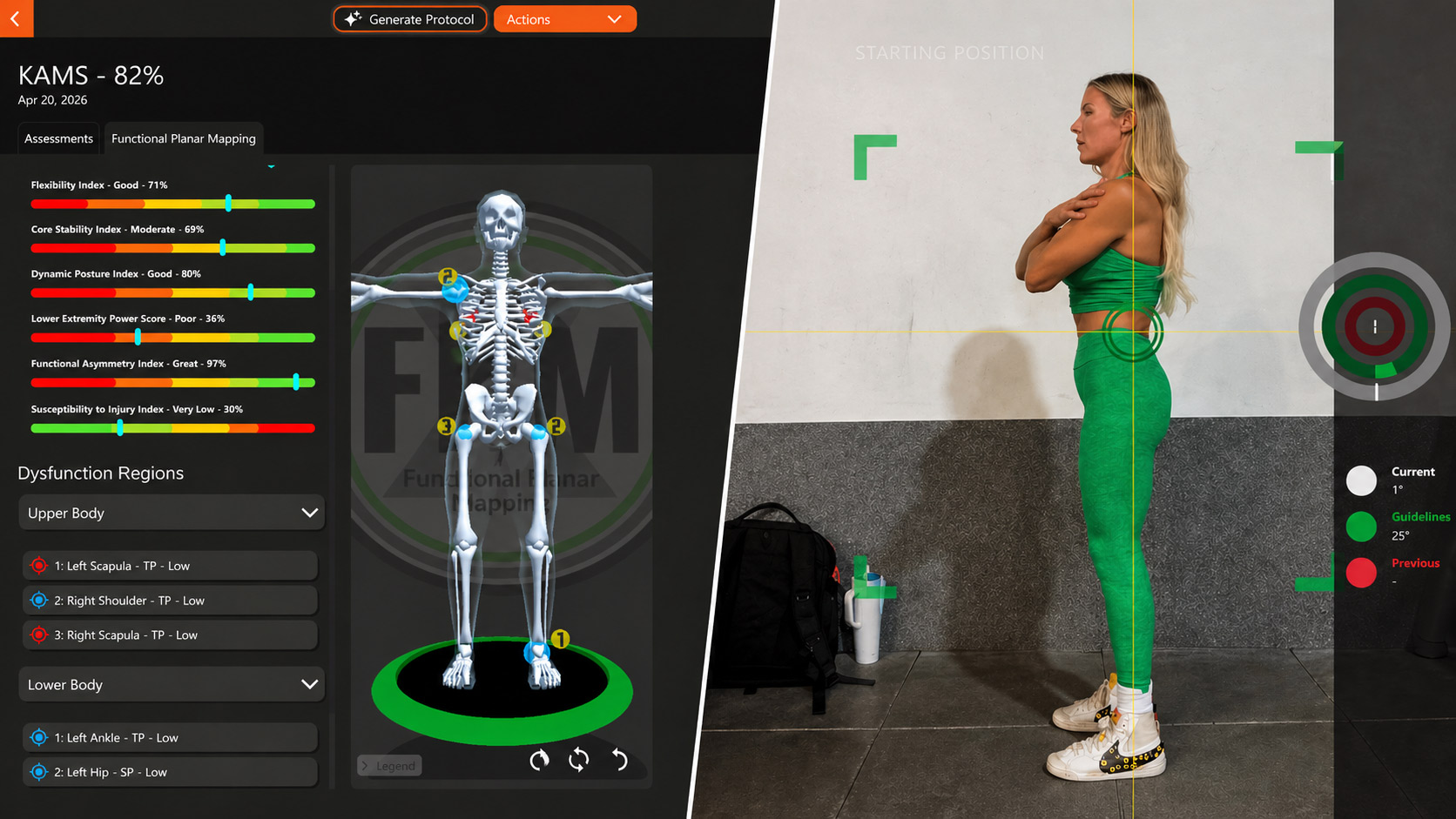
Don’t track everything. Track the metrics that change what you prescribe.
A strong starting set for coach-driven health data is:
Body composition tells you whether weight change is moving in the right direction. InBody’s educational material frames body composition as more specific than scale weight. It breaks weight into components like fat mass, lean mass, water, protein, and minerals. It can also show change over time in fat mass, lean muscle mass, and body fat percentage.
Strength performance tells you whether the training signal is holding. If scale weight drops and load drops every week too, you have a problem. If fat mass drops while strength stays steady, the plan has more room.
Resting heart rate or recovery trend gives you a simple fatigue flag. It isn’t a diagnosis. It is a programming signal.
This is where premium coaching services become easier to sell. The client sees the rule before the result.
Use hard triggers. The coach who can say, “This is the trigger, this is the adjustment, and this is when we retest,” has a stronger offer than the coach selling another month of workouts.
| Trigger | Coaching Decision |
|---|---|
| Body fat does not move after 6 weeks and adherence is above 80% | Change the nutrition process or raise activity targets |
| Lean mass drops more than 1% across the reassessment window | Reduce conditioning volume and increase protein priority |
| Resting heart rate is up for 7 days and session quality is down | Pull back intensity for 3 to 5 days and check sleep, stress, and intake |
| Grip strength drops across 2 straight checks | Reduce fatigue load before adding more work |
| Waist measurement is unchanged after 6 weeks while weight drops | Inspect hydration, food quality, and muscle loss risk before celebrating the scale |
| Strength on key lifts drops for 2 straight sessions | Hold load and reduce accessory volume |
| Blood pressure reads outside a safe exercise range | Stop intensity progression and refer the client to a licensed medical provider |
Use one repeatable lift as the performance marker. For example, track a trap-bar deadlift, goblet squat, or bench press for 3 working sets of 5 to 8 reps once per week.
Keep the test conditions consistent: same exercise, rep range, rest window, and point in the training week. Give the client 48 to 72 hours before repeating the pattern hard again, then progress load only when reps, form, and session quality hold.
At week 6, compare the lift, body composition, waist measurement, and recovery notes. If strength drops for 2 straight sessions, hold load and reduce accessory volume before adding more work.
The report is a moment. The reassessment cycle is the service.
A clean 6-week offer can include:
You’re not charging for a machine reading, but for interpretation inside your scope, programming changes, follow-up, and review. The data review belongs inside the paid cycle. It’s not meant to serve as a free explanation before the client decides whether to continue.
MedVanta fits this model because it connects clinical insight with the coaching decision that follows. For operators, that turns assessment data into a clearer service path, not a one-off report.
“Rather than completing generic assessments, that turn out variable and subjective results, Pronesis delivers clear and objective data showing the client’s dysfunction in their movement patterns, which can lead to decreased performance and possible musculoskeletal injury. This data shifts the conversation from ‘Do I need this?’ to ‘How do we fix this?'”
— Chuck Bollacker, MHA, PTA, Director of Business Development and Implementation, Pronesis, a MedVanta Company
Coaches don’t diagnose, prescribe medical treatment, interpret disease markers as medical findings, or tell clients to ignore clinician advice. Use clinical data to guide coaching decisions and refer when the data points outside training scope. This protects the client and the coach.
A high blood pressure screen belongs to a licensed medical provider. So do chest pain, unusual shortness of breath, fainting, unexplained symptoms, or lab results that look abnormal. You can adjust training around the information you are qualified to use, but medical interpretation stays with the ordering clinician.
You have to document better, run reviews on schedule, and explain data in plain language without drifting outside scope. You also have to train clients to care about more than the scale.
A 6-week reassessment cycle forces cleaner work. If the client knows you will retest in 6 weeks, the plan cannot stay vague. The training block needs a target, check-ins need a purpose, and the review needs a decision.
The review has one job: show the client what changed and what happens next.
Use this format. Here is what…
A client who sees progress has a reason to continue. Likewise, a client who sees the wrong metric move also has a reason to continue, if you can explain the correction. The data doesn’t close the sale by itself; the review does.
Body composition tools already show how training, nutrition, and lifestyle changes can become visible over time. InBody’s body composition analysis material describes tracking response to nutrition, physical activity, and lifestyle interventions as a way to turn data into actionable insight.
Coaches who can turn assessment data into clear training decisions are becoming more valuable in performance-driven settings. Browse roles at FitHire by Coach360 if you want to work where reassessment, strength planning, and coach-led systems carry real weight. www.fithirebycoach360.com.
What is clinical data fitness coaching?
Clinical data fitness coaching uses assessment data, such as body composition, performance markers, recovery trends, and referral-aware health screens, to guide training decisions. The coach uses the data to adjust programming and refer out when the issue sits outside training scope.
How often should a coach reassess clients?
Use a 6-week reassessment cycle for most coaching blocks. Six weeks gives enough time for a training change to show up, while keeping the client close to the next decision.
What data should a personal trainer track first?
Start with body composition, strength performance, and a simple recovery marker such as resting heart rate or session-quality trend. Add more data only when it changes a coaching decision.
About Robert James Rivera
Robert is a full-time freelance writer and editor specializing in the health niche and its ever-expanding sub-niches. As a food and nutrition scientist, he knows where to find the resources necessary to verify health claims.


Powering the Business of Health, Fitness, and Wellness Coaching