
All Categories
All Categories
I’ve stood in the back of enough studios to see the same look on a coach’s face after class. The room went well. The playlist hit. The cues landed. Clients left sweaty, smiling, and grateful. Then the coach checks the schedule, looks at the same weekly blocks, and realizes the harder question hasn’t changed: where does this career go next?
If you’re already coaching, the harder question isn’t whether you can lead the room. It’s where the room can lead you next. That’s the lane Career Lab by Coach360 is stepping into as it comes to Las Vegas.
Career Lab by Coach360 LIVE from Las Vegas runs from Friday, July 17, to Saturday, July 18, 2026. The venue will be announced soon, with Harry Reid International Airport listed as the airport for out-of-town attendees.
The event is built around a clear promise: help fitness professionals grow their careers, expand their businesses, and earn CECs in one concentrated experience.
Coach360’s Vegas event page centers the day on a 2026 career roadmap. Coaches can expect work around brand direction, niche clarity, revenue growth, client attraction, continuing education credits, industry connections, and stronger career confidence.
The real career shift starts when technical skill no longer holds a coach back. You can coach the class, hold the room, and keep clients coming back. That technical strength does not automatically give you the relationships, visibility, or business context that turns strong coaching into a longer career.
Career Lab is built around that next step.
“This year marks 23 years I’ve been in the fitness industry, first starting off as a personal trainer and supplement consultant at GNC at age 17.”
— Nathan Hyland, Co-Founder and Managing Partner, Lapaix Hyland GBC
He credits mentors for giving him advice, constructive criticism, and open doors along the way. That matters because most coaches don’t fail from lack of hunger. They stall because they don’t have enough access to people who can explain what actually changes a career.
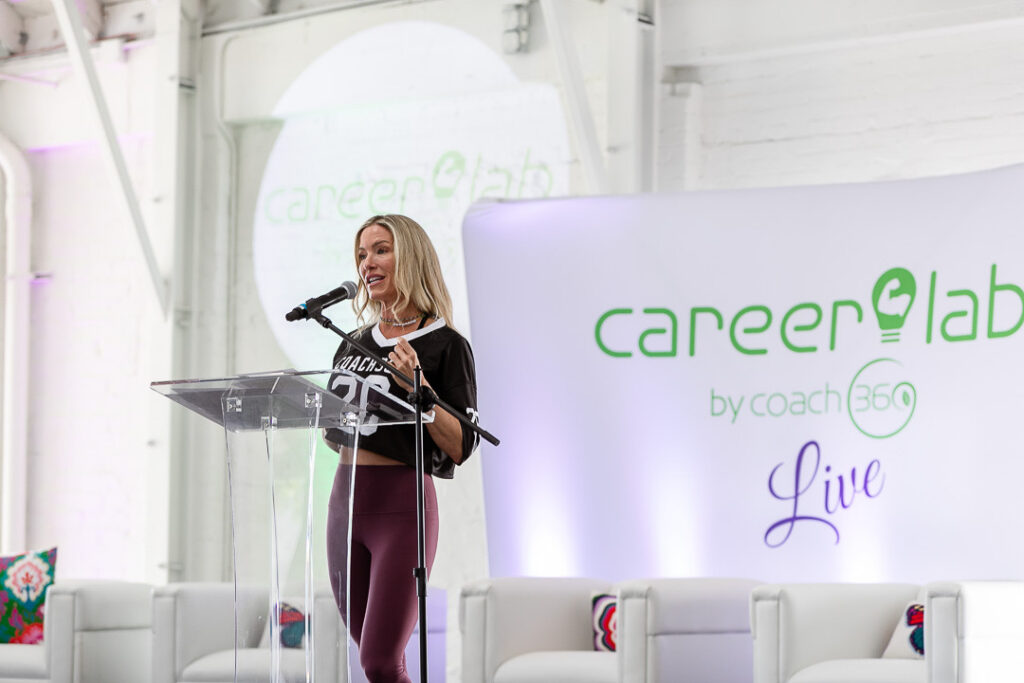
Hyland put it plainly: “Career Lab events allow me to give back and pass along the things I’ve learned over two decades.”
The event lets coaches learn from people who have been through the same pressure they face now. They’ve built teams, made mistakes, changed plans, hired staff, and grown in the fitness industry. Coaches will meet people who give useful feedback, explain hiring decisions, and point them toward roles they won’t see on the class schedule.
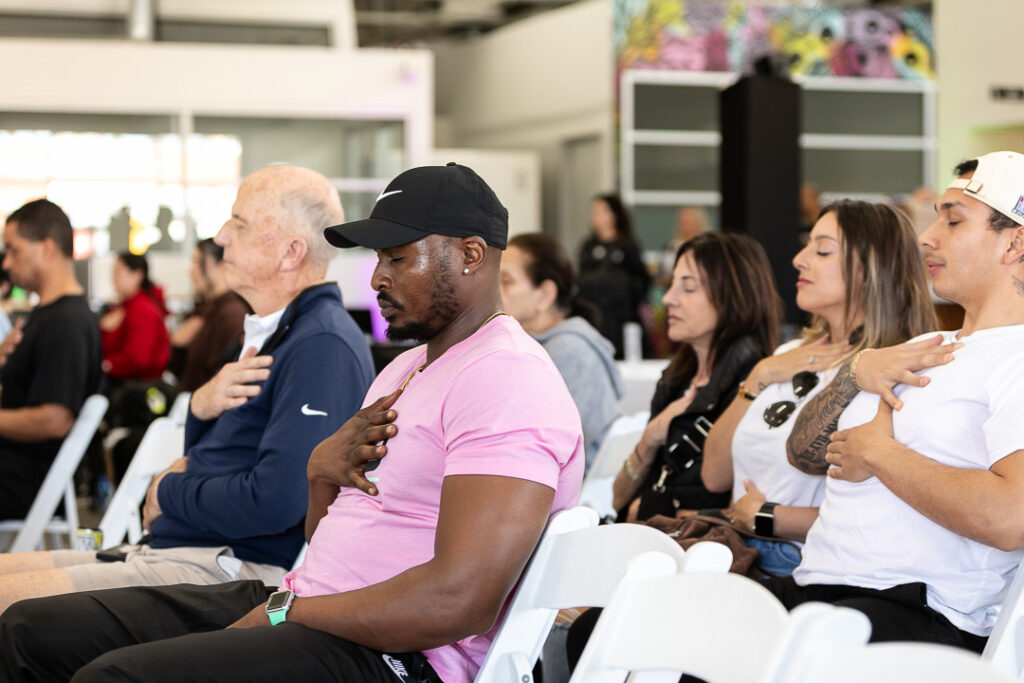
Day One includes sessions on identity, early-career trust, coach-to-brand growth, tech and data, longevity, hiring decisions, breakout labs, and long-term career durability. Those topics move past class delivery and into the parts of a career that often decide who advances.
Tricia Madden, Co-Founder of Fit Pro Programming, speaks directly to that point. She said coaches who are serious about “building a long-term career in coaching and fitness” should attend because the event gives them education, networking, and real-world insight that can challenge how they think, coach, and lead.
“Career Lab is the kind of event our industry has needed for a long time.”
— Dr. Jonathan Mike, owner, Scientific Strength
Dr. Mike pointed to tools, connections, and perspectives that help coaches build sustainable careers.
“This is not just another conference. Career Lab is designed for coaches and creators who want stronger positioning, clearer business strategy, and practical next moves they can actually apply.”
— Pamela Brown, EVP and Head of People & Culture, Crunch Fitness
Existing coaches don’t only need another motivational talk. They also need sharper judgment and to understand how hiring leaders evaluate readiness. They also need to understand how technology changes the coach-client relationship and how policy and advocacy can affect the profession’s future.
Career Lab puts those conversations into one room.
Related: The Coach-Client Relationship Has Changed: Three Roles That Define Modern Training
Brooke Vass, Lead Trainer at Life Time, said Career Lab helps coaches build the right connections. Those connections lead to jobs, grow their brand, and keep them close to current industry trends. Coaches who treat networking as a side task limit their career options.
Networking is built into Coach360 Career Lab Vegas. The “Fuel the System” breakfast connects coaches with brands through sponsor tables, ambassador talks, shared values, audience fit, and career goals. The event also includes networking blocks, lunch conversations, and an industry happy hour.
For coaches already in the field, the value comes from who they meet and what those conversations help them see clearly.
Career Lab creates access, but coaches still need to arrive prepared. Bring better questions than “How do I grow?” Better questions help a coach turn a room full of industry access into a practical plan.
Ask:
The agenda’s “Inside the Decision” panel is built around how organizations assess readiness, growth potential, and long-term value. A coach should listen for patterns in this session.
What language do leaders use when they talk about advancement? What behaviors do they reward? What makes someone easy to trust with more responsibility?
The cue is simple: don’t collect contacts — leave with a next move.
A coach still has to introduce themselves, ask specific questions, take notes that turn into action, and maintain relationships after Vegas. The event compresses learning, but career growth still needs execution.
Last year, Coach360 2025 Career Lab in Anaheim brought almost 200 fitness professionals together. The event focused on career growth, real challenges, practical sessions, and strong connections. The room gives a coach momentum, but the coach still has to act on it.
Career Lab by Coach360 brings coaches together for breakfast networking, keynotes, panel discussions, lunch relationship-building, breakout labs, afternoon networking, and a closing keynote on resilience and reinvention. Attendees can expect help with their 2026 career roadmap, brand direction, revenue growth, client attraction, and industry connections.
Early-bird tickets are listed at $50, with regular pricing at $149. Tickets include the two-day event, meals, snacks, sessions, networking, the workout, and CEC credits.
Coaches who want to grow past the weekly class schedule need to see roles that fit their skills, goals, and next step. FitHire helps fitness professionals find coaching jobs with clearer steps and more transparency.
Career Lab by Coach360 comes to Vegas with a clear message: coaching careers need more than talent and energy. They need relationships, direction, industry context, and honest conversations about what growth takes.
A coach can keep teaching classes and still feel stuck. Career Lab gives that coach a different room, one built around career strategy, leadership insight, brand access, and long-term direction.
The coach still has to do the work, and Coach360 Career Lab gives that work a place to start.
What is Career Lab by Coach360?
Career Lab by Coach360 is a live career-development event for fitness professionals. The Las Vegas agenda includes keynotes, panels, breakout labs, networking, brand connections, and sessions built around long-term growth in fitness.
Who should attend Career Lab in Las Vegas?
Career Lab is built for coaches who already work in fitness and want a clear next step. It fits coaches who want to move into leadership, build stronger industry relationships, connect with brands, or learn what hiring leaders look for.
What can coaches gain from Career Lab?
Coaches can gain career strategy, networking access, brand exposure, mentorship, and a clearer view of how the industry evaluates talent. The goal is to leave with stronger direction, not a longer note file.
When and where is Career Lab by Coach360 Vegas?
Career Lab by Coach360 LIVE from Las Vegas runs Friday, July 17 through Saturday, July 18, 2026. The venue will be announced soon. Harry Reid International Airport is listed as the airport for out-of-town attendees. Early-bird tickets are $50, with regular pricing at $149.
This story was produced by the Coach360 editorial team. Coach360 covers the business of health, fitness, and wellness coaching, with a focus on operators, brands, and the career decisions that move coaches forward.
You passed the exam. The confirmation email landed. Maybe a screenshot to a friend, maybe a post with the letters after your name.
Certified.
Then the first client walked in.
The textbook hadn’t covered the client who nods during your explanation but clearly has no idea what you just said. It didn’t prepare you for the person who bursts into tears halfway through a session because their stress level has been at maximum for three months. And it said nothing about what to do when a client’s progress stalls and they start wondering whether the program, or the coach, is the problem.
This is where elite coaching skills begin. Not in the exam. In the room.
Certifications provide the scientific foundation the profession needs. Exercise physiology, biomechanics, program design, behavior change. A coach without that foundation is guessing on behalf of real people. That matters.
But certification tests what you know, not how you coach.
Early in my career, I collected credentials the way some coaches collect training equipment. Each one felt like leveling up. Each one represented something I could answer on an exam that I couldn’t answer the week before. And yet the sessions that challenged me most had nothing to do with the Krebs cycle or periodization models. They involved people whose barrier wasn’t knowledge, but confidence. People who were afraid to fail again. People who didn’t believe they belonged in a gym at all.
No multiple-choice exam measures that. No textbook tells you how to handle it.
“For me, mentorship was the mirror I didn’t know I needed. Early in my career, I was convinced I had to fill each session with complicated movements. It took mentors watching my sessions and offering honest feedback to shift my focus from delivering the hardest workout in the gym to creating the most meaningful experience for the person in front of me. That guidance shaped not only the coach I became, but the way I now try to mentor others coming up in this profession.”
Jessica H. Maurer, fitness business consultant and co-creator of Move Mentors
The coaches who close this gap earliest aren’t the ones with the most credentials. They’re the ones who sought feedback on their actual coaching before they felt ready to ask for it.
Most coaches remember the first session where a carefully designed program completely failed to help someone. Not because the program was wrong. Because they were solving the wrong problem.
Mine was a client who showed up every week, followed every workout, and still wasn’t progressing the way either of us expected. I kept adjusting sets, reps, and exercises. Nothing changed.
Finally, I asked a different question.
“How’s your sleep?”
The answer: four hours a night and a high-stress job that had been running hot for six months.
The program wasn’t the problem. The context was.
That moment was clarifying. Coaching isn’t applying knowledge to a body. It’s understanding the person who lives in that body, and connecting with everything they carry when they walk through the door. The ability to ask a better question at the right moment isn’t taught in a certification program. It’s built through thousands of sessions and, faster, through deliberate mentorship.
Communication is where the gap between certified and elite shows most clearly. It’s one thing to understand movement mechanics. It’s another to explain them in the moment a client is standing in front of you under load.
The best cues I’ve developed over 23 years aren’t in any textbook. “Push the floor away.” “Drive your ribs down.” “Move like you’re trying not to spill a cup of coffee on your head.” Those cues work because I developed them through observation, feedback, and iteration. Not because they appeared in a certification manual.
Observation is the second skill certifications rarely develop. Elite coaches notice small things before clients mention them: a subtle shift in posture, a change in breathing, the moment fatigue begins to alter technique. They notice when a client’s affect has shifted before that client says a word. Those observations guide real-time decisions about what a session actually needs.
Adaptability is the third. The client didn’t sleep. Their knee is irritated today. They’re mentally exhausted in a way that will limit their output before the warm-up ends. Elite coaches adjust without hesitation because the goal was never to execute the plan perfectly. The goal is to serve the person in front of you effectively.
“Hard skills can make you impressive, but soft skills make you effective. I can teach a hundred ways to do a push-up, but my ability to notice when a client walks in carrying the weight of a rough week and then adjust everything from cues to intensity to connection is what truly defines my coaching. That awareness is what builds client trust and loyalty.”
Most elite professions build a formal apprenticeship period between credentialing and independent practice. Medicine calls it a residency. The trades call it an apprenticeship. Many fitness professionals finish a certification and begin working with clients the following week.
That gap is where mentorship functions as career architecture rather than just encouragement.
A mentor who watches your actual sessions can accelerate the development of instincts that would take years to build alone. Not generically. Specifically. “You’re good, but here’s where you can be better” is a different kind of feedback than any continuing education module provides. The best mentorship conversations happen at the specific level: why that cue didn’t land for that client, what you could have adjusted after the first set, how to recognize the moment a session needs to change direction.
Mentorship happens formally through internships and structured programs. More often it emerges through relationships in gyms, at professional events, and inside continuing education communities. The coaches who find it fastest are the ones who come with specific questions rather than general requests. Not “How do I get better?” but “I had a client plateau for six weeks. Here’s what I tried. Where would you have gone differently?” That specificity is what makes a mentorship relationship productive.
This profession has emotional peaks that are genuinely extraordinary. A client’s first unassisted pull-up. A marathon finish line. The moment someone realizes they are stronger than they believed, or that they have the energy to keep up with grandkids they used to watch from the sidelines.
And then there are the harder stretches.
The client who suffers an enormous personal loss and disappears from the schedule without a word. The person who quits just as progress begins. The weeks when your calendar is half-empty and you wonder whether you’re cut out for this at all. Twenty-three years in and those moments still arrive. That vulnerability rarely gets discussed in professional development circles, but it’s as much a part of the career as the program design.
“You are not in this alone. Sometimes being a trainer can feel incredibly lonely: the empty schedules, the clients who disappear, the doubts that creep in. Having a support system of mentors and peers who understand the journey isn’t just helpful, it’s vital. They keep you grounded and remind you why you started. Trust me, your sanity depends on who surrounds and supports you.”
The coaches who build long careers aren’t the ones who experience less doubt. They’re the ones who build systems around it. Mentors who know the territory. Peer communities that normalize the hard seasons. Business structures that protect their ability to stay in the profession long enough to actually master it.
Elite coaching isn’t a personality trait. It’s a practice. The coaches who rise in this profession do so because they build specific habits around development, not because talent showed up at the right moment.
They review sessions after the fact, not just during them. Post-session reflection surfaces patterns that in-session pressure masks: the moment a client’s confidence dropped before the coach noticed, the cue that almost worked and needs one adjustment, the question that should have been asked twenty minutes earlier. That review habit is what accelerates the learning curve.
They pursue certification strategically rather than continuously. Another credential for its own sake rarely produces a better coach. A certification chosen to close a specific gap in your current practice, taken at the point where you can apply it with actual clients immediately, is a different investment entirely.
They treat the letters after their name as the starting line, not the finish. What defines them is the quality of their presence in each session, the depth of their curiosity about the people in front of them, and the mentors who pushed them before they felt ready to be pushed.
Evolving your coaching in 2026 means building those specific practices, not accumulating credentials while the practices stay the same.
Start within your current environment. The most effective mentorship relationships begin with a specific ask, not a general request. Approach a coach whose sessions you’ve observed and ask whether they’d review one of yours. Professional events, continuing education workshops, and organizations like NSCA, ACE, and IDEA are built around the kind of peer exchange that becomes mentorship when you bring specific questions. The most productive mentorship happens when someone can actually watch you coach.
Communication, observation, and adaptability are the three areas certifications rarely test that most determine long-term coaching quality. Communication means developing cues that land for specific people, not clients in general. Observation means noticing what shifts before a client mentions it. Adaptability means serving someone effectively on the days when the planned session is the wrong one. All three are built through deliberate feedback, not additional reading.
Most experienced coaches identify a period between years three and seven as the point where technical knowledge and human skill integrate into something that functions like instinct. Mentorship compresses that timeline because it replaces trial-and-error learning with guided iteration. Coaches who seek structured feedback early in their careers reach that integration point faster than coaches who develop in isolation, regardless of how many certifications they hold.
When you have a specific client population in mind and a clear gap between what you can currently offer them and what they need. Specialty certifications taken before that gap exists rarely produce a better coach. Credentials chosen to close a specific practice gap, with current clients who will benefit immediately, tend to produce a measurably different outcome than credentials collected without a practice problem to solve.
About Erin Nitschke
Dr. Erin Nitschke, NSCA-CPT, NFPT-CPT, ACE Health Coach, ACE-CPT, Fitness Nutrition Specialist, Therapeutic Exercise Specialist, Pn1, FNMS, and DSWI Master Health Coach, is a seasoned college professor in health and human performance. She is a nationally recognized presenter, industry writer for IDEA, NFPT, Fitness Education Online, and Youate.com, and an active member of the ACE Scientific Advisory Panel. With extensive experience in health and exercise science, Erin specializes in holistic, evidence-based approaches to wellness. Her passion lies in empowering individuals to lead healthier, more vibrant lives through personalized coaching. Erin’s philosophy centers on education, accountability, and sustainable behavior change—guiding clients to achieve long-term success in nutrition, fitness, stress management, and overall well-being. To connect with Dr. Nitschke, email her at erinmd03@gmail.com or on Instagram: @nitschkeerin


Powering the Business of Health, Fitness, and Wellness Coaching