Coaching Under Pressure: What Elite Coaches Say About Peptides, Biomarkers, and the Lines That Cannot Be Crossed
A client sat down across from me last month and slid a lab report across the table. Hormones, biomarkers, a peptide protocol recommended by someone online. She wanted to know what I thought. A year earlier, that conversation would have been rare. Now it happens weekly.
The environment physique coaches are working in has changed. Clients are arriving with lab results, wearable data, physician recommendations, social media advice, and questions that do not fit neatly into traditional coaching categories.
That reality sits at the center of Coaching Under Pressure, one of the featured Career Lab panels on July 18. Faithlyn Derla and fellow industry leaders will tackle a challenge many coaches face every week: how do you help clients pursue performance optimization without crossing the line into medical practice?
The Scope Gap Physique Coaches Encounter
For coaches, the pressure does not come from a lack of knowledge. It comes from knowing exactly where expertise ends and something else begins.
A client asks whether a peptide protocol makes sense. Another wants feedback on hormone replacement therapy. Someone else is considering a GLP-1 medication and wants to know how it might affect body composition goals. The coach understands the context, understands the goal, and may even understand the research. The challenge is determining what role, if any, they should play in the decision.
The data from NASM makes the gap concrete. Mike Fantigrassi, Head of Product at NASM, describes what trainers are encountering on the ground.
“Nearly three out of four trainers are now coaching clients on weight loss medications, and most tell us they feel underprepared for it. This goes safely beyond a programming question; it is a human challenge. Our latest curriculum updates bring in expert guidance on supporting clients of every size, understanding the challenges they face, and deploying the right strategies for those on GLP-1 medications alongside the latest science. That is what separates a certified personal trainer from a professional who changes client outcomes.”
— Mike Fantigrassi, Head of Product, NASM
The profession of coaching has expanded faster than many coaches’ understanding of scope of practice. As performance optimization becomes more mainstream, the line between education, coaching, and medical guidance can become difficult to read. Successful coaches recognize that expertise is not measured by how many answers they provide. Sometimes it is measured by how quickly they recognize the need for referral.
The Medical Referral Framework Elite Coaches Follow
One pattern consistently appears among experienced physique coaches: they stay in their lane while becoming exceptionally good collaborators.
A coach can discuss adherence, training performance, recovery behaviors, sleep habits, nutrition execution, and goal setting. A coach can help a client understand how lifestyle factors affect outcomes and can observe patterns while encouraging clients to seek appropriate medical guidance when necessary.
What a coach cannot do is diagnose, prescribe, recommend medications, interpret laboratory results as a healthcare provider, or direct medical treatment. That line may sound obvious on paper. In practice, it becomes more complicated when clients view their coach as the central authority in their transformation.
“The line gets thin because clients deeply trust their trainers as primary health navigators. Elite coaches do not push back against this shift; they lean into it by establishing strict professional boundaries. Top-performing earners are twice as likely to actively pursue medical referral networks with doctors and physical therapists. They recognize that a professionalized practice does not mean knowing everything. It means knowing when to refer out.”
— Tyler McDonald, Senior Brand Manager & Strategic Partnerships, NASM
Coaches who stay within scope may occasionally feel less helpful in the moment. Coaches who drift outside their scope create larger problems and liabilities later. The most respected professionals understand that protecting the client sometimes means referring the client. According to the 2026 State of the Personal Trainer report, elite coaches who build medical referral networks generate 28% of their primary leads through those professional relationships.
The Biomarker Conversation Is Changing Client Expectations
Biomarkers are becoming part of the coaching conversation whether coaches are ready or not. Clients track sleep scores, recovery metrics, glucose responses, resting heart rate, body composition trends, and increasingly sophisticated health data. They often expect coaches to have an opinion on every metric and every recommendation they encounter online.
Many elite coaches are learning that their role is becoming less about delivering answers and more about helping clients ask better questions. Instead of immediately reacting to a number on a report, they help clients examine behaviors, trends, and patterns that can be addressed within coaching scope.
“With 88% of personal trainers identifying longevity and healthspan as top client priorities, the explosion of tracking biomarkers and wearable data is a natural evolution. The trick for coaches is to look at these metrics purely as a behavioral dashboard. A coach should not try to interpret complex lab panels or prescribe corrective medical protocols. Instead, use data points like sleep scores, heart rate variability, or recovery trends to assess consistency, stress levels, and lifestyle adherence. We use data to optimize the foundational habits that drive the physique results, leaving the clinical diagnoses entirely to licensed medical experts.”
— Tyler McDonald, Senior Brand Manager & Strategic Partnerships, NASM
That shift requires confidence. Clients often want certainty, and it is the coach’s job to provide nuance.
The Performance Optimization Trap
Social media has accelerated expectations around optimization. Clients see conversations about peptides, hormone protocols, longevity medicine, recovery therapies, and rapid body composition changes every day. The result is a growing belief that every plateau requires a more advanced intervention.
Experienced coaches often see something different. In many cases, the missing variable is still consistency. Recovery remains inconsistent. Sleep remains inadequate. Nutrition compliance remains unbalanced while stress remains unmitigated. The newest intervention receives attention before foundational habits receive mastery.
“Clients often believe that a new supplement stack or the latest optimization protocol is the missing variable. But when you look at the data, the coaches who produce the most consistent physique results are not the ones using the most advanced tools. They are the ones ensuring the foundational habits are locked in before anything else is layered on top.”
— Tyler McDonald, Senior Brand Manager & Strategic Partnerships, NASM
That does not mean advanced tools lack value. It means coaches must understand where those tools fit within a larger performance picture. Advanced interventions layered on top of an unstable foundation will not produce the outcomes clients are expecting.
What Coaches Will Take Away From the Career Lab Panel
The July 18 Career Lab discussion is not designed to tell coaches whether peptides, GLP-1 medications, hormone therapies, or biomarker tracking are good or bad. The conversation is more practical than that.
It is about understanding how elite coaches operate when clients bring increasingly complex health and performance questions into the coaching relationship. It is about recognizing where coaching creates value, where medical expertise becomes necessary, and how professionals can serve clients without compromising ethics, trust, or scope of practice.
For coaches working with physique athletes, lifestyle clients, or high performers, those conversations are already happening. The question is whether they are prepared to navigate them.
Career Lab Las Vegas — July 17–18 — Reserve Your Seat
The Coaching Under Pressure panel is one of nine sessions across two days designed for coaches, physique professionals, and industry leaders who want to navigate the future of fitness with clarity and confidence.
Frequently Asked Questions
Can a physique coach recommend peptides to a client?
No. Coaches should not prescribe, recommend, or direct the use of prescription medications or medical treatments. Coaches can educate clients within their professional scope and encourage consultation with qualified healthcare providers.
How should coaches respond when clients ask about GLP-1 medications?
A coach can discuss behavior change, nutrition adherence, training considerations, and goal management. Decisions regarding medications should remain between the client and their healthcare provider.
What biomarkers are most relevant to physique coaching?
Many coaches monitor trends related to recovery, sleep, body composition, training performance, and readiness. Interpretation of medical laboratory results should remain within appropriate healthcare scope.
Who should attend the Coaching Under Pressure panel at Career Lab?
The session is designed for physique coaches, performance coaches, transformation specialists, and any professional who works with clients pursuing advanced health, physique, or performance goals while navigating increasingly complex conversations around optimization.
Erin Nitschke, EdD, is a fitness educator, professor, and writer who covers coaching methodology, health science, and professional development for fitness professionals.
About Erin Nitschke
Dr. Erin Nitschke, NSCA-CPT, NFPT-CPT, ACE Health Coach, ACE-CPT, Fitness Nutrition Specialist, Therapeutic Exercise Specialist, Pn1, FNMS, and DSWI Master Health Coach, is a seasoned college professor in health and human performance. She is a nationally recognized presenter, industry writer for IDEA, NFPT, Fitness Education Online, and Youate.com, and an active member of the ACE Scientific Advisory Panel. With extensive experience in health and exercise science, Erin specializes in holistic, evidence-based approaches to wellness. Her passion lies in empowering individuals to lead healthier, more vibrant lives through personalized coaching. Erin’s philosophy centers on education, accountability, and sustainable behavior change—guiding clients to achieve long-term success in nutrition, fitness, stress management, and overall well-being. To connect with Dr. Nitschke, email her at erinmd03@gmail.com or on Instagram: @nitschkeerin
Ariel Belgrave: Identity Before Opportunity — Becoming the Coach the Industry Trusts
I was standing in the back of a packed conference room when a coach stepped onto the stage and immediately changed their voice. The energy they had backstage disappeared. Their stories became polished. Their language became careful. The room stayed with them, but something felt off. You could sense the gap between who they were and who they thought they needed to be.
That scene came back to mind while speaking with Ariel Belgrave, coach, wellness entrepreneur, and Career Lab opening keynote speaker. Two and a half weeks before coaches arrive in Las Vegas, Belgrave is asking a question many professionals skip past in the rush for visibility: who are you becoming before the opportunity arrives?
For coaches focused on growth, credibility, and larger opportunities, Belgrave believes identity is the variable most often overlooked. If you have spent more time building your content than building your clarity, you are working on the wrong problem first.
The Identity Gap Most Coaches Never Audit
Belgrave has seen the pattern repeatedly. “I have watched coaches with real skill start to shift who they are because they believe that is what will attract more opportunity,” she says. “They change how they teach. They change how they speak. They change their music, their energy, their message, their style, or even the way they lead because they think a certain room requires them to be a more acceptable version of themselves.”
The problem is not adaptation. It is self-abandonment.
“There is a difference between reading the room and losing yourself in the room,” Belgrave says. “A skilled coach knows how to adjust their delivery based on who they are serving. That is part of being excellent at your craft. But a coach with a shaky identity will adjust so much that the essence of who they are disappears. The thing that made them powerful in the first place gets watered down. That is where trust gets lost. And I think people can feel that.”
That distinction sits at the center of her keynote. Coaches often assume credentials, content production, or visibility create trust. Belgrave argues those things may create opportunities, but they do not necessarily create confidence in your leadership.
The Pressure-Test Framework for Fitness Coach Identity
When Belgrave talks about identity, she is not talking about branding, logos, or niche statements.
“Your niche may tell people who you serve. Your brand may tell people how to recognize you. But your identity tells people whether they can trust you.”
— Ariel Belgrave, Career Lab Opening Keynote Speaker
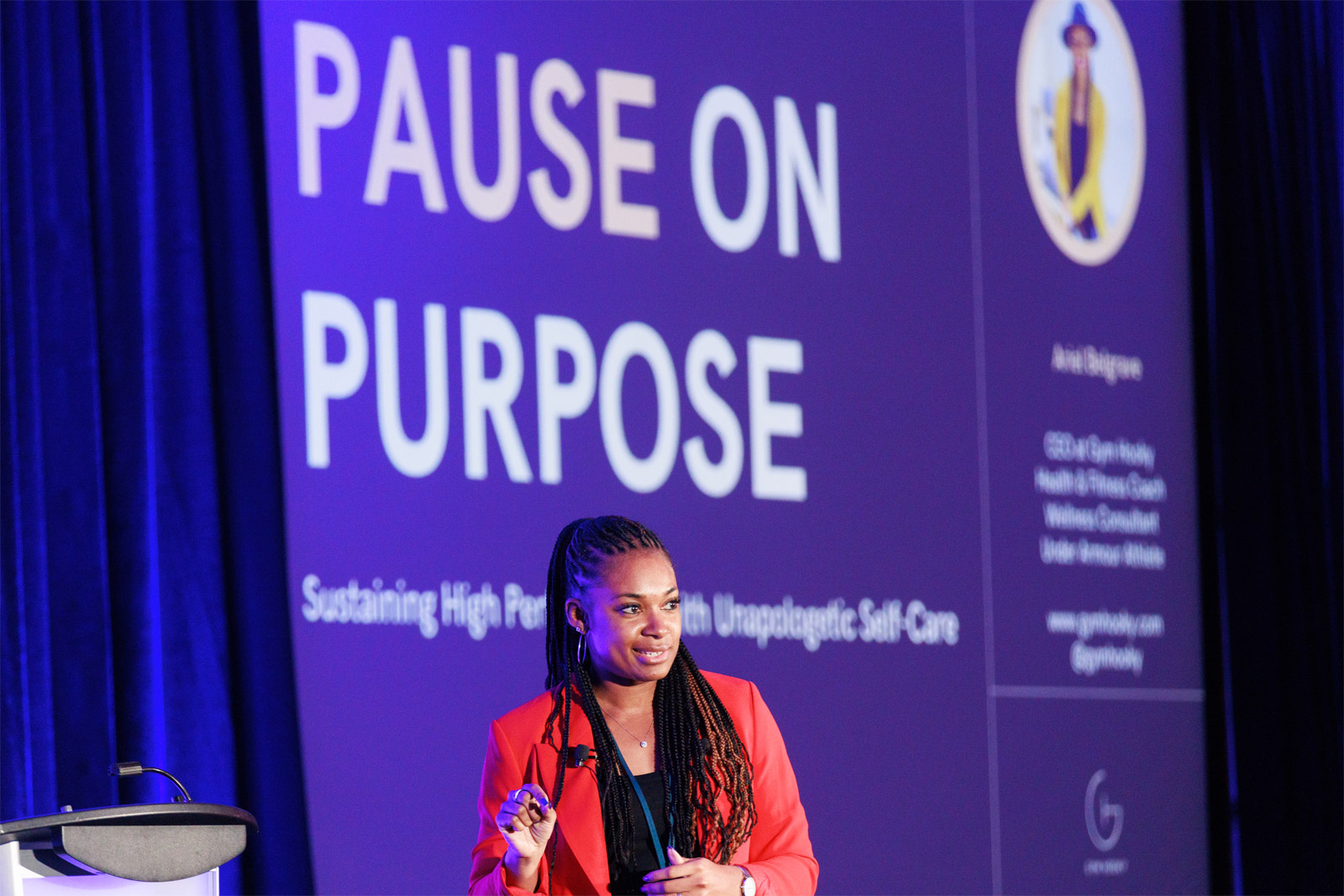
She believes the fastest way to evaluate identity is under pressure. Ask yourself: Do you over-explain when a client questions you? Do you change your voice depending on who is in the room? Do you need applause to decide whether a session was successful? Those are not marketing questions. They are leadership questions.
“Identity is not who you are when everything is going well,” Belgrave says. “Identity shows up when you are challenged.” That becomes especially important during the first 90 days with a new client, a new facility, or a new leadership role.
“I would look at how often they need external validation to feel secure,” she says. “Shaky identity can look like constantly changing the plan because they are afraid the client is not impressed.”
The tradeoff is real. Coaches who constantly seek approval often feel responsive in the moment. Long term, they become inconsistent. Clients stop knowing what version of the coach will show up each week, and trust erodes quietly.
The Trust Moment That Determines Whether Clients Follow You
According to Belgrave, clients decide whether they trust a coach during moments most professionals rush through. It usually happens when a client brings something difficult into the conversation, like a setback or a statement that they do not think they can do this.
Many coaches immediately move into problem-solving mode. Belgrave watches for something else. “They are watching your nervous system,” she says. “They are watching whether you get defensive, whether you rush to fix, whether you make it about you, or whether you can stay present and lead.”
Becoming a trusted coach does not happen during the perfect session or when everything is working. It happens when you lead during times of uncertainty.
A grounded coach might respond with a cue: “Let’s stay here for a second. Tell me what feels hardest right now.” The words matter less than the stability behind them. Coaches with strong identity hear resistance as information. Coaches with shaky identity hear resistance as rejection. That difference changes the entire coaching relationship.
The Four-Year Consistency Rule for Building Credibility
One of the strongest examples Belgrave offers comes from her own career. Before becoming widely recognized in wellness, she spent years teaching dance fitness classes in Brooklyn community centers. Those spaces allowed her to teach naturally. The music felt familiar. The energy felt authentic. The leadership felt effortless. Then came boutique fitness environments where she started questioning herself. Was her music right? Was her energy too much? Should she sound different?
The skill never disappeared. The certainty did. The breakthrough came when she stopped separating her identity from her coaching.
“The thing I was trying to tone down was actually the thing people connected with most.”
— Ariel Belgrave
Years later, that consistency led to a defining opportunity. While working at Meta, Belgrave was invited to lead a movement session during Women’s Leadership Day, one of the company’s largest internal events. Approximately 8,000 women participated. The invitation did not arrive because she suddenly became visible. It arrived because people had already observed years of consistent behavior.
For roughly four years, Belgrave shared the same message across her classes, content, and coaching work: women should be able to build their health while building ambitious careers. “They were not just hiring your skill,” she says. “They are trusting your identity.” Most opportunities look sudden from the outside. Very few are.
What Coaches Get Wrong About Becoming Trusted
Belgrave sees three common mistakes. The first is confusing credentials with trust. Credentials matter and so does expertise. Neither automatically teaches you how to lead people through uncertainty.
The second is confusing visibility with credibility. “You can be visible and still be unclear,” she says.
The third is confusing charisma with consistency. Many coaches can create excitement for sixty minutes. The harder question is whether clients still trust your leadership after the workout ends.
For coaches building careers, what matters most is presence before visibility, identity before opportunity, and confidence before performance.
Those themes will anchor Belgrave’s opening keynote at Career Lab. When coaches leave the room, she hopes they stop asking how to get more opportunities and start asking a different question: “Who do I need to become to hold the opportunities I am asking for?”
Belgrave’s keynote runs July 17, 9:45–10:15 AM at Career Lab Las Vegas.
Related: Career Lab by Coach360: Las Vegas Summit, July 17–18, 2026
Career Lab Las Vegas — July 17–18 — Reserve Your Seat
Ariel Belgrave opens Career Lab with her keynote on July 17, 9:45–10:15 AM. Career Lab is a two-day live summit for fitness professionals building careers, authority, and sustainable business.
Use promo code C360COMMUNITYVEGAS2026 for comp tickets while available.
Frequently Asked Questions
What does Ariel Belgrave mean by identity in coaching?
Belgrave is not referring to branding, social media aesthetics, or niche selection. She defines identity as the internal clarity around how you lead, what you stand for, and what clients can consistently trust you to hold. According to Belgrave, identity becomes visible when you are challenged, questioned, or under pressure.
How can a fitness coach build credibility before getting bigger opportunities?
Belgrave points to consistency over time. In her own career, she spent about four years sharing the same message through classes, content, and community work before larger opportunities emerged. The goal is helping people understand what they can reliably count on you for.
What are the biggest mistakes coaches make when trying to become trusted?
The most common mistakes are confusing credentials with trust, visibility with credibility, and charisma with leadership. A coach may have certifications, followers, or strong presentation skills, but clients ultimately decide whether they trust the coach during difficult moments and challenging conversations.
Who should attend Ariel Belgrave’s Career Lab keynote?
The keynote is designed for coaches who know they are capable of more but feel that skill alone is no longer enough. That includes newer coaches finding their voice, experienced coaches seeking larger opportunities, and professionals who want to become trusted in bigger rooms rather than simply booked for more sessions. Belgrave’s opening keynote runs July 17, 9:45–10:15 AM at Career Lab Las Vegas.
About Erin Nitschke
Dr. Erin Nitschke, NSCA-CPT, NFPT-CPT, ACE Health Coach, ACE-CPT, Fitness Nutrition Specialist, Therapeutic Exercise Specialist, Pn1, FNMS, and DSWI Master Health Coach, is a seasoned college professor in health and human performance. She is a nationally recognized presenter, industry writer for IDEA, NFPT, Fitness Education Online, and Youate.com, and an active member of the ACE Scientific Advisory Panel. With extensive experience in health and exercise science, Erin specializes in holistic, evidence-based approaches to wellness. Her passion lies in empowering individuals to lead healthier, more vibrant lives through personalized coaching. Erin’s philosophy centers on education, accountability, and sustainable behavior change—guiding clients to achieve long-term success in nutrition, fitness, stress management, and overall well-being. To connect with Dr. Nitschke, email her at erinmd03@gmail.com or on Instagram: @nitschkeerin
Modern Coach Technology Data: How to Use Platforms, Data, and Digital Tools to Deliver Better Client Outcomes
I’ve watched coaches open three dashboards before one client session and still walk into the room without a clear plan. One app had the client’s sleep. Another had training history. A third had messages, missed check-ins, food notes, and progress photos. That is the promise and problem of modern coach technology data. The coach had more information than ever, but less certainty about what to do next.
If you coach clients every week, your job is not to collect more data. Your job is to know which signal changes today’s session, which one needs a follow-up, and which one can wait. Most coaches have the tools. The gap is in the decision layer between the data and the client standing in front of them.
The coaches who use technology well are not the ones running the most sophisticated platforms. They are the ones who have built a clear reason for each tool they use and a consistent habit of acting on what it shows them. That is a system problem, not a software problem. And it is a problem with a practical solution.
The Signal-to-Action Framework
Data only earns its place in a coaching workflow when it changes a decision. A missed session should trigger a check-in. A sleep drop should change the warm-up conversation. Stalled progress should lead to a program adjustment. A client who stops replying should not disappear for three weeks before anyone notices.
The question before every data point is the same: what does this change about today’s plan? If the answer is nothing, the data is not actionable yet. If the answer is something specific, that is the moment the tool earns its place in the workflow.
A direct cue keeps the data tied to the session instead of turning it into a lecture: “Your sleep dropped last night, so we’re keeping the main lift clean and cutting the finisher today.” That sentence is the whole framework in practice. One signal. One decision. One adjustment. The client feels seen. The session improves.
“A platform can show missed sessions, low recovery, and stalled progress. It cannot decide how to speak to the client standing in front of you.”
— The Modern Coach panel, Career Lab Las Vegas, Day 1
That distinction is the coaching skill that is hardest to teach and most worth developing. A platform can surface patterns. It cannot read the room. The coach who can take a useful signal from a tool and translate it into a better client interaction is the coach whose clients stay.
Retention Is a Systems Problem
Retention is rarely built by one good session. It is built through repeated touchpoints: onboarding, communication, progress review, habit tracking, follow-up, and the small moments that make clients feel seen between sessions. Technology can support all of those touchpoints when coaches use it with purpose.
A platform can remind a client what to do on a travel day. A check-in system can flag when someone goes quiet. A progress dashboard can make a client’s work visible before they feel discouraged. A simple message can keep momentum alive after a rough week. None of that replaces coaching. It gives the coach a better reason to reach out, and a better moment to reach out into.
The honest tradeoff in any tech-enabled coaching workflow is clarity versus friction. Better tools can improve coaching, but only if the coach has a clear reason for each one. Without that reason, platforms add noise instead of signal. A coach running three apps with no decision logic for any of them is not more connected to their clients. They are just more busy.
Scaling Without Losing the Human Element
Scale does not require a massive audience or a fully automated business. For most working coaches, scale means something more practical: a cleaner onboarding process, a stronger education library, a better check-in rhythm, more consistent client communication, and fewer clients falling through the cracks between sessions.
“Scale does not always mean a massive audience or a fully automated business. It can mean fewer clients falling through the cracks.”
— The Modern Coach panel, Career Lab Las Vegas, Day 1
Digital tools can support that kind of scale without making coaching feel automated or cold. A coach who packages repeated lessons, tracks client patterns, sends timely reminders, and organizes the work that usually lives in memory or scattered notes is not replacing the human work. They are protecting it. The system handles what the system can handle, so the coach has more room for the work that requires a person.
Your systems affect how clients experience your coaching. Your follow-up affects whether clients stay. Your platform choices affect how much you can grow without burning out. Those are not technology decisions. They are career decisions.
Career Lab Las Vegas: This Conversation, Live
Career Lab by Coach360 runs July 17–18, 2026, in Las Vegas. Day 1 is built around the full picture of a modern coaching career: identity, trust, brand, authority, revenue, and the systems that make it sustainable. The Modern Coach panel, The Modern Coach: Using Tech & Data to Deliver Better Results and Scale, runs from 12:15 to 1:00 PM on Day 1.
Nate Hyland moderates. Panelists include Eloiza Tecson, Mo Iqbal, and Max Darsonval. The session puts the questions above into a room full of working coaches and gives them a structured conversation about how to use data and platforms without losing the human element that makes coaching work.
The panel sits inside a Day 1 schedule that opens with Ariel Belgrave’s keynote on identity in the new era of fitness and coaching, moves into hiring behaviors and brand authority, and continues after the Modern Coach panel into longevity expectations, pay decisions, and breakout sessions on AI, ownership mindset, and scalable coaching business. Technology is not a sidebar on the agenda. It is threaded through the whole conversation because that is where it sits in a modern coaching career.
Related: Strong Start Powered by Opus: The Gym Onboarding System That Stops First-30-Day Drop-Off
Career Lab Las Vegas — July 17–18 — Reserve Your Seat
Career Lab by Coach360 is a two-day live summit for fitness professionals who want a clearer career roadmap, stronger business direction, industry connections, and CECs. Day 1 includes the Modern Coach panel on tech, data, and scaling without losing the human element.
Use promo code C360COMMUNITYVEGAS2026 for comp tickets while available.
Frequently Asked Questions
What is the Modern Coach panel at Career Lab?
The Modern Coach panel is a Day 1 Career Lab session focused on how coaches can use tech, data, platforms, and digital workflows to improve client outcomes, increase retention, and scale their impact without losing the human element. The session runs from 12:15 to 1:00 PM on July 17, moderated by Nate Hyland, with panelists Eloiza Tecson, Mo Iqbal, and Max Darsonval.
Who is Career Lab for?
Career Lab is for fitness professionals who want a clearer career roadmap, stronger business direction, better revenue strategies, CECs, and new industry connections. Trainers, studio owners, online coaches, group instructors, and wellness professionals across all experience levels attend.
How can data help coaches improve client outcomes?
Data helps coaches catch missed sessions, poor recovery, low follow-through, stalled progress, and behavior patterns before they become cancellations. The goal is not to collect more numbers. It is to build a consistent decision habit around the signals that actually change the next session or the next check-in.
What is the honest tradeoff in using coaching technology?
More tools without a clear decision framework add friction instead of clarity. The coaches who use technology well are not the ones with the most sophisticated platforms. They are the ones who have a specific reason for each tool they use and a consistent habit of acting on what it shows them. Without that habit, platforms make coaches more busy, not more effective.
Why does technology matter for coaching careers?
Technology affects client experience, retention, communication, and how much a coach can grow without burning out. Platform choices are not just operational decisions. They are career decisions that shape what the coaching relationship feels like from the client’s side and how sustainable the business is from the coach’s side.
About Robert James Rivera
Robert is a full-time freelance writer and editor specializing in the health niche and its ever-expanding sub-niches. As a food and nutrition scientist, he knows where to find the resources necessary to verify health claims.
Robert James Rivera is a fitness industry writer and content strategist covering technology, coaching systems, and career development for fitness professionals.


Subscribe to our Newsletter
Powering the Business of Health, Fitness, and Wellness Coaching