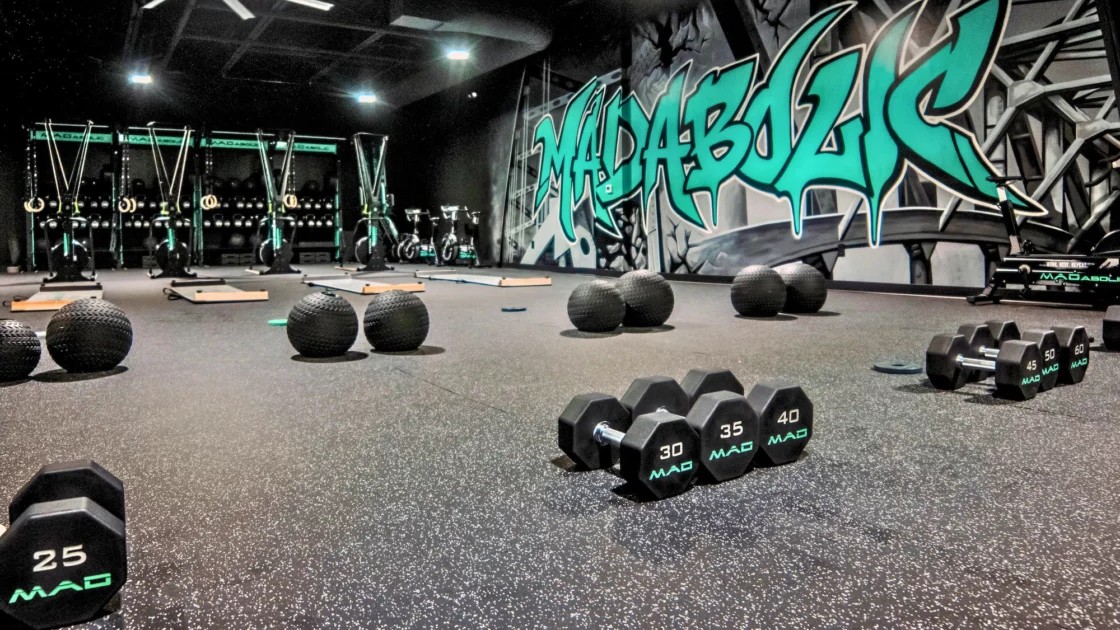



I watched a coach move between a handful of adults during a strength session. Nothing felt rushed or performative. This was a quality over volume fitness studio in practice. One member set up for a hinge while another waited for a load adjustment. The coach corrected the hinge, gave a quick cue, then moved on before the room lost its pace.
The limited number of members is not separate from the coaching experience. It is one of the conditions that makes that experience possible.
If you run a studio, the important question is not simply how many members the room can hold. It is how many members your coaching promise can support before the experience changes.
GameChanger’s Positioning: Who the Model Is Built to Serve
GameChanger Fitness founder Joe Meglio described the studio’s positioning plainly.
“We specialize in personalized strength training for busy adults.”
— Joe Meglio, Founder, GameChanger Fitness
That target member shapes more than the marketing. It affects coaching attention, capacity, staffing, pricing, and retention.
Meglio also tied the training model to what members need outside the gym. “Our focus is helping adults build strength they can carry into their everyday lives.”
A studio built for busy adults has a different operating target than one built around high traffic or broad access. Members are paying for structure, guidance, accountability, and coaching that responds to the person in front of them.
A coaching quality studio model is difficult to build around a vague member. The cap, staffing decisions, service standards, pricing, and retention process must support the person the studio intends to serve.
The Inflection Point: Making 150 Members the Operating Ceiling
GameChanger’s inflection point was the decision to treat capacity as part of the coaching product. Growth could not simply mean putting more members through the same space.
The reported model centers on a 150-member cap per studio, a 1,400- to 2,000-square-foot footprint, and roughly 40% four-wall EBITDA. The membership ceiling protects coaching attention. The smaller footprint shapes the economics. Staffing and retention then have to support both.
For an operator, the important question becomes clear: how many members can the studio serve before the coaching experience starts to change? GameChanger’s model answers that question with a defined ceiling.
The tradeoff is real. A lower-volume model demands stronger pricing discipline, consistent coaching, better staffing, and reliable retention. There is less room to cover weak execution with constant new-member growth.
The Capacity Cap: Set the Member Ceiling Around Delivery
A quality over volume fitness studio should not set capacity only by asking how many people can fit into the space. The better question is how much volume the coaching model can absorb before the promised experience changes.
In GameChanger’s case, the reported 150-member cap matters because it gives shape to the product. It signals that coaching attention is part of what members are buying. The cap protects the coach’s ability to know the member, track progress, manage the session, and notice when the experience starts to slip.
Smaller studios can reduce square footage pressure. A clearer offer can support stronger pricing. A tighter member base can make retention more visible. The schedule can become more predictable because the studio is not trying to push unlimited traffic through the same room.
The cap is not a growth ceiling. It is part of the product design.
The Next-Session Check: Spot Retention Risk Before a Member Disappears
A fitness studio retention model built around coaching quality has to make member visibility practical. Attendance alone does not tell the full story.
- A member who misses several days but has another session booked may still be engaged.
- A member with no next session presents a different retention risk.
“I’ve found it helpful to add a filter to those 3 buckets if they have a next session booked.”
— Joe Meglio, Founder, GameChanger Fitness
That small operational detail carries a larger lesson. Quality-first studios need to see disengagement before the member disappears. Changes in effort, follow-through, confidence, and booking behavior can all signal a retention problem.
On the floor, personalization can be as direct as: “Keep your ribs down and drive through the floor.” That cue shows what coaching quality looks like in real time. The coach sees the member, makes an adjustment, and keeps the session moving.
Related: Fitness Lifestyle Subscription Model 2026
The Coach-Quality Hiring Filter: Hire for Judgment, Not Coverage
A boutique fitness operator profile like GameChanger’s points to a different hiring question. The operator is not simply asking, “Can this coach cover the floor?” The better question is, “Can this coach protect the experience our model depends on?”
In a quality-first studio, the coach has to remember member context, document progress, and adjust sessions. The job also requires consistent follow-up, communication, and attention to retention risk.
Energy still matters. Presence still matters. But those traits are not enough if the coach cannot carry the operating standard from one session to the next.
This is where hiring becomes part of the business model. When coaching attention is part of what members pay for, coach consistency becomes a revenue variable. A coach can weaken the model by forgetting context, skipping notes, or missing follow-up. A lively session cannot make up for inconsistent coaching.
Related: Empowering Coaches in the Club Experience
Can Quality Beat Volume? The Economics Only Work When the System Fits
High-volume models can generate more revenue because more members can be served through the same location. It is the obvious appeal, and operators are right to take it seriously.
The limitation is volume only helps when the operating model can absorb it. Past a certain point, more members can reduce coaching attention and weaken follow-up. Staff strain can rise while the business relies more heavily on replacing churn. The top-line number may rise while the experience that supports retention starts to erode.
Operators should evaluate GameChanger’s model as a complete system rather than a member-count strategy. The target member, pricing, footprint, staffing, coaching capacity, retention process, and member ceiling all have to work together.
The model does not eliminate volume. It defines how much volume the coaching promise can support. Capping members does not create quality by itself. A studio can cap membership and still deliver an average experience. The approach works only when the value of coaching is visible enough that members remain willing to pay for it.
What Operators Should Take From the Model
The takeaway is not to copy GameChanger’s exact membership number, footprint, or pricing structure. The more useful exercise is to examine whether your promises and operating decisions agree with each other.
If your marketing promises personalization but your schedule leaves no time for coaching attention, the model is already misaligned. If your studio depends on retention but your team cannot see when members start drifting, the system is weaker than the brand says it is.
Member capacity, coaching delivery, staffing, retention, and economics all have to speak the same language. The useful number is not the maximum number of members you can sell. It is the number your operating system can serve without weakening the reason those members joined.
FitHire — Browse Studios Hiring for Coaching Quality
Studios built around coaching quality need coaches who can personalize sessions, track progress, communicate clearly, and protect the member experience. FitHire connects operators and coaches around roles where coaching quality matters alongside schedule coverage.
FAQ
What is a quality over volume fitness studio?
A quality over volume fitness studio limits how much the operation tries to serve at once so coaching attention, member experience, and retention stay strong. The goal is not low membership for its own sake. The goal is matching capacity to the coaching promise.
Why would a fitness studio cap membership?
A studio may cap membership to protect delivery when the business model depends on coaching attention, consistency, and personalization. If too many members move through the system, the experience can become harder to maintain.
Can a smaller fitness studio model be profitable?
A smaller fitness studio model can be profitable when pricing, staffing, retention, footprint, and member capacity work together. Smaller volume does not work by itself. The member has to feel enough value to stay and pay for the experience.
What can studio operators learn from GameChanger Fitness?
Operators can study how GameChanger connects positioning, capacity, coaching, hiring, and retention. The lesson is not to copy the model exactly. The lesson is to make sure the operating system supports the experience the studio sells.
About Robert James Rivera
Robert is a full-time freelance writer and editor specializing in the health niche and its ever-expanding sub-niches. As a food and nutrition scientist, he knows where to find the resources necessary to verify health claims.