Movement, Physical Activity, And Exercise – Is There A Difference?
In the world of health and fitness, coaches are challenged with the responsibility of supporting their clients and communities by increasing their overall wellness. No matter, if there is a specific niche that a fitness coach is skilled at, the overarching goal is to maintain proper food and nutritional intake alongside a balance of physical movement that maintains a healthy internal engine in someone’s body. By empowering individuals to do the best they can within their realm of possibility, coaches can pass on knowledge and keep individuals motivated to just keep going.
So, what about the debate over what counts as movement, physical activity, or exercise? Which matters more, and are they one and the same?
If you are someone who likes to break things down, you must first understand the recommendations behind movement, physical activity, and exercise as they relate to overall health interventions.
Physical Activity Guidelines
The Centers for Disease Control (CDC) recommends that individuals maintain a daily habit of physical activity, differentiated by age range, to optimize health outcomes and present health issues. From birth through adulthood, the CDC advises physical activity recommendations in time (minutes) based on research on how much and what level of activity offers health benefits:
Children Ages 3–5 For young children, active play is essential with the recommendation being at least 3 hours of physical activity daily (light, moderate, and vigorous intensity) in the form of playful activities that get them moving and exploring.
Children and Adolescents Ages 6–17 Older children and teenagers are recommended to have at least 60 minutes of moderate- to vigorous-intensity physical activity daily. Activities like running, soccer, and basketball (vigorous exercises,) along with strength-building activities like climbing or push-ups form a foundation of aerobic and anaerobic activities to be done at least three times a week.
Adults Aged 19 and Older Adults are recommended to have at least 150 minutes of moderate-intensity aerobic activity or 75 minutes of vigorous-intensity activity per week and strength training at least twice a week. Activities could include running, yoga, pilates, lifting weights, or carrying heavy bags can help meet the requirement.
By aligning with these recommendations and guidelines, all age groups can enhance their overall health and well-being.
Understanding Movement, Physical Activity, and Exercise – Similarities and Differences
Movement
Movement is defined as any change in the position or location of the body or its parts. A broad category that includes both physical activity and exercise, movement can happen during everyday activities and specific exercise routines. Shifting positions while standing, sitting, stretching, walking, or performing physical activity and exercise or sports is a natural and necessary component of daily life. Regular movement is crucial for maintaining joint health, improving circulation, and preventing stiffness. It ensures the body remains flexible and functional throughout various activities.
Physical Activity
Physical activity encompasses all forms of body movement that require energy expenditure. This broad category includes any activity that gets your body moving, from household chores to walking to the store. Gardening, walking the dog, playing with family on the playground, or doing routine everyday tasks like cleaning and climbing stairs count as physical activity. Benefits of physical activity include overall improvements with cardiovascular health, weight management, and longevity through increased energy expenditure and functional health.
Exercise
Exercise is a subset of physical activity that includes planned, structured, and repetitive activities aimed at improving or maintaining overall wellness. Outlined and specific goals that follow a set routine related to exercise including running, strength training, pilates, or cycling. Exercise is usually performed to improve cardiovascular endurance, muscle strength, flexibility, or overall fitness. Regular exercise enhances physical fitness, boosts mental health, and supports chronic health outcomes by maintaining muscular strength, cardiovascular health, and flexibility.
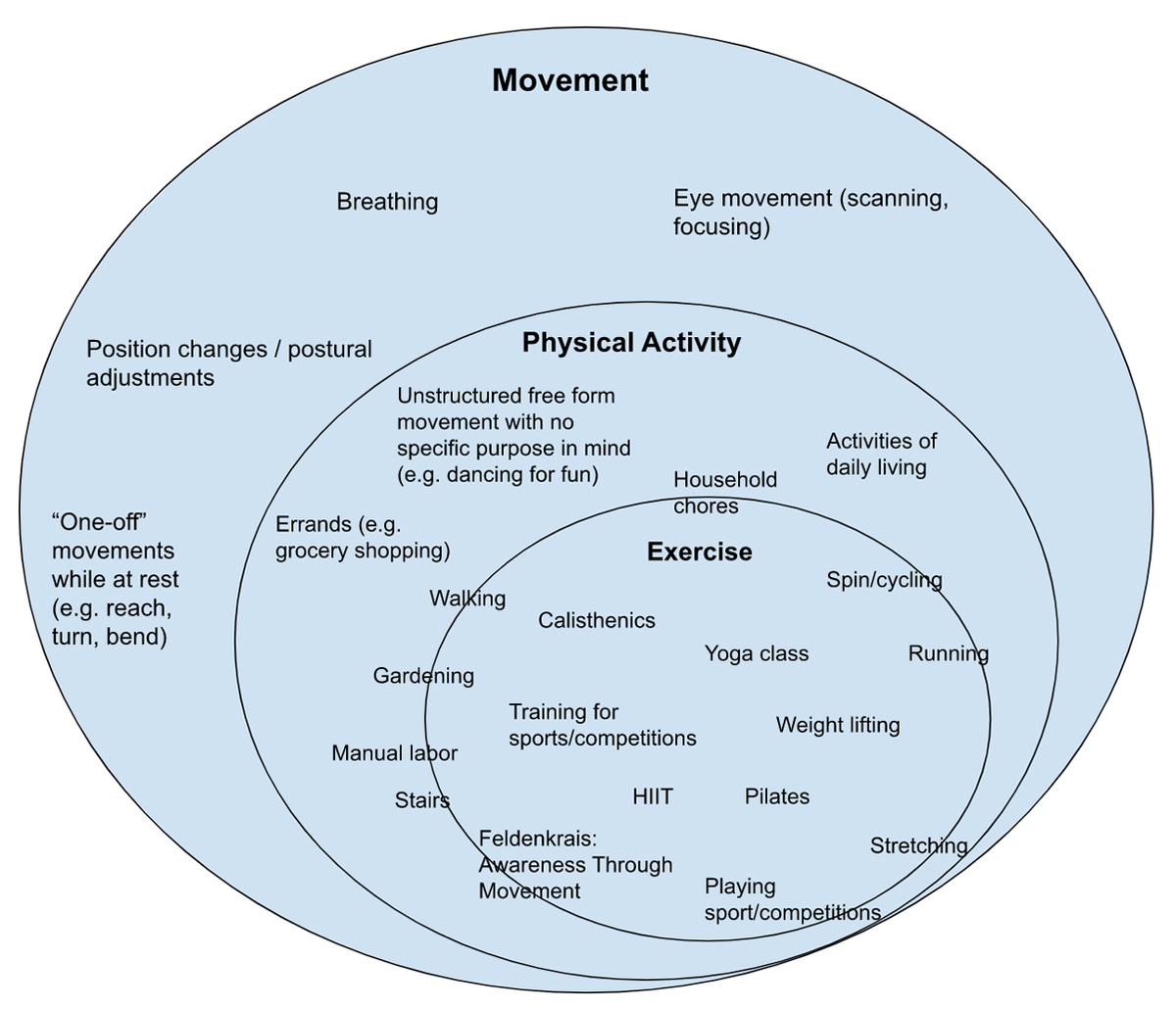
Davis, L. (2023, February 7). Movement, Physical Activity, & Exercise: Comparing and Contrasting — The Wellness Station. The Wellness Station. https://www.thewellnessstation.co/blog/2023/2/7/movement-physical-activity-amp-exercise-comparing-and-contrasting
Summary
So, the answer to our question is: YES. There is a difference between movement, physical activity, and exercise. Moving the body is imperative for using what we’ve been given to keep healthy, and moving the body happens through physical activity and exercise. A daily routine that includes movement, along with structure to support physical activity and exercise can reap positive health benefits and leverage overall wellness as a way of caring for our beautiful bodies.
References:
- What you can do to meet physical activity recommendations. (2024, April 16). Physical Activity Basics. https://www.cdc.gov/physical-activity-basics/guidelines/index.html
- Davis, L. (2023, February 7). Movement, Physical Activity, & Exercise: Comparing and Contrasting — The Wellness Station. The Wellness Station. https://www.thewellnessstation.co/blog/2023/2/7/movement-physical-activity-amp-exercise-comparing-and-contrasting
- Penn State College of Medicine Research. (2021, August 11). Exercise vs. Physical Activity – Penn State College of Medicine Research. https://research.med.psu.edu/oncology-nutrition-exercise/patient-guides/exercise-vs-activity/
About Katrina Liew Wilson
Katrina is a global educator and Certified Wellness Specialist dedicated to bridging gaps through equitable access and collaborative coaching. With over 20 years of experience, she leads diverse teams, creates support groups, and mentors future leaders. Katrina specializes in Bias Unearthing, Neurodiversity Inclusion, and Intersectional Inclusion. She holds a Master of Science in Exercise Science and Health Promotion, certificates in Diversity and Inclusion from Cornell and USF, and an Associate of Science in Graphic Design. Katrina’s mission is to foster unity through self-care and compassion, making healing a path to deeper purpose and inclusivity.
What Can “Plant-Based” Really Mean
Introduction
In a world where food choices and “diet options” can be overwhelmingly complicated to dissect, going plant-based with simple foods and methods offers a breath of fresh air. Coaches can understand that being plant-based is all about focusing on foods that come from the earth and that those foods offer a multitude of benefits for clients. It’s really about keeping things simple and natural, making healthy eating both easy and approachable. Let’s dive into what being “plant-based” can mean for those wanting to enhance their natural food content into their busy day. People who eat a more plant-based diet (or who are more plant-focused) have been shown to have a lower risk of chronic heart disease when compared to non-vegetarians and benefit from better biomedical health marker results. Plant-based diets have been proven to prevent and reverse heart disease, improve cholesterol, improve blood glucose levels, and lower blood pressure.
It’s really that simple
So, what does being “plant-based” or “plant-focused” within one’s diet really mean? Well, it means that someone looks to include food intake centering on fruits, vegetables, grains, legumes, nuts, and seeds while simultaneously cutting back on or skipping animal products altogether. Given the higher phytonutrient and fiber content within plant-based foods compared with animal products, the body’s gut microbiome benefits from the diversity of plants and can use the nutrient content in a multitude of ways to drive healthier results. Plants are naturally free of cholesterol, and low in calories and saturated fat so they serve as a base for less strain on the body’s systems in a negative way.
Moderation is usually what is taught as it relates to foods with higher fat, sugar, and non-nutrient-based content, so allowing more free-flow eating with plant-based foods can also free people from the notion that they have to be restrictive with their food and food intake.
Options for everyone
Shifting to a plant-based or plant-focused way of eating can include multiple simplified options to choose from with each having its unique approach:
- Semi-Vegetarian (Flexitarian): This diet includes eggs, dairy, and occasionally meat, poultry, fish, or seafood. It’s a flexible option for those who want to reduce their animal product intake but aren’t ready to fully commit.
- Pescatarian: This diet incorporates eggs, dairy, fish, and seafood but excludes meat and poultry. It’s a great choice for those who want to enjoy the benefits of seafood while avoiding other animal products.
- Vegetarian (Lacto-Ovo Vegetarian): This diet includes eggs and dairy but excludes meat, poultry, fish, and seafood. It’s a popular choice for those who want to maintain a plant-based diet with the addition of animal-derived products like milk and eggs.
- Vegan: This diet excludes all animal products, including meat, poultry, fish, seafood, eggs, and dairy. It’s the most restrictive plant-based option but aligns with a commitment to avoiding all forms of animal exploitation.
Each of these plant-based diets offers a different level of flexibility and commitment, allowing you to choose the one that best fits your lifestyle and dietary preferences.
Getting started
Supporting clients in getting started on eating more plant-based or plant-focused can be simple with these tips for daily habit changes:
- Load Up on Vegetables: Aim to fill half your plate with a variety of colorful vegetables at lunch and dinner. Enjoy them as snacks with hummus, salsa, or guacamole for extra flavor and nutrition.
- Reconsider Meat: Use meat sparingly, treating it as a garnish rather than the main dish. This helps reduce your overall meat consumption while still enjoying its flavors.
- Choose Healthy Fats: Opt for fats from sources like olive oil, olives, nuts, seeds, and avocados. These options are rich in healthy fats that support overall wellness.
- Cook a Vegetarian Meal Weekly: Make it a habit to prepare at least one meat-free meal each week, focusing on beans, whole grains, and vegetables to build satisfying, nutritious dishes.
- Start Your Day with Whole Grains: Begin your mornings with whole grains such as oatmeal, quinoa, buckwheat, or barley. Add nuts, seeds, and fresh fruit for a balanced breakfast.
- Go for Greens: Incorporate a variety of green leafy vegetables—like kale, collards, Swiss chard, and spinach—into your daily meals. Use steaming, grilling, or stir-frying to retain their flavor and nutrients.
- Make Salad the Star: Create meals around a hearty salad. Start with greens like romaine, spinach, or red leaf, and add other vegetables, fresh herbs, beans, peas, or tofu for a nutritious, satisfying dish.
- Enjoy Fruit for Dessert: Satisfy your sweet tooth with fresh fruit. A juicy peach, crisp apple, or refreshing slice of watermelon makes for a delicious and healthy end to your meal.
These tips help clients to easily embrace more plant-based foods into their daily food intake and enjoy more variety of nutritious foods. By sticking to basic ingredients and straightforward recipes during meal prep time, anyone can enjoy the perks of a plant-based diet without needing fancy gadgets or hard-to-find items.
References:
- Ldn, K. D. M. M. R. (2024, March 28). What is a plant-based diet and why should you try it? Harvard Health. https://www.health.harvard.edu/blog/what-is-a-plant-based-diet-and-why-should-you-try-it-2018092614760
- Physicians Committee for Responsible Medicine. (n.d.). Plant-Based diets. https://www.pcrm.org/good-nutrition/plant-based-diets
About Katrina Liew Wilson
Katrina is a global educator and Certified Wellness Specialist dedicated to bridging gaps through equitable access and collaborative coaching. With over 20 years of experience, she leads diverse teams, creates support groups, and mentors future leaders. Katrina specializes in Bias Unearthing, Neurodiversity Inclusion, and Intersectional Inclusion. She holds a Master of Science in Exercise Science and Health Promotion, certificates in Diversity and Inclusion from Cornell and USF, and an Associate of Science in Graphic Design. Katrina’s mission is to foster unity through self-care and compassion, making healing a path to deeper purpose and inclusivity.
Combating Ageism Against Women in Health and Wellness: Strategies for Inclusivity and Empowerment
Ageism, a term generated back in 1969, refers to the systematic stereotyping and discrimination against individuals based on their age. As a key issue, that is affecting women across the health and wellness industry, ageism manifests in both personal biases and institutional practices. In a recent 2024 survey, 8 out of 10, or around 80% of women worldwide face ageism in the workplace. Feedback from survey respondents highlights a notable gender disparity in how older professionals are perceived in the workplace. While older men are often seen as ‘distinguished’ or ‘very experienced,’ older women frequently face age-related biases, with some unfairly regarded as being ‘past their prime’ or deemed less suitable for certain opportunities. This reflects a broader issue of ageism in the workplace, particularly affecting women. This discrimination can be fueled by societal norms, cultural attitudes, and economic pressures, impacting older women in various ways. It’s important to recognize that ageism can be both intentional and unintentional, with unintentional biases also having a significant negative impact on older women. Addressing ageism is crucial for promoting equality and respect for women of all ages. Addressing these biases is crucial for creating a more inclusive environment for women in all industries, including fitness and health.
Understanding Ageism In The Fitness Workforce
Ageism has been known to refer to prejudice, stereotypes, and discriminatory behavior directed at older employees. This bias of “oldism” stems from the false belief that as people age so does their performance and capabilities. Older workers are often expected to retire quietly to make way for younger talent. Yet, with today’s increasingly diverse and multigenerational workforce, age bias affects women at all stages of their careers. This includes “youngism,” or a form of ageism targeting younger adults, driven by misconceptions linking age with maturity and falsely assuming that experience is necessary for competence or the ability to do various job roles. Survey respondents from a recent study note, “Workplaces were built for men,”, “The old boys’ network still exists,” and “This is a carryover from the outdated belief that women should not be in the workplace.”
Women, taking on much of their household responsibilities societally and caretaking smaller humans if they are mothers, face hefty opposition when evolving their careers in health and fitness across all ages. Many of us, throughout our careers, have encountered inappropriate pet name-calling with terms such as “sweetheart,” “kiddo,” or “young lady.” Upon entering the workplace as a fitness professional, women generally discover they are in a more masculine environment saturated with men and “machismo.” Gendered ageism intersects age and gender bias creating a domino effect where women fitness professionals continue to face an uphill battle. Gender bias against women happens across the full spectrum of age.
How Can We Show Up To Fight Against Ageism?
To combat ageism against women in the fitness industry, coaches and leaders should adopt an approach to address both systemic and individual challenges. One crucial step is to promote diverse role models that showcase successful women of various ages in leadership positions. Highlighting their achievements across channels such as promotional materials, social media, and industry publications challenges stereotypes and fosters inspiration. Including instructors of various age ranges in fitness programs and classes demonstrates expertise and vitality not limited to young age.
Creating a culture of belonging that is heavily inclusive is equally important as representation. Implementing comprehensive diversity, equity, and inclusivity training models focused on age inclusion educates staff about the value of experienced professionals and promotes a supportive environment. Working in tandem with training, creating accountability measures progresses the notion of training into tangible measures to create group responsibility to disrupt and tackle bias against women of all ages. Encouraging open dialogue about ageism recognizes its impact in the fitness and wellness environments (virtually and in-person).
Encouraging ongoing professional development is essential for career growth at any stage. Providing training opportunities such as workshops, certifications, and seminars helps women at all levels advance in their careers. Mentorship programs are also valuable, offering guidance and support from experienced professionals to newcomers and fostering a culture of mutual respect and learning.
Fair hiring practices play a critical role in combating ageism. Ensure that your hiring processes are age-neutral and focus on qualifications and experience rather than age. By promoting equal opportunities for career advancement regardless of age, you help build a diverse and inclusive workforce.
By adopting these strategies, fitness leaders can create a more inclusive and respectful environment for women of all ages, ultimately benefiting the industry as a whole.
References:
- Diehl, A. (2023, June 20). Women in leadership face ageism at every age. Harvard Business Review. https://hbr.org/2023/06/women-in-leadership-face-ageism-at-every-age
- Fair Play Talks. (2024, July 30). Eight in ten women face ageism at work, confirms new research. Fair Play Talks. https://www.fairplaytalks.com/2024/07/30/eight-in-ten-women-face-ageism-at-work-confirms-new-research/
About Katrina Liew Wilson
Katrina is a global educator and Certified Wellness Specialist dedicated to bridging gaps through equitable access and collaborative coaching. With over 20 years of experience, she leads diverse teams, creates support groups, and mentors future leaders. Katrina specializes in Bias Unearthing, Neurodiversity Inclusion, and Intersectional Inclusion. She holds a Master of Science in Exercise Science and Health Promotion, certificates in Diversity and Inclusion from Cornell and USF, and an Associate of Science in Graphic Design. Katrina’s mission is to foster unity through self-care and compassion, making healing a path to deeper purpose and inclusivity.
The Business Of Longevity And Its Need For Accessibility
As trends evolve in the health and fitness industry, consumer priorities shift towards enhancing health outcomes and improving quality of life. The growing interest in the “Business of Longevity” highlights new priorities in fitness and wellness. While traditional goals often focused on aesthetics, there is now a significant shift towards a comprehensive approach to wellness, encompassing all 8 dimensions of health. This evolving perspective addresses a broader spectrum of wellness needs, reflecting a deeper understanding of overall health.
Statistics reveal that while people are living longer, they’re not necessarily living better. By mid-century, the number of older adults is projected to soar to 1.6 billion, marking one of the most significant demographic shifts in history. Although this means an average increase of 20 years in life expectancy, extending lifespan hasn’t translated into more years of vibrant, healthy living.
Almost 29% of consumers say they exercise for a long and healthy life, compared to 20% the year before, according to survey data from exercise platform Mindbody. Many fitness businesses and platforms are offering services geared toward a focus on living healthier and healthy aging. Coach360 Founder Kathleen Ferguson gives the hot take on how longevity offerings provide insight while needing accessibility to remain at the forefront: “Clubs and boutique studios are partnering with companies to offer biomarkers and health diagnostics, focusing on longevity. Fitness SF has recently introduced Inside Tracker, which utilizes blood biometrics and a one-time DNA swab to create personalized health plans.
Ultra-premium gyms like Equinox are also entering this space with their Optimize concept, catering to big-spending biohackers at an additional cost of $3,000 per month. However, with a price tag of over $40,000 a year, Equinox is not an accessible option for most. Emerging franchise concepts now offer more comprehensive longevity programs, including holistic coaching, DNA sequencing, life coaching, and recovery services. For instance, IMPACT-X Performance, a franchise brand developed by TD, Cyndy, and Travis Barnes, combines fitness, faith, life coaching, and recovery. In today’s fast-paced world, customers seek a one-stop shop for their health and well-being, driving the increasing demand for accessible longevity offerings.” Steep pricetags remain an issue that leaves many populations off of the longevity train coming into our industry.
Where the rubber meets the road
The question remains in the fitness industry of how to balance a focus on longevity and creating means through which consumers can access these interventions across different levels of access at the same time. The fitness industry faces a significant challenge: how to make longevity-focused interventions both effective and affordable. To tackle this, it’s important to refocus efforts toward preventive care. Emphasizing regular physical activity, balanced nutrition, and stress management, helps individuals enhance their quality of life and potentially avoid the need for expensive interventions down the line. Offering affordable fitness solutions, such as group classes, virtual training, and cost-effective resources, can make a real difference. Leveraging technology is also key—think apps and online platforms that provide accessible and scalable options for a range of budgets.
Cost is one factor, along with others. A holistic approach to health, integrating physical, mental, and emotional wellness, can lead to better overall outcomes. Educating clients about practical, low-cost practices and advocating for policy changes to include fitness in insurance coverage are vital steps. Building community partnerships to offer free or low-cost programs and personalizing fitness plans to fit individual needs can make longevity-focused fitness more accessible and impactful. By fostering supportive communities and continually refining programs based on real-world effectiveness, the fitness industry can better support healthier, happier lives for everyone.
So, what can coaches and fitness leaders do about this
Coaches can stay mindful of how aging impacts individuals across different identities including gender identity, hormonal variances, disability, body type, aging populations, cultural background, socioeconomic status, health condition, or mental health needs. (See this article related to Fitness for Menopausal Women, for example). Fitness professionals can level with their unique perspective and how that varies from that of those they aim to serve in their community. Fitness leaders can ensure that they stay informed about the latest research on longevity and the associated costs. Working to understand the various interventions, their benefits, and their financial implications creates a foundation of understanding. This knowledge helps in advising clients effectively and empathetically. Given the hefty price tag of longevity interventions within fitness spaces, coaches can increase their unique understanding of populations to provide coaching through the lens of their communities’ identities and needs.
References:
- Cerullo, M. (2024, May 6). Equinox’s new fitness program aims to help you live longer — for $40,000. CBS News. https://www.cbsnews.com/news/equinox-optimize-gym-membership-longevity/#:~:text=Luxury%20fitness%20chain%20Equinox%20is,membership%20costs%20%2442%2C000%20a%20year.
- Dewhurst, M., Linzer, K., Maud, M., & Sandler, C. (2022, November 11). Living longer in better health: Six shifts needed for healthy aging. McKinsey & Company. https://www.mckinsey.com/mhi/our-insights/living-longer-in-better-health-six-shifts-needed-for-healthy-aging
- Healthy aging news. (n.d.). ScienceDaily. https://www.sciencedaily.com/news/health_medicine/healthy_aging/
About Katrina Liew Wilson
Katrina is a global educator and Certified Wellness Specialist dedicated to bridging gaps through equitable access and collaborative coaching. With over 20 years of experience, she leads diverse teams, creates support groups, and mentors future leaders. Katrina specializes in Bias Unearthing, Neurodiversity Inclusion, and Intersectional Inclusion. She holds a Master of Science in Exercise Science and Health Promotion, certificates in Diversity and Inclusion from Cornell and USF, and an Associate of Science in Graphic Design. Katrina’s mission is to foster unity through self-care and compassion, making healing a path to deeper purpose and inclusivity.
More Than A Mom: Part 2 – Supporting Through The Infrastructure Of Fitness Business
We’re in this industry because movement, exercise, nutrition, and wellness have profoundly impacted our lives. Our passion for supporting and coaching others stems from our servant-hearted nature, guiding individuals to become their best selves. The response to my piece titled “More Than a Mom: Helping Clients Achieve Fitness and Wellness While Juggling Life” was very positive with an outpouring of support from leaders and coaches who aim to center caretakers on how they prioritize their care despite having busy lives. The concept of “More Than a Mom” highlights the importance of providing mothers and caretakers with a supportive community. This support encourages ongoing wellness and well-being, helping to prevent burnout and positively impact their lives. Little humans benefit from those who care for them being of the most sound mind and body and observing modeled behavior of self-care taking a front seat.
Our role in the wellness continuum of mother figures
How we influence the lives of mothers is crucial to our role in the wellness continuum. Many of us lean towards the client-facing side of wellness and coach in various ways in session. For others of us, we might have shifted into leadership roles within the wellness industry that have taken us more behind the scenes. No matter which side or facet of the coin we are on, centering “wellness” above all else, ensures that we provide mother figures the onramp to being on the active pursuit of activities, choices, and lifestyles that lead to a state of holistic health.
The wellness continuum is a framework to consistently come back to, particularly through the lens of support for clients who then have to care for others:
Spiritual Wellness: Seeking meaning and higher purpose in human existence.
Social Wellness: Connecting & engaging with others and our communities meaningfully.
Environmental Wellness: Fostering positive interrelationships between planetary health and human actions, choices, and well-being.
Physical Wellness: Nourishing a healthy body through exercise, nutrition, and sleep.
Mental Wellness: Engaging the world through learning, problem-solving, and creativity.
Emotional Wellness: Being aware of, accepting, and expressing our feelings, to then understand the feelings of others.
Vocational Wellness: Building meaning through purpose-driven work and provision for one’s family
As coaches, how can service for moms include a review of the many ways that taking time for them is necessary for their survival through the trials and tribulations of life while exerting understanding for unique situations and off-the-cuff scenarios? Too many of us know that each day we plan a routine, monkey wrenches of all sizes can cause our priorities to take a back seat. From waking up to a sick child to stacks of homework, our ability to pivot and adapt as moms requires the support of our community members and their flexibility as well. For many moms, we might juggle more than one role within their vocational lives. An added facet to wellness is Vocational Wellness. Many might debate if this is a cornerstone for what wellness is understood as, however, it’s a part of our day-to-day lives. The stay-at-home mom can also protest that their lives are full of vocational duties that support an entire household while serving as “domestic engineers.”
Our role in the professional continuum for mother figures
Considering how many mothers are also professionals in the world who are balancing their jobs alongside child-rearing, industry leaders can also check out my piece “Developing Women Professionally in the Health, Fitness, and Wellness Industry” for insights targeting how to support developmental movement throughout the fitness and wellness space. With less than 11% of women in leadership positions within the health, fitness, and wellness industry there is more than work to be done – we have a full rehaul opportunity to ensure that equity is an accessible component of how women move throughout the fitness industry. How is this done while being the main caretaker for little humans? The wellness industry enables moms to lead by example for their little humans; Mothers should have the support and mentoring needed to pursue their careers while raising children, ensuring they can thrive both professionally and personally. No matter what the role, mother figures deserve the opportunity to work alongside of their circles of influence to do whichever best suits their strengths:
- Health and Wellness Director
- Corporate Wellness Consultant
- Chief Wellness Officer
- Corporate Wellness & Benefits Director
- Group Fitness Director
- Chief Executive Officer
- Chief Financial Officer
- Fitness Instructor
- Personal Trainer
- Physical Education Teacher
- Exercise Physiologist
- Wellness Coach
- Fitness Manager
The list goes on! Representation matters in leadership roles and C-suite opportunities within the health, fitness, and wellness industry.
What are some other ways that the intersection of motherhood and fitness and wellness can collide to support those who are growing our population of young people?
References:
- Global Wellness Institute. (2023, August 21). What is Wellness? – Global Wellness Institute. https://globalwellnessinstitute.org/what-is-wellness/
- How some working, single moms manage to exercise. (n.d.). Association for Psychological Science – APS. https://www.psychologicalscience.org/news/how-some-working-single-moms-manage-to-exercise.html
- Paulise, L. (2024, February 20). 5 steps to start Timeboxing and Improve your Time-Management Skills. Forbes. https://www.forbes.com/sites/lucianapaulise/2022/11/03/5-steps-to-start-timeboxing-and-improve-your-time-management-skills/?sh=532fe9525ef3
- Wittels, P., Kay, T., & Mansfield, L. (2022). The Family Is My Priority: How Motherhood Frames Participation in Physical Activity in a Group of Mothers Living in a Low Socioeconomic Status Area. International journal of environmental research and public health, 19(3), 1071. https://doi.org/10.3390/ijerph19031071
Katrina Liew Wilson
Katrina is a global educator and Certified Wellness Specialist dedicated to bridging gaps through equitable access and collaborative coaching. With over 20 years of experience, she leads diverse teams, creates support groups, and mentors future leaders. Katrina specializes in Bias Unearthing, Neurodiversity Inclusion, and Intersectional Inclusion. She holds a Master of Science in Exercise Science and Health Promotion, certificates in Diversity and Inclusion from Cornell and USF, and an Associate of Science in Graphic Design. Katrina’s mission is to foster unity through self-care and compassion, making healing a path to deeper purpose and inclusivity.
Sensory-Friendly Considerations For Coaches – Fitness on the Spectrum Part 2
To level set for this article, I want to remind coaches and fitness leaders that sensory-friendly considerations for clients do not necessarily pertain to those who identify as being on the neurodivergent spectrum. Staying in tune with sensory considerations remains a way that a coach can work towards guiding their clients to mindfully reduce stimulation and help individuals dial into their unique relationship with movement and how it feels for them. Shifting away from fitness goals and methods associated solely with aesthetics prioritizes wellness as the ultimate goal and active movement as a part of their day-to-day dose of how to gain all of the happy chemicals and feels. Part 1 of Fitness on the Spectrum provided a brief overview of how movement benefits clients offering numerous benefits to the body, enhancing cognitive function and reaction time. Physical exercise invigorates the release of dopamine and serotonin, uplifts our mood, and fosters emotional well-being. A skilled coach can create a safe sensory space tailored to each client’s unique sensory needs, providing personalized comfort and maximizing the advantages of movement.
In Part 2 of Fitness on the Spectrum, let’s dive into how coaches can assess their techniques to stay mindful of sensory-friendly methodologies. Centering mindfulness and introspection, a fitness coach levels up their efficacy to empower their clients.
How does movement feel in your body?
Interoception, the sense of the internal bodily state, critically impacts physical, cognitive, emotional, and social well-being. Interoception constantly monitors your body, gathering information from various parts like the heart, lungs, stomach, bladder, muscles, skin, and even your eyes. For example, interoception helps your brain determine the state of your stomach—whether it feels empty, full, gassy, nauseous, tingly, or something else entirely. Interoception can also indicate how our muscles fire and to what range of motion they feel an exercise is “working” or engaging the right body parts. For those on the neurodivergent spectrum, some variances can exist between when interoception fires or doesn’t. Sometimes processing times aren’t in sync with when a movement happens and when the feeling is felt in the body. Your brain uses data to decode your emotions, as well, as helping you understand if you are hungry, nervous, tired, sick, or excited. It’s fascinating how our body’s interoceptive processes can change based on different physical conditions. Studies begin to show that individual traits like motivation, anxiety sensitivity, and how well we focus can really influence how our brains respond to physical activity. But there’s still a lot we don’t know, especially when it comes to how neurodivergent people experience these sensations during exercise, both in the short and long term. More research is needed to understand these differences and create personalized exercise plans that benefit everyone.
How can coaches support clients’ interoceptive responses?
As highlighted in Part 1, coaches should consistently check in with their clients to enhance body awareness and sensation. For instance, during a plank, a coach can guide clients to achieve the correct pelvic tilt and avoid back strain. They might suggest aligning elbows towards the wall behind them, extending heels in the same direction, and concentrating on breath and core isolation. Simply instructing clients to perform exercises without detailed guidance can lead to errors and improper form. Given the variances in interoception, it’s essential for coaches to continuously remind clients of their movement sensations while considering individual needs and body types.
In addition to spoken guidance, coaches can stay mindful of how a client best receives information. Which modality is best for the client to receive information based on their individual needs:
- Auditory
- Visual
- Kinesthetic
- Written
When evaluating the environment of a session, it’s crucial to consider how distractions like music or noise may impact a client’s ability to absorb information. To set individuals up for success, we must assess their surroundings, identify their optimal learning style, and address their needs for coaching body awareness. This comprehensive, 360-degree assessment of sensory factors demonstrates a coach’s commitment to viewing their methods from the client’s perspective. This kind of empathetic coaching highlights true compassion and a genuine desire to ensure success.
What other questions do you have about Fitness on the Spectrum?
Are there other areas you’d like to learn about to expand on this topic?
References:
- “Feel good” hormone could explain why exercise helps boost your brain. (2024, January 24). ScienceDaily.
https://www.sciencedaily.com/releases/2024/01/240116131729.htm - Kapp, Steven & Steward, Robyn & Crane, Laura & Elliott, Daisy & Elphick, Chris & Pellicano, Elizabeth & Russell, Ginny. (2019). ‘People should be allowed to do what they like’: Autistic adults’ views and experiences of stimming.
https://www.researchgate.net/publication/331437023_’People_should_be_allowed_to_do_what_they_like’_Autistic_adults’ views_and_experiences_of_stimming - Ranieri, A., Mennitti, C., Falcone, N., La Monica, I., Di Iorio, M. R., Tripodi, L., Gentile, A., Vitale, M., Pero, R., Pastore, L., D’Argenio, V., Scudiero, O., & Lombardo, B. (2023). Positive effects of physical activity in autism spectrum disorder: how influences behavior, metabolic disorder and gut microbiota. Frontiers in psychiatry0.
https://www.ncbi.nlm.nih.gov/pmc/articles/PMC10681626/ - Wallman-Jones, A., Perakakis, P., Tsakiris, M., & Schmidt, M. (2021). Physical activity and interoceptive processing: Theoretical considerations for future research. International Journal of Psychophysiology, 166, 38–49.
https://doi.org/10.1016/j.ijpsycho.2021.05.002
Katrina Liew Wilson
Katrina is a global educator and Certified Wellness Specialist dedicated to bridging gaps through equitable access and collaborative coaching. With over 20 years of experience, she leads diverse teams, creates support groups, and mentors future leaders. Katrina specializes in Bias Unearthing, Neurodiversity Inclusion, and Intersectional Inclusion. She holds a Master of Science in Exercise Science and Health Promotion, certificates in Diversity and Inclusion from Cornell and USF, and an Associate of Science in Graphic Design. Katrina’s mission is to foster unity through self-care and compassion, making healing a path to deeper purpose and inclusivity.
Understanding Levels of Burnout and How They Impact Movement
In my first article on Coach360 News about Burnout, I highlight the heavy need for the coaching community to form a clear understanding of what burnout is so that we are better suited to support our clients in a world that is seemingly on fire right now. The rise of world chaos and environmental strain continues to plague communities and cause a need for wellness to take a front seat in everyone’s list of priorities right now. Familial, environmental, and workplace burnout weigh on clients in an overlapping manner. Mother figures and those who serve a caretaker role can feel an overwhelming sense of burnout throughout the day and may not receive the support they need to prevent issues related to it before they hit their lowest points.
In Part 2 about Burnout, we will dive into how burnout can be presented through physiological or somatic means and break down the levels of burnout with their impact on movement. These physiological manifestations that can be triggered by burnout include:
Emotional Exhaustion: Feeling drained, overwhelmed, and unable to cope with daily demands.
Reduced Performance: Decreased productivity, feeling ineffective, and a lack of accomplishment.
Depersonalization: Developing a cynical or detached attitude toward work and colleagues.
Physical Symptoms: Experiencing chronic fatigue, headaches, or other stress-related ailments.
Behavioral Changes: Noticing increased irritability, withdrawal from responsibilities, or changes in sleep and eating habits.
Mental Health Impact: Experiencing anxiety, depression, or a sense of hopelessness.
Lack of Motivation: Losing interest or motivation in work and other previously enjoyed activities.
In addition to physiological responses in the body to depletion and burnout, the severity typically progresses through several levels, with each increase in severity significantly impacting a client’s physical movement and overall well-being:
Levels of Burnout
- Honeymoon Phase
- Symptoms: High energy, optimism, and job satisfaction.
- Impact on Movement: Generally positive, with enthusiasm often leading to increased physical activity and engagement.
- Onset of Stress
- Symptoms: Awareness of some days being more difficult than others, with declining energy and enthusiasm.
- Impact on Movement: May start to experience fatigue, leading to a reduction in physical activity and motivation to exercise.
- Chronic Stress
- Symptoms: Persistent stress, irritability, and decreased job satisfaction. Physical symptoms like headaches and muscle tension become more frequent.
- Impact on Movement: Physical activity may decrease further as exhaustion sets in. Muscle tension and stress can cause discomfort during exercise, leading to reduced participation.
- Burnout
- Symptoms: Emotional exhaustion, cynicism, and feeling overwhelmed. Physical symptoms intensify, including sleep disturbances, chronic fatigue, and frequent illnesses.
- Impact on Movement: Significant reduction in physical activity. Chronic fatigue and physical discomfort make regular exercise challenging. Motivation to move can be almost non-existent.
- Habitual Burnout
- Symptoms: Chronic mental and physical fatigue, depression, and severe health problems.
- Impact on Movement: Severe reduction or complete cessation of physical activity. Chronic health issues may develop, further hindering the ability to engage in movement or exercise.
Impact on Movement
- Physical Exhaustion: Persistent tiredness and lack of energy reduce the ability to engage in regular exercise or movement.
- Muscle Tension and Pain: Chronic stress can lead to muscle tension and pain, making physical activity uncomfortable.
- Reduced Motivation: Emotional exhaustion and decreased job satisfaction can result in a lack of motivation to stay active.
- Health Issues: Prolonged burnout can lead to more serious health problems like hypertension and cardiovascular disease, further impacting physical capabilities.
Recognizing the levels of burnout and their impact on movement can help individuals take steps to manage stress, maintain physical activity, and seek support when necessary.
As coaches who are tasked with being of service to their clients, along with being leaders in the health and wellness space we have a large role to play in supporting how someone manages burnout. We can be of the best service to others by checking in on:
- How someone is coming into a session
- Helping them to name how their level of fatigue is before engaging in movement (on a scale of 1-10)
- Supporting their adjustment of movement and movement type depending on their day and their bandwidth
Every day is not the same, and every day has a different purpose with how movement is incorporated into someone’s day-to-day wellness routine. Encouraging grace and variation can feel validating to a client and encourage them to adapt to their daily routines.
In a future article, we can take a deeper look at the Spoons Theory and how this speaks to understanding daily bandwidth along with supporting the disabled community.
References:
- Gordon, S. (2023, December 18). What are the stages of burnout? Health. https://www.health.com/stages-of-burnout-8405010
- Hammarström, P., Rosendahl, S., Gruber, M., & Nordin, S. (2023). Somatic symptoms in burnout in a general adult population. Journal of Psychosomatic Research, 168, 111217. https://doi.org/10.1016/j.jpsychores.2023.111217
Katrina is a global educator and Certified Wellness Specialist dedicated to bridging gaps through equitable access and collaborative coaching. With over 20 years of experience, she leads diverse teams, creates support groups, and mentors future leaders. Katrina specializes in Bias Unearthing, Neurodiversity Inclusion, and Intersectional Inclusion. She holds a Master of Science in Exercise Science and Health Promotion, certificates in Diversity and Inclusion from Cornell and USF, and an Associate of Science in Graphic Design. Katrina’s mission is to foster unity through self-care and compassion, making healing a path to deeper purpose and inclusivity.
From Passion to Purpose: Catching Up With Fitt Insider’s Anthony Vennare
Anthony Vennare: Insights from a Leading Expert in Fitness and Wellness
Anthony Vennare is the co-founder of Fitt Insider and Wellworthy, leveraging his extensive background as a lifelong athlete, bodybuilder, strength coach, and former United States Marine to navigate the fitness and wellness industry. Along with his brother, Joe Vennare, he’s spent over 15 years building solutions through businesses deeply rooted in addressing the pain points observed within the fitness sector, leading him to establish ventures that provide comprehensive solutions. As part of the multi-trillion-dollar health and fitness industry, Anthony advises companies on how to successfully enter and thrive in the world of wellness, using his firsthand experience and insights.
Innovating the Scope of Fitness and Wellness
Fitt Insider, a venture he co-founded, serves as a newsletter and podcast that delves into industry headlines, trends, and investment activities within the health, wellness, fitness, and human performance sectors. The platform functions as an all-encompassing flywheel for industry operators, offering media, talent, and recruiting services, job board visibility, and specialized services to unify the industry as health advocates. Meanwhile, Wellworthy, currently in its beta stage, addresses the challenge of accessibility in the fitness industry, moving away from a pay-to-play model. It aims to connect consumers with high-quality content and products, helping them discover brands and ideas that support their health and fitness goals through expert-driven guidance and inspiration. On the Wellworthy platform, consumers can discover something new, be it a new brand or product to try or even expert advice to help them work towards their well being goals.
Anthony’s goals with both Fitt Insider and Wellworthy revolve around providing high-quality content, highlighting excellent products, and helping people discover valuable resources in the health and wellness sector. He aims to shift the industry’s focus from being primarily profit-driven to genuinely promoting health and wellness. Vennare poses the following questions:
“How are we helping others with resources instead of everything being pay-to-play? And “How do we reach consumers without affiliate revenue being the main driver?” Using creativity derived from his past as a word-of-mouth entrepreneur, he and his brother Joe Vennare set out to shift their role in the health and fitness industry towards one that focused on reach and access instead of profit first. By making it to as many people and businesses as possible, Anthony strives to spread the right quality information, products, services, and events, ensuring that both consumers and industry operators can access the best tools and knowledge to support their health and fitness goals.
Like many of us who started in the fitness industry with our personal stories and experience, Anthony’s reasons for being a part of the fitness ecosystem stem from his time as a youth who found outlets to be more active in sports. Later, when Anthony joined the Marines, his father was diagnosed with terminal cancer, which profoundly impacted his perspective on health. This experience exposed him to the importance of health and wellness beyond performance and the aesthetic, inspiring him to build businesses that address these critical areas. Motivated by a desire to expand his reasons for being well, Anthony aimed to reach people by promoting health, activity, and equitable access to wellness resources. His focus on word-of-mouth communication and community-building has been central to his approach, emphasizing the importance of creating a supportive and informed community dedicated to health and wellness.
A Personal Health Journey: The Turning Point that Inspired a New Direction
In 2020, Anthony faced his own daunting health challenge when a brain tumor was discovered just a week before the COVID-19 pandemic began. This diagnosis came amidst a known family history of similar health issues with other members who battled cancer. Over a 16-month journey of chemotherapy and radiation, Anthony embraced the belief that “if you don’t have your health, nothing else matters.” During this time, Fitt Insider served as a crucial distraction and a source of purpose with impending launches scheduled around the same time. By 2022, he was declared clear of the tumor, only for it to return in the summer of 2023. Armed with more information and better resources, Anthony navigated an even more harsh treatment regimen, losing an immense amount of body weight and struggling to eat. Still, he used all he learned to aid his recovery process. Despite his challenges, he remained committed to launching even more new products and staying active to represent his brand. By May 2024, the tumor was gone again. So, now Anthony’s primary goal is to maintain his health, with his training focused on walking and building strength, understanding the vital correlation between muscle mass and the effectiveness of cancer treatment.
Anthony’s journey informs all he does with his businesses, enabling him to educate others on what truly matters in life from clients to the general public. He emphasizes that health and well-being go beyond simply “working out and being active.” By sharing his story, he hopes to help people understand how to navigate life’s challenges and maintain their health through adversity. He moves day-to-day with the mantra of “Just be healthy, just be active,” which underscores a focus on movement and lifestyle rather than rigid routines and conventional reasons for focusing on fitness. Anthony’s approach serves as an encouragement to others to adapt to their circumstances and prioritize their overall well-being, highlighting the importance of resilience and sustainable health practices. This approach also informs what components are integrated into resources on both the Fitt Insider and Wellworthy respectfully.
Anthony envisions the future of the fitness and health industry shifting from a narrow focus on “health and fitness” to a broader emphasis on an “active lifestyle.” He believes that activities like pickleball, kayaking, and simply moving will become central to how people approach their well-being. This perspective encourages individuals to enjoy life while staying active so that their overall health is benefitted, rather than adhering to rigid fitness routines or notions of what healthy used to mean. Looking ahead, Fitt Insider has exciting plans that include partnering with health organizations to explore the big picture of how various factors impact health. By fostering these collaborations, Anthony aims to create a more holistic approach to wellness that integrates active living with overall health improvement.
Katrina is a global educator and Certified Wellness Specialist dedicated to bridging gaps through equitable access and collaborative coaching. With over 20 years of experience, she leads diverse teams, creates support groups, and mentors future leaders. Katrina specializes in Bias Unearthing, Neurodiversity Inclusion, and Intersectional Inclusion. She holds a Master of Science in Exercise Science and Health Promotion, certificates in Diversity and Inclusion from Cornell and USF, and an Associate of Science in Graphic Design. Katrina’s mission is to foster unity through self-care and compassion, making healing a path to deeper purpose and inclusivity.
Optimizing Time with Tech
Fitness and wellness coaches require tools and support that help them to optimize their time effectively. Throughout the course of my career, I’ve realized how easily time can go into a vacuum and how necessary it was for me to find ways to optimize my time. I won’t speak for us all, but I know that many of us juggle a lot when it comes to being coaches and that can include other jobs, multiple roles in the home, or our own health and wellness routines. With many innovations shaping the way that we do life in our day-to-day, it only makes sense to use available tools and apps to support our need to move the needle with proper time management. The more we can maximize our time, the more clients we can help, and the better balance we have with our lives as a whole!
Timeboxing
Timeboxing is a tool I started doing about 10 years ago that made a huge impact on my work day and helped me to establish better boundaries with my life overall. I essentially use my calendar app of choice (one that I can toggle between both on my laptop and my phone) and use it as a way to keep me on task, allow for buffers between events and meetings, as well as ensure I am staying mindful of a well-rounded day. Timeboxing makes planning fun, helps us to understand how long tasks can take and budget time appropriately, sets clear expectations for all involved, and enhances focus for boxed time blocks to be centered on key priorities.
Steps for effective timeboxing on a digital or paper calendar:
- Identify your tasks
- Pick tasks that work well with a set time limit. If you often spend too long perfecting things, try giving yourself just 30 minutes for that task. Setting a strict time limit helps you avoid getting caught up in perfectionism and saves you from spending too much time on one thing.
- Understand your top 2-3 priorities or goals
- Once you’ve set time limits, it’s crucial to prioritize your tasks for the week. Start by listing all your responsibilities and identifying which ones are most important. Focus on these key priorities first, ensuring they get the attention they deserve. This approach not only keeps you on track but also helps you manage your workload more efficiently. By tackling the most important tasks early, you’ll have a clearer, less stressful path for the rest of the week.
- Delineate tasks and themes with colors, text variations, and emojis 🤓😅👍🏽
- Speaking of keeping things fun, try using different options to make your schedule stand out. If you’re like me and need clear distinctions, use different colors for personal time, coaching sessions, work, family events, and holidays. Customize it to suit your style!
- Encourage focused time by respecting time boundaries
- Center the focus of each time block around working on that particular item or being focused for that time. You can even set alarms to remind you to unplug and shift into another mode as needed.
- Eliminate distractions
- Having a neurodivergent brain that gets distracted easily, I know how important it is for me to stay focused in a way that works for me. I might have to put my phone in another room. I might have to turn off sounds and TV while others put music or a show on to stay focused. Find what works for you!
Here is a condensed list of the best Timetracking apps you can reference as well – including some that eliminate distractions while you work on your coaching business!
Generative AI to maximize time
I have had a love/hate relationship with technology ever since AI came onto the scene. I had to realize, one sunshiny day, that I either learned how to use the tool for good or allow it to seem like an evil to constantly work against. How can coaches use generative AI for their coaching business?
Some might assume that I mean using ChatGPT to create fitness programs and nutrition plans out of thin air without putting in the work that you offer as a unique coach. That’s not at all what I mean. I mean that you can use the behind-the-scenes information within the internet to blend in with your coaching technique as a way to structure prompts in ChatGPT and build workout templates with your exercise guide, provide recipes for a client to help their meal plan for a picky eater, or even be sure to reference the proper considerations when dealing with a client with a particular co-condition medically (along with partnering with their care provider.)
Here is a list of ways that you can use Generative AI to optimize time as a coach:
- Workout Planning: Quickly generate personalized workout plans for clients based on their goals, fitness levels, and preferences using exercises that fit your coaching style or input.
- Nutrition Advice: Provide dietary suggestions and meal plans tailored to individual client needs. Consider medical conditions, movement limitations, and even food aversions.
- Content Creation: Create engaging social media posts, blog articles, and newsletters to keep clients informed and motivated.
- Client Communication: Draft and automate responses for frequently asked questions or routine client check-ins.
- Scheduling: Assist with managing and organizing client appointments, classes, and personal training sessions.
- Fitness Tips: Offer quick fitness tips, exercises, and routines that clients can try between sessions.
- Program Adjustments: Help make quick adjustments to fitness programs based on client feedback or progress.
- Market Research: Provide insights into the latest fitness trends and competitor analysis to stay ahead in the industry.
- Educational Resources: Create informative guides and resources for clients about fitness, wellness, and lifestyle changes.
- Data Analysis: Analyze client progress data to make informed decisions about their training programs. Use AI to generate content that can inform a tracking sheet of your choice.
- Motivational Support: Generate motivational messages or quotes to keep clients engaged and encouraged.
- Administrative Tasks: Assist with administrative tasks such as invoicing, tracking payments, and updating client records.
By leveraging timeboxing along with the use of AI coaching tasks, fitness and wellness professionals can save time, streamline their workflows, and focus more on delivering high-quality training and support to their clients. This is what we ideally want right? Also, these are just two main ways that time can be optimized using tech in the wellness coaching industry.
What are other suggestions that have worked for you?
Katrina is a global educator and Certified Wellness Specialist dedicated to bridging gaps through equitable access and collaborative coaching. With over 20 years of experience, she leads diverse teams, creates support groups, and mentors future leaders. Katrina specializes in Bias Unearthing, Neurodiversity Inclusion, and Intersectional Inclusion. She holds a Master of Science in Exercise Science and Health Promotion, certificates in Diversity and Inclusion from Cornell and USF, and an Associate of Science in Graphic Design. Katrina’s mission is to foster unity through self-care and compassion, making healing a path to deeper purpose and inclusivity.
Developing Women Professionally in the Health, Fitness, and Wellness Industry
Let’s start with the numbers
Turning the tide for equity and equality for women in the workplace has been a growing mission for advocacy efforts, and the same emphasis should be placed on doing the same for women in health, fitness, and wellness spaces. Statistics offer a glimpse of perspective into the variances of experiences women have within the industry. Around 47% of men employed by a company in the fitness industry are in a leadership role and 21% are in a C-suite role; yet, that number is 11% or less for women. Specifically looking at self-employment, men make up 70%of gym owners and women only make up around 29%. The gender pay gap remains at 16% which translates into women earning significantly less than their male counterparts. At the same time, 4 out of 10 women have experienced workplace discrimination.
What do these numbers mean?
Across a wide spectrum of survey and interview feedback, women consistently state that they feel undervalued and struggle to balance career demands with life. This is not due to a lack of confidence or skill. Generations of inequitable treatment form the foundation of the constant work women must do to continue winning the battle over gender inequality. Within the fitness industry, gender bias hinders career progression for women. Many feel they pay a career penalty for taking parental leave, and lack of mentoring and coaching is a major barrier to career advancement. Over half of women have experienced sexual harassment and bullying at work.
Equity-centered mentorship considers the historical context of inequities while also moving the needle forward to rectify them. Developing women in health, fitness, and wellness spaces requires significant discernment to address past wrongs and simultaneously decenter oneself in the process. The statistics of women in the fitness industry underscore the need for a greater focus on personal and professional development opportunities to combat these persistent issues. Pity never the name of the game, gender equity is.
Michaela Brown, General Manager of VIDA Fitness & Aura Spa and Chairwoman of VIDA’s first Diversity and Inclusion Board, uses her experience from her time entering the fitness industry to continue work developing fitness professionals. Michaela found herself in the fitness industry after her life as a youth athlete and needed to become certified and learn about the culture of wellness and movement. In the earlier years of her journey, she was certified at cost as an instructor and was paid to take training. Her entry into the industry, after her first certification as a fitness professional, showed Michaela the importance of accessibility and leveraging developmental opportunities for individuals to propel themselves from novice to professional. Health and wellness businesses along with the leaders who lead them need to value their efforts and take the time to invest in women across identities and experience levels. This ongoing work ensures that employees can develop and grow programmatic thinking in the fitness and wellness space – no matter where they start.
Nicole Petitto, Director of Franchise Learning & Development at Pvolve, works to ensure she’s using the most equitable lens when looking for talent in hiring for boutique fitness opportunities. She started her fitness career focusing on mind-body modalities and worked to leverage learning and development within key roles she’s held throughout her career. She has learned so much across her career that has bolstered her ability to seek out talent while also working to develop talent at the same time. Early on she realized that many individuals were coming into the fitness space with various experience levels and different skills that lended into fitness modalities, but needed synchronicity to elevate these experiences for translation to clients and customers. She understands how diverse perspectives and creativity elevate the client experience while also bringing in opportunities to create blended curriculums for fitness talent and organizations across learning styles and origins.
What can fellow fitness leaders learn from these amazing women?
Coaches and fitness leaders can leverage diversity of thought to foster innovation and creativity. Every woman brings a unique set of skills to her role and deserves the opportunity to refine those skills while accessing additional growth opportunities. By providing women with more chances to explore potential roles in the fitness industry and identify areas where they seek mentoring and leadership development, leaders can advocate for greater representation of women in the wellness industry. This proactive approach promotes a more inclusive and dynamic fitness landscape.
What traits are key in developing women leaders in fitness?
- Coaching Depth – Focusing on “the what” while also focusing on “the how’ of execution. Understanding the purpose behind what is being taught ensures that learners are being amplified.
- An Empathetic Personality – Portraying an authentic personality that is motivating and empowering at the same time. A high level of empathy enables leaders to figure out where someone else is in their journey and compassionately tailor growth opportunities to individual needs.
Leaders who bring themselves back to a place in their career where they can relate to others create a baseline to level set creating clear action plans and action items for mentoring. Small incremental opportunities honed in at a time can elevate someone’s career and support their growth – opportunities can turn into strength over time with the right support.
While leaders should be mindful of their impact on women’s careers, those seeking to grow in their fitness and wellness roles should actively affirm their desire for development. Women looking to enhance their skills should communicate their interests and advocate for mentoring and career pathing opportunities. By expressing a keen interest in exploring roles beyond their initial positions in the fitness industry, women can open doors to personal and professional growth.
References:
- GmbH, S. A. (n.d.). The fitness industry remains male-dominated | SPORT ALLIANCE. https://sportalliance.com. https://www.sportalliance.com/en/press/the-fitness-industry-remains-male-dominated/
- Marshall, A. G., Vue, Z., Palavicino-Maggio, C. B., Neikirk, K., Beasley, H. K., Garza-Lopez, E., Murray, S. A., Martinez, D., Crabtree, A., Conley, Z. C., Vang, L., Davis, J. S., Powell-Roach, K. L., Campbell, S., Brady, L. J., Dal, A. B., Shao, B., Alexander, S., Vang, N., Vue, N., … Hinton, A. (2022). The role of mentoring in promoting diversity equity and inclusion in STEM Education and Research. Pathogens and disease, 80(1), ftac019. https://doi.org/10.1093/femspd/ftac019
Katrina is a global educator and Certified Wellness Specialist dedicated to bridging gaps through equitable access and collaborative coaching. With over 20 years of experience, she leads diverse teams, creates support groups, and mentors future leaders. Katrina specializes in Bias Unearthing, Neurodiversity Inclusion, and Intersectional Inclusion. She holds a Master of Science in Exercise Science and Health Promotion, certificates in Diversity and Inclusion from Cornell and USF, and an Associate of Science in Graphic Design. Katrina’s mission is to foster unity through self-care and compassion, making healing a path to deeper purpose and inclusivity.
Next Page »

Subscribe to our Newsletter
Powering the Business of Health, Fitness, and Wellness Coaching