
Fit Body Boot Camp: Building Careers in Age-Inclusive Fitness
As older populations have become increasingly visible in gym spaces, Fit Body Boot Camp has positioned itself at the forefront of this change. What started as traditional boot camp sessions in Southern California has grown into a franchise network across over 200 locations throughout the United States and Canada, with a unique focus that sets it apart from typical gym chains.
The brand has discovered something interesting: their average boot camp member is 47 years old, which is older than the typical gym demographic. This insight led to the creation of Fit Body Forever, a specialized program designed for adults 55 and older that emphasizes health and longevity. The company anticipates a 50-50 split between traditional boot camp sessions and their older adult programming in the coming year.
Fit Body Boot Camp
Fit Body Boot Camp provides members with a great workout that doesn’t consume too much of their day. The 30-minute high-intensity interval training sessions deliver results through structured programming and personalized attention. The company has shifted toward what they call HIRT—high-intensity resistance training—to serve their aging demographic better while maintaining the effectiveness that built their reputation.
Each location follows a dual-coach model during sessions. One instructor manages participants on mics while a floor coach moves throughout the space, providing corrections and ensuring proper form. This hands-on approach creates accountability that keeps clients safe and satisfied as they take on challenging classes. The structure maintains a ratio of approximately one coach for every 10 to 15 members, depending on class size and timing.
The franchise’s nutrition component adds another layer of support for members. Rather than focusing solely on exercise, Fit Body Boot Camp addresses the complete picture of health and wellness, particularly important for their older adult clientele who often have specific dietary considerations and health goals.
Opportunities for Coaches and Trainers
Fit Body Boot Camp seeks certified trainers who can work effectively with diverse age groups and fitness levels. The franchise welcomes various personality types, from technical coaches who focus on form and mechanics to high-energy instructors who excel at motivation and group dynamics. This variety helps create well-rounded teams that can serve different member preferences and needs.
All trainers must hold current certifications, though the specific accrediting body can vary by location due to the franchise model. The company partners with NASM for continuing education opportunities, including conferences where coaches can earn CEUs. Internal training programs supplement external certifications, particularly for the specialized Fit Body Forever programming that requires additional certification. Current job offerings are available in Marketplace by Coach360.
The franchise structure means compensation packages, benefits, and specific policies vary between locations. However, the dual programming model creates additional earning opportunities for trainers willing to pursue certification in traditional boot camp and older adult fitness. This presents a unique opportunity to increase revenue and impact, as the older demographic constitutes a significant portion of the population and holds a majority of the wealth.
Trevor from the corporate team emphasizes the rewarding nature of working with their demographic: seeing members celebrate picking up grandchildren or improving health markers provides motivation and retention. The untapped potential in serving older adults represents a business opportunity and a chance to make meaningful impacts on quality of life.
Final Thoughts
Fit Body Boot Camp has found success by paying attention to an underserved population. The approach demonstrates how understanding your clientele can lead to programming decisions that benefit everyone involved.
Working with older adults requires patience, knowledge, and genuine care—qualities that create better trainers across all demographics. The coaches who thrive in this environment develop skills that translate to working with any age group, making them more valuable professionals in an industry that values versatility and real-world experience.
About Elisa Edelstein
Elisa is a curious and versatile writer, carving her niche in the health and wellness industry since 2015. Her lens is rooted in real world experience as a personal trainer and competitive bodybuilder and extended out of the gym and on to the page as a writer where she is able to combine her passions for empowering others, promoting wellness, and the power of the written word.
Finding The Perfect Coach: Steve Cochran’s Insight on Bodybuilding Coaching
Stepping onto the bodybuilding stage culminates from months of discipline, sacrifice, and meticulous preparation. Behind every successful competitor stands a coach who understands the intricate dance between physical conditioning and mental fortitude. The relationship between athlete and coach becomes the foundation upon which competition dreams are built.
Choosing the right bodybuilding coach can make the difference between a successful prep and a struggle that leaves you questioning your goals. The stakes feel high because they are—your physical health, emotional and mental well-being, and competitive aspirations all rest in the hands of the person guiding your journey to stage readiness.
The Art of Finding Your Competition Match
Bodybuilding coaching exists in a specialized realm where science meets artistry. Unlike traditional fitness coaching, bodybuilding preparation involves sculpting a physique to meet specific judging criteria while maintaining optimal health throughout an intensive preparation period. The process demands expertise across multiple disciplines: nutrition manipulation, training periodization, posing technique, and psychological support.
While some people are hell bent on coaching themselves through prep, there are many reasons it’s important to utilize the skills and knowledge of a bodybuilding coach. Successful bodybuilding coaches possess deep knowledge of human physiology, understanding how the body responds to various training and dietary protocols. They recognize that each competitor’s journey looks different based on their natural build, metabolism, lifestyle factors, and division requirements. A coach working with a bikini competitor approaches prep differently than one preparing a men’s physique athlete or a classic bodybuilder.
The coaching relationship is more than writing workout plans and meal schedules. During prep, competitors push their bodies and minds to extremes that test every aspect of their resilience. Coaches must navigate these psychological challenges while making precise adjustments to keep athletes on track for peak conditioning. They serve as educator, motivators, and sometimes therapists, helping competitors understand not just what they’re doing, but why each element matters for their specific goals.
Insights from IFBB Pro Steve Cochran
IFBB Pro and respected bodybuilding coach, Steve Cochran, brings a unique perspective to bodybuilding coaching, having experienced both sides of the athlete-coach dynamic. His approach centers on building mutual trust through education. “A good coach for bodybuilding is mutual trust vs blind following,” Cochran explains. “I find the best coaches bring the most information and always explain the process versus saying ‘trust me’.”
This philosophy addresses a critical aspect of successful coaching relationships in bodybuilding. Competitors invest tremendous physical and emotional energy into their prep, making transparency essential. Cochran emphasizes that “the best quality to look for is true care for the athlete, someone who is willing to help you achieve the best physique you can.” This genuine investment in an athlete’s success creates the foundation for effective coaching partnerships.
Even as an experienced IFBB Pro, Cochran maintains his own coaching relationship, highlighting the universal value of an outside perspective. “I even have a coach. The reason is that it takes the extra stress I’d put on myself if I were coaching myself,” he shares. “Since I have the coach I trust, I let him tell me how much to eat, cut, train, and how much cardio I need. So it takes that stress off me… Plus, we are our own worst critics, so we can usually be too hard on ourselves.”
Cochran’s insight into bodybuilding’s unique nature reveals why specialized coaching matters. “Bodybuilding isn’t a normal athletic sport, as in we don’t work out on stage like football players practice football,” he notes. “We sculpt a physique over and over to try and achieve perfection in the viewing process to show our art like a Greek sculpture.” This artistic element requires coaches who understand the technical and aesthetic aspects of physique development.
Final Thoughts
The mirror reflects progress, but it can also distort reality during the intense weeks of competition prep. Having a skilled coach eliminates the dangerous tendency toward self-criticism that can derail even the most dedicated competitor. They provide the objective eye that athletes cannot maintain when pushing their bodies to competitive conditioning.
Bodybuilding coaching transcends typical fitness guidance because it operates within the realm of human limits. The best coaches recognize they’re working with artists who use their bodies as the medium, requiring both scientific precision and creative vision to bring out each competitor’s unique potential on stage.
About Elisa Edelstein
Elisa is a curious and versatile writer, carving her niche in the health and wellness industry since 2015. Her lens is rooted in real world experience as a personal trainer and competitive bodybuilder and extended out of the gym and on to the page as a writer where she is able to combine her passions for empowering others, promoting wellness, and the power of the written word.
Fitness Visionary Winner Jerry Joseph: The Trainer Who Turned ‘Dollar Workouts’ Into Global Impact
Jerry Joseph understands the power of a single spark. Each client who walks into his training sessions carries a unique story, and Jerry has mastered the art of igniting the fire within them. As a NASM-certified trainer with over 20 years of experience working with celebrities and athletes worldwide, Jerry has built a reputation that reaches across continents and cultures
What started as training sessions in front of his house has evolved into a global platform where people chant his name across different cities and countries. Jerry’s approach centers on creating thorough workout programs tailored to individual needs, whether working with A-list celebrities or everyday people seeking healthier lifestyles. His philosophy remains consistent: fitness creates physical, mental, and emotional growth that ripples through every aspect of a person’s life.
The Making of a Fitness Visionary
Jerry’s journey into fitness began naturally through his athletic background and sports science education. After college, his desire to help people led him to certification from NASM and eventually to opening his own gym in Williamsburg from 2017 to 2020. During this period, he created the Dollar an Hour Power Workout platform, where people paid just one dollar to join a livestream workout on Monday, Wednesday, and Friday sessions featuring celebrity guests.
This concept proved prescient when the world shifted to virtual platforms. Jerry’s ability to create meaningful connections and deliver effective modifications through a screen demonstrated his understanding that fitness transcends physical spaces. The energy exchange he fostered virtually allowed people to get creative with their movement while maintaining the motivation and inspiration that defines his training style.
Fitness Visionary and the Future
Jerry’s recent recognition as the Fitness Visionary award winner at Career Lab LIVE by Coach360 validates years of dedication to pushing boundaries in the fitness industry. His key takeaway from the event centered on staying updated as the industry evolves. “Teachers need to soak in new things,” Jerry explains, emphasizing how even experienced professionals must continue learning to reach new generations and adapt to changing platforms effectively.
He shared that the Career Lab event reinforced his approach to professional networking and building strong relationships within the fitness community. Jerry discovered new techniques for brand communication and collaboration, viewing the experience through a fresh lens despite his extensive knowledge. He particularly valued being a student again, recognizing that continuous learning enables him to inspire the next generation of trainers.
Looking ahead, Jerry plans to expand his impact through social media platforms, wellness retreats, and his holistic wellness brand that encompasses mental, physical, and emotional health. His upcoming Miami fitness tour is a strategic step toward reaching wider audiences. Jerry also pursues stunt work and acting opportunities, leveraging his multilingual abilities and diverse skill set to create multiple touchpoints for his brand.
Final Thoughts
Jerry’s story illustrates how authentic passion can transcend geographical and cultural boundaries. As a single father who turned early challenges into fuel for growth, he embodies his personal motto that “pressure is privilege.” His belief that fitness goes well beyond working out reflects a deeper understanding of human potential and connection.
The most powerful aspect of Jerry’s approach lies in his ability to see each client as more than just a training session. When people encounter Jerry, they experience something larger than traditional fitness instruction—they encounter possibility itself. This perspective positions him to continue making waves across the industry while inspiring countless others to recognize their own capacity for growth and change.
About Elisa Edelstein
Elisa is a curious and versatile writer, carving her niche in the health and wellness industry since 2015. Her lens is rooted in real world experience as a personal trainer and competitive bodybuilder and extended out of the gym and on to the page as a writer where she is able to combine her passions for empowering others, promoting wellness, and the power of the written word.
Who Lifts You Higher? Nominate for the Top 25 Most Inspiring Coaches
Coaches and trainers are the backbone of the fitness industry. Day after day, they show up in studios, gyms, and virtual spaces across the globe, dedicating themselves to transforming lives one client at a time. These professionals work tirelessly behind the scenes, crafting personalized programs, offering encouragement during tough moments, and celebrating every victory alongside their clients.
Despite their profound impact, these dedicated individuals often remain overlooked and undervalued. Their contributions go beyond leading workouts or counting reps. They also serve as mentors, motivators, and catalysts for lasting change. Coach360 recognizes this gap and believes these exceptional professionals deserve recognition for their unwavering commitment. We’re proud to introduce our newest campaign: Top 25 Most Inspiring Coaches, brought to you by Coach360 and sponsored by Everfit, designed to shine a spotlight on those who embody the true spirit of coaching.
Top 25 Most Inspiring Coaches Campaign
The fitness industry grows because of coaches who consistently go above and beyond for their clients and communities. These are the professionals who arrive early, stay late, and continuously seek new ways to elevate their craft. They’re the ones implementing fresh approaches that elevate the gyms and studios, always learning and growing to better serve those who trust them with their health journeys.
Starting on August 11th, Coach360 and Everfit want to hear from you about these exceptional individuals. Whether you’re nominating yourself or recognizing a colleague, trainer, or employee who exemplifies inspiration in their daily work, we want to celebrate their story. Maybe they’ve developed unique training methods that produce remarkable results, or perhaps they consistently show up with infectious enthusiasm that motivates everyone around them. These coaches might be the ones who remember every client’s personal goals, who adapt their approach to meet individual needs, or who create an atmosphere where people feel empowered to push their limits.
Studio and gym owners have a particular opportunity here to acknowledge team members who make a measurable difference in their communities. These nominations allow you to publicly appreciate employees who level up your facility’s culture and consistently exceed expectations. The campaign seeks to recognize coaches who demonstrate exceptional dedication, creativity, and heart in their approach to helping others achieve their fitness goals.
Nominating takes mere minutes, but the impact lasts much longer. Share what makes your nominee special, whether it is their unique methods, their client success stories, or the way they’ve changed your gym’s atmosphere. Tell us about their commitment to professional development, their ability to connect with diverse populations, or how they’ve helped clients overcome significant challenges. Every inspiring coach has a story worth telling, and we want to help tell theirs.
Final Thoughts
Recognition can be a powerful motivation for continued excellence. Trainers and coaches deserve accolades for their tremendous work. These professionals often measure their success by their clients’ achievements rather than their recognition, making external appreciation even more meaningful.
Health and wellness services exist because passionate individuals choose to dedicate themselves to others’ wellbeing. By celebrating these coaches, we strengthen the entire community and inspire others to reach similar heights. The Top 25 Most Inspiring Coaches campaign represents our commitment to honoring those who make fitness personal, accessible, and transformative for everyone they encounter.
About Elisa Edelstein
Elisa is a curious and versatile writer, carving her niche in the health and wellness industry since 2015. Her lens is rooted in real world experience as a personal trainer and competitive bodybuilder and extended out of the gym and on to the page as a writer where she is able to combine her passions for empowering others, promoting wellness, and the power of the written word.
Aletha: Changing Movement and Function By Releasing Muscle Tension
The world of recovery has seen countless gadgets promising to solve chronic pain, but few emerge from the direct experience of treating hundreds of complex cases over decades. Christine Koth’s journey began in a private practice clinic where paying clients arrived after exhausting traditional treatments—insurance-covered physical therapy, medications, even surgeries—yet remained in pain. These were people carrying decades of discomfort who needed someone willing to be a detective.
Working alongside seasoned manual therapists, Koth developed an acute understanding of how muscle tension drives postural dysfunction and impacts every aspect of movement. Her hands learned to feel what others missed, and her results spoke louder than any marketing campaign ever could. But there was a problem: she could only help so many people, and her schedule was already stretched to its limits.
The Birth of Aletha
Koth’s path to entrepreneurship and Aletha’s began with a deeply personal mission inherited from her grandmother, who taught her that making the world better required generosity and practical action. Physical therapy provided the perfect vehicle for this purpose, allowing her to build meaningful relationships with clients while addressing their deepest physical challenges.
Her private practice experience proved crucial. Unlike hospital-based physical therapy, her clients were often paying out of pocket for specialized care. They represented the most complex cases—people who had tried everything conventional medicine offered without success. This environment forced Koth to think differently, to look at each person as a puzzle requiring a unique solution rather than a standard protocol.
The breakthrough came through her focus on the iliacus muscle, one of the two muscles comprising the hip flexor complex. Koth observed that when this particular muscle held tension, it created a cascade of alignment issues throughout the body. Release that tension, and clients would experience immediate changes, including better posture, reduced pain, and improved movement patterns. The challenge was that traditional tools like foam rollers and lacrosse balls couldn’t reach this muscle effectively. It required the specific angle and pressure that only her trained hands could provide.
Faced with a waiting list of people who needed help and her physical limitations, Koth began experimenting. She tried everything from remote controls to wooden spoons, searching for objects that could replicate the angle and pressure her fingers delivered. Eventually, this led to a 3D-printed prototype in the form of a simple plastic tool that clients could use at home. When people paid $200 for what was essentially a blob of plastic and thanked her for it, she knew she had discovered something significant.
Her husband, Shridhar, recognized the potential immediately. Having experienced the tool’s effects on his knee pain, he understood its life-changing power. Together, they co-founded Aletha, combining Christine’s clinical expertise with Shridhar’s business acumen. They approach their work with deep appreciation for finding the right partner and a shared commitment to spending their lives creating meaningful impact.
Tools That Transform Movement
Aletha’s product suite addresses the most critical muscles for maintaining proper alignment and movement quality. Each tool targets specific anatomical structures that traditional recovery methods struggle to reach effectively, providing fitness professionals with precise instruments for helping clients move and feel better.
The Mark is Aletha’s flagship innovation—the first tool specifically engineered to release tension in the psoas and iliacus muscles. These two separate muscles form the hip flexor complex, and their proper function affects everything from core stability to foot positioning. The tool’s patented design allows users to penetrate each muscle at the optimal angle, delivering the kind of targeted release that previously required skilled manual therapy. When these muscles function properly, they provide the foundation for strong, aligned, and mobile movement patterns.
The Range focuses on upper body tension, particularly targeting the suboccipital muscles and trapezius areas where stress and poor posture create chronic tightness. This tool proves especially valuable for clients dealing with headaches, neck pain, and shoulder dysfunction. Its design allows for precise pressure application to areas that are difficult to address with conventional stretching or foam rolling.
The Orbit focuses on glute and hip flexor releases. I got to try each tool, and as someone who has suffered for almost two decades from chronic pain from a coccyx injury, The Orbit has become my new best friend. Each tool in the collection works synergistically with the others, creating a comprehensive approach to muscle tension release that fitness professionals can implement with their clients.
For trainers and coaches, these tools are a game-changing addition to their practice. Many fitness professionals encounter clients with chronic pain or movement limitations but lack the training or licensing to provide hands-on manual therapy. Aletha’s tools bridge this gap, allowing trainers to help clients address muscle tension without crossing professional boundaries. The tools can be incorporated into warm-up routines, used as part of corrective exercise programs, or recommended for home use to maintain the benefits of training sessions.
The pre-movement application proves particularly powerful. Using these tools before exercise helps ensure that clients begin their workouts with proper alignment and muscle function. This foundation improves exercise effectiveness, reduces injury risk, and enhances overall training outcomes. Clients experience better movement quality, which translates to more productive sessions and stronger long-term results.
Final Thoughts
Christine and Shridhar’s work has created life-changing tools for those who experience body pain and for those who want to move better. By addressing the muscle tension that creates movement restrictions and pain patterns, fitness professionals can unlock their clients’ true potential in ways that no amount of additional training volume can achieve.
When people move without pain, when their bodies function as integrated systems rather than collections of tight, disconnected parts they live better. This understanding changes the role of fitness professionals from exercise instructors to movement facilitators, giving them tools to create lasting change in their clients’ daily lives.
About Elisa Edelstein
Elisa is a curious and versatile writer, carving her niche in the health and wellness industry since 2015. Her lens is rooted in real world experience as a personal trainer and competitive bodybuilder and extended out of the gym and on to the page as a writer where she is able to combine her passions for empowering others, promoting wellness, and the power of the written word.
Coach360’s Career Lab LIVE – Event Highlights You Need to Know
On August 1st, 2025, almost 200 fitness professionals gathered in the heart of Anaheim, California, for a magical day. We didn’t end up at Disney; instead, we shared, created, learned, and grew at the Convention Center at Career Lab LIVE by Coach360. The day began with an energizing workout and tons of swag, culminating in the awarding of three individuals with incredible prizes and recognition for their hard work and impact as coaches.
Between those events, we were enlightened by some of the greatest names in the industry. We had incredible opportunities to listen to their greatest insights about starting, growing, or shifting a fitness career. With opportunities to connect and network at such an intimate event, the Career Lab by Coach360 provided a unique platform for everyone to level up their career.
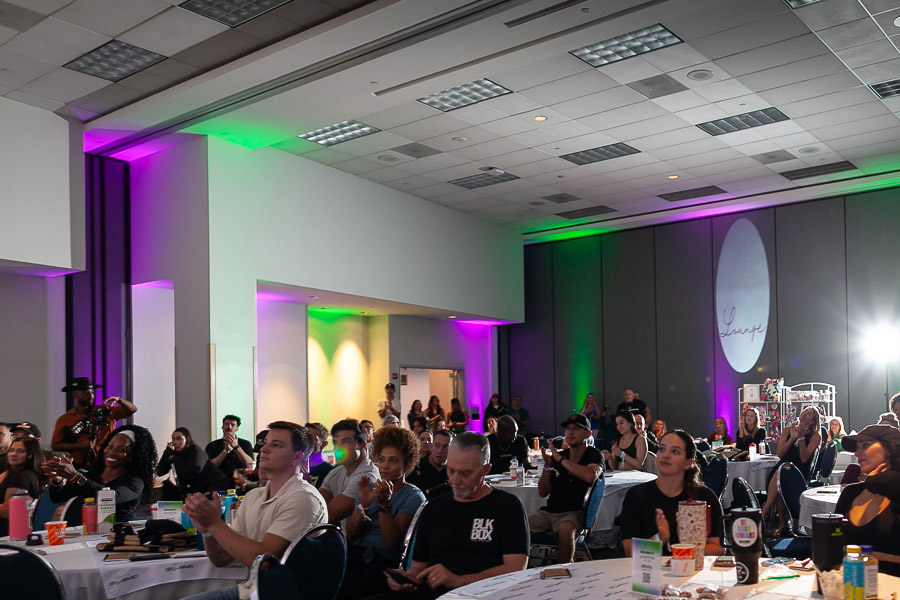 Career Lab by Coach360 provided a focused approach to professional development in the fitness space. The event brings together trainers, coaches, and industry leaders for intensive learning sessions designed to address real career challenges. Unlike massive conferences where attendees can feel lost in the crowd, Career Lab maintained an intimate atmosphere that encouraged meaningful connections and practical skill development.
The program structure balanced education with networking, combining expert-led sessions with hands-on workshops, and each person left with CECs from either ACE, ISSA, NASM, AFAA, or NCSF. Participants engaged with content that addressed common industry pain points while building relationships that attendees could take with them after the event concluded. This dual focus creates an environment where professional growth happens through formal learning and organic peer-to-peer exchange.
A Day Packed with Practical Wisdom and Career-Building Sessions
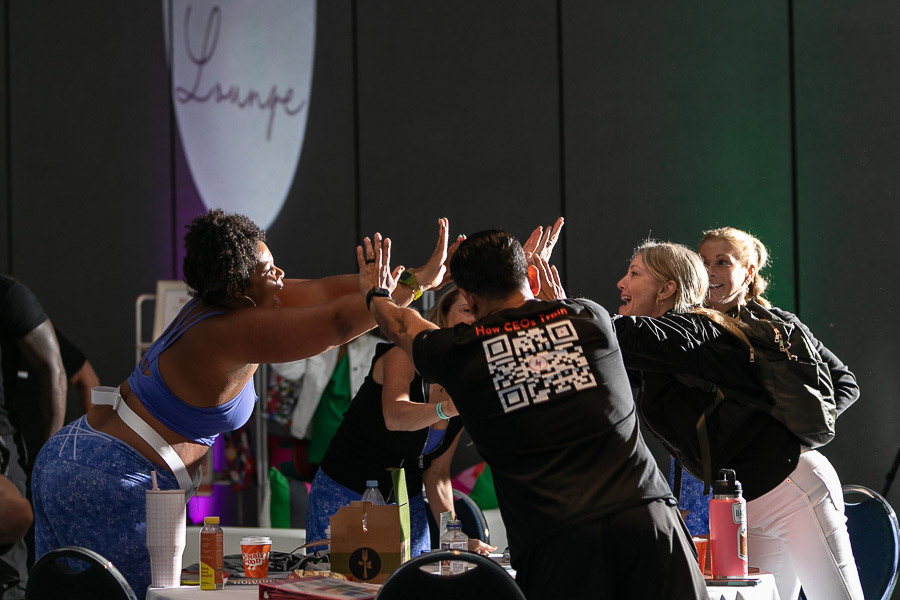 The Convention Center turned the event into a carefully curated learning environment that prioritized human connection. Tables accommodated no more than eight people each, creating natural conversation circles that encouraged networking and community building throughout the day.
Colour-Addicts brightened the room with vibrant pillows, towels, and textiles that added energy and warmth to the space. The visual elements created an atmosphere that felt welcoming, setting the tone for open dialogue and collaboration. As one of the event sponsors, American Council on Exercise provided the Coach of the Year winners with free education opportunities, demonstrating their commitment to ongoing professional development. A highlight of the event was the Creator Spotlight, sponsored by True Coach, which allowed coaches to share their stories and get their photo taken.
White Rabbit and Lemon Perfect kept attendees energized with delicious drinks throughout the day, while Vooray and Fabletics contributed swag bags that participants could use in and out of the gym. These partnerships enhanced the experience while providing practical value. The swag bags included protein by PERK protein powder, but PERK didn’t stop there. They also sponsored the breakfast to ensure participants were adequately fueled for a day of learning.
The day began with an energizing workout led by Maricris Lapaix and Lacee Green, immediately establishing the active, engaged tone that would carry through every session. They brought the best vibes, and three participants walked away with more than a workout. Lacee awarded two participants with Ryka shoes, and Kathleen gave away a Kineon MOVE+ to one lucky winner.
Following the workout, Coach360 CEO Kathleen Ferguson addressed the group about Career Lab’s purpose and the critical role coaches and trainers play in the industry. She highlighted the persistent challenge of high turnover rates, emphasizing that the best coaches often struggle due to a lack of better business and career skills, which hinder their professional advancement. Ferguson’s message resonated throughout the room: “There is no pill for lasting transformation; coaches are the catalysts for real change in the industry.”
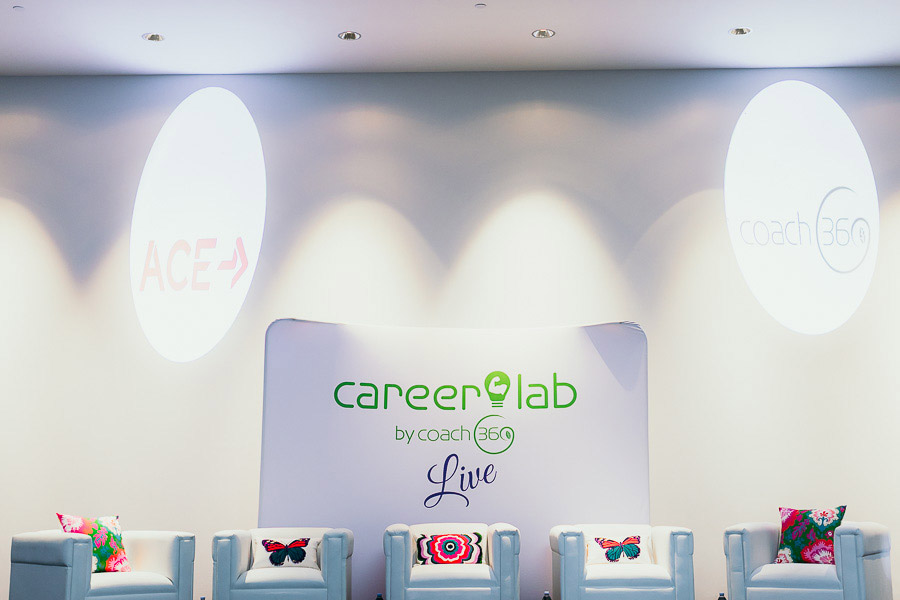 Celebrity trainer Corey Calliet followed with insights from his journey from the streets to Hollywood, sharing practical wisdom about manifestation and professional development. “If you speak it into existence, it can actually happen,” he told the audience, before challenging them to examine their own readiness to serve others.
The morning continued with “Certified and Ready: Now Let’s Build Your Fitness Career!” moderated by Dr. Anthony Wall with panelists Jessica Maurer, Tricia Murphy Madden, and Christine Conti. This session guided newly certified professionals through the transition from certification to thriving career, covering how to become an ideal candidate for clubs and studios, find their unique niche, and market themselves effectively. The panel addressed what hiring managers look for and how to position yourself as an asset to fitness facilities.
Pete McCall delivered a focused session on “Periodization Programming for Client Retention,” diving deep into how structured progressive training plans keep clients engaged and motivated while preventing plateaus. McCall explored how varying intensity, volume, and recovery periods throughout the year can align with clients’ goals, ensuring they stay challenged and invested in their fitness journey. He emphasized how effective periodization builds long-term client loyalty by providing personalized, goal-oriented training that adapts to each client’s needs.
The lunch break turned into a networking opportunity, allowing attendees to connect with peers, industry leaders, and potential employers while discussing career opportunities. This extended networking session provided valuable face-to-face time that many found instrumental in making meaningful professional connections.
Joey Thurman moderated “Define Your Lane: Building a Standout Fitness Brand Rooted in Purpose, Passion & Personal Identity” with panelists Lacee Green, Bree Mitchell, and David Christopher. This session explored how successful fitness professionals find their niche, align their business with their identity, and create brands that resonate. Participants learned to turn their background, values, and lived experiences into compelling brand stories, define and dominate their niche, and build with purpose while scaling without losing their voice or values.
Jessica Maurer presented “Fitness Industry Roadblocks: Mistakes To Avoid and Strategies For Growth,” combining cutting-edge research with insights from industry leaders and real-world experiences. The workshop provided strategies to avoid common pitfalls and turn obstacles into growth opportunities, helping participants navigate challenges confidently. Attendees received practical tools for enhancing resilience and achieving success while learning to identify and avoid industry pitfalls.
The afternoon featured “Real Connection, Real Growth: Cultivating In-Person Community to Build Fitness Careers in a Digital Age,” moderated by Maricris Lapaix with panelists Nate Hyland, Eloiza Tecson, and Marc Rodriguez. This session explored how authentic community building remains the cornerstone of long-term fitness industry success. As Nate noted, big events are always a great way to level up your career, but small, intimate events like Career Lab are where the real magic happens. Participants learned practical strategies to create inclusive, purpose-driven spaces that foster deep connection and naturally support career opportunities and client retention.
Todd Durkin closed the educational portion with his high-energy keynote “Coaching Greatness: Top ’10’ Traits of the Greatest Coaches of All-Time.” Drawing from 25 years of experience, Durkin unpacked proven strategies for scaling fitness businesses and increasing active and passive revenue. He delivered actionable insights on brand-building, marketing, and team growth while sharing methods for maximizing client results by selecting the right services, products, and offerings. Not to mention, he had the room laughing at his tactics to hold his clients accountable.
The day concluded with Kathleen Ferguson presenting the Coach of the Year Award, recognizing an exceptional fitness professional who demonstrated leadership, growth, and impact in the industry. With Nicole Leasher winning the Rising Star category, Jerry Joseph taking home the Fitness Visionary award, and Alli Felsenthal winning the Holistic Hero award. Each winner received a Hyperice Hypervolt 2 and a Kineon Move+, and Jerry walked away with a $100 giftcard to Fabletics.
Final Thoughts
Trade shows offer quick handshakes and business card exchanges, but Career Lab provided an opportunity to slow down to build something deeper. The intimate setting allows conversations to move past surface-level introductions into genuine exploration of challenges, solutions, and shared experiences.
These connections matter because fitness careers are built on relationships that go beyond a single transaction or referral. The coach you sit with at lunch might become your accountability partner, the panelist who shares vulnerability about their struggles might inspire your next career pivot, and the person you meet during the networking break might open doors you never knew existed.
About Elisa Edelstein
Elisa is a curious and versatile writer, carving her niche in the health and wellness industry since 2015. Her lens is rooted in real world experience as a personal trainer and competitive bodybuilder and extended out of the gym and on to the page as a writer where she is able to combine her passions for empowering others, promoting wellness, and the power of the written word.
GLP-1 Training Protocols: Insights from Bob Thomas for the Fitness Professional
Fitness professionals face an unprecedented challenge as GLP-1 medications reshape client expectations and outcomes. Whether you agree with it or not, GLP-1 medications are here to stay. These weight loss medications are creating a new category of gym members whose bodies respond differently to traditional training approaches. Yet, many fitness professionals remain unprepared for the unique considerations these clients bring.
Industry expert Bob Thomas, through his work with NexgenMD360, has identified gaps in how gyms and trainers handle this growing demographic. His weight loss management program combines medical oversight with specialized training protocols, revealing the opportunities and pitfalls that await fitness professionals who encounter GLP-1 users.
Understanding the GLP-1 Training Challenge
GLP-1 medications alter how the body processes nutrition and responds to exercise stimuli. Clients using these medications experience rapid weight loss that can include significant muscle tissue loss if training protocols aren’t properly adjusted. Thomas has observed trainers designing programs without knowing their clients are using these medications, creating potentially harmful mismatches between exercise intensity and physiological capacity.
The communication barrier compounds the problem. Many clients feel embarrassed about using weight loss medications and choose not to disclose this information to their trainers. This secrecy leaves fitness professionals operating without crucial context about their clients’ metabolic state and recovery capacity. The result is training programs that may be too aggressive for bodies undergoing rapid compositional changes.
Corporate fitness leadership often treats GLP-1 medications as a temporary trend rather than a permanent shift in client demographics. This perspective prevents gyms from investing in proper trainer education and protocol development, leaving individual trainers to navigate these challenges without institutional support or standardized approaches.
Building Effective GLP-1 Training Systems
NexgenMD360 addresses these challenges through an approach that combines medical supervision with specialized trainer development. Their program operates through partnerships with medical offices and clinics, ensuring clients receive coordinated care that addresses medication management and exercise programming.
The key lies in metabolic strength training protocols specifically designed to preserve lean muscle mass during rapid weight loss phases. Traditional gym transformation packages typically run six to eight months, but GLP-1 clients require extended timelines of 12 to 18 months minimum to achieve sustainable results without excessive muscle loss.
Thomas emphasizes that successful GLP-1 training programs must incorporate proper nutrition education alongside exercise protocols. The holistic approach includes appetite management strategies, craving reduction techniques, and long-term weight maintenance planning. This framework delivers superior outcomes compared to medication-only approaches while supporting trainers with the knowledge and tools they need to serve this client population effectively.
The program also focuses on building legitimate career paths for trainers rather than relying on part-time relationships. By providing specialized education and ongoing development opportunities, trainers can position themselves as experts in this growing field while building sustainable business models around extended client relationships.
Final Thoughts
The trainers building careers around GLP-1 clients understand that these aren’t temporary medication users looking for quick fixes. They’re individuals committed to 12- to 18-month journeys to make their lives better. This creates an entirely different business model where deep knowledge commands premium rates and long-term relationships replace constant client churn.
Professionals are positioning themselves as specialists who bridge the gap between medical treatment and physical recomposition. They’re building reputations that attract clients seeking knowledgeable guidance through their weight loss journey, providing a stable, long-term career path.
About Elisa Edelstein
Elisa is a curious and versatile writer, carving her niche in the health and wellness industry since 2015. Her lens is rooted in real world experience as a personal trainer and competitive bodybuilder and extended out of the gym and on to the page as a writer where she is able to combine her passions for empowering others, promoting wellness, and the power of the written word.
How Jim Baugh and PHIT America Are Tackling Youth Inactivity at Its Roots
America’s children face a crisis. With youth ranked last among 38 developed countries in physical health and 47th out of 50 nations in fitness levels, the statistics paint a troubling picture of an entire generation losing touch with movement and physical activity. While public health discussions often center on nutrition and food policy, one former tennis industry executive has dedicated his nonprofit career to addressing the other half of the health equation.
Jim Baugh brings decades of experience in the sports industry to this challenge, having previously disrupted the tennis world through his work at Wilson, Prince, and Converse. His transition from corporate executive to nonprofit leader stems from a recognition that the foundation of physical activity in America has cracked, leaving millions of children without the skills and confidence they need to maintain active lifestyles throughout their lives.
Jim Baugh: From Tennis Courts to Classrooms
Baugh’s path to founding PHIT America began with his early experience as a physical education teacher in Trenton, New Jersey. That classroom experience planted seeds that would later bloom into a mission focused on youth physical activity. His subsequent career in the sporting goods industry, where he helped create the oversized tennis racket and developed cardio tennis—a fitness-focused approach that now engages millions of participants—demonstrated his ability to identify market gaps and create solutions that put smiles on people’s faces.
The former president of Wilson Sporting Goods, whose corporate success included his induction into two Hall of Fame organizations, uniquely positioned him to understand the business and grassroots sides of physical activity. His creation of cardio tennis emerged from research showing that traditional tennis wasn’t providing adequate exercise for recreational players, leading to a movement-based approach that prioritized fun and fitness over competition and scoring.
PHIT America has become Baugh’s most ambitious undertaking. The organization focuses exclusively on what he calls the “inactivity pandemic”—a term coined by The Lancet in 2012 that describes the global health crisis created by sedentary lifestyles. His approach targets the root cause: children who never develop fundamental movement skills and the confidence to use them throughout their lives.
Addressing the Crisis Through Direct Action
PHIT America attacks the inactivity pandemic through programming that rebuilds physical education in schools where traditional PE has been diminished or eliminated entirely. The organization’s four core programs focus on teaching lifetime sports skills rather than creating elite athletes, recognizing that most children need foundational movement abilities that will serve them whether they pursue competitive sports, recreational activities, or simply maintain basic fitness.
The centerpiece of this approach is the PHIT Center, a facility measuring just 150 by 90 feet—roughly one-fourth the size of a football field—designed specifically for children. The first center, launched in Brownsville, Texas, features ten activity stations where up to 60 students can rotate every five minutes, accompanied by music and structured programming. This circuit-training approach accommodates the reality of modern physical education, where class sizes have ballooned to unmanageable numbers while budgets have shrunk to an average of one dollar per child annually.
Unlike federal programs that ship equipment to schools and leave implementation to overstretched staff, PHIT America maintains three-year partnerships with participating schools. This sustained involvement ensures that curricula, equipment, and training are utilized rather than sitting unused in storage rooms. The organization has already impacted over one million children across ten years of programming, demonstrating that direct engagement and ongoing support create lasting change in school environments where physical education has been marginalized.
Final Thoughts
The challenge facing American youth extends beyond individual health outcomes to encompass national security, economic competitiveness, and social development. When three-quarters of teenagers lack the fitness levels required for military service, and when 96 percent of female corporate executives grew up playing sports while only 30 percent of today’s girls participate regularly in athletics, the implications reach every corner of society.
Baugh’s methodical approach to rebuilding physical education infrastructure addresses these systemic issues by focusing on the places where all children can be reached: schools. His recognition that movement skills must be taught early, when children are most receptive to learning, shows an understanding that fitness habits formed in childhood create the foundation for lifelong health behaviors. Through PHIT America’s sustained programming and purpose-built facilities, he has created a replicable model for communities serious about reversing the trends that have left American children at the bottom of international health rankings.
About Elisa Edelstein
Elisa is a curious and versatile writer, carving her niche in the health and wellness industry since 2015. Her lens is rooted in real world experience as a personal trainer and competitive bodybuilder and extended out of the gym and on to the page as a writer where she is able to combine her passions for empowering others, promoting wellness, and the power of the written word.
BFS Network: Data-Driven Growth for Elite Studio Owners
Studio owners often face the same challenges: How much should I pay my managers? What’s a realistic conversion rate? How do profitable studios structure their pricing? These questions keep many fitness entrepreneurs awake at night, as they search for answers that often feel like educated guesswork. The BFS Network eliminates that guesswork by connecting successful studio owners with hard data and a community of peers who’ve already solved these problems.
Founded in 2018, BFS has evolved from producing regional conferences to creating something much more valuable—a growth accelerator that helps established studios scale from five locations to 15, or from 15 to 50. This is where proven businesses go to reach their next level.
Building Success Through Community and Data
The BFS Network recognizes that successful studio owners learn more effectively when they collaborate with other successful studio owners. Rather than struggling alone with staffing challenges or expansion decisions, members tap into a network where someone has already navigated those exact obstacles.
The peer network model connects studio owners across different modalities and markets. A Pilates studio owner in Los Angeles might learn expansion strategies from a strength training franchise operator in Nashville, while a yoga studio owner in Chicago gains insights into instructor retention from a barre studio chain in Dubai. These connections happen naturally within BFS’s carefully curated member community.
What sets BFS apart from other business networks is its data-first approach. Co-founder Julian Barnes explains their philosophy: “You’re never going to hear us talk about trends or give you our opinion. We’ll tell you what happened based on data, then use our experience to provide insights on what that means.” This commitment to empirical evidence helps members make decisions grounded in real studio performance metrics.
The network includes executive training programs led by industry veterans—like the former CEO of Massage Envy, who scaled the company from three locations to 1,200. Members gain access to proven methodologies from leaders who’ve built and scaled successful businesses.
Industry Intelligence: The 2024 State of the Industry Report
The BFS 2024 State of the Industry Report is the most comprehensive analysis of boutique fitness studio performance available today. Drawing on survey responses from 369 studios across 46 states and 15 countries, the report provides specific benchmarks that studio owners can use to improve their operations.
The standout finding is that 17.4 percent of studios achieved profit margins of 20 percent or higher in 2024, nearly doubling from 9.2 percent in 2023. Major industry shifts or economic windfalls didn’t drive this improvement, but it came from studios consistently applying proven business methods.
Studios generating 50 or more new leads monthly were three times more likely to achieve those 20 percent profit margins. The most successful studios also converted 30 percent or more of their leads into first-time visits, and then converted another 30 percent of first-time visitors into paying customers.
The report breaks down performance by modality, revealing distinct patterns. Pilates studios showed the highest likelihood of achieving 20 percent profit margins, with 81 percent of city-based Pilates studios using scarcity-based pricing models through small group classes and private sessions. Most operated in spaces smaller than 2,500 square feet, maximizing revenue per square foot.
Strength studios typically landed in the 10- to 19-percent profit range, occupying larger spaces and paying managers more than their Pilates or yoga counterparts. Yoga studios faced the greatest challenges, with 61 percent earning less than $500,000 annually and 41 percent reporting profit margins between just one and nine percent.
City versus suburban location made a significant difference. Urban studios had stronger pricing power and a higher likelihood of generating $1 million or more in revenue, despite higher rent costs. They consistently outperformed suburban studios in profit per square foot.
Perhaps most valuable is the new BFS Scorecard, which benchmarks studios across five critical metrics determined by the BFS CEO Peer Network members. Studios completing the BFS Assessment receive both the full report and a personalized scorecard that compares their performance to that of successful peers.
The path to 20 percent profitability often comes down to simple mathematics. For a studio generating $500,000 annually, moving from a 10 percent to a 20 percent profit margin means finding an additional $50,000—roughly equivalent to gaining 24 new, net recurring members annually, or just two new members per month.
Final Thoughts
Building a successful studio requires strategic thinking and tactical execution, but the most challenging part is often determining which strategies are effective. The fitness industry is filled with opinions, trends, and theories, but successful scaling happens when owners base decisions on documented results from similar businesses.
The BFS Network provides something rare in business: a combination of hard data and experienced guidance from people who’ve built what you’re trying to build. Whether you’re looking to benchmark your current performance or connect with other successful operators facing similar challenges, this community offers practical resources for studio owners ready to move beyond guessing their way to growth.
Ready to benchmark your studio’s performance? Download the BFS 2024 State of the Industry Report and complete the assessment to receive your personalized scorecard comparing your metrics to the industry’s most profitable studios.
About Elisa Edelstein
Elisa is a curious and versatile writer, carving her niche in the health and wellness industry since 2015. Her lens is rooted in real world experience as a personal trainer and competitive bodybuilder and extended out of the gym and on to the page as a writer where she is able to combine her passions for empowering others, promoting wellness, and the power of the written word.
Bette Bentley and the Skimpies Brand: How a Personal Pain Point Became a Powerful Solution
Bette Bentley was living in leggings during 2020, juggling constant exercise, Zoom calls, homeschooling, and nursing her infant son when recurring UTIs became a persistent problem. Her attempt to solve this by putting panty liners in her workout leggings during jogs resulted in them being “balled up and completely up my butt” by mile two—a moment that sparked the creation of Skimpies, a brand that’s now changing how women approach comfort and confidence in their workout wear.
Bentley’s path from struggling with UTIs to creating a viral TikTok product doesn’t follow the typical story of entrepreneurship. Her commitment to developing a product that honors women’s health while delivering authentic solutions has created a community she calls “the skimpy sisters”. This led to authentic problem-solving that builds lasting connections.
A Business Breakthrough From A Hospital Bed
Rather than accepting the inadequate panty liner solution, Bentley dove headfirst into research, calling manufacturers to understand why period products often fail to work in pants. She discovered that traditional products contain ingredients necessary for menstruation but unhealthy for daily wear—exactly what many women were attempting to use as underwear replacements. Her Aries determination drove her to envision something entirely different: organic cotton underwear shaped like a liner with adhesive designed to withstand sweat and movement.
The turning point came during the most challenging moment of her life. After discovering a tumor and undergoing a sudden double mastectomy just weeks later, Bentley woke up in the hospital bed feeling stripped of everything—her career, her body, her plans for another child. In that vulnerable moment, she asked for joy and listed what made her happy: “God, my kids, my husband, and Skimpies.” The appearance of a hummingbird at her second-story window, which she interpreted as a sign from her grandmother who died of breast cancer, solidified her mission.
From that hospital bed, Bentley put down a $25,000 deposit on manufacturing equipment, which showed a leap of faith, but she knew it was essential. Her mastectomy became inseparable from the brand’s birth, with a postcard above her desk reading “what is our purpose: to make women’s lives better every day.” This commitment to doing right by women drives every decision, from her refusal to compromise on ingredient quality to her dedication to building the brand entirely in public, sharing prototypes and failures alongside successes.
The TikTok phenomenon that followed wasn’t manufactured or paid for, as Skimpies has never paid an influencer or for advertising. Instead, authentic word-of-mouth from women who found relief in her product created organic viral moments. When they launched their website in September 2024, an influencer’s unpaid enthusiasm led to selling out of pre-orders in their first month, forcing Bentley to quickly scale from hand-packing orders to establishing a warehouse in Simi Valley.
The Science Behind the Solution
Skimpies addresses a fundamental gap in women’s activewear solutions. Traditional underwear can create lines and discomfort under tight workout clothes, while going without underwear raises hygiene concerns for active women. Bentley’s solution combines the health benefits of organic cotton with innovative engineering that remains in place during intense movement.
The product’s bike seat shape mimics the natural contours of how women move and stretch during exercise. The adhesive technology, developed through partnership with what was then the world’s oldest adhesive manufacturer, can withstand marathons while remaining gentle on skin. This German manufacturer was the first to take Bentley’s vision seriously, providing technical specifications for adhesives and cotton materials that could withstand the rigors of industrial machinery.
Bentley’s comedy writing background proved unexpectedly valuable in product development. Her approach to testing material—having friends and family serve as guinea pigs, sleeping in prototypes, breastfeeding, then jumping in pools—mirrors the iterative process of comedy writing. She views failures as data points rather than setbacks, continuously refining her approach based on real-world feedback from actual users, rather than relying on focus groups or market research.
The organic cotton composition addresses health concerns that many women don’t realize they’re experiencing. Unlike synthetic materials that can trap moisture and bacteria, or conventional cotton treated with chemicals, Skimpies’ organic cotton allows proper airflow while wicking moisture away from the body. For women experiencing recurring infections or discomfort during long workout sessions, this material choice makes ensures women can thrive during their workouts.
Final Thoughts
Bentley’s journey illuminates how innovation happens when personal pain meets unwavering commitment to doing things properly. Her decision to tackle manufacturing herself rather than licensing the concept to established brands speaks to a level of care that’s rare in consumer products. The result transcends typical business success, a she’s created a community of women who feel seen and supported in ways they didn’t know they needed.
The hummingbird that appeared at Bentley’s hospital window serves as a perfect metaphor for how unexpected moments can redirect entire life trajectories. Bentley’s willingness to bet on herself from that hospital bed has created something that honors her grandmother’s memory and the daily experiences of thousands of women who deserve better solutions.
About Elisa Edelstein
Elisa is a curious and versatile writer, carving her niche in the health and wellness industry since 2015. Her lens is rooted in real world experience as a personal trainer and competitive bodybuilder and extended out of the gym and on to the page as a writer where she is able to combine her passions for empowering others, promoting wellness, and the power of the written word.


Subscribe to our Newsletter
Powering the Business of Health, Fitness, and Wellness Coaching