Be Perfect Foundation’s 11th Annual Gala: Playing the Hand You’re Dealt
There are moments that shift the entire trajectory of a life. For Hal Hargrave, that moment arrived on July 26, 2007, when a spinal cord injury left him with a new reality and opened his eyes to a broken system. The immediate financial strain of living with paralysis, the gaps in healthcare coverage, and the impossible choices between therapy and groceries were just a few of the many issues that the paralysis community faces. What started as one conversation during the holidays, just five months after his accident, would become a movement that has raised $10 million and counting.
The Be Perfect Foundation came from a single exchange with Brian O’Neill, a fellow therapy patient who couldn’t afford to continue treatment because feeding his family had to come first. Hal wheeled up to the front desk that day and committed to covering Brian’s payments. His father’s response during the car ride home—pride mixed with practicality—led to a dinner-table conversation that would launch a foundation nine months later, hosting their first gala with a hopeful goal of $35,000 and 250 attendees. They raised a quarter million dollars, and seven hundred people showed up.
The Be Perfect Foundation: Where Friday Night Lights Meets Real-Life Heroes
The foundation’s name carries weight that reaches back to Hal’s high school years and a movie that planted a seed. Friday Night Lights told stories of Texas football, but the mantra that stuck was about perfection—not the flawless kind, but the genuine pursuit of becoming the best version of yourself, leaving nothing on the table, correcting faults, and moving forward with intention. Pre-injury, Hal carried this philosophy onto the field. Post-injury, it became the foundation’s entire ethos.
“The people that will sponsor and support will be the strongest people in the room at any given time without even knowing,” Hal explains, “because they’ve already lived through the trauma and they will already be looking to us for this idea of wanting to take the next steps forward in recovery.” The foundation serves people in the paralysis community with direct financial aid for medical-based needs—wheelchairs, home and car adaptations, therapy programs in the chronic stage of recovery, and medical supplies. The things insurance won’t cover, and the expenses that pile up and never stop.
For 18 years, the foundation has operated without paid staff. Hal doesn’t collect a salary. Neither does his volunteer team. Yet they show up year after year, pouring themselves into an event that feels less like a fundraiser and more like a family reunion where everyone shares the same unspoken understanding of what survival looks like. Every dollar raised goes directly to people who need it, creating a transparency that donors crave. They know exactly where their money lands and whose life it changes.
The 11th Annual Scholarship Gala: An Invitation to Witness Change
April 18, 2026, at the Sheraton Fairplex Conference Center in Pomona, California, marks the 11th annual scholarship gala. The theme—Ocean’s Eleven meets casino night—carries a message that resonates and reminds us that we play the hand we’re dealt. The foundation has raised $10 million since its inception, with recent events bringing in $600,000 to $700,000 each. This year’s goal is north of $750,000.
The event opens with a cocktail hour where 1,200 attendees mingle with 70 to 90 clients who have been directly supported by the foundation. Hal becomes visibly emotional as he describes this collision of his two communities—the one that rallied around him in his hospital room and the one he’s dedicated his life to serving. “When you come as an attendee, you get to meet them, you get to learn about them,” he says, his voice catching. The sincerity is palpable. This isn’t a networking grab or an opportunity to shine; this is a community coming together to make change.
After cocktails, guests enter a transformed ballroom for what Hal describes as a cinematic storytelling experience, a massive 300-item silent auction, a live auction, dinner, dancing, and casino tables. Every element serves the same purpose of creating tangibility. Donors feel safe participating because all items are donated, and Be Perfect doesn’t use an auctioneer, ensuring 100 percent of proceeds go back to helping the community.
While donations and support count are meaningful and count for a lot, Hal’s most passionate plea centers on showing up. “If people came, they witnessed this, they experienced this, they felt it, it will change them,” he insists. The event isn’t invitation-only. Anyone can attend. Anyone can see firsthand what happens when a community decides that financial burdens shouldn’t compound the trauma of life-altering injuries.
Clients attend dressed up, celebrated, surrounded by family members who finally see their loved ones receiving attention for the right reasons—curiosity rather than judgment, acceptance rather than pity. For many, it’s the first time they’ve felt comfortable leaving home for a social event since their injury. This event matters, and there are many ways to still get involved. Tickets are available through the website.
Final Thoughts
Hal sits in his office, taking calls about event logistics, reviewing program committee decisions, and getting choked up as he describes what this night means to him and the lives it touches. His vision statement, to live in a world where people don’t reap the financial burdens of an injury or diagnosis, is simple, direct, and achingly necessary.
What makes April 18th different from any other Saturday isn’t the dollar amount raised or the number of auction items won, but the difference it makes in the lives of those who need the Foundation’s assistance. Hal calls it his Super Bowl, but really, it’s just proof that when good people come together to make a difference, the lives of many can change.
About Elisa Edelstein
Elisa is a curious and versatile writer, carving her niche in the health and wellness industry since 2015. Her lens is rooted in real world experience as a personal trainer and competitive bodybuilder and extended out of the gym and on to the page as a writer where she is able to combine her passions for empowering others, promoting wellness, and the power of the written word.
The Body Standard Pendulum—Bodies Are Not a Trend
Beauty standards have always moved like a pendulum, swinging from one extreme to another with dizzying speed. Twiggy’s waif-like frame defined the 60s, the 90s brought heroine chic, and suddenly, curvy was celebrated before strength took center stage. Now, celebrity culture and the widespread use of GLP-1 medications signal another shift toward extreme thinness. Those of us who lived through the Y2K era remember the damage these impossible standards inflicted—the disordered eating, the self-hatred, the hours lost to measuring ourselves against airbrushed magazine spreads.
We can’t return to that place. The fitness and wellness community spent decades building a healthier narrative, one where strength and self-love matter more than size and health trumps aesthetics. This moment demands we hold that ground while acknowledging the very real pressures people face when cultural messaging tells them their body is suddenly wrong again.
The Impossible Chase
The current shift in beauty standards presents a particularly difficult form of psychological warfare. GLP-1 medications like Ozempic have created a new pathway to rapid weight loss, making what was once unattainable seem suddenly achievable—if you have the prescription and the funds. Celebrities are shoring off dramatic transformations, and the message filters down to everyone who looks up to them.
This creates a dangerous feedback loop. Media amplifies celebrity bodies while social platforms echo and magnify these images, and suddenly, people who felt confident in their skin last year question what they’ve built. The standard shifts, but bodies don’t change that quickly without extreme measures. People push themselves toward dangerous territory all in pursuit of an aesthetic that will likely change again in a few years again.
The whiplash affects mental health and self-confidence. When the standard keeps moving, people live in a perpetual state of falling short. You finally build the strength you were told to want, and suddenly that’s wrong too. The goalpost moves, and you’re left wondering what part of yourself to reject next. The constant recalibration takes a toll on confidence, mental energy, and the relationship people have with their own reflection.
Protecting Your Peace
Building a stable relationship with your body while beauty standards ping-pong around takes deliberate practice. Start by curating your media intake with the same care you’d use selecting food. Unfollow accounts that make you feel inadequate, even if they’re popular or influential. Fill your feeds with diverse bodies doing impressive things—athletes of all sizes, dancers with different builds, people living full lives without obsessing over their appearance.
Challenge comparison thoughts when they surface. Notice when you’re measuring yourself against someone else’s body, then redirect that energy. Ask yourself what your body allowed you to do today—what I like to call non-scale victories—maybe you carried groceries, played with kids, hiked a trail, or didn’t run out of breath when chasing after the ice cream truck.
Practice speaking about your body with neutral or appreciative language. Catch yourself before making self-deprecating comments about your appearance, even joking ones. Those small verbal cuts accumulate. Instead, acknowledge what your body does well. Maybe your legs are strong, your arms can lift heavy things, and your body heals from illness. Build a vocabulary around capability rather than appearance.
Set boundaries around body talk with friends and family. When conversations turn to diets, weight loss, or appearance criticism, redirect or excuse yourself. You don’t owe anyone participation in these discussions and your mental wellbeing should always come first. State clearly that you’re working on a healthier relationship with your body and ask for support in maintaining that space.
Remember that celebrities and influencers exist in a completely different context than regular people. They have personal trainers, chefs, stylists, plastic surgeons, and professional lighting. Their job is to look a certain way. Your job is to live your life, which requires a functional, healthy body—not a display piece that matches this season’s trend.
Celebrating What Matters
The fitness community holds a responsibility here that extends to everyone—trainers, studio owners, brands, and practitioners. We need to actively push back against the resurgence of the thin-ideal by celebrating diverse body types in our marketing, hiring, and daily language. Show clients of different sizes doing impressive physical feats. Highlight strength, endurance, flexibility, and mental resilience rather than aesthetic outcomes.
Health markers matter more than appearance. Blood pressure, cholesterol levels, cardiovascular fitness, bone density, mental health all indicate wellbeing in a more tangible light than a number on a scale. A person can look “ideal” by current standards while being metabolically unhealthy. Bodies come in different sizes naturally, and that diversity deserves celebration.
Your body has carried you through every experience you’ve ever had. It heals from injuries, fights off illness, allows you to move through the world, and connect with people you love. It deserves respect for what it does, not criticism for how it looks in comparison to a cultural standard that will change again anyway.
Final Thoughts
We stand at a crossroads where we can either repeat the mistakes of previous decades or choose something different. The beauty standard will keep changing, but our response can change as well. We can refuse to participate in the chase, decline to measure our worth by whatever aesthetic happens to be trending, and build our self-concept on sturdier ground.
Individually, we practice speaking kindly about our bodies, focusing on capability instead of appearance, and protecting our peace from harmful media messages. Collectively, we push back against industries and cultural forces that profit from our insecurity. We demand diverse representation, call out harmful messaging, and support each other in resisting the pendulum swing. Bodies deserve better than constant criticism based on arbitrary standards that change faster than seasons.
About Elisa Edelstein
Elisa is a curious and versatile writer, carving her niche in the health and wellness industry since 2015. Her lens is rooted in real world experience as a personal trainer and competitive bodybuilder and extended out of the gym and on to the page as a writer where she is able to combine her passions for empowering others, promoting wellness, and the power of the written word.
Unpacking Performance: Fueling, Hydration, and Recovery Insights from Career Lab LIVE
Career Lab LIVE by Coach360 brought together five experts to examine how coaches can better serve clients through smarter approaches to nutrition, hydration, and recovery. Alex Jamal, celebrity nutritionist and trainer representing Fitness Results Coach, moderated the discussion with Dr. Jonathan Mike, educator and scientist from the International Society for Sports Nutrition; Mel Scott, creator of Linear Bar; Dr. Desiree Bartlett (Desi), wellness leader specializing in women’s health; and Christine Koth, CEO and founder of Aletha and author focused on soft tissue health and chronic pain.
The Panel Discussion
Alex Jamal opened by asking about shifts in how clients approach health and wellness. Mel Scott noted that consumers increasingly seek cleaner grab-and-go options, particularly products free from seed oils that don’t trigger inflammation. She emphasized the importance of reading labels rather than simply looking for protein content. Dr. Mike pointed out that coaches need to evolve into performance managers, rather than designing generic workouts, and to focus on implementation and execution.
Christine Koth highlighted how AI and accessible health apps have empowered individuals to take greater control of their wellness, creating opportunities for coaches to bridge gaps between clients and various health resources. Dr. Desi stressed the importance of “working in” alongside working out, especially for women navigating pregnancy, motherhood, and perimenopause.
A key theme emerged early: it doesn’t matter how much you train if you can’t properly recover from the workouts. The panel explained that two people could do the exact same workout, and one will improve while the other won’t, due to individual variability. Adaptation should be the overarching goal, not just training hard.
The conversation on fueling centered on stability and predictability over perfection. Dr. Mike outlined that energy, mood, cravings, and consistency are largely governed by blood glucose stability, protein adequacy, and total energy availability. Dr. Desi expanded nutrition to include what we consume through our eyes and ears. Noting that clients who may arrive stressed from news consumption and caffeine already face challenges before training even begins.
Christine encouraged coaches to help clients identify the most potent daily habits rather than overwhelming them with options, which can create choice paralysis. She identified muscle tension as an undertreated issue, explaining that addressing tension in key areas—front and back of hips, neck, and shoulders—has a major impact on how we move and recover. She stressed that rubbing, stretching, and rolling do something important, but don’t relax the muscle as effectively.
Dr. Mike called hydration “performance insurance”—cheap and high-impact but often misunderstood. The panel explained that hydration involves fluids, electrolytes, and context (environmental temperature, caffeine intake, travel). A study of football players found that those who were just one percent less dehydrated showed less focus on the field. Mel noted the importance of driving water into cells with adequate salt and electrolytes rather than relying on large amounts of water to hydrate.
Recovery generated considerable discussion as a multi-layered approach involving training methods (cold water immersion, saunas), nutritional aspects (protein and carbohydrate replenishment), and developing it as a skill through self-awareness. Christine reframed recovery as repair and preparation, whether for sleep or for the next day’s challenges. The panel noted that modern life—sitting, driving, air travel—creates tension that requires a systematic plan to undo.
Dr. Desi introduced box breathing and pranayama, techniques now used by Navy SEALs to regulate their nervous systems. She led attendees through a breathing exercise, noting that many people, especially women, inhale incorrectly by sucking in rather than allowing the abdomen to expand.
Dr. Mike doubled down on what Dr. Desi shared by stating that people are only as strong and powerful as their nervous system allows. When injured, the body isn’t at fault—it’s a physiological defense mechanism that prevents further injury.
Mel made an impassioned plea for coaches to educate clients on reading food labels, sharing her experience with severe leaky gut that prevented recovery and performance. She stressed that inflammation from poor food choices compounds into sleep problems and next-day performance issues.
For longevity, the panel recommended simplicity: two to four resistance training sessions per week with progressive overload, adequate protein intake, quality sleep, and cardiovascular conditioning. Dr. Desi also identified community as the number one indicator of exercise adherence—having someone waiting for you makes the difference.
Final Thoughts
The panel revealed how deeply interconnected fueling, hydration, and recovery are. A client who eats inflammatory foods faces compounded challenges when that food disrupts sleep, limiting recovery and reducing the next day’s training capacity. What stood out was the panelists’ shared emphasis on simplicity and self-awareness.
Assessing individual needs, adjusting multiple variables simultaneously, and creating sustainable practices that clients can maintain will make all the difference in client adherence and recovery. As a coach, you have the influence to help your clients make the wisest choices to get them to their goals and beyond.
About Elisa Edelstein
Elisa is a curious and versatile writer, carving her niche in the health and wellness industry since 2015. Her lens is rooted in real world experience as a personal trainer and competitive bodybuilder and extended out of the gym and on to the page as a writer where she is able to combine her passions for empowering others, promoting wellness, and the power of the written word.
How One Fitness Studio Eliminated Dead Space to Survive Margin Pressure — and What It Changed
Fitness studios are bleeding money on wasted square footage. With rent climbing in major markets and profit margins thinning, every inch of floor space needs to justify its existence. The old model—dedicated studios sitting empty between scheduled classes, nurseries serving a fraction of members, lobbies designed for aesthetic rather than function—can’t survive today’s economics.
Owners are ripping out single-use spaces and replacing them with flexible zones that generate revenue around the clock. Studios are rethinking how members interact with space throughout the day, measuring success by revenue per available hour rather than simple class attendance.
Performance Zones Replace Single-Use Studios
Many gyms were built with specific rooms for different activities such as yoga, cycling, barre, or boxing. In this scenario, the gym is wasting valuable space rather than using the rooms for multi-modality purposes. A studio paying $15,000 a month can’t afford to let spaces collect dust for 18 hours a day.
Some studios are eliminating nurseries entirely. These spaces might serve ten percent of members during narrow time windows, leaving the space as a money-suck the rest of the day. That square footage could host classes, training sessions, and open workouts that run from open to close.
Floor-based classes made this possible. When you don’t need a room full of bolted-down bikes or reformers, you can run different formats in the same footprint. Studios track every empty seat now because each one represents lost revenue. When you need 70 percent utilization just to break even, you can’t afford rooms that only work for a few hours of the day.
Final Thoughts
The studios’ surviving the pressure to hit their margins have stopped romanticizing empty space. Beautiful lobbies, dedicated nurseries, and single-purpose studios all sound wonderful until the rent check is due and utilization reports show hours of darkness. The facilities that make money have embraced the uncomfortable truth that every square foot either pays rent or costs rent.
This doesn’t mean sterile, overcrowded gyms. The best redesigns maintain member experience while eliminating waste, and it should be done with intention. If your gym is comprised of a large number of parents, it may be worth keeping the kid zone to better serve your demogrpahic. The death of Dead Space is about directing resources toward what members value enough to pay for, which creates stronger businesses capable of serving those members for year.
About Elisa Edelstein
Elisa is a curious and versatile writer, carving her niche in the health and wellness industry since 2015. Her lens is rooted in real world experience as a personal trainer and competitive bodybuilder and extended out of the gym and on to the page as a writer where she is able to combine her passions for empowering others, promoting wellness, and the power of the written word.
Purpose, Pathways, and People: A Recap of Career Lab by Coach360
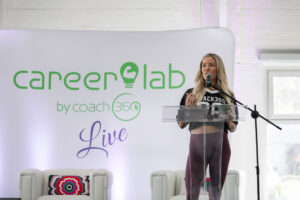
The fitness industry runs on passion, but it thrives on real connection. That’s why it was so meaningful when hundreds of coaches, trainers, and industry professionals gathered in Santa Monica on January 17th for Career Lab LIVE by Coach360. They showed up ready to learn, share, and support each other, and they didn’t disappoint.
Sponsored by brands like Sudor, NASM, Linear Bar, Aletha, Recovery Experience, Hyperice, Divvy Health, WOLFpak, TONA leggings, and FloWater, the event showcased some of the brightest minds in health and wellness, alongside a packed agenda of education and meaningful exchanges that left attendees energized and equipped for their next chapter.
 What Went Down
 What Went Down
The day kicked off with an outdoor TRX workout to get everyone moving, followed by a healthy breakfast and a Root to Rise Cacao and meditation ceremony facilitated by Hannah Ritchie and Kait Tomkosky. This intentional opening gave attendees space to center themselves and approach the day with clarity and purpose. Kathleen Ferguson followed with welcoming remarks that set the tone for what was ahead. Attendees were greeted with WOLFpak goodie bags, water jugs from Divvy Health, and clean, fresh water from FloWater.
Panels and sessions throughout the day featured industry leaders, including Luke Milton, Marc Rodriguez, Jessica Maurer, Kim Lyons, Shawn Ray, Ashley Kaltwasser, David Van Daff, Christine Koth, Efonda Sproles, David Sherman-Presser, Dorin Heid, and Michael Henderson. Wendy Fortino closed out the event with a keynote that brought everything full circle. Topics ranged from scaling a business and standing out in a crowded market to finding authenticity and daring to dream bigger. The midday movement break led by Maricris Lapaix added levity and laughter, reminding everyone that joy matters just as much as strategy.
 White Rabbit kept the energy alive all day, while California Ice Protein handed out their protein ice cream bars for a pick-me-up, and Colour Addicts made the space feel welcoming and polished, and all those who joined spent the day munching on Linear Bars. Attendees tested Aletha tools, relaxed in (and some fell asleep in) massage chairs, tried out Hyperice recovery equipment, and a few lucky winners brought home some Hyperice gear of their own. At the end of the night, Sudor drew the names of two winners who were ready to level up their businesses by building their own app through Sudor. NASM also awarded the winner of its giveaway a free course on Physique and Bodybuilding Coaching, helping level up careers.
 The Real Takeaway
 The Real Takeaway
Attendees flew in from Hawaii, Cape Town, Canada, and Chicago. They drove across state lines and showed up ready to engage. Notebooks filled with scribbled insights, excited glances exchanged between neighbors during panels, and the hum of conversation during breaks painted a picture of a group hungry to elevate their careers and their communities.
The room buzzed with professionals offering advice, swapping ideas, and forming relationships that will carry them forward into their next ventures. Career Lab LIVE created a space where ambition and encouragement were plentiful, seasoned veterans sat alongside newcomers, and where everyone walked away with something they didn’t have before—whether that was a new contact, a fresh perspective, or simply the reminder that they’re part of something bigger.
We’re deeply grateful to everyone who made Career Lab LIVE what it was. The coaches who showed up eager to learn, the sponsors who believed in this vision, the speakers who generously shared their wisdom, and the attendees who brought their full energy to every moment—you made this day exceptional. Watching this community come together with such enthusiasm and openness fills us with pride. Serving a group of professionals this talented and committed is an honor we don’t take lightly.
Final Thoughts
Every person who traveled across the country or booked a last-minute flight to Santa Monica made a decision that their growth mattered enough to prioritize. That kind of commitment ripples outward—into the clients they train, the studios they build, and the communities they serve.
Kathleen, Al, and I saw that commitment reflected back in every conversation, every question asked during panels, and every connection made between sessions. The gratitude runs deep for a community that shows up this fiercely. Events like this are built by people willing to invest in themselves and each other, and the ideas sparked in that room will shape careers and businesses for years to come.
About Elisa Edelstein
Elisa is a curious and versatile writer, carving her niche in the health and wellness industry since 2015. Her lens is rooted in real world experience as a personal trainer and competitive bodybuilder and extended out of the gym and on to the page as a writer where she is able to combine her passions for empowering others, promoting wellness, and the power of the written word.
Understanding the Science Behind the Lymphatic System
Your body contains approximately 600 lymph nodes and twice as many lymphatic vessels as blood vessels. This system moves approximately two liters of fluid through the body daily. The lymphatic system handles immune function and fluid balance without requiring any special intervention to work properly.
People are booking lymphatic massages, purchasing vibrating facial tools, and jumping on mini trampolines, believing that these practices improve their health. Some of these methods have legitimate medical applications for specific conditions. Others rest on shaky science and marketing claims that don’t match what research shows. Here’s what the lymphatic system actually does and what the evidence says about the techniques currently gaining popularity.
What the Lymphatic System Actually Does
Your lymphatic system consists of a network of vessels, nodes, and organs that transport lymph—a clear fluid containing white blood cells—throughout your body. Unlike the cardiovascular system, which relies on the heart as a pump, the lymphatic system relies on muscle contractions and movement to propel fluid. This system plays several critical roles. It returns excess fluid from tissues to the bloodstream, filters out bacteria and cellular debris through the lymph nodes, and houses immune cells that combat infection.
Lymph nodes act as filtering stations where immune cells can detect and respond to pathogens. The spleen, thymus, and tonsils are also part of this system, each playing specialized roles in immune function. The thoracic duct, the largest lymphatic vessel, drains lymph from most of your body back into your bloodstream near your heart.
Lymphedema, a condition in which lymphatic fluid accumulates in tissues, causes severe swelling, typically in the arms or legs. Primary lymphedema results from congenital malformations of the lymphatic system, while secondary lymphedema often follows cancer treatment, particularly when lymph nodes are removed or damaged by radiation. Medical-grade lymphatic drainage massage, performed by trained therapists, helps manage lymphedema by manually encouraging fluid movement. These therapeutic sessions follow specific protocols developed through clinical research and differ substantially from spa treatments marketed for wellness.
Evaluating Popular Lymphatic Drainage Methods
Rebounding—jumping on mini trampolines—has gained attention as a way to stimulate lymph flow. The theory holds that the up-and-down motion alters the gravitational force, thereby facilitating lymph flow through vessels. While no robust clinical trials have specifically tested rebounding for lymphatic health, the basic premise is consistent with evidence that movement supports lymphatic function.
Any exercise that involves muscle contraction can assist lymphatic flow, as the system depends on these contractions. Rebounding might offer this benefit, but so does walking, swimming, or dancing. Claims that rebounding provides unique lymphatic benefits above other forms of exercise lack scientific backing.
Facial tools such as jade rollers, gua sha stones, and vibrating plates have become ubiquitous in skincare routines, marketed for their purported lymphatic drainage properties. The mechanical action of rolling or scraping the skin could theoretically facilitate fluid movement, and many users report feeling less swollen after use. However, several factors complicate these claims. Facial puffiness is often attributable to fluid retention influenced by diet, sleep, hormones, and allergies, and the gentle pressure applied during an at-home facial massage likely affects the movement of superficial fluid. Many people report temporary relief from puffiness after using these tools, but whether this effect results from lymphatic drainage or from massage increasing blood flow and reducing muscle tension remains unclear.
Manual lymphatic drainage massage, when performed by certified therapists, uses specific light-pressure techniques designed to encourage lymph flow toward functioning lymph nodes. Research supports its use in managing lymphedema, with studies demonstrating that it can reduce swelling and improve quality of life in patients with this condition.
Medical literature documents the effectiveness of manual lymphatic drainage when combined with compression therapy in individuals with diagnosed lymphatic dysfunction. However, these studies focused on people with actual medical conditions. The spa version of lymphatic massage falls into a different category.
The concept of “detoxification” through lymphatic drainage deserves scrutiny. Your lymphatic system helps filter cellular waste and pathogens, but as long as you don’t have a condition affecting your lymphatic system, it works continuously without needing a massage to initiate its function. Your liver and kidneys handle the bulk of detoxification in your body, breaking down and excreting waste products.
Final Thoughts
The lymphatic system deserves more recognition for the essential work it performs daily, but that doesn’t mean every trending method for supporting it holds up under examination. Medical applications of lymphatic drainage massage serve a clear purpose for specific conditions, backed by clinical evidence. For the average person without lymphatic dysfunction, the benefits of at-home tools and wellness spa treatments remain largely anecdotal.
What matters most for lymphatic health is also the least glamorous: regular movement, staying hydrated, and maintaining overall health. Your body already knows how to manage its lymphatic system. If facial massage or rebounding makes you feel good and fits into your routine, there’s likely no harm in continuing. Just recognize the difference between a practice that feels beneficial and one that’s medically necessary or scientifically proven to provide specific results.
About Elisa Edelstein
Elisa is a curious and versatile writer, carving her niche in the health and wellness industry since 2015. Her lens is rooted in real world experience as a personal trainer and competitive bodybuilder and extended out of the gym and on to the page as a writer where she is able to combine her passions for empowering others, promoting wellness, and the power of the written word.
Red Bull Gym Clash: How Competitive Fitness Events Build Community and Coach Visibility
Red Bull Gym Clash takes the usual gym grind and throws it into a competitive arena where your performance matters to everyone around you. Teams from different facilities compete in athletic challenges that test strength, endurance, and how well you handle pressure when people are watching. The format pulls workout culture out of its typical individual bubble and puts it on display.
What makes this different is the stakes, as you’re representing your entire gym community. Your teammates depend on your output, spectators fill the venue, and every rep either helps or hurts your team’s standing. This is a challenge for the fitness community that honors those who work and live the gym culture.
The Competition Format
Red Bull events center on team-based challenges that require different fitness skills. Gyms send their strongest members to compete across multiple rounds that can include strength tests, cardio circuits, and obstacle courses. One person might dominate the lifting portion while someone else carries the team through endurance events, so building a balanced roster matters.
Scoring combines individual and team results, which means everyone contributes to the final outcome. The challenges vary enough that specialization in one area won’t carry you through the entire competition. You need people who can adapt and perform across different physical demands while dealing with crowd noise and time limits.
As only Red Bull does, the competition brings high-energy staging, loud crowds, and an atmosphere that mimics professional sports. The World Finals will take place on October third and fourth, 2026 in Greece, bringing together the best gym teams from around the globe to compete at the highest level.
A Necessary Competition
The gym community lacks shared experiences that bring them together around something bigger than their individual goals. Most training happens in isolation—people show up, do their workout, and leave without connecting to the larger community around them. Red Bull Gym Clash fills that void by creating an event that requires collaboration and builds relationships across facilities.
Training for a competition gives people a reason to show up consistently, support each other through tough sessions, and develop the kind of accountability that keeps them engaged long-term. These shared experiences create the foundation for communities that care about each other, where members applaud each other’s progress and success.
The industry also needs more opportunities for gyms to showcase what they’ve built. Competitions like this highlight the quality of training programs and the capabilities of coaches who work daily to develop athletes. Facilities that participate demonstrate their commitment to excellence while giving their members a platform to prove what they’re capable of achieving.
Events like Red Bull Gym Clash remind people why they started training in the first place. The excitement of competition, the camaraderie of working toward a common goal, and the satisfaction of pushing past limits all contribute to a healthier gym culture.
Final Thoughts
Competitive training builds the type of gym community that survives schedule changes and motivation dips. When members form real friendships with teammates who count on them, skipping workouts becomes harder. These connections turn a membership into something people value instead of another monthly charge they feel guilty about.
The competition also provides direct feedback about programming. Gyms see how their training methods compare to other facilities and where their coaching produces results versus where it falls short. This helps refine programming while showing members that their work translates to actual performance when tested.
About Elisa Edelstein
Elisa is a curious and versatile writer, carving her niche in the health and wellness industry since 2015. Her lens is rooted in real world experience as a personal trainer and competitive bodybuilder and extended out of the gym and on to the page as a writer where she is able to combine her passions for empowering others, promoting wellness, and the power of the written word.
Microbiome-Targeted Exercise Protocols: The Gut-Performance Connection
Your digestive tract contains a living ecosystem that directly influences how your body responds to training. The bacteria residing in your gut communicate with your muscles, immune system, and brain during physical activity. A 2017 study published in Oxidative Medicine and Cellular Longevity examined how exercise modifies this microbial community, revealing that different types, intensities, and timing of workouts create distinct bacterial environments with measurable effects on performance and recovery.
The relationship operates in both directions. Exercise reshapes which bacterial species thrive in your digestive system, while the health of your microbiome determines how efficiently you adapt to training stress. Understanding this connection opens new possibilities for optimizing athletic performance through strategic training protocols that account for microbial health.
Understanding the Gut-Exercise Relationship
Microbiome-targeted training is one pathway among many that will shape how we approach fitness and health optimization in the future. As research continues to uncover the mechanisms linking gut bacteria to performance outcomes, this knowledge will coexist with advances in recovery protocols, nutritional timing, and personalized programming, thereby creating a more comprehensive understanding of human adaptation.
Research indicates that exercise alters the gut microbiota in ways that confer health benefits for the host. Their findings show that physical activity increases beneficial microbial species and enriches microflora diversity, which contributes to improved metabolic and immune function.
The mechanisms behind these changes involve multiple pathways. Low-intensity exercise reduces gastrointestinal transit time, thereby decreasing contact between pathogens and the intestinal lining. This protective effect appears to lower risks of colon cancer, diverticulosis, and inflammatory bowel disease. High-intensity endurance exercise induces changes, temporarily reducing blood flow to the digestive organs by up to 80 percent of baseline levels due to increased sympathetic nervous system activity.
The study documented that voluntary running exercise in rats increased concentrations of n-butyrate, a short-chain fatty acid that protects against colon cancer and inflammatory bowel disease by affecting cellular NF-B activation. Exercise also prevented obesity-related changes in obese mice fed high-fat diets, with total distance run inversely correlating with Bacteroidetes-Firmicutes ratios. These shifts in bacterial populations mirrored those observed in lean animals, suggesting that exercise counteracts diet-induced microbial imbalances.
Practical Applications for Training
The timing of initiation of an exercise program affects microbial outcomes. One study found that exercise initiated during the juvenile period altered more bacterial genera and led to greater increases in lean body mass than exercise initiated in adulthood. Juvenile exercise increased Bacteroidetes while decreasing Firmicutes, changes associated with improved metabolic health. This suggests early-life activity establishes bacterial populations that support long-term metabolic advantages.
Different exercise types produce distinct microbial signatures. A study found that forced exercise and voluntary exercise altered the gut microbiome differently during inflammatory challenges, resulting in distinct microbial taxonomic profiles in both cecal and fecal samples. These variations may influence immune function, nutrient absorption, and overall physiology.
Final Thoughts
The microbial communities in your gut represent a variable that responds predictably to training interventions. Matsumoto’s early observations that voluntary running increased cecum n-butyrate concentrations launched a line of inquiry that has documented specific bacterial shifts across different exercise modalities, intensities, and life stages. Petriz’s work on obese and hypertensive rats showed exercise improved microbial composition and diversity, suggesting therapeutic applications for metabolic disorders.
What emerges from this body of work is a framework for thinking about training as an ecological intervention with microbial consequences that affect multiple physiological systems. The bacteria that flourish or decline in response to your workouts produce metabolites that affect everything from inflammation to energy availability to barrier function in your gut lining. Programming decisions that account for these microbial effects may explain previously puzzling individual differences in training response and open paths toward more personalized optimization strategies.
About Elisa Edelstein
Elisa is a curious and versatile writer, carving her niche in the health and wellness industry since 2015. Her lens is rooted in real world experience as a personal trainer and competitive bodybuilder and extended out of the gym and on to the page as a writer where she is able to combine her passions for empowering others, promoting wellness, and the power of the written word.
Inside Doyenne: The Women’s Strength Studio Where Members Build Fitness Careers, Not Just Bodies
Walking into a gym for the first time can feel intimidating, especially for women who’ve spent years watching from the sidelines, questioning whether they belong in fitness spaces. Doyenne, a women’s fitness studio, understands this hesitation because its founder lived it. What started as garage workouts and social media posts grew into something far bigger—a space where women show up to reclaim confidence, find their strength, and discover a community that genuinely sees them.
The studio serves women at every stage of their fitness journey, from complete beginners to seasoned lifters. Through strength training, powerlifting, and structured programming, members learn what their bodies can accomplish while building connections with others who understand their struggles and celebrate their wins.
The Doyenne Experience
Doyenne’s culture shows itself the moment someone walks through the door. The atmosphere carries a specific energy—welcoming, supportive, and decidedly different from traditional gym environments. Many members have spent months or even years watching the studio’s social media presence before finally deciding to visit. Some have never set foot in a gym before. Others come searching for a women-centered environment where they can feel safe, seen, and supported without explanation or apology.
The studio offers structured strength and powerbuilding classes, with coaching that balances technical education and community support. Members learn proper form, progressive overload, and how to push past self-imposed limitations. The 5 AM classes fill regularly with women who’ve made early morning training a non-negotiable part of their lives. Weekend sessions draw those juggling work schedules and family commitments. Each class creates space for women to focus on themselves, their goals, and their growth.
What makes Doyenne distinct is the women who teach and train there. They remember details, celebrate small victories, and understand that every woman in class carries her own story. Some members wear hijabs and appreciate a space where they can remove them comfortably. Others are rebuilding confidence after divorce, trauma, or years of putting themselves last. The coaches hold space for all of it without judgment or pressure.
From Member to Coach: Stephanie and Shay’s Stories
Stephanie’s journey with Doyenne began shortly after having a baby. As a stay-at-home mom, she began attending the 5 AM strength and power-building classes consistently, day after day. Her dedication didn’t go unnoticed by other members, who naturally gravitated toward her for support and encouragement. When she entered a Doyenne Challenge and won—earning a year membership—the timing aligned perfectly with a coaching transition at the studio.
The founder recognized Stephanie’s potential immediately. She offered to sponsor Stephanie’s education and have her take over the 5 AM class. Stephanie accepted, honored by the opportunity. Watching her step into the coaching role has been deeply fulfilling for everyone involved. Her classes remain full; she’s thriving in her new position, and Doyenne has provided her with income while adding stability and purpose to her life. She’s now a mother who makes a real impact on other women every day, a role that holds significant meaning for both Stephanie and the studio.
Shay’s path took a slightly different route. She joined Doyenne around the same time as Stephanie, curious about powerlifting after trying other gyms. The founder, who had recently taken up powerlifting, began training Shay and similarly recognized her natural ability. Conversations about Shay becoming the powerlifting coach led to action. Shay earned her certification and fully embraced the role, growing into the confident, knowledgeable coach she is today.
Both women’s stories mirror the founder’s own experience. She started as a stay-at-home mom working out in her garage, trying to care for herself and her family. Fitness changed her life, and Doyenne became the place where that shift could be shared with others. The business partner, Taylor, came into the picture with her certification, her kindness, and her belief in what Doyenne could become. Two years later, she became a co-owner alongside the founder.
These stories matter because they demonstrate what’s possible when women receive support, opportunity, and belief in their capabilities. Doyenne exists to create these moments—to help women see themselves differently, grow into new roles, and thrive in ways they might not have imagined.
Career Lab by Coach360
Stephanie and Shay will both be present at Career Lab by Coach360 on January 17th, 2026, in Santa Monica, California. This event brings together fitness professionals, studio owners, and industry leaders to discuss career development, business growth, and the future of the fitness industry.
Career Lab provides an opportunity to connect with others who understand the challenges and rewards of building a career in fitness. Whether you’re an established professional looking to grow your business, a newly certified coach searching for the right environment, or someone considering a career change into the industry, the event offers practical insights and meaningful connections.
Join us in Santa Monica to meet Stephanie, Shay, and other professionals who are shaping the fitness industry and leading with heart and dedication.
Final Thoughts
The fitness industry talks frequently about empowerment, but Doyenne shows what that word actually means in practice. Empowerment looks like Stephanie standing in front of a packed 5 AM class, coaching women who once watched her as a member. It looks like Shay guiding someone through their first heavy lift, sharing the confidence she’s built through her own training. These moments happen because someone believed these women could step into larger roles and created the conditions for that growth.
Every woman who walks through Doyenne’s doors carries her own story, her own reasons for showing up, and her own definition of strength. The studio’s role is to hold space for all of it, to provide education and support, and to remind each person that she’s capable of far more than she might believe.
About Elisa Edelstein
Elisa is a curious and versatile writer, carving her niche in the health and wellness industry since 2015. Her lens is rooted in real world experience as a personal trainer and competitive bodybuilder and extended out of the gym and on to the page as a writer where she is able to combine her passions for empowering others, promoting wellness, and the power of the written word.
Learning Your Way to Longevity and The Science Behind Lifelong Education
Most discussions about healthy aging center on familiar topics such as nutrition plans, exercise regimens, and stress-management techniques. These things matter, but they miss a factor that may be just as important but is less discussed and less often. It is equally powerful in determining how we age.
The practice of sustained, challenging learning throughout adulthood influences cognitive health, physical capability, and even lifespan itself. This connection between education and longevity operates through specific mechanisms that depend on how difficulty shapes the aging brain.
The Challenge Principle
Educational difficulty operates on a spectrum, and positioning yourself appropriately determines whether you’re building cognitive resilience. Brain training apps and crossword puzzles offer mental engagement, but they rarely push users into the discomfort zone where measurable change occurs. The key lies in cultivating skills that demand sustained attention, problem-solving, and tolerance for repeated failure.
Consider the 65-year-old tackling conversational Mandarin or the 72-year-old learning calculus. These pursuits force the brain to establish new neural pathways, a process that appears to slow cognitive decline and may contribute to extended healthspan. The difficulty itself becomes the intervention—your brain responds to challenge by strengthening existing connections and forging new ones.
This brings us to what researchers call the frustration window, the precise point at which a task feels almost impossible yet remains achievable with effort. If the challenge is too simple, your brain coasts on established patterns. If it’s too complex, you disengage entirely. The sweet spot is right at the edge of your current capability, demanding focus while offering periodic wins that keep you engaged.
Physical Learning Creates Compound Benefits
Learning can be divided into two categories: cognitive pursuits such as languages and mathematics, and physical skills such as dance, musical instruments, and martial arts. While both offer brain benefits, physical learning appears to deliver something extra.
When a 60-year-old picks up jazz piano or begins studying Brazilian jiu-jitsu, they’re engaging multiple systems simultaneously. The brain processes complex motor patterns while the body develops new muscle memory, leading to improvements in coordination and balance that stabilize over time. The cardiovascular system adapts to new movement patterns, creating a multi-system engagement that produces benefits extending past pure cognitive training.
Physical learning also requires various forms of problem-solving. A guitar player troubleshoots fingering challenges, a dancer works through spatial awareness in real time, and a martial artist reads and responds to an opponent’s movements. These activities combine cognitive and physical demands in ways that appear to produce measurable health outcomes.
Career Lab by Coach360, taking place on January 17th, 2026, in Santa Monica, CA, acknowledges the connection between continuing education and professional longevity. The event provides fitness professionals with opportunities to learn and grow from industry professionals. Whether you’re exploring new training modalities or refining existing expertise, the focused learning environment creates that optimal frustration window—challenging enough to produce growth, structured enough to prevent overwhelm. Join us to invest in your education and, by extension, your long-term health.
The Social Dimension
Solo learning has its place, but group education introduces a variable that significantly amplifies health outcomes, such as human connection. Attending a class, working with an instructor, or joining a study group combines cognitive challenge with social engagement, and the combination appears to have a greater impact.
Research on Blue Zones—regions where people routinely live past 100—consistently identifies social connection as a longevity factor. Learning in community settings delivers intellectual stimulation and the proven health benefits of regular social interaction. Consider how a pottery class brings together a teacher and students, creating an environment in which hands-on learning and collaborative problem-solving work in tandem.
The social element also addresses a common barrier to sustained learning. The temptation to quit when progress stalls. An instructor can adjust difficulty, offer encouragement, and provide the external structure that keeps you showing up. Fellow learners normalize the struggle and celebrate breakthroughs, transforming what might feel like isolated failure into a shared journey.
Final Thoughts
The relationship between learning and longevity hinges on a simple truth: the brain, like muscle tissue, responds to stress by adapting and strengthening. But we often underestimate what “stress” means in this context. Scrolling through trivia or completing the daily sudoku rarely generates the productive friction that triggers meaningful change.
Real cognitive health comes from tackling material that humbles us, that forces us to sit with confusion and work through it systematically. The 70-year-old learning tango isn’t just picking up a hobby—they’re engaging in a practice that may add quality years to their life. The retiree enrolled in a university course on philosophy isn’t filling time—they’re investing in their future self. Education doesn’t end when formal schooling does. The most compelling argument for lifelong learning may be the most personal: it gives us more years to keep learning.
About Elisa Edelstein
Elisa is a curious and versatile writer, carving her niche in the health and wellness industry since 2015. Her lens is rooted in real world experience as a personal trainer and competitive bodybuilder and extended out of the gym and on to the page as a writer where she is able to combine her passions for empowering others, promoting wellness, and the power of the written word.

Subscribe to our Newsletter
Powering the Business of Health, Fitness, and Wellness Coaching