
As Fitness Industry Faces Staffing Crisis, Instructors Hold the Cards
This article was republished with permission, the original content appears here.
With gyms struggling to fill positions, experienced trainers and independent instructors are in high demand, reshaping the fitness job market.
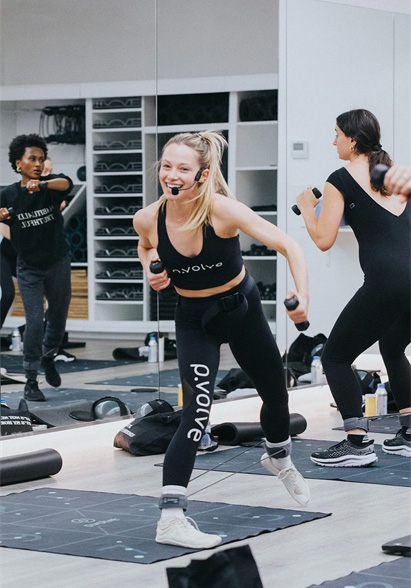
It’s a good time to be a good fitness instructor.
“There is, without a doubt, a mass staffing crisis in the industry,” says Studio Grow founder Lise Kuecker, who estimates that at least three open positions exist for every available fitness instructor. Experienced teachers, according to Kuecker, are in particularly high demand: her consultancy, established in 2016, advises the “boutique” segment of fitness studios—which is seeing some of the biggest increases in the $22 billion health club industry, and whose revenues spiked 37 percent in 2022 alone, according to the Health and Fitness Association. But Kuecker expects a quandary. During the last four years, she relates, the industry has lost “50 percent of our mid-to-upper-level people.”
As health clubs predict a 12 percent spike in memberships this month, increased staffing challenges will mean oversubscribed group classes and fewer personal trainers on the floor.
Though it’s been nearly five years, gym managers are still feeling the disruptions caused by the pandemic’s shutdowns. Many part-time instructors quit the profession at the time, while more experienced trainers realized they could retain their clients and make a living without setting foot in a gym, through either video training or home visits. Consumers, too, discovered that they no longer had to rely on the gym for fitness: some found new activities outdoors, while others discovered hobbies like pickleball, which grew by 52 percent last year.
This could explain why, though health club memberships reached a record 73 million in 2023, gym attendance remains below pre-pandemic levels. In 2023, members visited gyms an average of 79 days– up from 75 in 2022, but still well below the 109 visits reported in 2019, according to the Health and Fitness Association.
While most job markets favor employers, who continue to pull the strings, the opposite is true in the fitness world, where instructors and personal trainers find they often hold the cards. “Since Covid, you have to be a lot more flexible,” says Hank Ebeling, owner of H4 Training, which offers small-group fitness classes in the Chicago area. In the past, gym management frowned upon instructors running their own personal training businesses on the side. Today, many gym owners, including Ebeling himself, allow it. “As long as it’s not pulling clients away,” he says. He also gives new instructors a six-month grace period to get certified as well as a $200 stipend toward certification fees.
With less foot traffic in gyms, related roles—such as group instructors and personal trainers—are less visible to people considering jobs in fitness.
“We had ten instructors teaching thirty classes last year; now we have six instructors teaching twenty-four classes,” says Jacob Thomas, owner of Razor Sharp Fitness, which operates two gyms in Racine, Wisconsin. “A good number of instructors have aged out—just getting too old to teach that many classes—and it’s hard to replace them with younger staff.”
Additionally, gyms have had to be more creative about class schedules, as the traditional before-work and after-work models no longer align with today’s more flexible schedules. “As we’ve moved away from the conventional 9-to-5 workday, it’s essential to increase staffing to cater to peak workout times,” says Kathleen Ferguson, founder of Marketplace by Coach360, a platform that connects coaches with jobs and offers educational resources. She adds that gyms haven’t traditionally offered the benefits employees need to take the profession seriously as a full-time career.
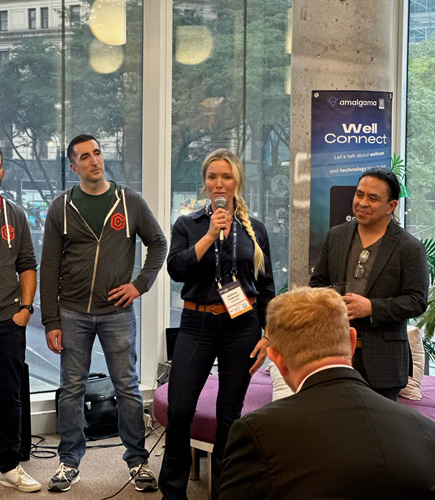
“When coaches feel uncertain about their career paths, they often leave the industry,” she says, pointing to the alarmingly high turnover rate, which now exceeds 80 percent within two years.
As a result, many top-tier instructors have decided to go independent.
The National Academy of Sports Medicine (NASM), which educates and certifies personal trainers, reports increased applications for its Certified Personal Trainer certification, in part due to more accessible options, including versions that allow remote testing.
“You actually don’t need much,” says Carolyn Appel, a former Equinox trainer on New York’s Upper West Side. After six years at the company, she left the job one summer when she failed to meet the revenue thresholds necessary to maintain health insurance coverage. Since then, she’s worked as a personal trainer, meeting clients at home and devising workouts that incorporate bands, kettlebells, and dumbbells they kept in their apartments. Years earlier, she had become a partner in ProNatal Fitness, a business that offers pre-and post-natal certification for fitness instructors, which now accounts for 40 percent of her annual income—and she covers her own health insurance. “I make more now than I ever did while working at a commercial gym,” says Appel.
Meanwhile, F45, the global fitness franchise, has reached into the military to recruit fitness staff, offering a unique twist on its brand with authentic GI Joe (or Jane) appeal. As of December, F45 had 126 active-duty service members interning at studios across the US, with another 117 set to start soon. Michael Nichols, F45’s military director, says the program has been instrumental in both retention and expansion, with over 20 participants advancing into ownership roles and hundreds more transitioning from part-time to full-time positions.
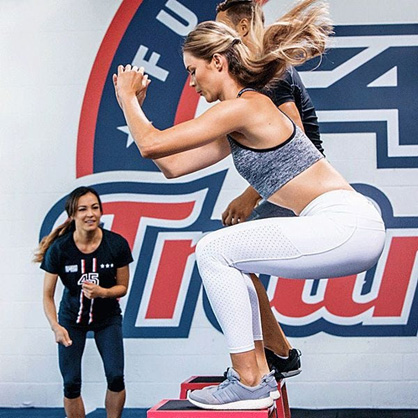
Colton Duran, a former Gunnery Sergeant in the Marines, now teaches classes in San Diego while working in operations for F45. Duran enjoys helping people reach their physical fitness goals, and finds it similar to his training in the military. “It perfects the idea of group fitness,” he says.
And Chris Farnsworth, co-founder of LiveMetta, a chain of Pilates and yoga studios in Orange County, California, has decided to take a more flexible approach with his instructors. “If our instructors tell us, ‘We can only teach 20 hours a week, otherwise we’re tapped out,’ we can offer more hours on the business side” from behind a desk, he says.
All in all, piecing together a full-time, 40-hour work-week is “very difficult,” says Rebecca Garity Pinto, a 41-year-old group fitness instructor in San Diego. She currently teaches nine classes a week at OrangeTheory, which she says is sustainable because the format doesn’t require her to be exercising with the class. “In more traditional group fitness, you’re performing,” she says. She combines the group-fitness classes with personal training on her own schedule. “It’s not easy work. I’ve always had to have another job,” she says.
The pay she receives is anywhere from $20 to $75 per class, but what she loves about the job transcends money. “Being on the mic, creating change in people’s lives, is way more rewarding than any paycheck.”
About Anne Marie Chaker
Anne Marie is a seasoned Wall Street Journal reporter turned professional bodybuilder. Her unique journey combines award-winning journalism with a passion for strength and wellness. In spring 2025, her highly-anticipated book, LIFT: How Women Can Reclaim Their Physical Power and Transform Their Lives (Penguin Random House), will debut.
Done is Better Than Perfect: Breaking the All or Nothing Fitness Mindset
Republished with permission, originally published on Lift.
We’re thrilled to introduce LIFT by Anne Marie Chaker, an inspiring newsletter on Substack designed to help women reclaim their physical and inner power.
If there’s one habit I’ve got that’s as steady as brushing my teeth, it’s this: I go to the gym. As a bodybuilder, lifting weights has become something I do almost automatically. Heading to the weight room is right up there with showering and flossing.
Hoisting cold metal bars to my back again and again isn’t glamorous. It isn’t something I’m dying to do. (Even writing this is my way of procrastinating going to the gym).
Most days, I’m not in the mood. Some days, I dread it. So, I make a deal with myself: I’ll just do a shitty workout. I’m talking the bare minimum—something that feels like the lamest version of what I could be doing. Just enough to get me in the door.
Sometimes, just moving is the win. And here’s the magical thing. That little bit of movement? It often turns into something more. I might walk in thinking I’ll only do a couple of half-hearted reps, but by the end, it’s always more than that, and I always feel better than when I walked in.
How I Tackle a Half-Assed Workout
Here’s how it goes: I’ll start by hitting the sauna to warm up my muscles and stretch a bit. Nobody is ever in there. I might listen to music, I might not. I don’t overthink it. I just let my body tell me what feels right for a few minutes. Then, I drag myself upstairs to the weight room and give myself permission to “just do something.” Anything. I’m serious—zero expectations.
You know what I find? When I stop trying to be perfect and just do the thing, even if it’s “shitty,” I end up feeling good. And if I’m honest, a 20 percent effort is still way better than doing nothing at all.
The Problem with the “Wellness Space”
Sometimes, the whole “wellness space” drives me up the wall. It looks exhausting, designed to make everyone feel inadequate. I grow weary of influencers acting like they’re Rocky Balboa grunting out killer reps, or the check-me-out Lulu set strutting around with full lashes and matching tops and bottoms. I’m sick of having to trip over tripod after tripod to find the equipment I need. Once, in the women’s locker room, I had to ask someone to stop with the selfies because I was trying to get dressed without ending up in her Instagram story.
One Set is Enough?
Here’s something I learned while researching for my book that blew my mind: It turns out, you don’t necessarily need to do three sets to get results. Some studies have shown that even doing one set of an exercise can give you pretty much the same benefits as doing three—especially for beginners or those training for general fitness.
For most people, a single set of 12 to 15 repetitions with a proper weight can build muscle as effectively as three sets of the same exercise, according to Mayo Clinic. In another study from 2014, researchers found that older women saw similar strength and muscle gains whether they did one set or three. Still, exercise scientist and researcher Brad Schoenfeld cautions against any absolute rule of thumb. “There is no such thing as ideal,” says the professor at Lehman College in New York in an interview with me over the weekend. “Due to a combination of genetics and lifestyle, some people respond as well to lower volumes [of sets] as higher volumes. Other people need higher volumes.” The mix of exercises chosen can also make a difference, says the author of the Science and Development of Muscle Hypertrophy.
When Less Really Is More
So, sure: I typically do three sets because it’s what I’m used to, I want to aim for the optimal option, and I frankly like the way it feels. But on days when I’m low on energy or time, I remember that even one set can be effective.
And while we’re here, let’s bust another myth: that you need to strength train every day. I’m not one of those people who brags about working out every day or even five days a week. I strength train four days a week, and honestly, that’s plenty.
According to the Department of Health and Human Services Activity Guidelines, adults should do 2.5 to 5 hours a week of moderate-intensity exercise or 1.25 to 2.5 hours a week of vigorous-intensity activity. That might look like a mix of walking, some HIIT classes, or other combination of higher and lower-intensity activities each week.
The guidelines also recommend at least two resistence-training sessions per week.
A more rigorous schedule may be more suited to advanced lifters, but for the rest of us, that is plenty. The goal is to get progressively stronger over time, rather than overdo things in one session and not be able to return to the gym so easily. Recent research from Schoenfeld that analyzed studies on workouts of multiple exercise sets shows that training a muscle group just once a week showed similar effects to more frequent sessions.
In other words, you can make gains without spending hours at the gym every day.
The Long-Term Approach
Truth be told, there are a million other things I’d rather do than head to the gym. I could organize the closet, blow dry my hair, call my mother, paint my nails. But I don’t let myself use those distractions as an excuse.
I love fitness. Day to day, I look at it as my me time and I approach it as a long-term game. And since I don’t want to burn out, I stay consistent, and–this is important–I respect my limits. For me, lifting is a way to reconnect with myself: it’s my “why.” It’s the time when I feel strong, when I’m focused, when I know that I’m taking care of myself. I visualize whatever’s bothering me as the weight I’m lifting, and I channel that energy into the barbell. And after every lift, I feel that rush of endorphins.
Final Thoughts: Showing Up Matters
Did I push myself to my limit? No. Did I sweat buckets? No. Do I make Huberman-esque calculations on VO2s and percent of 1 RMs before approaching each workout. No. Do I look like Jennifer Aniston in the new P.volve ad campaign? Definitely not. But I showed up. And that’s really the main thing.
About Anne Marie Chaker
Anne Marie is a seasoned Wall Street Journal reporter turned professional bodybuilder. Her unique journey combines award-winning journalism with a passion for strength and wellness. In spring 2025, her highly-anticipated book, LIFT: How Women Can Reclaim Their Physical Power and Transform Their Lives (Penguin Random House), will debut.


Subscribe to our Newsletter
Powering the Business of Health, Fitness, and Wellness Coaching